Chef
Marissa Gerlach
- Discipline
- Chef
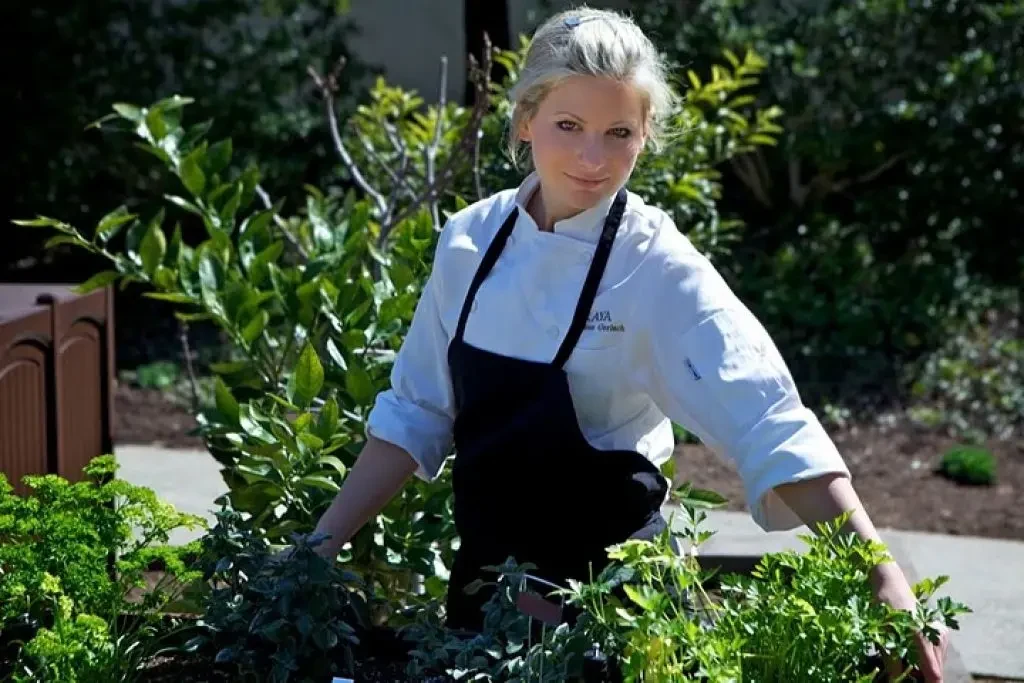
i. Biography
Ingredient history sets the working terms for this kitchen: “Every product we use has a history, a story behind it. For instance, AquaFarm is a small local sustainable seafood farm in Southern California.” In Marissa Gerlach’s practice, that statement functions as sourcing discipline rather than menu language. The work starts before the pan, with attention to where a product was grown or raised, who handled it, and what responsibilities come with using it. Formal training came through a culinary arts certification at Orange Coast College, giving structure to a point of view already organized around provenance. Provenance, handled seriously, is not garnish for a dish. It is part of flavor architecture. A product carries place, labor, handling, and intent; the cook’s job is to preserve enough of that information for the guest to receive it through the plate. In Gerlach’s cooking, connection to supplier and region is treated as part of composition, not as an afterthought.
Coming Up
Culinary arts certification at Orange Coast College provided the formal base for Marissa Gerlach, establishing the discipline and kitchen fundamentals behind an ingredient-led approach. The training gave technical shape to questions of source, season, and handling. California kitchen work then added pressure and range. At Bardessono in Yountville, CA, Gerlach worked in a setting where season and place were part of the operating context. At the Restaurant at Meadowood in Napa Valley, CA, under Chef Christopher Kostow, the craft demanded close focus, refinement, and the pace of ambitious service. Exact standards also shaped the work at Cyrus in Healdsburg, CA, where Gerlach worked under Chef Douglas Keane. Across these kitchens, technique was not an end in itself. Its value was in clarification: using skill to make the product more legible, not more covered. Restaurant chef duties at Raya at the Ritz-Carlton, Laguna Niguel in Dana Point, CA, in 2011 placed sourcing, craft, and guest experience in direct contact. The plate became the meeting point between the coast, the supply chain, and the diner.
Today
Sustainability operates here as a practical relationship, not a badge. Gerlach’s reference to AquaFarm, a small local sustainable seafood farm in Southern California, shows the scale of attention: the ingredient arrives with a source, a method, and a context that the kitchen is responsible for carrying forward. “It’s this type of experience that brings a story to the food we create and enjoy.” The craft in that statement is translation. A product with a history, a local seafood farm, and a guest at the table are connected through choices in preparation, balance, texture, aroma, and flavor. The plate is where sourcing becomes observable. The story is not the explanation around the dish; it is the clarity of the food itself.
Peer Recognition
Marissa's honors include Restaurant of the Year for RAYA (2011).
FAQ What does Marissa Gerlach currently do? Marissa Gerlach is chef at Raya — Indonesian Cuisine. What recognition has Marissa Gerlach received? Restaurant of the Year for RAYA (2011). What is Marissa Gerlach known for? Pan-Latin coastal cuisine prepared with sustainable seafood, local produce, natural and organic meats, and Richard Sandoval’s signature Latin flavors.


