Chef
Masayuki Otaka
- Discipline
- Chef
i. Biography
The Estate
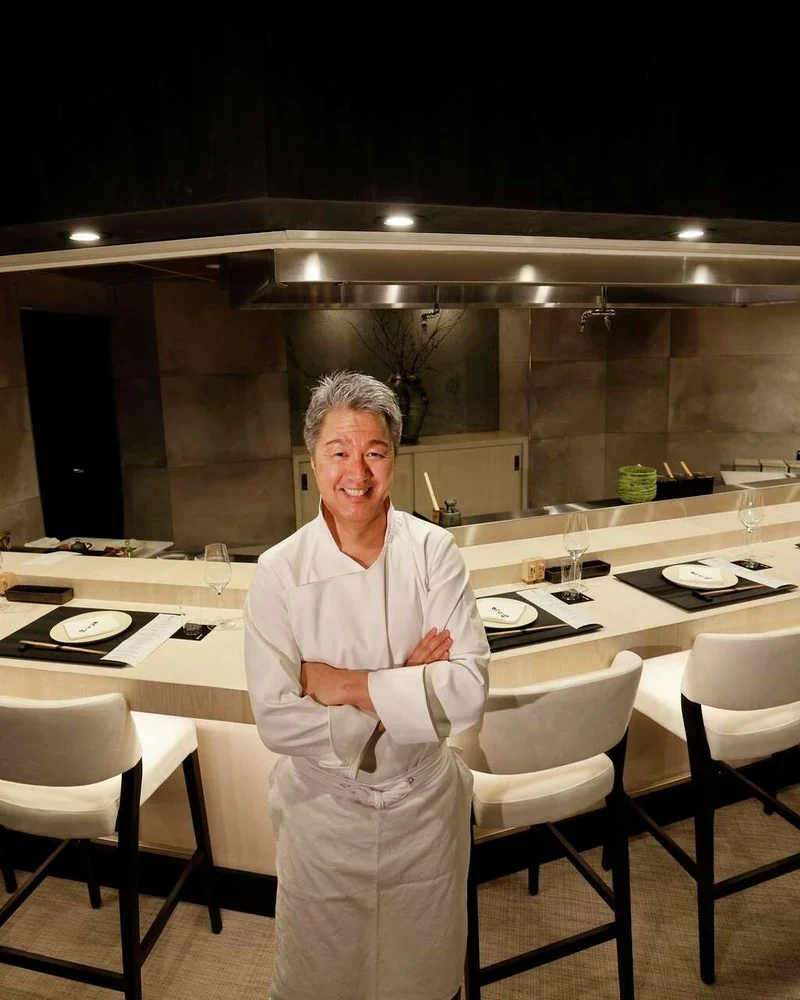
Binchotan charcoal, chicken liver pâté monaka, and the measured cadence of a kappo-style yakitori omakase are the clearest markers of Masayuki Otaka’s work: smoke, restraint, and a sequence that advances by rhythm rather than spectacle. In Portland, where he serves as executive chef at Oun Lido’s, that same control carries into Cambodian-Chinese fusion, with classic Chinese technique read through a Cambodian lens. The craft here is not about accumulation. It is about how Otaka builds flavor course by course from a deliberate base, keeping the line between method and finish in view. The career trail runs through Dallas before reaching Portland, and the length of that route matters. Masayuki Otaka formerly served as chef/owner of Teppo, which he ran for nearly three decades before opening Mābo, and the span of that work points to an approach built on repetition, upkeep, and attention to detail. In 2024, he was chef at Mābo in Dallas, where the restaurant was described in terms of yakitori and a kappo-style omakase that was clean and well-paced. That description fits the form of his cooking: disciplined, measured, and organized around timing as much as flavor. At Oun Lido’s, the present work introduces another register without changing the underlying discipline. Portland’s kitchen is identified with Cambodian-Chinese fusion, and the label is useful because it names the craft question directly: how techniques are held, adapted, and re-read across traditions. As executive chef, Masayuki Otaka is working at the point where inheritance meets reinterpretation, and where the structure of the meal does as much of the talking as the ingredients.
In the Cellar
Process is the main material in Masayuki Otaka’s cooking, and the finished plate is the method behind it. At the Dallas restaurant, each skewer is grilled over binchotan charcoal, placing yakitori in direct relation to a specific fuel rather than a general idea of heat. The format is equally precise: kappo-style yakitori omakase, paced cleanly, with the skewer serving as the recurring unit of focus. Repetition gives the sequence its discipline, but it also gives the meal its forward motion, one measured course after another. That same discipline explains why the Portland work reads as continuity rather than a break. In Masayuki Otaka’s hands, Cambodian-Chinese fusion is presented as craft, not ornament. The emphasis stays on how technique is handled, how tradition is interpreted, and how a plate can hold clarity and adjustment at the same time.
The Bottlings
The most concrete dish attached to Masayuki Otaka’s recent Dallas work is chicken liver pâté monaka. As the first course at Mābo, it sets the tone for the yakitori kappo-style omakase before the meal moves on, which makes its placement part of the craft rather than a standalone gesture. It marks the threshold of the sequence. Beyond that, the clearest signature is the Cambodian-Chinese fusion at Oun Lido’s in Portland. Here, the craft note is not a single dish but a way of working: classic Chinese methods reframed through a Cambodian perspective. Alongside yakitori, binchotan charcoal, and kappo-style omakase, it places Masayuki Otaka’s cooking in the language of process — grilling, pacing, sequencing, and translating technique across cuisines.
Signature
Masayuki's signature dishes include chicken liver pâté monaka.
FAQ What is Masayuki Otaka's current role? As of 2026, Masayuki Otaka is Executive Chef. What is Masayuki Otaka known for? Yakitori.


