Chef
Matteo Baronetto
- Discipline
- Chef
i. Biography
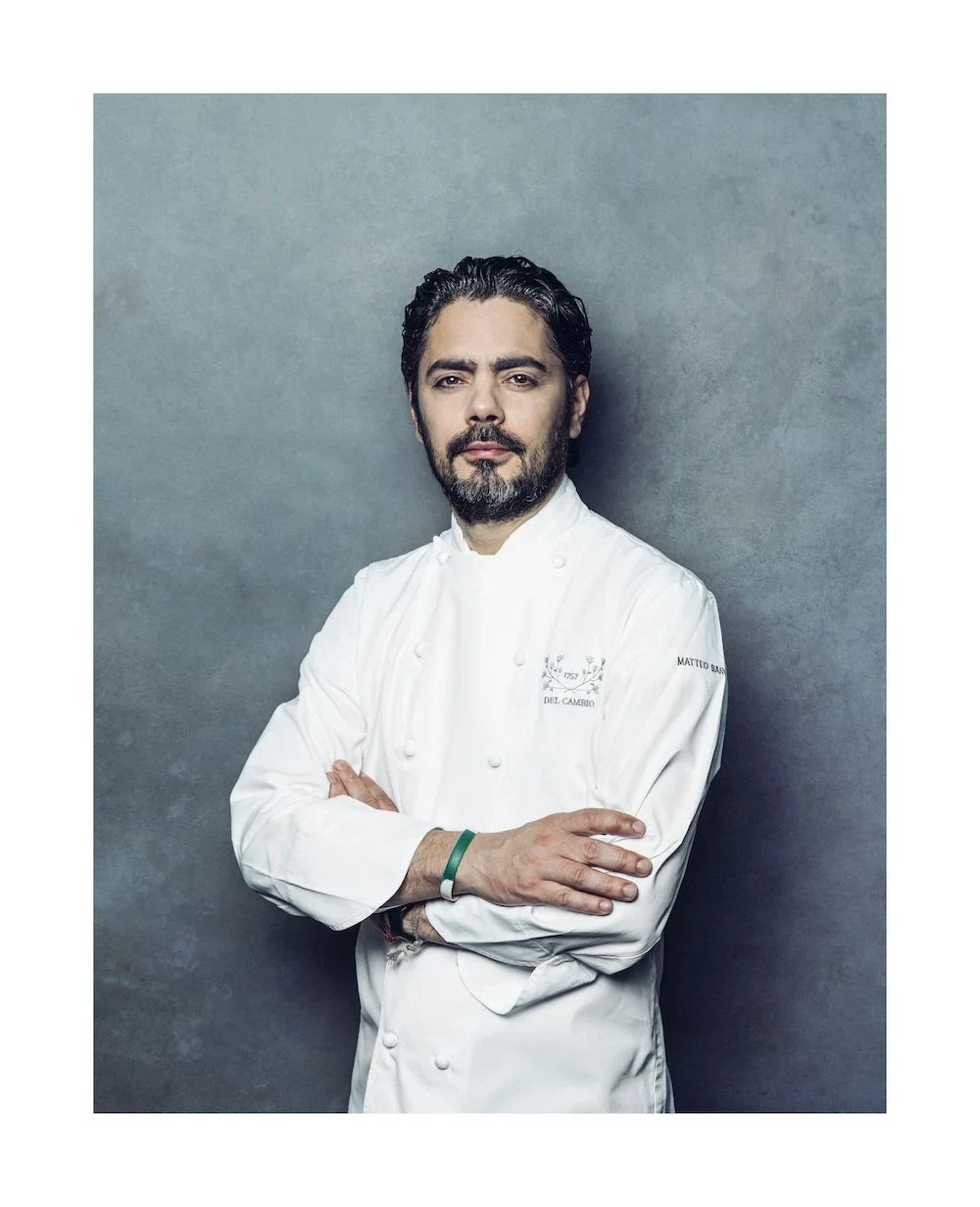
Matteo Baronetto was Executive Chef at Del Cambio in Turin, Italy, from 2014 to 2025. That role placed his cooking inside one of the city’s most formal dining rooms, where service, pacing, and platework carried equal weight. At Del Cambio, the work read as history handled with control: a kitchen translating ritual into food without letting the room outrun the craft.
The Climb
Technique in professional kitchens is built in increments, and Matteo Baronetto started that process as an intern at Albereta in Erbusco from 1994. The position marks the first step in a career shaped by repetition, standards, and close attention to detail. From there, he worked as collaborator at Le Clivie and as collaborator at Cracco-Peck (now Ristorante Cracco), adding experience in rooms that sharpened his sense of pace, discipline, and finish. That progression is best read as accumulation rather than acceleration. By the time Matteo Baronetto arrived at Del Cambio in Turin (2014–2025), the work had been trained through enough stages to rely on restraint as much as invention. Del Cambio became the setting where that approach settled into maturity, and where his identity as a chef was articulated through precision rather than excess.
Today
A dining room can change how a kitchen is read, and Matteo Baronetto treated Del Cambio as a room with its own memory. He said, “These halls, these mirrors have been hosting me as a chef for 10 years on.” The line points to a working relationship with place: not decoration, but a space that frames service, controls atmosphere, and holds continuity from one meal to the next. That same control runs through the food. Of one tagliatelle, Matteo Baronetto said, “Apparently it might seem like a classic pasta dish seasoned with a roast sauce and its vegetables, instead this is tagliatelle in which the dough is choux pastry.” The point is technique meeting expectation and then redirecting it. The dish relies on recognition first, then on a precise shift in structure that changes what the plate is doing without turning the gesture into spectacle.
Career - intern — Albereta, Erbusco (from 1994) - collaborator — Le Clivie - collaborator — Cracco-Peck (now Ristorante Cracco) - Executive Chef — Del Cambio, Turin (2014–2025)
Signature
Matteo's signature dishes include Insalata Piemontese, Lenticchie e caviale, Salmone e coniglio, Zucchina e avocado, and Tagliatelle di pâte à choux. The list shows range without losing discipline: regional reference sits alongside technical adjustment, and familiar forms are handled with enough control to keep the plate legible. Across the set, the common thread is attention to contrast, texture, and finish.
In Their Words “Apparently it might seem like a classic pasta dish seasoned with a roast sauce and its vegetables, instead this is tagliatelle in which the dough is choux pastry.”
Recognition
Matteo's honors include Michelin star and Three Forchette. Those recognitions place his work at a level where rigor and refinement are the relevant criteria. In practical terms, they register a kitchen that is read as exacting, composed, and able to work within tradition while shifting its terms just enough to matter.
FAQ Where did Matteo Baronetto work before? Earlier in their career, Matteo Baronetto worked at Albereta, Le Clivie, and Cracco-Peck (now Ristorante Cracco). What recognition has Matteo Baronetto received? Michelin star.