Winemaker
Maxime Barmès
- Discipline
- Winemaker
i. Biography
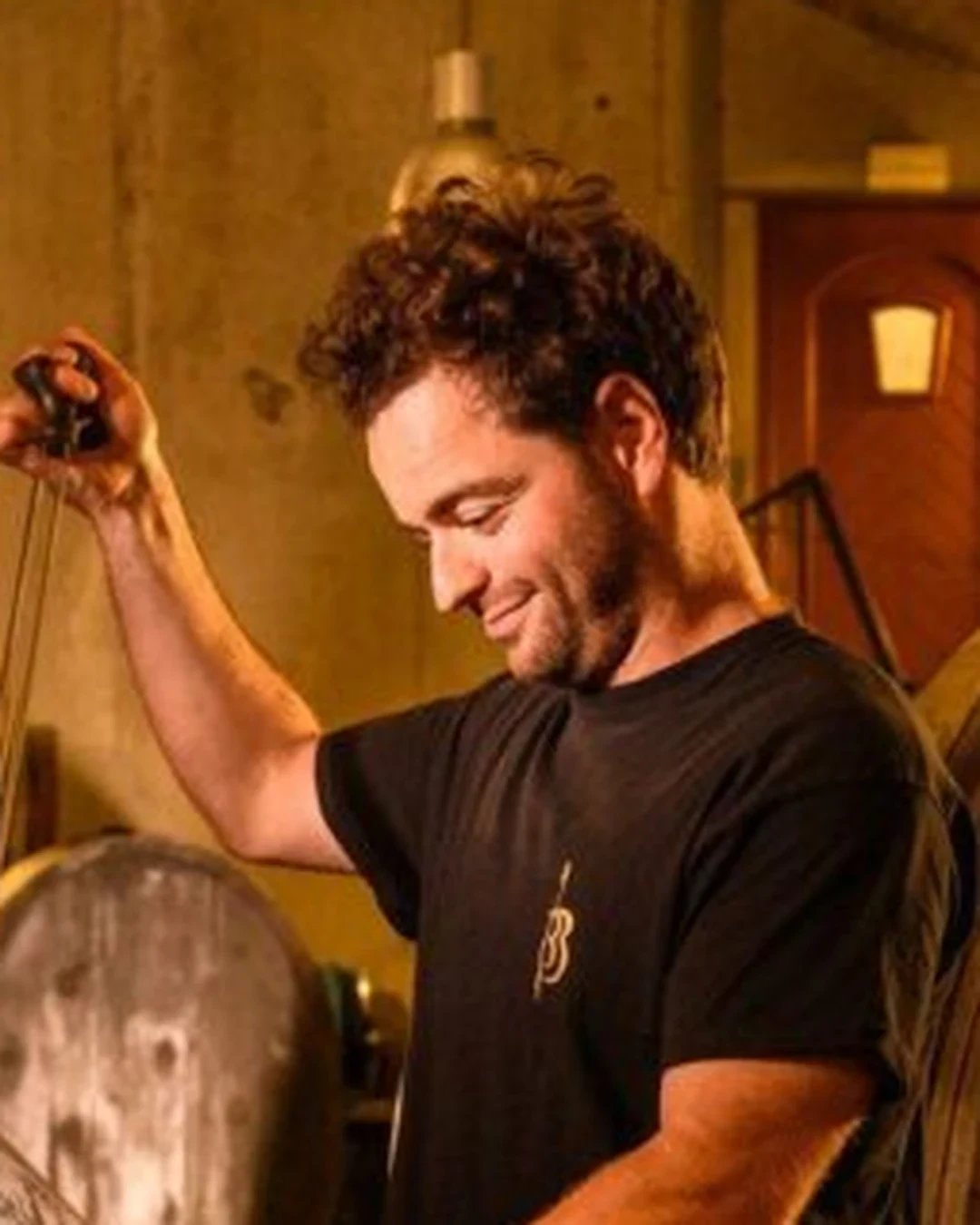
In Wettolsheim, France, the work at Domaine Barmès-Buecher is split between vineyard soil, cellar lees, sulfur used sparingly, and grapes handled without haste. Maxime Barmès leads the work in the vineyards and the cellars, carrying the family domaine through a biodynamic rhythm built around parcels, patience, and the character of each vintage.
The Place The turning point came at the end of 2011, after his father’s fatal accident, when Maxime returned to the family domaine to support his mother and sister. The sudden loss of François in 2011 accelerated Sophie and Maxime becoming key figures in the family business, shifting responsibility toward a younger generation under difficult circumstances. His connection to the work had begun much earlier. “Around age 13, I was already helping my father in the vineyards and in the cellar. I admired my father's work, which was fascinating and passionate.” The domaine was certified biodynamic in 2001, a credential that shapes how its vineyards and cellar are approached. In Maxime’s own words: “I appreciate this profession as I practice it, in biodynamics, because it becomes meaningful, as close as possible to nature.”
The Method The work is biodynamic and as ecological as possible, with almost no oenological inputs apart from a little sulfur. The aim is characterful wine that reflects terroir and vintage with precision and purity, rather than wines pushed toward a fixed model. Vineyard and winery decisions are heavily influenced by the lunar calendar. Practices are adapted to each individual parcel, with a preference for manual growing practices and lightweight machinery, keeping intervention close to the ground and specific to the site. Harvest is by hand. Pressing is long and soft, lasting 9 to 15 hours; juice moves by gravity; fermentations proceed slowly on lees for 5 to 18 months, and sometimes up to 24 months. Before bottling, only a small amount of sulfur is used. The guiding idea is to carry what nature and the vine provide into honest wines with personality, wines that frankly and singularly resemble their terroir. That philosophy gives the cellar a restrained role: protect the material, follow the vintage, and let the parcel speak through texture, structure, and clarity.
The Range Among the domaine’s strengths are excellent Pinot Noirs, including Alsace Pinot Noir. Pinot Noir Coteaux Calcaire 2023 is described as structured, refined, and fresh, and received 94/100 from Le Figaro. Riesling Clos Sand 2024 points to the precision of a named plot: it is 100% Riesling from Clos Sand, a two-mica granitic terroir with a surface area of 0.41 hectares. The release ties variety to a very small piece of ground, keeping the wine’s identity rooted in site rather than category alone. Gewürztraminer and Pinot Auxerrois also form part of the domaine’s range. On Gewurztraminer, Maxime is direct: “Gewurztraminer, without hesitation. It is also the most complicated grape variety to vinify, because of its aromatic exuberance, its low acidity and its high pH.”
FAQ Where does Maxime Barmès work? Maxime Barmès works at Domaine Barmès-Buecher in Wettolsheim, France, where he leads the vineyards and cellars. What style or method defines Maxime Barmès's work? His work is biodynamic, influenced by the lunar calendar, parcel-specific, hand-harvested, gravity-led, and nearly without oenological inputs except a little sulfur. What are Maxime Barmès's signature releases or dishes? Signature releases include Pinot Noir Coteaux Calcaire 2023, rated 94/100 by Le Figaro, and Riesling Clos Sand 2024 from a 0.41-hectare two-mica granitic plot.


