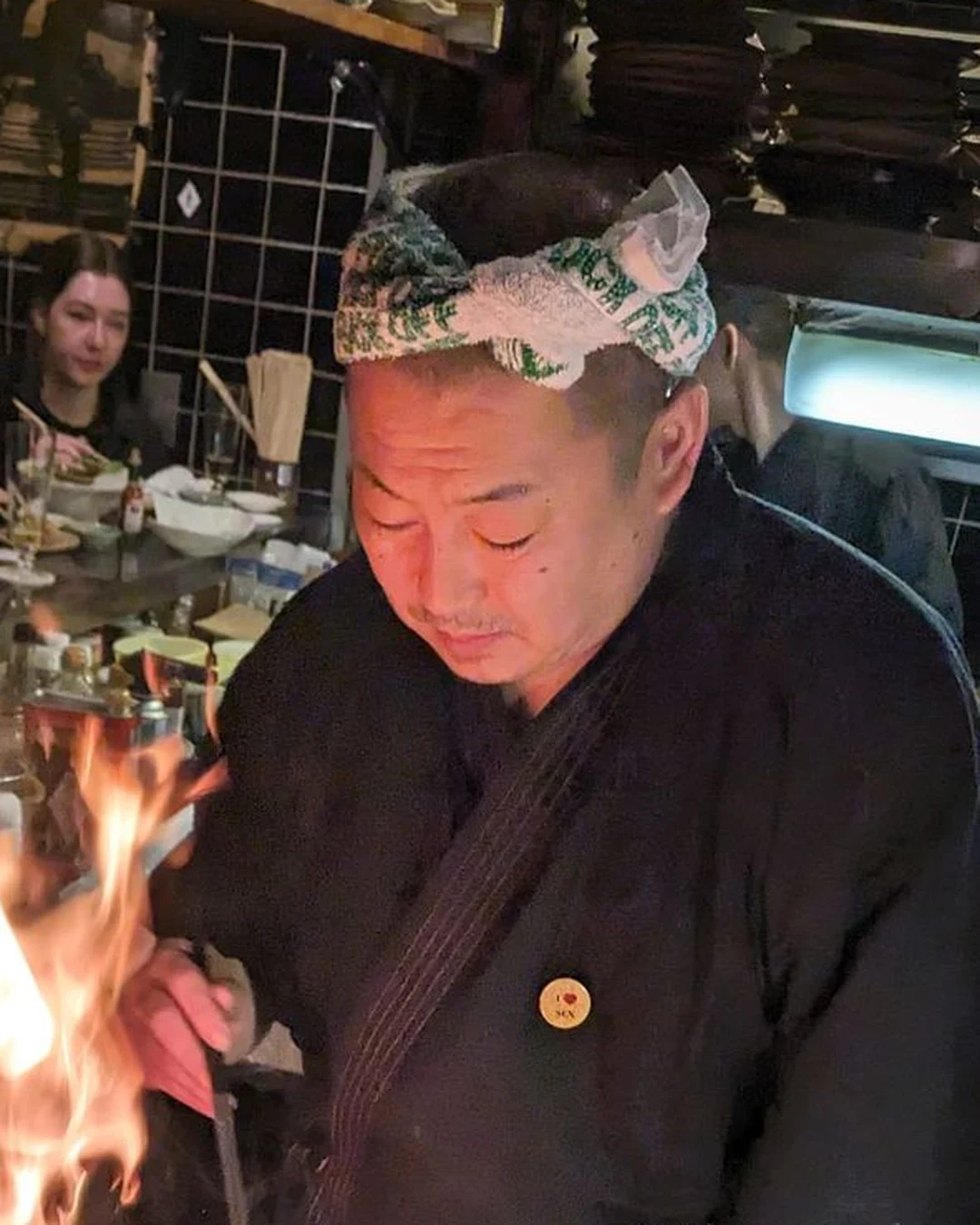
i. Biography
Since 2004, Narukiyo Yoshida has been head chef and owner of Narukiyo in Tokyo, Japan, a restaurant shaped less like a formal chef-driven room than a gathering of food, music, culture, alcohol, conversation, and subculture. Its formation reads like a house tradition built in public: seasonal cooking, late-night company, and a refusal to let the word chef become the center of the experience.
The Training The clearest school in Yoshida’s biography is the restaurant itself. At Narukiyo, the work has been sharpened through repetition since 2004: buying, cutting, grilling, frying, serving, listening, and letting the night decide its own tempo around alcohol and conversation. That approach gives the place its discipline. Yoshida has described the restaurant as entertainment, built around people gathering at night with alcohol rather than around the title of chef. The philosophy is not anti-craft; it assumes craft, then asks what kind of human charge the meal can carry. As he puts it, "Deliciousness is a given because we take money for it; what is being questioned has become the style of eating." The training, then, is visible in how little ceremony the cooking needs. Seasonal and direct, it favors Kyushu fish cut thick for sashimi, grilled shirako with a crisp outside and soft center, mountain-vegetable tempura, and thick asparagus with miso mayonnaise. Each dish belongs to a rhythm of immediacy: the ingredient arrives clearly, the pleasure is direct, and the table remains open to music, talk, drink, and the surrounding culture of the room.
The Lineage Yoshida’s lineage is not presented as a list of named masters or a formal apprenticeship chain. It runs through a place he has led for two decades, where influence is expressed through atmosphere as much as through technique. Food is one strand; music, culture, alcohol, conversation, and subculture are the others. That mixture is decisive since it changes the hierarchy of the night. Instead of making the chef the object of attention, the restaurant turns the room itself into the main event. Yoshida’s own language reaches for that charge: "Rather than wanting people to be interested in eating, even now, I want them to have romance." The extension of that sensibility is visible beyond the table as well. Yoshida is director of the Narukiro clothing project, a role that sits naturally beside a restaurant already defined by culture and subculture as much as by dinner service.
The Table The table at Narukiyo is built for closeness rather than distance. A plate of Kyushu fish arrives as thick-cut sashimi; shirako is grilled until its exterior crisps and the inside stays soft; mountain vegetables appear as tempura; asparagus is served thick with miso mayonnaise. These are specific acts of cooking, not abstractions. The room’s spirit is just as specific. Yoshida has said, "I wanted to make a place with tasteful music playing, with the same feeling as picking someone up at a club counter." That sentence carries the restaurant’s family resemblance: night, appetite, sound, flirtation, drink, and a sense that eating is only one way people find one another.
FAQ