Chef
Olivier Samin
- Discipline
- Chef
i. Biography
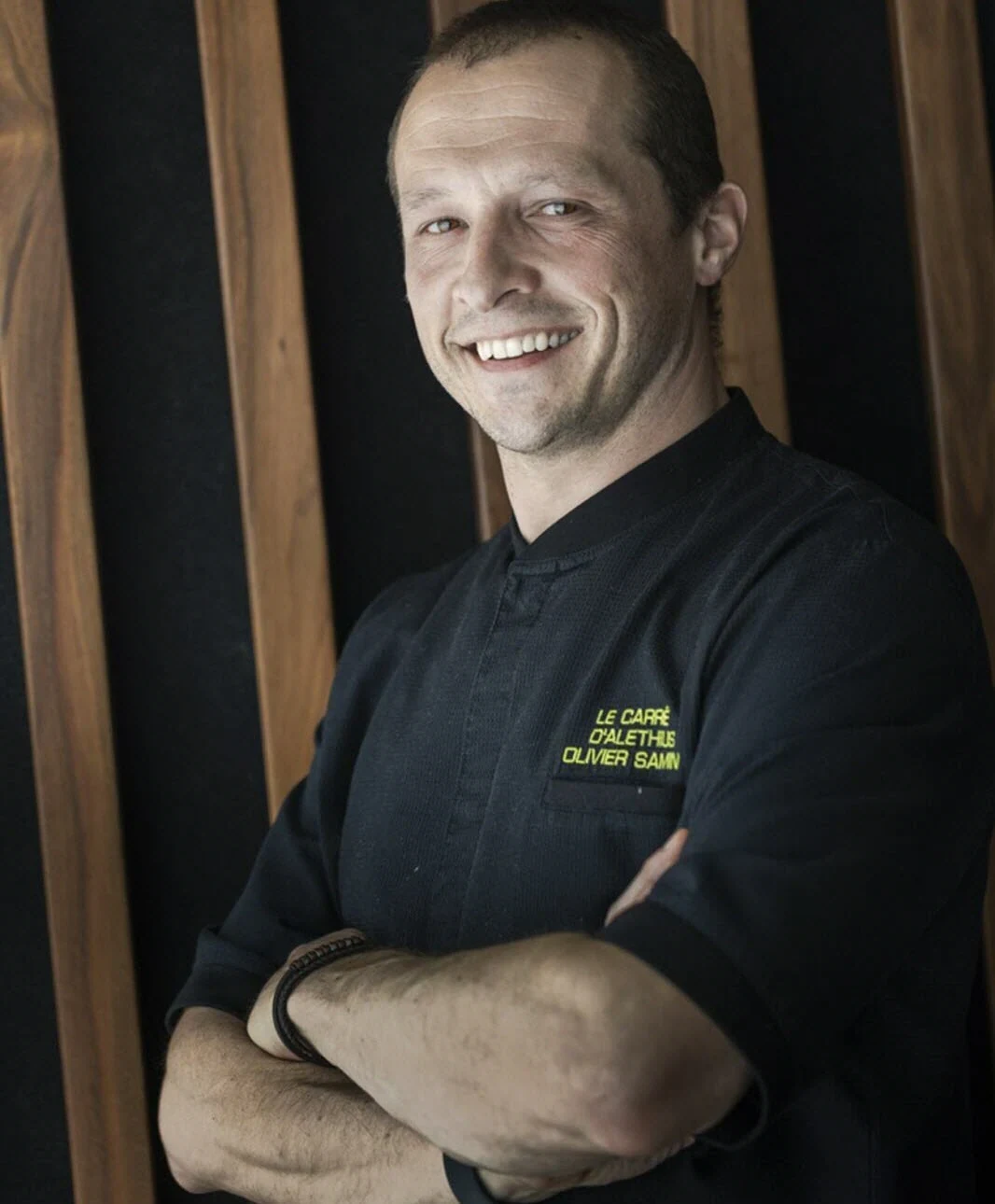
Olivier Samin’s cooking is shaped by a family table, with a grandfather in the role that often matters most in the trade: first reference point. His grandfather, described by Samin as a passionate cook and “a bit like my first mentor,” gave him an early sense that technique is often absorbed by watching, repeating, and being present around the work. That kind of kitchen education leaves a mark: not theory first, but instinct, memory, and hands on the task. Before the stove became the obvious place to work, the pull was toward labor that could be felt physically. Samin has said, “I didn't really have a clear idea of what I wanted to do, except that it had to be hands-on, physical.” That preference for direct, tangible work points to the kind of temperament the kitchen tends to reward: practical, immediate, and comfortable with the demands of the body as much as the mind.
At a Glance - His cooking is fresh cuisine that reflects the seasons and the market, the kind of approach that follows what is available and best rather than forcing the opposite. - He trained at the hotel school in Clermont-Ferrand, where he completed a four-year vocational baccalaureate at the hotel school in Clermont-Ferrand, specializing in catering and hospitality. That training gave structure to a path that had begun more as instinct than plan. - In the end, the kitchen became the clearest answer. As he puts it: “I preferred to be in the kitchen.”
Signature
The signatures associated with Samin map directly onto a market-led style: La Cerise, Le Foie Gras, Le Cochon, La Truite, and Carbonara ardéchoise. Read together, those names point to a cook working in a register of clarity and familiarity, where seasonal produce and recognizable ingredients are handled without clutter. The result is a menu language that stays grounded while still carrying a distinct point of view.
In Their Words “He was a bit like my first mentor.” In the trade, early mentorship often comes from proximity rather than a formal apprenticeship. In Samin’s case, that role belonged to his grandfather, and the remark captures a first education built on watching, absorbing, and learning what a cook does before anyone explains why. It is a plain account of lineage: the craft coming through the family, one presence at a time. “I preferred to be in the kitchen.” That line cuts through the uncertainty that comes before a career hardens into direction. For Samin, the kitchen was not an abstract calling but the place that best matched the way he wanted to work: active, physical, and concrete. The statement is brief, but it tells you enough about the instinct behind the choice.
FAQ What is Olivier Samin known for? Fresh cuisine that reflects the seasons and the market. Where did Olivier Samin train? Olivier Samin trained at the hotel school of Chamalières.


