Chef
Paul Pairet
- Discipline
- Chef
- Based in
- Shanghai, China
Made By record
Awards & recognition
3 total
1 winner


i. Biography
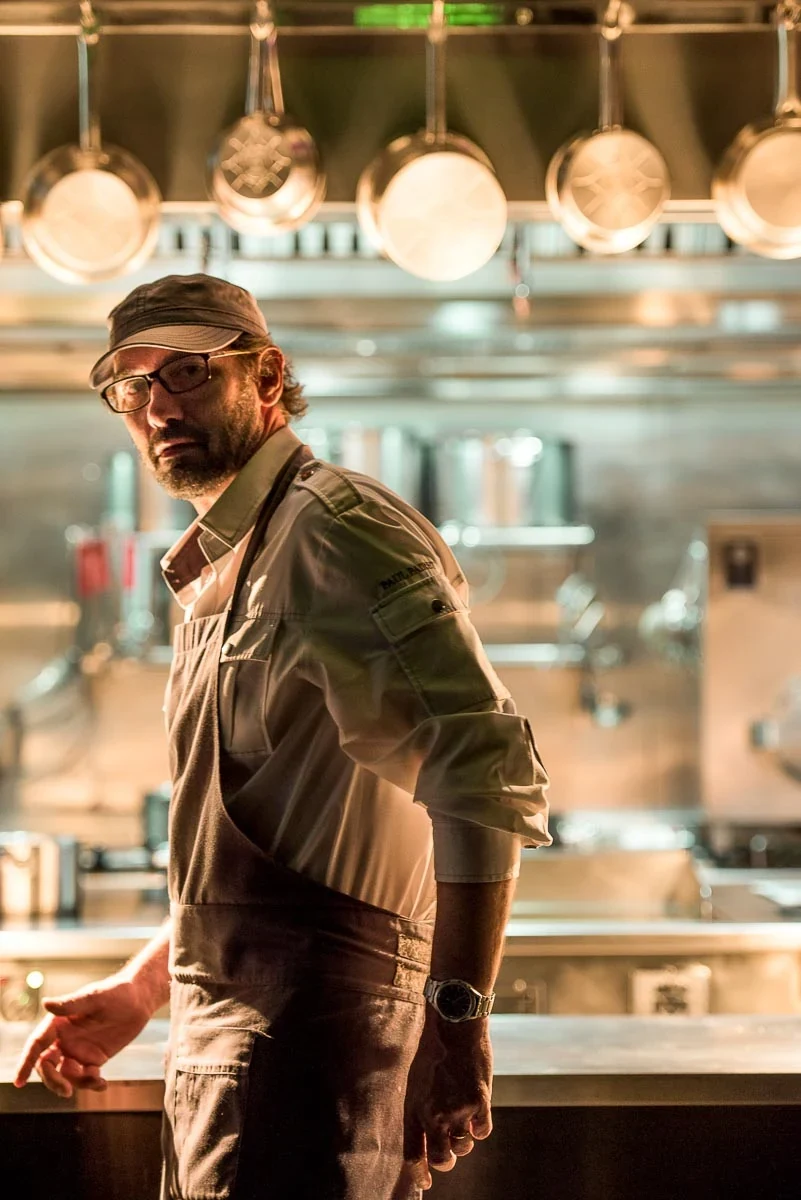
Paul Pairet is Chef de cuisine at Polux in Shanghai, a role that sits inside a career built on movement, repetition, and recalibration. The work is less about a fixed style than about translating what he has picked up across cities and kitchens into a coherent dining language. Shanghai has become the main coordinate for that language, but the method was formed well before he settled there.
The Path
Training at Hotel school in Toulouse gave Paul Pairet an early base in the practical grammar of hospitality. From there, the kitchen became the working field: chef at Café Mosaic in Paris (from 1998), then chef in Istanbul, Hong Kong, Sydney, Jakarta. Taken together, those posts show how a chef’s vocabulary can be built city by city, by adapting to different rooms, different service cultures, and different expectations without losing control of the line. Shanghai became a recurring site in that progression. Paul Pairet worked there as chef at Jade on 36 in Shanghai, China (2005–2008), then later as chef at The Chop Chop Club in Shanghai, China (2017–2018). The city matters here as a place where a chef can keep testing scale and format over time, returning with more precise ideas about what a room can hold and what a service can carry. Ultraviolet (2012–2025) Those projects point to a practice concerned not only with plates, but with the structure around them: sequence, pace, room, and the way expectation is managed before service reaches the table.
The Work Today
At Polux — Polux (Shanghai) — Paul Pairet works as Chef de cuisine in a setting where experience is treated as part of the craft, not as decoration. His own words make the priority clear: "Sound drives the whole experience, probably more than appearance." That is a useful line for understanding the work. It places atmosphere inside the remit of the kitchen, alongside flavor, timing, and execution. That approach makes the role more than supervisory. At Polux, Chef de cuisine means shaping how a meal is received, not only how it is cooked. The focus sits on the full dining sequence, where a room, a soundtrack, and a plate are all part of the same construction.
Career - Founder-partner and Head Chef — Mr & Mrs Bund, Shanghai, China (2009–present) Founder-partner and Head Chef — Ultraviolet, Shanghai, China (2012–2025) - Founder-partner and Head Chef — Polux, Shanghai, China (2019–present) - Chef — Café Mosaic, Paris (from 1998) - Chef — Istanbul, Hong Kong, Sydney, Jakarta - Chef — Jade on 36, Shanghai, China (2005–2008) - Chef — The Chop Chop Club, Shanghai, China (2017–2018) Education: Hotel school in Toulouse
Signature
Paul's signature dishes include Cucumber Lollipop, ULTRA-LUNE, grilled seabass vierge, and steak frites. The list shows range without losing control of register. Cucumber Lollipop and ULTRA-LUNE suggest a chef willing to push form and naming, while grilled seabass vierge and steak frites stay grounded in clearer, more familiar territory. The through line is not novelty for its own sake, but the ability to move between invention and classic order.
In Their Words The sentence points to a set of trade realities that shape a project like Ultraviolet: capital, build-out, technology, and timing. Paul Pairet frames the work as more than opening a restaurant; the challenge is the sequence of the meal itself, and how that sequence is held together from the first scenario through service. This is a note of closure without embellishment. The emphasis sits on control of the menu and control of the room, which is often what an operator is left with at the end: whether the intended format was actually realized, and whether the guests matched the room the team set out to make.
Acclaim
Paul's honors include La Légion d'Honneur (2025), The 50 most influential French people in the world (2019), Restaurateur of the Year (2018), Chefs' Choice Award (2016), and Lifetime Achievement Award (2013). Read together, these recognitions track a career that moved from ki