Winemaker
Philippe Gimel
- Discipline
- Winemaker
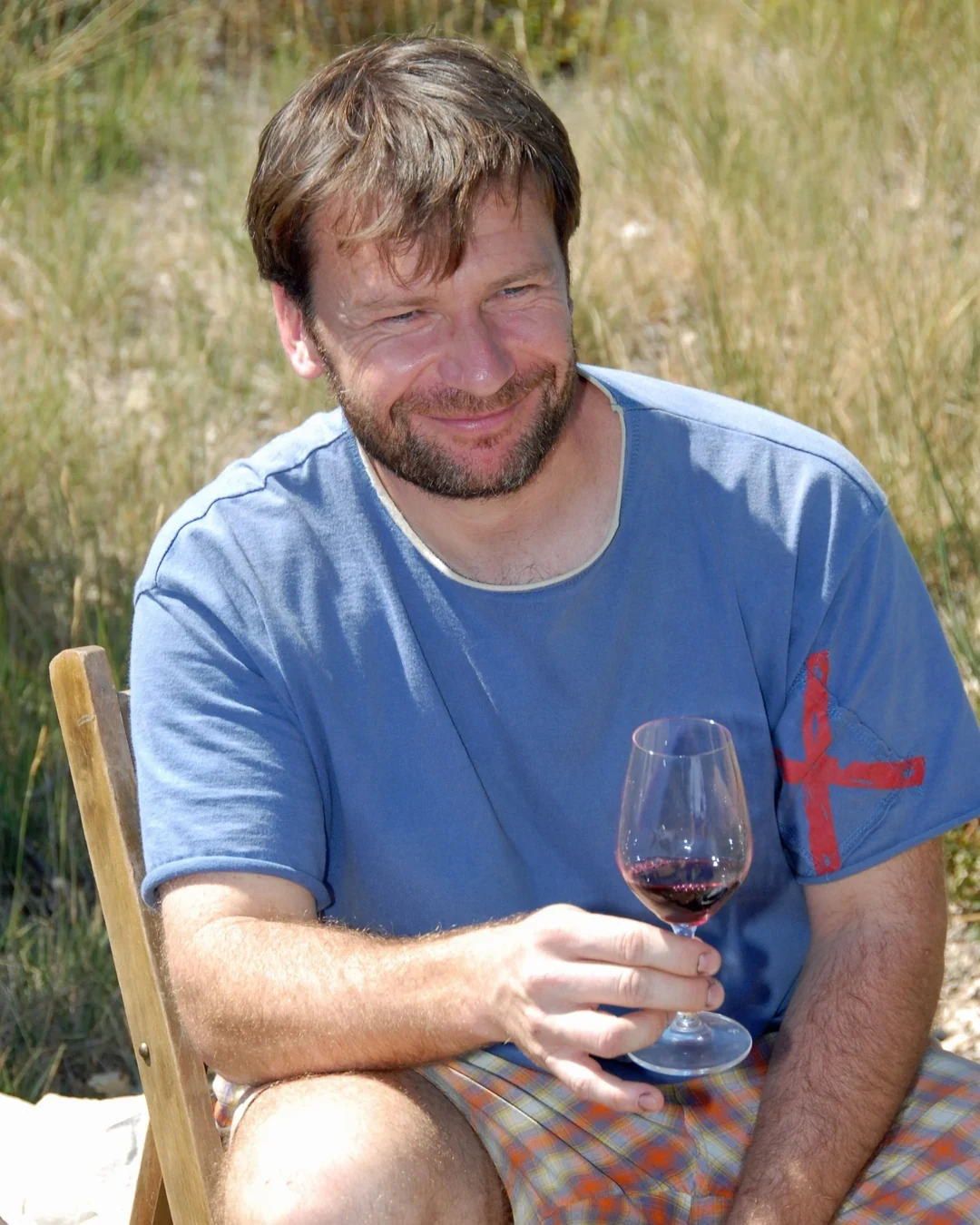
i. Biography
The Climb
The estate’s identity still reads from its start in 2003: Saint Jean du Barroux in Malaucène, France, began with Philippe Gimel working a small parcel without a cellar, and for a time living in the same space that also served as the winemaking facility. That arrangement shaped the method from the outset. Organic farming, biodynamic practices, manual harvesting, and close cellar work are not add-ons here; they are the operating tempo. What started as bare ground became a place where patience and precision are built into the daily work.
Today
Manual harvesting and meticulous cellar work still define the pace at Saint Jean du Barroux in Malaucène, France, where Philippe Gimel works as winemaker. The decisions are made to keep the finished wines clear and composed. Aging is extended in concrete tanks, while La Montagne sees partial aging in French oak and concrete. Across the range, the approach favors restraint, with the wines given time to settle into shape rather than being forced into it.
Career - Winemaker — Saint Jean du Barroux
Signature
La Source, L'Argile, La Pierre Noire, La Montagne, and Bois Long sit within the estate’s vocabulary of place and method. In Philippe Gimel’s hands, those names mark a line of wines built to be read closely, with the work in the vineyard and cellar left visible in the glass. The range reflects Saint Jean du Barroux’s exacting vineyard care and careful élevage.
Recognition
Saint Jean du Barroux, founded in 2003, is the key marker in Philippe Gimel’s career. The recognition lies in building a domaine from a single parcel and very little infrastructure, then keeping it coherent over time. It is a durable achievement, rooted in the original decision to work the land carefully and let the estate’s method carry forward.
FAQ What is Philippe Gimel's current role? As of 2026, Philippe Gimel is Winemaker. What is Philippe Gimel known for? He farms organically with biodynamic practices, manual harvesting, and meticulous cellar work, with extended aging in concrete tanks and, for La Montagne, partial aging in French oak and concrete.


