Winemaker
Pier Bovone
- Discipline
- Winemaker
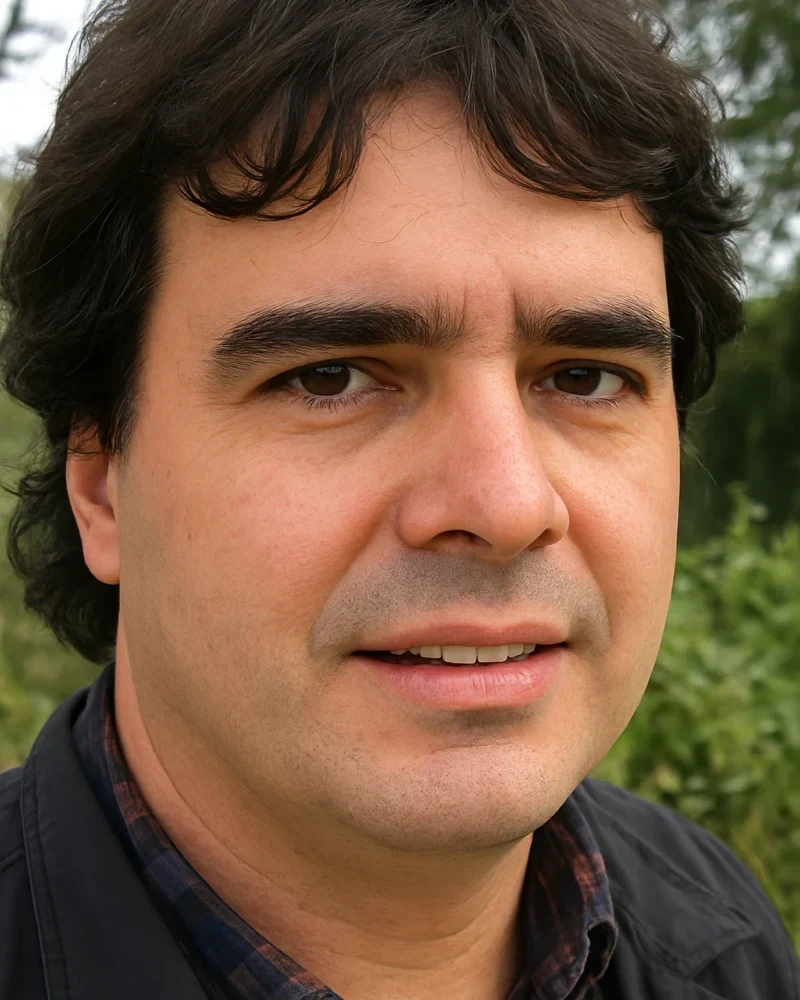
Portrait of Pier Bovone
i. Biography
Where It Started Family structure is the first discipline in Pier Bovone’s work: on Cornarea hill in Canale, one generation hands the next a living vineyard and a fixed place in Roero. “My company is in Canale and produces Roero wines, especially Roero Arneis and Roero, and we are the second generation,” he says, locating his own sales and public-relations role inside that inherited line. The red-wine frame comes from Bovone’s father, who established the house’s direction in Roero. “My father started producing the red wines of Roero, the Nebbiolo and the Barbera,” he says. That first decision still defines the cellar language. The family’s red wines continue through Nebbiolo d’Alba and Roero rosso, both tied to Cornarea in Canale, where continuity matters as much as change. Roero Arneis carries another kind of family work: the white grape was replanted on Cornarea hill after it had nearly disappeared. In that sense, the wine stands as more than a label in the range; it marks recovery made practical.
Who Shaped Them Lineage is the main influence here, not as sentiment but as operating method: father to sons, vineyard to cellar, hill to market. Bovone describes the business as second generation, and that frame tells you how the work is organized. Shared responsibility extends to his brother. “My brother and I take care of the commercial side,” he says, placing sales and public relations inside the family structure rather than outside it. The original vineyards also shape the work. “The vineyards are still the original ones; we have never replanted them,” Bovone says, linking the present wines to the same ground that has carried the house forward.
The Work Today
Sales and public relations are Pier Bovone’s outward-facing tools for Cornarea in Canale, Italy, where the house is identified above all with Roero wines, especially Roero Arneis and Roero. His job is to carry the family’s vineyard identity into the market without separating it from place. Roero Arneis remains central because of its history on the hill: the grape was nearly lost, then replanted by the family. Explaining the wine means explaining that recovery, which is part of the bottle’s meaning as much as its name. Roero Arneis Riserva adds a slower register to that white-wine line: it is aged 5 years, with 2 years in steel and 3 in bottle. The time spent before release gives the wine its pacing. Nebbiolo d’Alba and Roero rosso carry the red side of the inheritance. Together with Roero Arneis, they make Bovone’s commercial work a translation from original vineyards and cellar decisions into a public language.
Signature
Pier's signature wines include Roero Arneis, Roero Arneis Riserva, Nebbiolo d'Alba, and Roero rosso.
In Their Words “My company is in Canale and produces Roero wines, especially Roero Arneis and Roero, and we are the second generation.” “The vineyards are still the original ones; we have never replanted them.”
FAQ What tradition or house shaped Pier Bovone? Pier Bovone was shaped by the family house of Cornarea in Canale, Italy, and by its second-generation work with Roero wines.