Winemaker
Renaud Burnier
- Discipline
- Winemaker
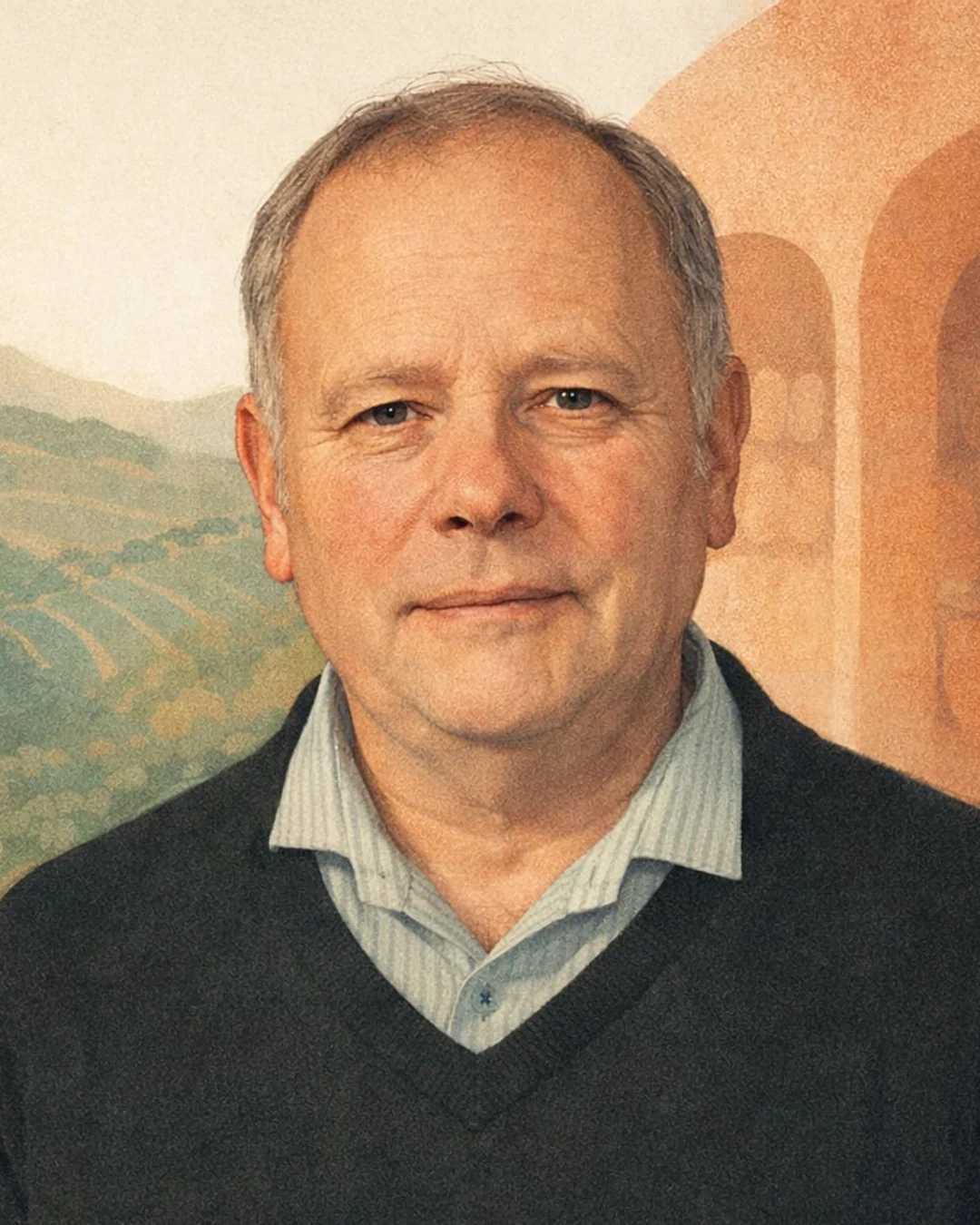
i. Biography
A 2018 gold medal in the best Russian indigenous wine category gives the clearest public measure of Renaud Burnier’s work as winemaker at Domaine Burnier in Sugiez.
In Their Words “The bureaucratic effort and costs were not very important to us. Even so, our Swiss and Russian friends thought we were crazy.” “It has a beautiful acidity which allows conservation for 20 years without problem.”
The Recognition In 2018, Domaine Burnier received a gold medal for best Russian indigenous wine, a direct accolade for wine made from the country’s native viticultural identity rather than from an international template. The award is the sharpest dated marker in Burnier’s public career, and it aligns with the work he has chosen to emphasize: farming methods, vineyard ecology, and grape varieties rooted in Russia. Krasnostop Zolotovskiy sits at the center of that recognition. Burnier’s own description of the wine is structural rather than decorative: “Its taste is very complex, with intense colours and a great tannic mass.” He also points to endurance in the bottle: “It has a beautiful acidity which allows conservation for 20 years without problem.”
The Work
Behind It At Domaine Burnier in Sugiez, Burnier works as winemaker, carrying a point of view formed between Swiss vineyard life and Russian grape culture. His craft is defined by organic farming, by vitiforesterie — the creation of an ecosystem of vineyards and trees — and by a commitment to Indigenous Russian grape varieties. Those choices are specific. Organic farming sets the terms for how the vineyard is worked. Vitiforesterie expands the idea of the vineyard beyond rows of vines, placing trees inside the agricultural system rather than outside it. Indigenous Russian varieties focus the cellar on grapes with their own local identity, and Krasnostop Zolotovskiy is the named specialty most closely associated with Burnier’s work. The language he uses for that grape is notably physical: colour, tannin, acidity, and time. There is no need to soften the subject. In his telling, the wine’s concentration and ageability are not side notes; they are the structure of the work.
The Road Burnier grew up in the family vineyards in Switzerland’s Three Lakes region, an origin that places viticulture at the beginning of his biography rather than as a later turn. The vineyard was not simply a workplace he entered as an adult; it was the landscape of his upbringing. In 2001, he founded Domaine Burnier in Natukhaevskaya near Novorossiysk. That step placed him in direct contact with Russian viticulture and the native grape varieties that would later define the award-winning part of his work. His memory of that decision is frank: “The bureaucratic effort and costs were not very important to us. Even so, our Swiss and Russian friends thought we were crazy.” The sentence says much about the scale of the move without overstating it: the obstacle was visible, the doubts were real, and the work went ahead. What followed was a career shaped by two geographies named in his story: Switzerland’s Three Lakes region, where he grew up among family vines, and Natukhaevskaya near Novorossiysk, where he founded a winery in 2001. From that path comes the present role in Sugiez and the focus on Krasnostop Zolotovskiy, organic methods, vineyard-tree ecosystems, and Russian indigenous wine.
FAQ What is Renaud Burnier's current role? As of 2026, Renaud Burnier is Winemaker. What is Renaud Burnier known for? Krasnostop Zolotovskiy. What recognition has Renaud Burnier received? Gold medal, 'best Russian indigenous wine' (2018).


