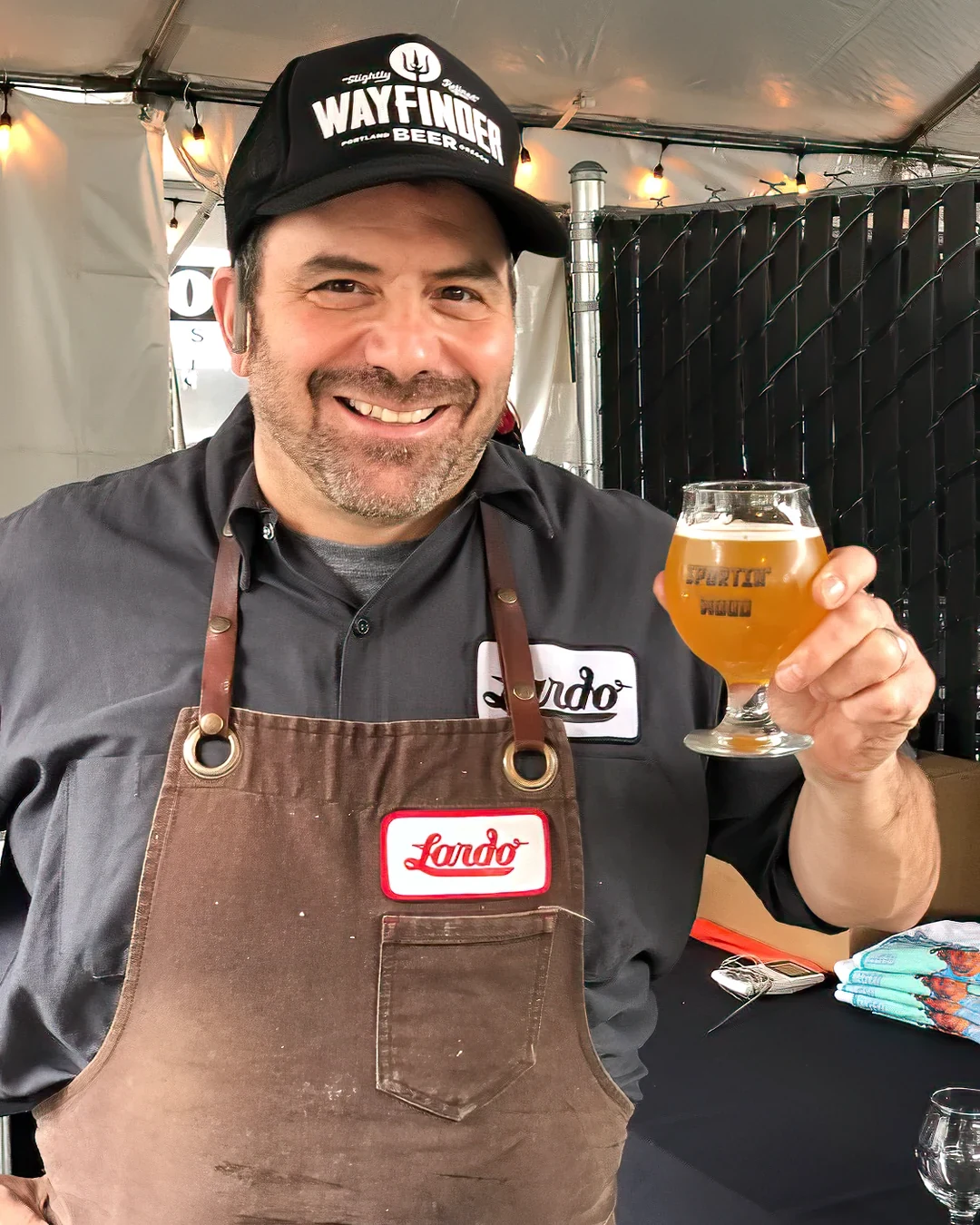
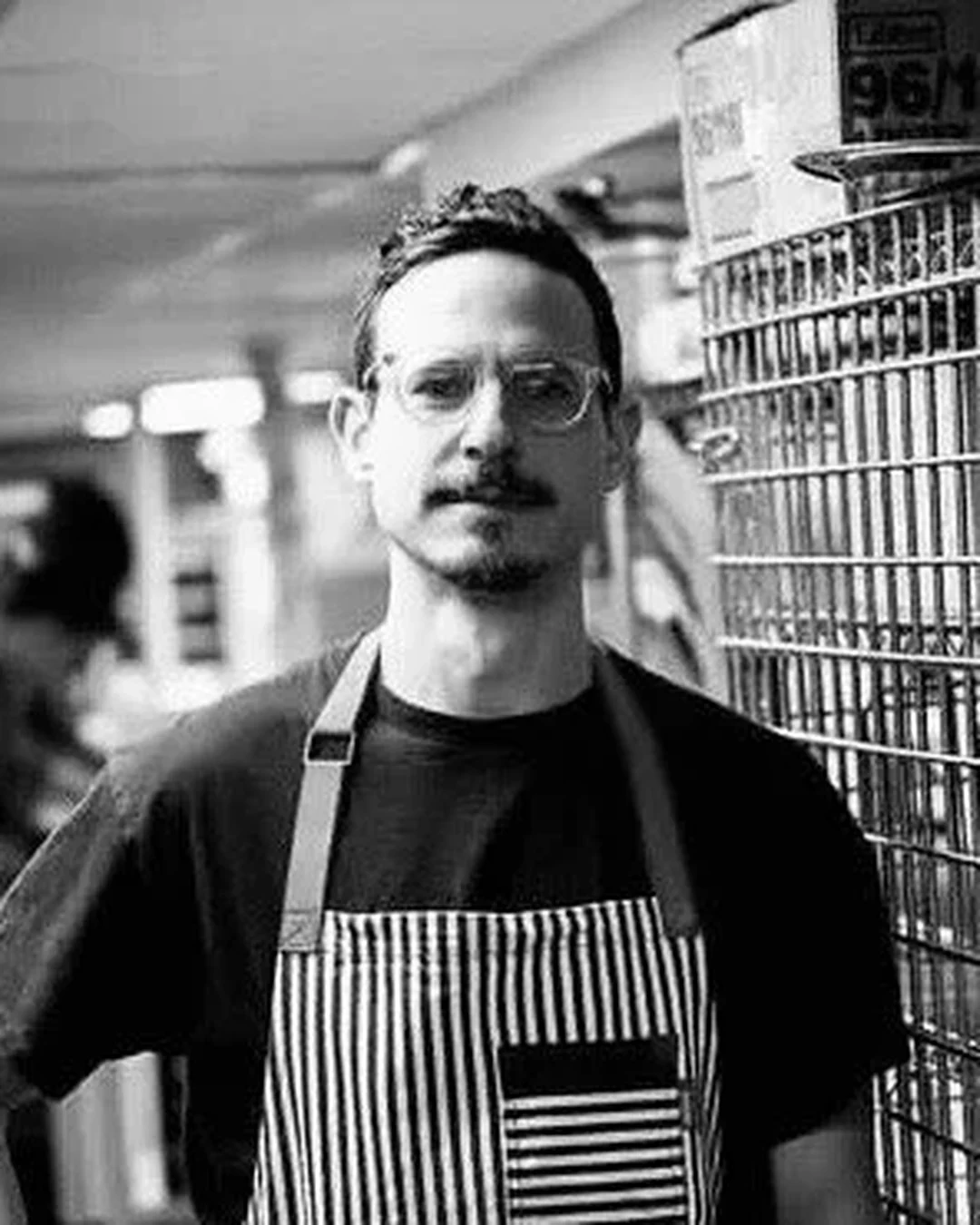
Portrait of Rick Gencarelli
i. Biography
Rick Gencarelli’s restaurants work in a direct register: appetite first, with technique in service of volume, texture, speed, and satisfaction. His cooking favors weight and clarity over ceremony, with formats built for immediate eating, including sandwiches, pasta bowls, and counter-service meals. The food is structured to hold up under repetition while still feeling generous and fully satisfying. Technical formation at The Culinary Institute of America gave Rick Gencarelli a kitchen base for hearty, sharply focused cooking and for the operator’s side of restaurant work. The later shift in his career is in the service model: less distance between production and guest, more emphasis on food that can move quickly without giving up intent. Across Lardo, Grassa, and Bluto’s, the common thread is food built with clear appetite logic. He is chef and one of the owners of Lardo, chef and one of the owners of Grassa, and one of the owners of Bluto’s. At Lardo, the sandwich work specializes in unapologetically rich builds, using old-world techniques, contemporary flourishes, and a gonzo approach in a sandwich shop focused on bovine and swine. The craft is in construction. Fat, crust, tenderness, seasoning, and layering are arranged so the bite stays coherent while still delivering abundance. Rich, over-the-top sandwiches are a known part of Rick Gencarelli’s work there. At the Las Vegas location, Dirty Fries are identified as a signature item and a favorite, and the Phởrench Dip is also cited among the favorites. The format stays recognizable, but the scale and flavor pressure are pushed harder without losing the comfort that makes the item work. At Grassa, fresh pasta is treated as counter-service food without dropping the craft premise. The restaurant is built around meticulously crafted bowls of fresh pasta served quickly in a casual counter-service format, presenting artisan comfort food in a no-frills way. Named dishes include Cacio e Pepe with truffle butter and Rigatoni with Sunday Pork Ragu. The strength of the model is its discipline: a precise product delivered in an everyday frame. Counter-service cooking, as practiced across these projects, depends on formats that read fast and eat fully. The same food logic extends to hospitality for endurance cyclists, where restoration comes through density, timing, and generosity. Rick Gencarelli describes the appeal of feeding a fully bonked, beyond-hungry endurance cyclist as one of the most gratifying parts of the work. The point is practical. Food has to bring the guest back, whether the setting is a sandwich counter, a pasta line, or a rider running on empty. Rick Gencarelli’s career also reflects a move from plated kitchens to a more direct format. He describes coming to Portland as opening the door to explore different ways to stay in the business and have it be a little different, and says he loves sandwiches. That shift is a change of frame, not a rejection of technique. Counter service, sandwiches, pasta, and high-satisfaction comfort food still require control. They simply put that control closer to the guest and under faster conditions. In his work, the craft is measured by how clearly the food delivers: fast, rich, direct, and built for appetite.
The Sunday letter
Read Made By's new profiles every Sunday.
Meet the chefs, winemakers and sommeliers behind the places we cover. See a sample below before you subscribe.
See a sample of the Sunday emailOne email a week. Unsubscribe from any issue.
The Sunday letter
Get the next Made By profile in your inbox.
We send one email every Sunday morning with the people we profiled that week.
See a sample of the Sunday emailOne email a week. Unsubscribe from any issue.