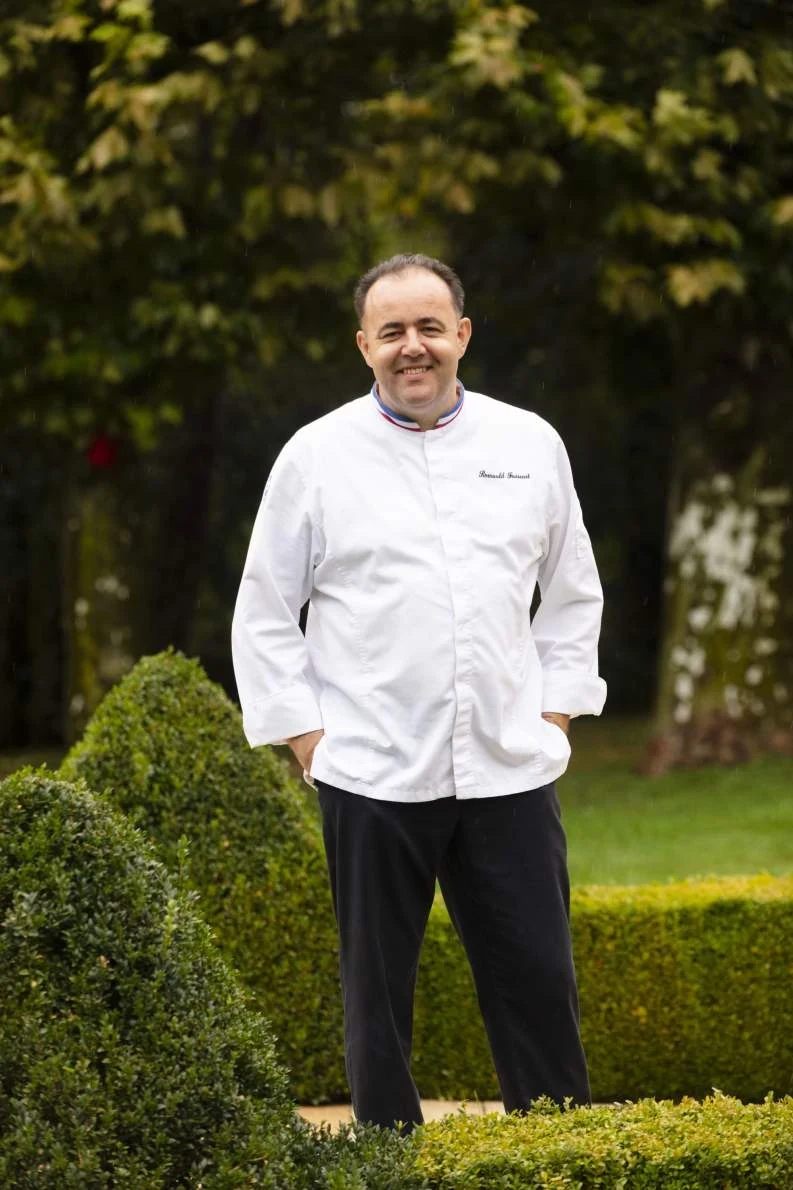
i. Biography
Chef at Da Vittorio Shanghai, Romuald Fassenet’s working line runs through formal training, brigade leadership, ownership, and menu development. The sequence begins at Lycée hôtelier de Poligny, moves through Le Bec Fin in Dole from 2002, and continues into Sampans and Shanghai. Read as a trade profile, the progression is plain: training first, then service, then responsibility, with each step adding scope rather than replacing the last.
The Climb
At Lycée hôtelier de Poligny, the basis was professional training: the kind of grounding that establishes timing, discipline, and standards before a cook accumulates a public record. That foundation shows up later in the way Romuald Fassenet’s roles are stacked by function rather than by flourish. The school matters here because it frames the rest of the work as technique built early and carried forward. From 2002, Le Bec Fin in Dole marked the move into a chef role. Dole anchors the start of the kitchen record in a specific place, and the title itself signals the demands of day-to-day leadership. It is the point at which training becomes practice, with the kitchen no longer a place of preparation but of execution and responsibility. The recognition followed in measured steps. In 2004, Fassenet received Meilleur Ouvrier de France (MOF), and in 2006 Michelin Guide one star followed. Those markers do not sit outside the work; they describe how the work was being read by peers and by the guide. In trade terms, they register consistency, control, and the ability to sustain standards over time. Ownership arrived in 2007 with Château Mont Joly in Sampans. That role changes the scale of the work: a chef-owner is not only cooking but also maintaining a house, a kitchen identity, and a longer operating rhythm. Since 2015, Fassenet has also been menu development chef at Pashmina hotel gourmet restaurant in Val Thorens, adding another layer of authorship focused on composition and sequence. By 2009, he was also coaching the Japanese Bocuse d'Or team. The role extends beyond his own kitchens and into direct transmission, where technique and standards are moved across borders and into another competitive setting. It is a practical form of influence: not a separate career, but an additional use of the same skill set.
Today
Chef at Da Vittorio Shanghai is the current public point of Romuald Fassenet’s career. The role sits within a line of practice that has been built step by step. The present picture is a working one, not a symbolic one. Da Vittorio Shanghai, Château Mont Joly in Sampans, and Pashmina hotel gourmet restaurant in Val Thorens together show a chef operating across service, stewardship, and development.
Career - chef-owner — Château Mont Joly, Sampans (2007–present) - menu development chef — Pashmina hotel gourmet restaurant, Val Thorens (2015–present) - chef — Da Vittorio Shanghai - chef — Le Bec Fin, Dole (from 2002) - coach — Japanese Bocuse d'Or team (from 2009) Education: Lycée hôtelier de Poligny
Recognition
Romuald Fassenet’s honors include Meilleur Ouvrier de France (MOF) (2004) and Michelin Guide one star (2006). Taken together, they mark the work as it moved from training into broader recognition, with the record carrying from Lycée hôtelier de Poligny to Le Bec Fin in Dole, then onward through Château Mont Joly in Sampans and Da Vittorio Shanghai.
FAQ Where did Romuald Fassenet train or study? Romuald Fassenet trained at Lycée hôtelier de Poligny. What recognition has Romuald Fassenet received? Michelin Guide one star (2006).