Chef
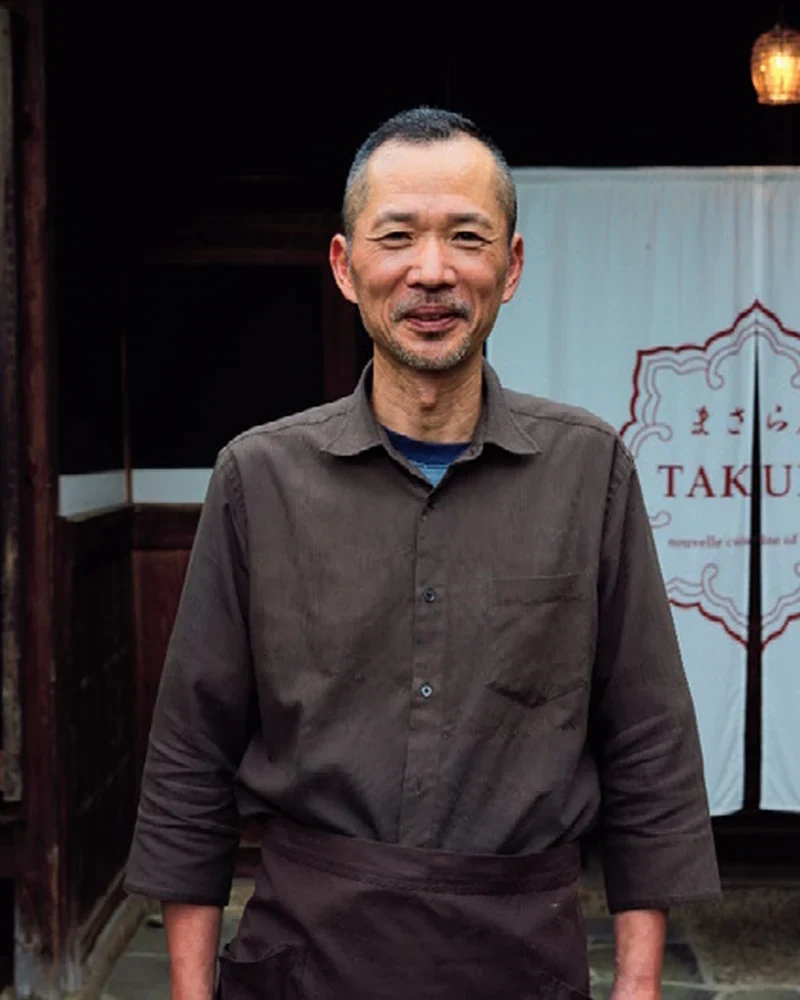
Takumi Sakanaka
- Discipline
- Chef
i. Biography
The frame is not fixed tradition but working tradition: a kitchen language that can be adjusted, sharpened, and carried into another register without losing its source. In Sakanaka’s hands, heritage reads less like reference than like method.
The Path
The early post as chef at Masala an TAKUMI in Nara, Japan set the terms of Takumi Sakanaka’s practice. It established a style that favors restraint over display and precision over volume, with the kind of authority that comes from balance and discipline. That foundation still shows in the way the work is built: flavors are allowed to carry themselves, and the cooking earns its weight through control. Today, Takumi Sakanaka is chef of Meraki and chef of Miceli, two roles that show the range of the practice across different rooms and different expectations of hospitality.
The Work Today
At Meraki, the cooking is considered, technique-led, and priced for repeat visits. The register is deliberate rather than theatrical. Precision and structure do the work here, and the point is not novelty but consistency: a room and a plate organized around clarity, with enough warmth to make exacting cooking feel usable rather than remote. At Miceli, the restaurant is located in the stone house where he grew up. That setting gives the work a specific gravity, because the dining room is not abstracted from place but held inside it. The cooking there is market-driven and changes daily according to what is available at market. The menu follows the day’s supply rather than a fixed script, and that dependence on fresh arrivals sets the pace of the kitchen. Attention, responsiveness, and judgment become the core skills. That daily rhythm gives the Selva kitchen its discipline. The menu follows supply, not a fixed script, and the work depends on close attention to ingredients as they arrive. In this way, the kitchen becomes less a place of repetition than of skilled adaptation, where the act of cooking is guided by what the market offers and by the chef’s ability to translate that into coherence on the plate.
Career - chef — Meraki, Nantes, France - chef — Miceli, Selva, Spain - chef — Masala an TAKUMI, Nara, Japan
Acclaim
Sakanaka’s name is tied to Masala an TAKUMI in Nara, Japan. The broader recognition comes from a precise three-part map of work: Indian dishes reframed through French and Japanese experience, technique-led cooking in Nantes, and daily market cooking in Selva. Taken together, these lines describe a practice built on refinement rather than noise, with influences made legible through control.
FAQ Where did Takumi Sakanaka work before? Takumi Sakanaka's earlier career included Masala an TAKUMI. What is Takumi Sakanaka known for? market-driven cooking that changes daily according to what is available at market.