Chef
Troy Jorge
- Discipline
- Chef
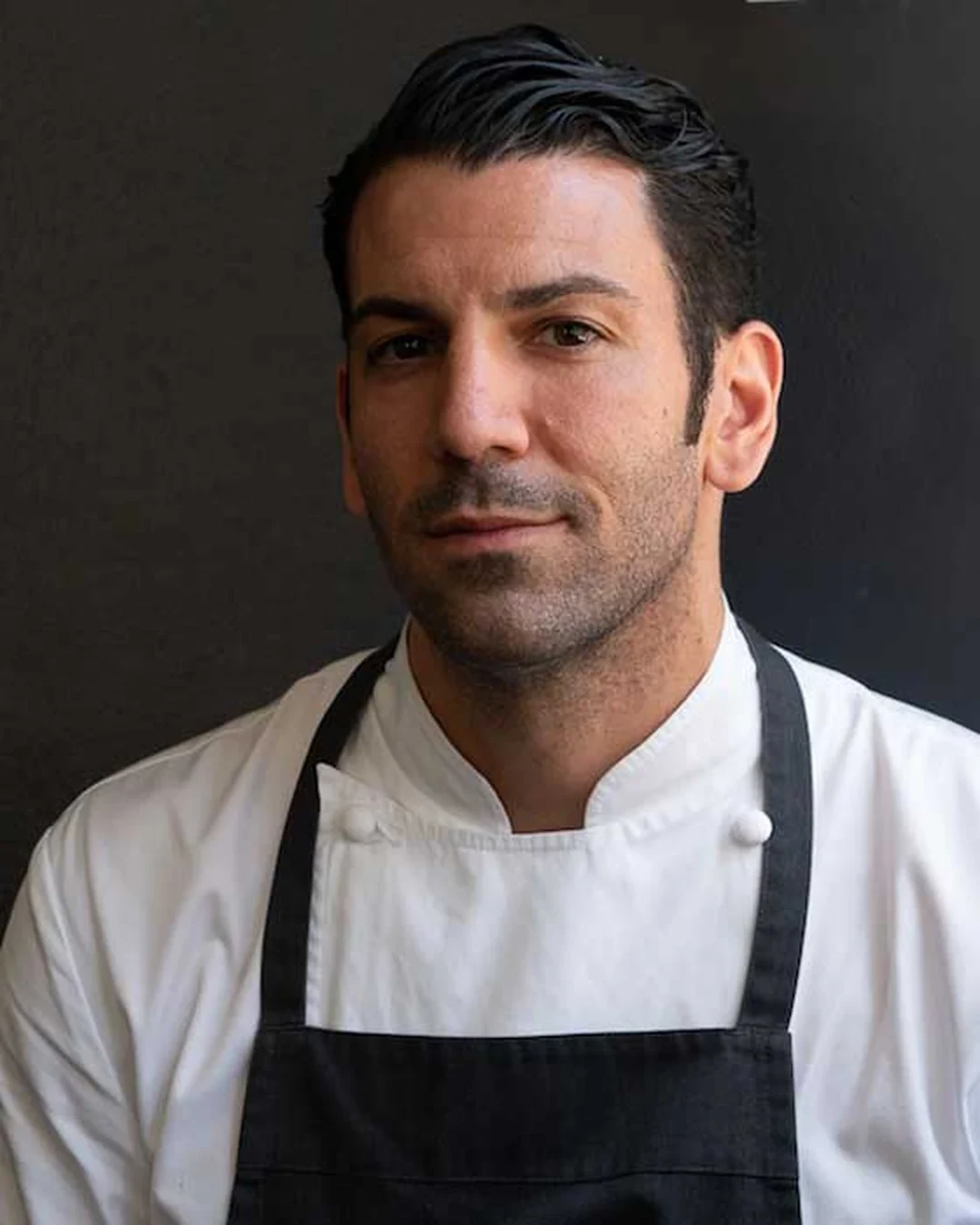
i. Biography
Training and Lineage
Luxury-hotel kitchens train repetition before expression: prep measured early, timing checked constantly, refinement built before service. Troy Jorge entered that register in a kitchen role at Ritz-Carlton Boston from 2001, then continued through kitchen roles at Clio in Boston, The Federalist in Boston, and Ostra in Boston. The through-line was Boston fine dining: disciplined rooms, different service pressures, and technique shaped under close standards. Kitchen leadership changes the work from station execution to the maintenance of a whole system. At Mooo in Boston, Jorge rose to chef de cuisine, a role that required standards to become daily practice through ordering, prep, pacing, correction, and service control. In 2015, the work moved to Chicago with a kitchen role at Grace in Chicago, followed by sous chef at Acadia in Chicago, and then work as consultant at restaurant and art gallery in West Loop, Chicago. The executive chef role at Temporis brings that background into a current fine-dining format. In Jorge’s hands, the record is not a loose biography but a sequence of kitchens where detail, restraint, and service pressure were part of the job.
The Work Today
Fine-dining tasting menus at Temporis are built in part around ingredients grown hydroponically in the restaurant. That growing system gives the kitchen a closer interval between cultivation and plating, and it makes certain ingredients part of the restaurant’s working structure rather than a detached purchase. Jorge’s cooking there uses that proximity as one component of the menu. Seasonal change is part of the operating method. The Temporis menu changes several times throughout the year to reflect shifting seasons and the restaurant’s own evolution, so the work is not fixed around a single set of dishes. The cooking has to remain adjustable: courses are composed for a particular point in the year, with color, texture, acidity, and richness arranged within a tasting-menu progression. Australian Wagyu has a defined role in the savory sequence at Temporis. As Jorge puts it, “Our Wagyu dish is usually the last savoury before we go onto sweet. It’s the most luxurious ingredient and the star of the show.” The placement matters technically: a rich final savory course has to carry weight without dulling the transition into dessert. The plated work named from Temporis shows a range of fine-dining construction. Poached White Asparagus has appeared with asparagus purée, rhubarb gel, asparagus and rhubarb curls, brioche crisps, cured egg yolk, and Plum Lucky oxalis. Venison has been served with fiddlehead purée, gooseberry purée, ground cherries, blackberry gastrique, cocoa, pickled ramps, juniper-sautéed fiddlehead and morel, puffed tendon, freeze-dried blackberries, tangerine, and citrus lace flowers. Both examples depend on multiple preparations around a central ingredient, using contrast and sequencing rather than size or excess. Visual composition is treated as part of the dish, not as an afterthought. “I want every dish to be as visually engaging as it is delicious.” At Temporis, Jorge’s plates are described through precise arrangements of garnish, purée, gel, crisp, cured element, and aromatic accent; the craft lies in making those elements read clearly before and during the eating.
Career - executive chef — Temporis, West Town, Chicago - kitchen role — Ritz-Carlton Boston (from 2001) - kitchen role — Clio, Boston - kitchen role — The Federalist, Boston - kitchen role — Ostra, Boston - chef de cuisine — Mooo, Boston - kitchen role — Grace, Chicago (from 2015) - sous chef — Acadia, Chicago - consultant — restaurant and art gallery, West Loop, Chicago
Signature
Signature dishes include Poached White Asparagus with asparagus purée and Venison with fiddlehead purée.
FAQ What is Troy Jorge's current role? Troy Jorge is chef at Temporis — New American. Where did Troy Jorge work before? Earlier in their career, Troy Jorge worked at Ritz-


