James Beard Award winner
Yamuna Devi
- Discipline
- James Beard Award winner
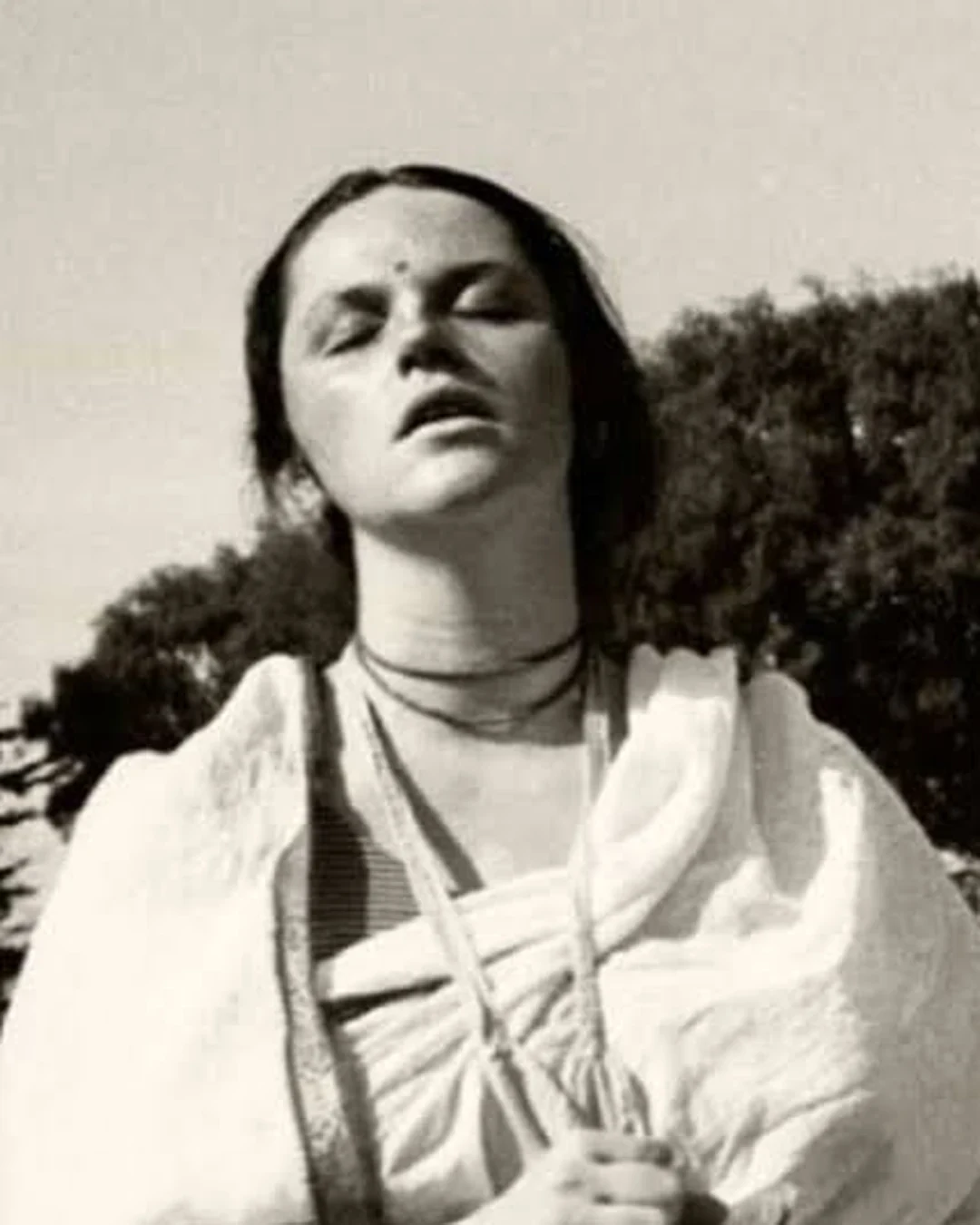
i. Biography
Coming Up
“I wanted to keep living the Indian-village way of life, centered on the land, the cow, and the temple, so along with kértana and cooking came tilling and fencing.” In Yamuna Devi’s account, cooking sat inside a working devotional ecology rather than apart from it. The kitchen was tied to land, cow, temple, song, fence work, and field work. The meal began before heat was applied: with tending, attention, and the daily labor that makes food possible. Cookbook authorship became the main vessel for the craft, and Yamuna Devi used it to carry Indian Vegetarian Cooking as practice, not just repertoire. The work was shaped by people, place, and memory; technique was present, but so was transmission. Knowledge moved through outstanding cooks, observation, repetition, tasting, serving, and return. The page became useful because it was backed by kitchens where learning happened by hand and eye. Newspaper and magazine writing extended that practice into other working kitchens. As a regular contributor to *The Washington Post*, Yamuna Devi translated a rooted vegetarian tradition for a broad readership without reducing it to novelty. As a regular contributor to *Vegetarian Times*, she wrote to readers already engaged with meatless cooking, where her specialty in vegetarian cooking met the publication’s core subject. Across both forms, ingredient attention and clear instruction carried the work.
Where They Are Now
The lineage she identified remains the clearest way to read the work: temple prasadam, village-centered living, and ingredients handled with care. In that frame, vegetarian cooking is not only a category of omission. It belongs to a devotional and practical system where cooking, offering, feeding, and nourishment are connected. The books and journalism gave readers an entry into Indian Vegetarian Cooking through practice-based authorship. Yamuna Devi’s pages carry the marks of learned kitchen knowledge: the patience asked by dals, the handling of spices, and the social purpose of food made to be shared. The line of transmission is plain: cooks informed the practice, the practice shaped the writing, and the writing carried temple prasadam and its surrounding discipline to readers beyond that setting.
Signature
Yamuna's signature dishes include Lord Krishna's Cuisine: The Art of Indian Vegetarian Cooking, Yamuna's Table, Pumpkin and Toor Dal Bisque, Aloo Dum (New Potatoes in Cashew Broth), and The Vegetarian Table: India. Read together, they show the range of the work: major cookbook authorship, table-based writing, and preparations that move from pumpkin and dal to New Potatoes in Cashew Broth. The signatures sit between instruction and use, with Indian Vegetarian Cooking treated as both a written discipline and a kitchen practice.
In Their Words “I wanted to keep living the Indian-village way of life, centered on the land, the cow, and the temple, so along with kértana and cooking came tilling and fencing.” “It was one of the purest ingredients I had ever used in a kitchen, full of subtle energy and outstanding flavor.”
Honors
Recognition from the International Association of Culinary Professionals/Seagram award for Lord Krishna's Cuisine: The Art of Indian Vegetarian Cooking (1987) placed Yamuna Devi’s cookbook work within the professional culinary publishing field.
FAQ What recognition has Yamuna Devi received? International Association of Culinary Professionals/Seagram award for Lord Krishna's Cuisine: The Art of Indian Vegetarian Cooking (1987). What is Yamuna Devi known for? Indian Vegetarian Cooking.


