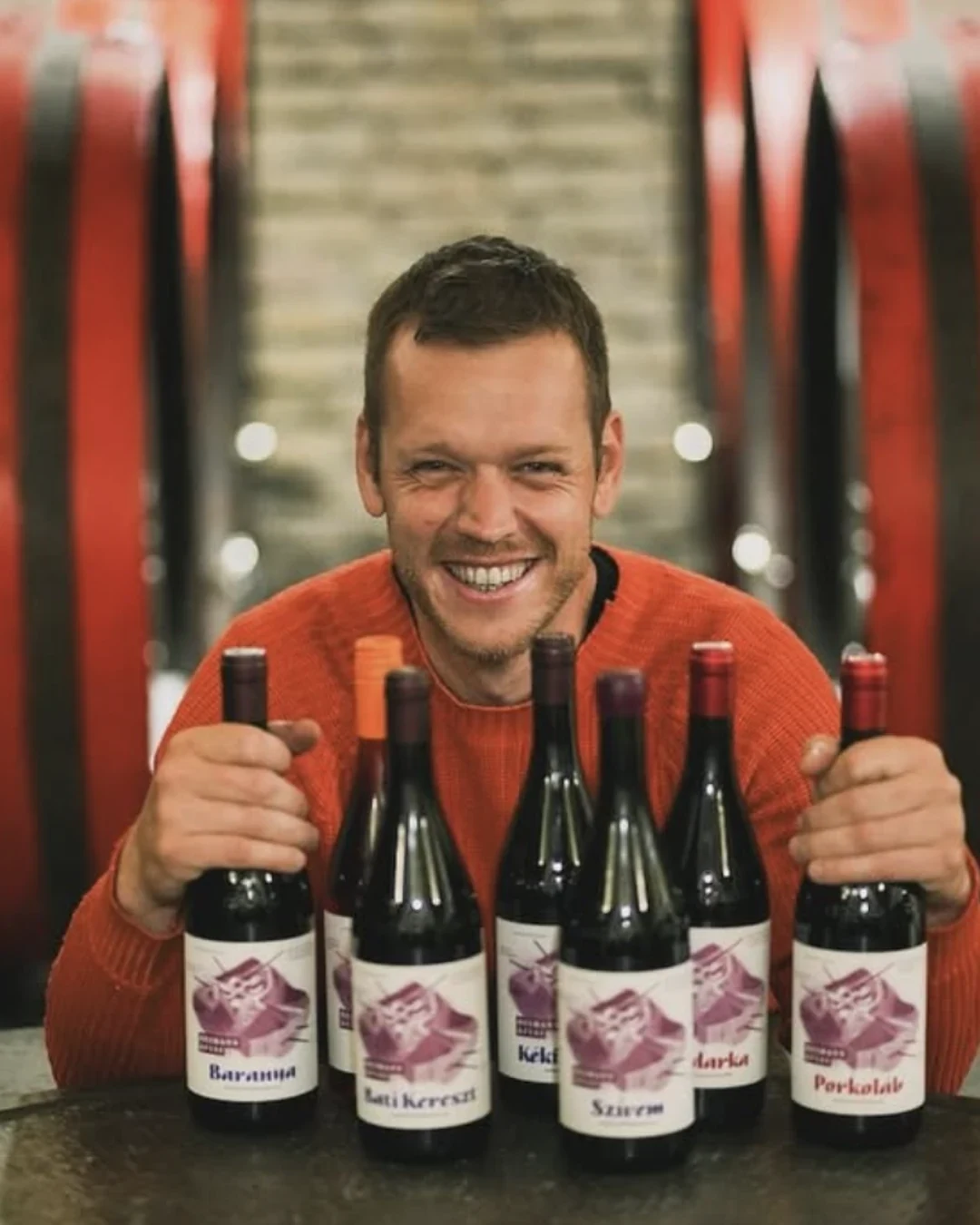
Portrait of Zoltán Heimann Jr
i. Biography
In Szekszárd, Hungary, the most legible work in Zoltán Heimann Jr’s cellar is the conversation between Kadarka and Kékfrankos at Heimann & Fiai, where he serves as winemaker. The language there is regional and procedural: small open-top vessels, whole bunches, and a steady effort to ask what Szekszárd wine should sound like when it is built from its own grapes. The method is measured rather than decorative, with each fermentation used as a way to read the place more clearly.
The Sunday letter
Read Made By's new profiles every Sunday.
Meet the chefs, winemakers and sommeliers behind the places we cover. See a sample below before you subscribe.
See a sample of the Sunday emailOne email a week. Unsubscribe from any issue.
The Climb
Geisenheim, Montpellier, and Udine form the training ground that shaped Zoltán Heimann Jr’s approach, giving him exposure to several of Europe’s established wine regions. That background widened the frame, but the work it seems to have sharpened is specificity: what the grape can carry, what the site can support, and what style still reads as honest rather than merely finished. Today, Zoltán is winemaker of Heimann & Fiai and winemaker of Heimann Winery.
Today
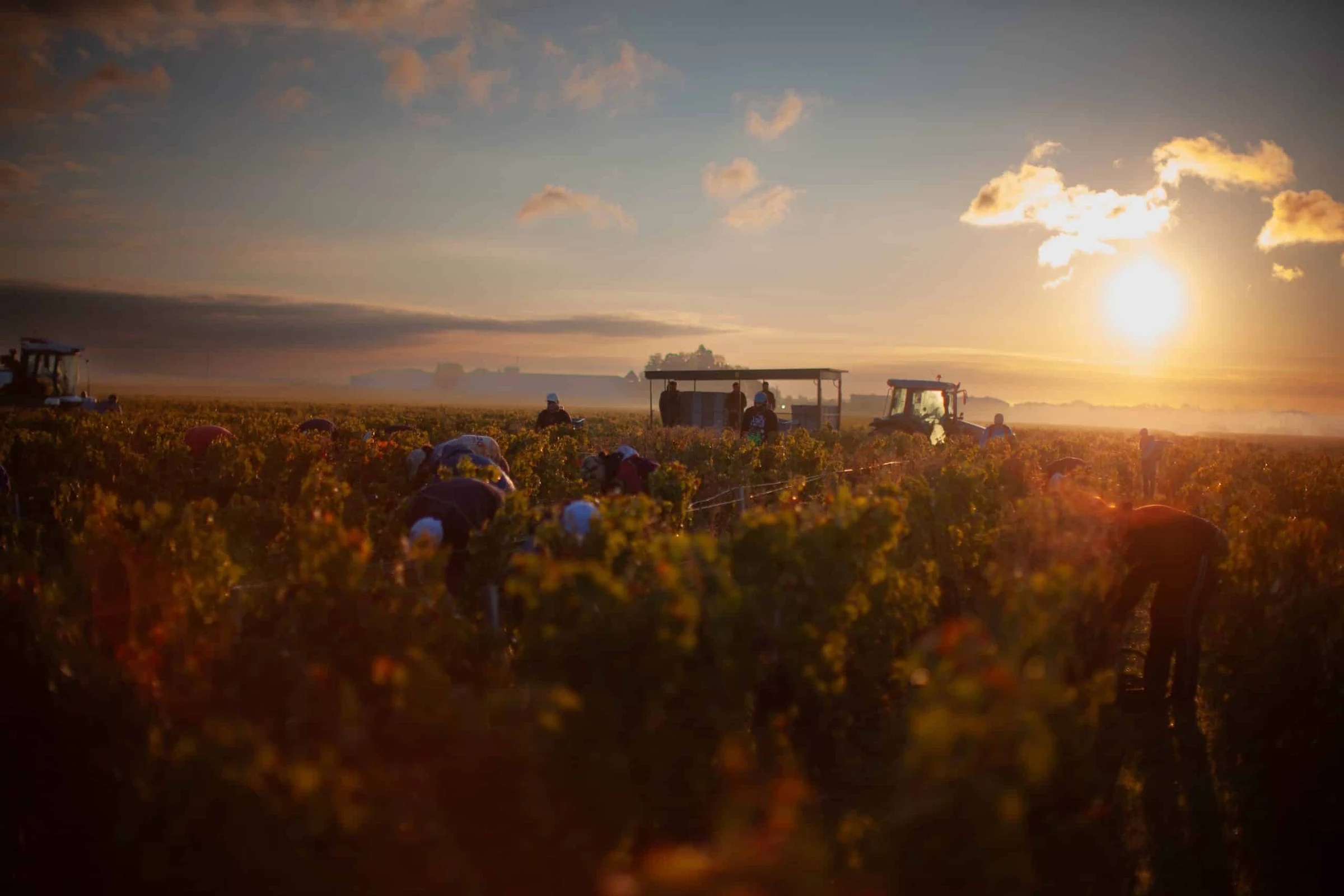
At Heimann & Fiai (Szekszárd, Hungary), the work centers on Kadarka and Kékfrankos as the defining grapes of the job. It is presented less as a fixed formula than as an active reading of region and variety, a way of keeping tradition in use rather than treating it as a sealed reference point. He also works as winemaker at Heimann Winery (Szekszárd, Hungary), which keeps the two current roles anchored in the same place. His approach to Kadarka is notably exacting: he treats it more like Pinot Noir, using around 20–30% whole bunches and semi-carbonic fermentation in small open-top vessels. The technique is technical on paper, but in practice it stays close to touch, timing, and restraint. Whole bunches keep structure in view; semi-carbonic fermentation changes where the focus falls before extraction becomes dominant; small open-top vessels keep the process near the hand and eye of the winemaker. Taken together, those choices point toward a style that is controlled, intimate, and attentive to fragility. The aim is not volume. It is clarity. His clearest statement is aimed at the region itself: "For me, Szekszárd wine... is not finished yet. That is my main statement." The work here is to keep testing what Szekszárd can become through Kadarka, Kékfrankos, and the daily discipline of fermentation.
In Their Words “This dialogue, in words and in the style of the wines, reinforces me in expressing Szekszárd in an authentic way, highlighting its strengths.”
Career - Winemaker — Heimann & Fiai, Szekszárd, Hungary - Winemaker — Heimann Winery, Szekszárd, Hungary Education: Geisenheim; Montpellier; Udine
Recognition
Recognition in this work is tied to Szekszárd and to a way of speaking about authenticity that stays connected to technique. He has described the work as a dialogue: "This dialogue, in words and in the style of the wines, reinforces me in expressing Szekszárd in an authentic way, highlighting its strengths." The value of that position is its restraint. The named materials are local grapes; the named methods are whole bunches, semi-carbonic fermentation, and small open-top vessels; the named place is Szekszárd. From those elements, Heimann’s work argues for a regional wine language still being worked out.
FAQ Where did Zoltán Heimann Jr train or study? Zoltán Heimann Jr trained at Geisenheim and Montpellier. What is Zoltán Heimann Jr known for? Kadarka and Kékfrankos.


The Sunday letter
Get the next Made By profile in your inbox.
We send one email every Sunday morning with the people we profiled that week.
See a sample of the Sunday emailOne email a week. Unsubscribe from any issue.