Tatsuo Ikeda draws the blade across the polishing stone at an angle he has held for thirty years, water pooling at the heel of the steel, the sound somewhere between a whisper and a scrape. Seki, a city in Gifu Prefecture, has been producing blades since the Kamakura period, and the craft has not moved far from that original posture: a person, a stone, a piece of steel, and time. Getting into the workshops is possible for most visitors, though the depth of access scales sharply with preparation. The public-facing entry point is the Seki City tourism portal, where guided forge visits and the annual Hamono Festival are listed. Walk-in access to working smithies is limited; the better routes require advance contact, a translator if your Japanese is thin, and patience with lead times that the smiths themselves set and rarely publish.
Why the Forges of Seki Are Not Simply Open to the Public
Seki's blade-making lineage runs to the fourteenth century, when smiths trained under the Soshu tradition migrated to the region for its charcoal, clay, and water. The city does not publish a comprehensive figure for its share of Japan's knife production; confirm current statistics directly with the Seki City tourism office.
What is documented is the licensing structure governing traditional Japanese swords: a smith may produce a limited number of blades per month under the Agency for Cultural Affairs, which means production is small, the calendar is full, and a visiting stranger represents an interruption to a schedule that cannot be recovered.
The working smithies are private workshops, not museums. The handful of smiths who accept visitors do so on their own terms, often through introductions from the Seki Hamono Association or through established knife dealers who have relationships with specific makers. Cold approaches, even polite ones, rarely succeed. The city's public infrastructure, including the Seki Traditional Swordsmith Museum, exists partly to absorb tourist demand so that the working smiths are not overwhelmed by it.
When Seki's Workshops and Events Actually Open
The Seki Hamono Festival, held annually on the second weekend of October, from 10:00am to 5:00pm,1 is the most reliable public access point. The festival opens the city's blade-making culture to visitors through demonstrations, market stalls, and, in some years, supervised forge visits. The festival runs across Honmachi-doori, the Seki Traditional Swordsmith Museum, Apise Seki, and other locations throughout town,1 and is a 5-minute walk from Seki Station on the Nagaragawa Railway.1 Specific 2026 dates should be confirmed with the Seki City tourism office before booking travel, as the annual schedule is published on the official portal closer to the event. The festival draws large crowds, and accommodation in Seki books out; Gifu City, roughly thirty minutes by train, is the practical base.
The Seki Traditional Swordsmith Museum operates from 9:00am to 4:30pm2 and does not require advance booking for general admission. Forging demonstrations are not held daily; visitors should use caution when planning a visit around them.2Demonstrations are usually held once a month and also during the Seki Hamono Festival.3 The museum's own calendar, available through the city tourism portal, lists demonstration dates, and these are the only demonstration windows that can be confirmed without direct contact with a private smith.
Private workshop visits are not governed by a published booking window. Each smith sets their own availability. The Seki Hamono Association can facilitate introductions, but lead times of several weeks to several months are common, and some smiths do not accept visitors at all. The association does not publish a standardized booking process; contact them directly, ideally in Japanese or through a bilingual intermediary.
The Channels That Actually Work
Three routes exist, ranked by reliability.
The Seki Traditional Swordsmith Museum. This is the floor-level entry point and the most accessible for independent travelers. Admission is 300 yen for adults, 200 yen for high school students, and 100 yen for middle and elementary school students, with group discounts available.2 The museum holds a collection of blades spanning several centuries, and its live forging demonstrations put a working smith at the anvil in front of visitors. Visitors can also try their hand at blade polishing.4 This is not a private workshop, but the craft is real and the proximity is closer than most visitors expect.
The Seki Hamono Festival. The October festival is the single best opportunity for visitors who want to see multiple makers in one visit, handle production knives directly from the smiths who made them, and occasionally watch live demonstrations in a less formal setting than the museum. Booking accommodation early, well before the festival date is announced, is the practical move; Seki's hotel stock is thin and fills from the announcement date.
Direct introduction through a knife dealer or the Hamono Association. For visitors who want bench-side access to a working smith, this is the only route that consistently delivers. Established dealers in Tokyo and Osaka, particularly those who stock Seki-made knives and have long supplier relationships, can sometimes facilitate introductions. The Seki Hamono Association5 is the formal channel. Neither publishes a fee for this service; neither guarantees access. Budget several months of lead time and be prepared for a no.
Cost Breakdown Across the Access Timeline
Museum admission at the Seki Traditional Swordsmith Museum is 300 yen for adults, 200 yen for high school students, and 100 yen for middle and elementary school students.2 Festival entry to the Hamono Festival market area has historically been free, though specific stalls and demonstrations may carry small charges; confirm with the city office for 2026. Cutler Sansyu / Seki Hamono Museum, an alternative hands-on venue, offers admission free of charge, with activities available for an extra cost and reservation required.6 Private workshop visits, where they occur, are typically not charged as a formal admission fee, though it is standard practice to purchase a blade or tool from the smith as a gesture of respect for their time. Knives from working Seki smiths range from a few thousand yen for production pieces to several hundred thousand yen for hand-forged custom work; the spread is wide and the pricing is set by each maker individually. Travel from Tokyo to Seki requires a shinkansen to Nagoya and a local connection to Gifu or Seki; the cost varies by seat class and booking window.
Inside a Seki Forge: What the Visit Actually Looks Like
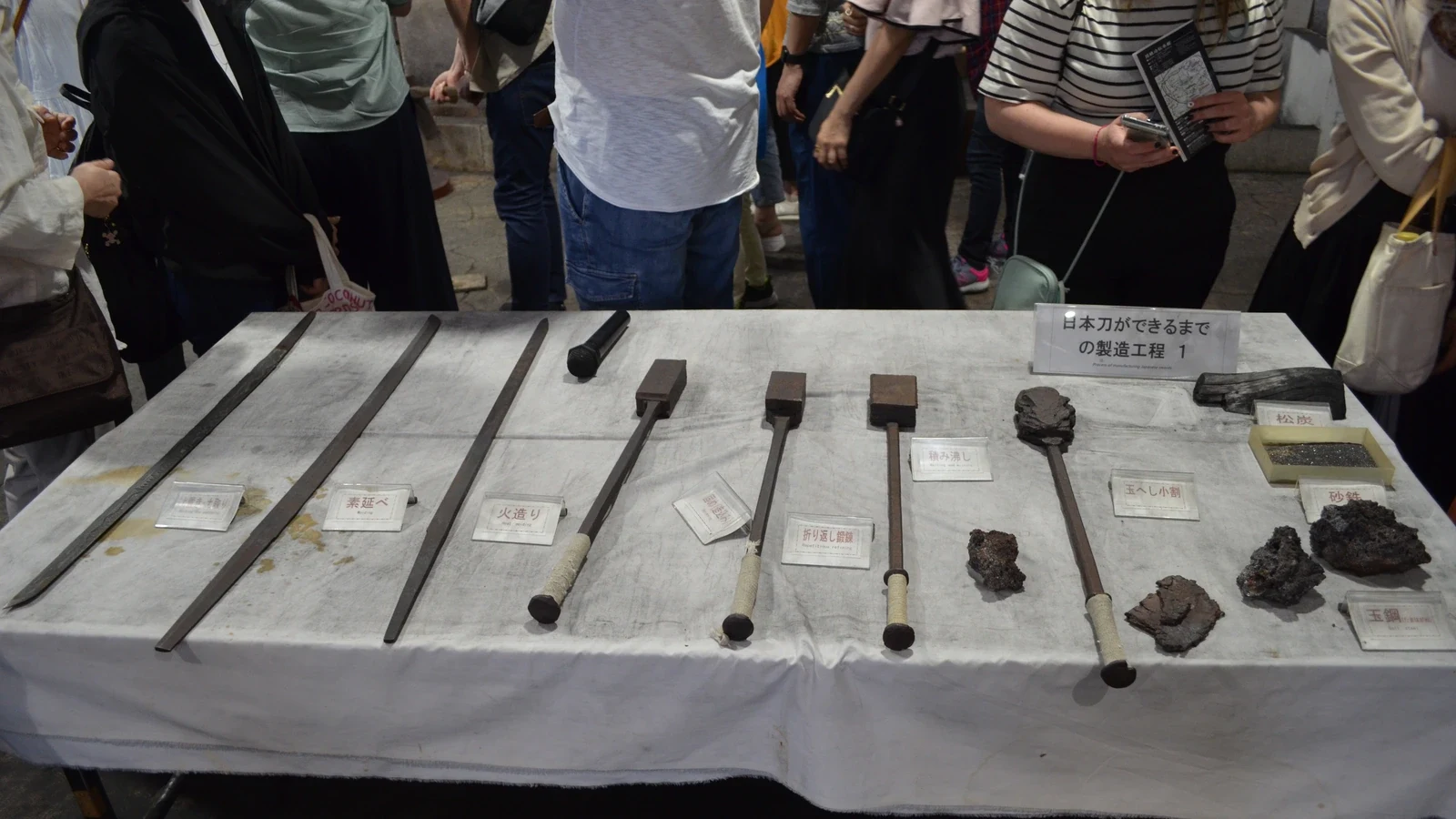
At the Seki Traditional Swordsmith Museum, forging demonstrations are held periodically, usually once a month, and also on January 2 (the Uchizome-shiki first-forging ceremony) and during two days in the festival period.7 The demonstration begins with the smith heating tamahagane, the traditional steel smelted from iron sand, in a charcoal forge. The temperature is read by color: a pale yellow-white means the steel is ready to fold. The smith, working with a striker or alone depending on the piece, hammers the billet on a low anvil, the rhythm irregular in a way that takes a moment to understand as intentional. Each blow is placed, not repeated. The folding process, which distributes carbon through the steel and removes slag, can involve dozens of folds over several sessions; what visitors see in a single demonstration is one stage of a process that takes days or weeks.
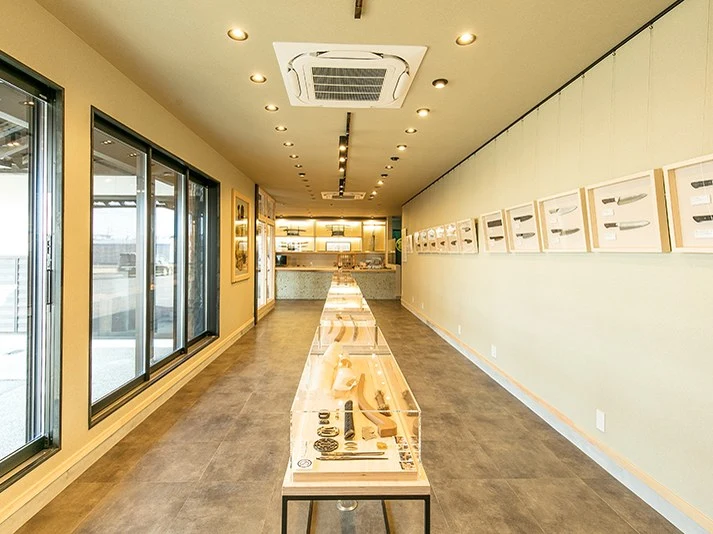
The museum's collection contextualizes what the demonstration shows. Blades from the Muromachi period sit alongside contemporary work, and the continuity of form across six centuries is the argument the collection makes without stating it. The hamon, the temper line that runs along the edge of a traditionally made blade, varies by smith and by school; reading it is a skill that takes years, but the museum's labeling gives visitors enough to begin. On January 2nd, visitors can also watch the Uchizome-shiki, the first forging of the year ceremony, at the museum.2
A private workshop visit, where one is arranged, is a different register entirely. The workshop is small, often a single room with a forge, an anvil, and a grinding station. The smith works; the visitor watches. Conversation, if it happens, tends to be brief and specific: the steel, the angle, the stone. Smiths who have accepted visitors over many years have developed a tolerance for the presence of a stranger, but the work does not pause for explanation. What you take from the visit depends on what you already know. Arriving with some understanding of the craft, its vocabulary, its stages, is not a courtesy; it is the price of the access.
Strategy: How to Improve Your Odds
Learn the vocabulary before you arrive. Tamahagane, hamon, hizukuri, tsuchioki: these are not decorative terms. A visitor who can name what they are watching signals to the smith that the visit is worth their time. Smiths read the difference between a curious tourist and a practitioner-curious adult within the first two minutes of a workshop visit, and they respond accordingly.
Use a dealer as your introduction. The knife shops of Tokyo's Kappabashi district and Osaka's Dotonbori area stock Seki-made blades and maintain supplier relationships. A purchase, a conversation, and a direct ask about introductions is a slower route than a cold email to the Hamono Association, but it tends to produce warmer results. The dealer has skin in the relationship; they will not make an introduction that reflects badly on them.
Time the festival visit for the morning of the first day. The Hamono Festival draws large crowds by midday, and the smiths who set up stalls are more available for conversation in the first hour. The pieces worth buying, particularly the limited production knives from smaller makers, move early.
Mistakes that cost people the access. Arriving without Japanese language support and expecting the smith to accommodate you is the most common failure; it is not a language school, and the burden of communication falls on the visitor. Requesting a visit with less than a month's notice rarely succeeds for private workshops. Treating the visit as a photo opportunity rather than a craft observation will end it quickly. Booking Seki accommodation only after festival dates are confirmed means sleeping in Nagoya and losing two hours of travel each day; the festival office can be reached at 0575-22-31311 to check on scheduling before committing to travel.
Alternatives That Scratch the Same Itch
Seki vs. Comparable Blade-Making Access Points in Japan
| Destination | Access Difficulty | Public Entry Point | Private Workshop Access | Best Season |
|---|---|---|---|---|
| Seki, Gifu | Moderate (museum easy; private hard) | Seki Traditional Swordsmith Museum, 9:00am, 4:30pm2 | Via Hamono Association or dealer intro | October (second weekend festival)1 |
| Sakai, Osaka | Moderate | Sakai Traditional Crafts Museum | Some smiths accept visits; contact direct | Year-round |
| Tsubame-Sanjo, Niigata | Moderate | Tsubame-Sanjo Factory Festival (October) | Factory open days during festival | October (festival) |
| Kyoto (sword polishers) | Hard | N/A (no public museum equivalent) | Invitation only; no public route | N/A |
Sakai, Osaka. Sakai's knife-making tradition is as old as Seki's and well regarded among professional cooks. The Sakai Traditional Crafts Museum offers a comparable public entry point, and some smiths in the Sakai district accept visitors through similar introduction channels. The city is easier to reach from Osaka and requires no overnight stay for most visitors based in the Kansai region.
Tsubame-Sanjo, Niigata. The Tsubame-Sanjo area produces metalwork across a wider range of objects, from knives to hardware, and its annual factory festival in October opens workshops that are otherwise closed. The festival is less focused on blade-making specifically but gives broader access to Japanese craft metalwork than either Seki or Sakai.
Kappabashi, Tokyo. For visitors who cannot reach Gifu, the knife district of Kappabashi in Asakusa concentrates more Seki-made blades per square meter than anywhere outside the city itself. The dealers there can explain the lineage of specific makers, and some stock knives from smiths who do not sell directly to the public. It is not a forge visit, but it is a serious education in the output of the craft.
Who Should Make the Trip and When
Seki rewards visitors who arrive with a prior relationship to the craft: cooks who have used Japanese knives seriously, collectors who can read a hamon, students of metalwork or material culture. The museum visit is worth the trip for anyone with a real interest in how steel becomes a blade; the private workshop access is worth pursuing only if you have the language support, the lead time, and the patience to accept that it may not happen.
The October festival is the occasion for most visitors. It concentrates access, reduces the friction of cold introductions, and puts the city's makers in a context where they expect to be seen. Traveling to Seki outside the festival period, without a pre-arranged introduction, means relying on the museum alone, which is worthwhile but incomplete.
Visitors who want a passive cultural experience, a museum tour followed by a purchase, will find the museum satisfying and the knife market at the festival more than sufficient. Visitors who want to stand at the bench and watch a smith work need to do the preparation before they board the train.
The Verdict on Seki
Seki is not closed to visitors, but it does not open itself either. The museum is the honest entry point: a working demonstration, a serious collection, no advance booking required. The museum is closed on Tuesdays and days following national holidays,2 so plan accordingly. The festival in October is the best single day a visitor can spend in the city, and it is worth building a trip around. Private workshop access is real but earned; it requires introduction, lead time, and enough craft knowledge to make the visit worth the smith's time. The mistake most visitors make is treating the private access as a tourism product rather than a professional courtesy, and the smiths have seen that mistake often enough to be cautious about new requests.
For most visitors, the combination of the museum and the festival covers the ground. For the serious practitioner who wants to stand at the bench, the route runs through a dealer relationship or the Hamono Association, and it takes months, not days, to arrange.
madeby follows the people, and in Seki the people are at the forge before dawn, working steel that will outlast the visit by generations. The access problem here is not a booking system; it is a question of whether you have done enough of the work to earn the proximity, and that question is worth sitting with before you book the train.
Frequently Asked Questions
Can you walk into a Seki swordsmith's workshop without an appointment?In almost all cases, no. Working smithies in Seki are private workshops, not visitor attractions. The Seki Traditional Swordsmith Museum is the walk-in option; it holds live demonstrations and a permanent collection and does not require advance booking for general admission. Private workshop visits require an introduction, typically through the Seki Hamono Association or an established knife dealer, and several weeks to several months of lead time.
When does the Seki Hamono Festival take place in 2026, and how do you get tickets?The festival is held annually on the second weekend of October. Specific 2026 dates should be confirmed with the Seki City tourism office before booking travel, as the schedule is published on the official portal closer to the event. Festival market access has historically been free, though some demonstrations and events may carry charges; confirm with the city office for 2026 specifics.
Does the Seki Traditional Swordsmith Museum hold forging demonstrations every day?No. Forging demonstrations are held on specific days, not daily; usually once a month and during the festival period. The museum publishes its demonstration calendar through the Seki City tourism portal. Checking the calendar before travel and planning your visit around a demonstration day is strongly recommended; the collection alone is worth the visit, but the live forging is the reason most craft-curious visitors make the trip.
How much does admission to the Seki Traditional Swordsmith Museum cost?Admission is 300 yen for adults, 200 yen for high school students, and 100 yen for middle and elementary school students, with group discounts available. The museum is located at 9-1 Minamikasuga-cho, Seki City, Gifu, and is a 3-minute walk from Nagaragawa Railway Sekiterasu-mae Station (formerly Hamono Kaikan-mae Station). The telephone number is 0575-23-3825.
Is Japanese language ability necessary to visit Seki's blade-making workshops?For the museum and the festival, English signage and some English-speaking staff are available, though coverage is uneven. For private workshop visits, Japanese language ability, or a bilingual intermediary, is close to essential. The smiths who accept visitors are not running a hospitality operation; the burden of communication falls on the visitor, and arriving without language support significantly reduces the quality and depth of the access.