At the bench inside the Musée Atelier Audemars Piguet, a watchmaker works under glass while visitors move past at timed intervals; the piece in hand is not a demonstration prop, but part of the manufacture’s daily work. You can visit this museum in Le Brassus, Switzerland, through a ticketed reservation system on the Audemars Piguet website. Demand is real, especially on weekends and during watch fair season, and the museum does not publish a fixed release window for new slots. Book as early as the calendar allows, and confirm current availability directly with the venue before you build travel around it.
Why the Musée Atelier Draws More Visitors Than the Valley Can Hold
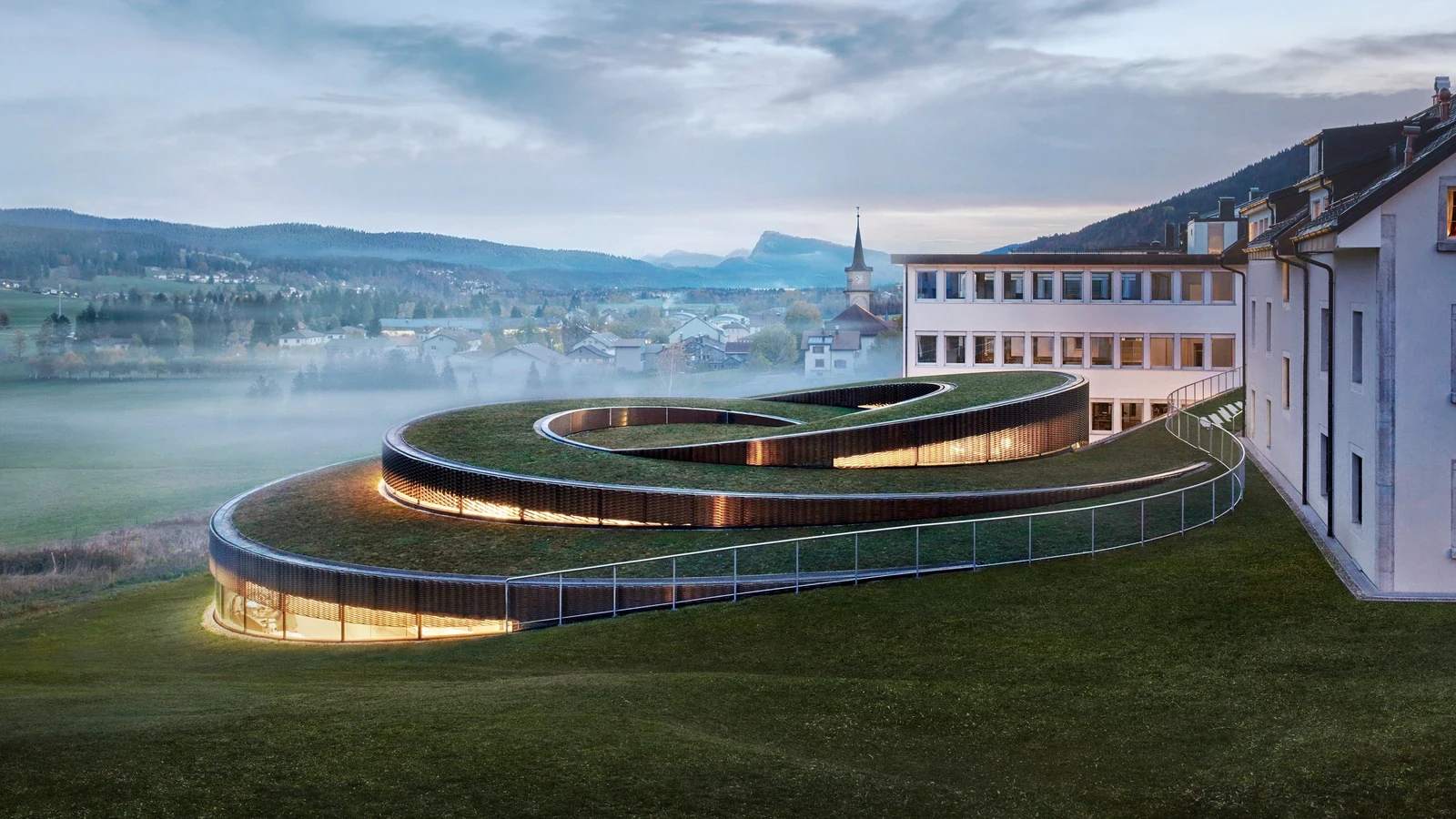
Le Brassus sits at the end of the Vallée de Joux, a high valley in the Vaud canton where makers have produced complicated movements since the eighteenth century. The village is not a transit point; you go there because you mean to. That distance has long filtered casual visitors, but the opening of the Musée Atelier, designed by Bjarke Ingels Group (BIG), changed the pace of arrival. The building is a spiral of glass and steel wound around the original 1875 manufacture, and it drew architectural attention before the first watch collector booked a slot.
"Architecture and watchmaking hold a unique place in culture..."(Architectural Record1)
The project took years to come into form. Jasmine Audemars, who served on the board of the family-controlled company, described the ambition plainly:
"We did have a small museum here but we had in mind to build an extension to present the richness of our watchmaking cult..."(Jasmine Audemars, Audemars Piguet2)
That richness, once held in a modest display, now sits inside a purpose-built spiral with the permanent collection, rotating exhibitions, and a working atelier where visitors can watch craftspeople at the bench. The demand gathers from three directions at once: watch collectors following the lineage, architecture students studying the BIG intervention, and general tourists trying for the same timed entry slots.
When Reservations Open and How the Calendar Behaves
Audemars Piguet does not publish a fixed release schedule for museum tickets, not a certain weekday, not a set number of days in advance when new slots appear. The booking calendar on the official Audemars Piguet website is the primary channel, and availability shifts without announcement. Confirm the current release window directly with the museum before you shape a travel itinerary around a specific date.
What holds steady is the pattern. Weekend slots fill faster than weekday slots, and the period around Watches and Wonders Geneva, typically spring, brings higher demand from collectors already in the region. If your travel dates can move, a Tuesday or Wednesday visit in autumn or early winter gives you the most room to work.
The Routes That Can Put You in the Atelier
The official museum website is the only confirmed public booking channel. There is no third-party ticketing platform, no concierge allocation, and no membership tier that guarantees entry in the way a museum foundation membership might. The Hôtel des Horlogers, the property Audemars Piguet operates adjacent to the museum, may offer guests preferential or bundled access; if you are considering a stay, contact the hotel directly to ask whether room bookings include museum entry or priority scheduling. That is the one route that could simplify access, though the hotel’s own availability is limited.

Audemars Piguet boutiques, particularly the flagship locations in Geneva and Zurich, occasionally have relationships with the museum team. If you are an existing client or are considering a purchase, ask your boutique contact directly whether they can facilitate a visit. This is not a guaranteed channel, and the brand does not advertise it as one, but some collectors have secured access this way during high-demand periods.
For group visits, the museum has a separate inquiry process. Contact the museum directly by email rather than using the standard ticketing flow; the team handles group bookings individually and may include guided options not available to individual ticket holders.
Inside the Spiral: What the Visit Involves
The BIG-designed building does not call out from the road like a civic museum. Its spiral form sits low and horizontal, wrapping the original manufacture building rather than competing with it. From certain angles, the glass facade reflects the meadow and the treeline; from others, you see straight through to the movement displays inside. The architecture has a clear method: it makes the old building the center of the new one.
Entry is timed, and the visit is self-guided through the permanent collection unless you have arranged a guided tour. The collection traces Audemars Piguet’s output from the founding in 1875 by Jules-Louis Audemars and Edward-Auguste Piguet, through the development of the 1972 Royal Oak, which Gérald Genta conceived in a single overnight session, and on to current complications. The objects carry enough context for a visitor who does not follow watchmaking closely to follow the thread, but the density of technical information rewards anyone who arrives with some grounding in movement architecture.
The working atelier is the part that separates this from a conventional museum visit. Watchmakers are at the bench during opening hours, and the work is visible. You are not watching a demonstration staged for visitors; you are watching production. The movements being assembled or regulated are real pieces. The craftspeople do not perform, and the visit does not turn theatrical. If you have spent time in any working atelier, the atmosphere will feel familiar: focused, quiet, with the kind of concentration that makes conversation feel like an interruption.
The original 1875 manufacture building, now enclosed within the spiral, is part of the circuit. The contrast between the nineteenth-century construction and the BIG envelope is not incidental; it is the argument the building makes about continuity and change. Whether that argument lands depends on how much you care about the history of the valley, but the physical experience of moving between the two structures is worth the trip on its own terms.
Plan for two to three hours if you intend to spend real time with the collection and the atelier. The museum has a café and a shop. The shop carries branded items and, depending on the period, limited-edition objects; it is not a point of sale for watches.
How to Improve Your Odds
Check the booking calendar on the Audemars Piguet website regularly. Slots open as cancellations come in, and the calendar is live. If you are targeting a specific date and find it full, set a reminder to check again two to three weeks out; that window tends to move as travel plans change.
Weekday visits in the shoulder seasons, October through early December and February through early March, are the lowest-competition windows. The valley is quieter, the light is different, and the museum is not managing the volume it sees during watch fair season or summer.
If you are staying in the region, the Hôtel des Horlogers is the obvious base. Contact the hotel directly and ask explicitly about museum access as part of your booking; do not assume it is included. The hotel does not publish a bundled access policy on its website, so a direct conversation is the only way to know what is currently on offer.
For collectors with an existing relationship at an Audemars Piguet boutique, ask your contact directly before you go through the public ticketing system. This is not a formal channel, but it is a real one.
Comparable Visits When Le Brassus Is Not Possible
The Patek Philippe Museum in Geneva is the closest equivalent in depth and seriousness. It holds over 2,000 timepieces across four floors of a converted watchmaking building in the Plainpalais district, and it is open to the public on a walk-in basis during regular hours. The collection runs from the sixteenth century to the present, and the Patek archive is among the most complete in Geneva. It does not have a working atelier visible to visitors, but the density of the collection carries its own weight.
The Musée International d'Horlogerie in La Chaux-de-Fonds is a civic museum rather than a brand museum, which gives the collection a broader reach and less attachment to a single house’s narrative. It covers the full sweep of Swiss watchmaking and includes significant holdings in tools and industrial equipment. For anyone interested in the craft tradition rather than a specific brand, it is the more instructive visit.
The IWC Museum in Schaffhausen, opened in 2007, follows a similar model to the Musée Atelier: a purpose-built space adjacent to the manufacture, with a permanent collection and rotating exhibitions. Access is through the IWC website, and availability is generally easier than Le Brassus. The manufacture tour, bookable separately, is the stronger draw for anyone interested in production.
Jaeger-LeCoultre in Le Sentier, a few kilometers from Le Brassus in the same valley, offers manufacture visits and a museum. The valley visit can be structured to include both houses in a single trip, which makes the logistics of traveling to a remote location considerably more efficient.
Who Should Make the Trip, and When
The Musée Atelier is worth the effort for anyone who follows watchmaking seriously, for architects interested in how BIG handled the brief, and for collectors who want to understand the physical context in which Audemars Piguet movements are made. The valley itself is part of the experience; arriving by car through the Joux valley in any season belongs to the visit.
It is less suited to visitors who want a quick cultural stop on a broader Swiss itinerary. Le Brassus is not on the way to anything else. The commitment is real, and the museum rewards visitors who arrive with preparation. If you are not already curious about the history of the house or the mechanics of what is on display, the visit will be pleasant, but it will not change how you think about the work in the way it can for someone who has been following the craft for years.
Worth the Drive to Le Brassus?
Yes, with preparation. The Musée Atelier is one of the few places where you can stand in the building where a watch tradition was established, watch the current generation of craftspeople continue it, and read the architecture of the movement in your hand, or the one you are considering. That combination does not exist at scale anywhere else in the valley.
The access problem is real but solvable. The booking calendar on the Audemars Piguet website is the primary route; check it early and check it often. If your dates can move, target a weekday in autumn or winter. If you have a boutique relationship, use it. If you are considering the Hôtel des Horlogers, call before you book and ask directly about museum access.
Do not build a tight itinerary around a specific date without a confirmed ticket. The museum does not publish a release schedule, and the valley is not a place you want to reach without a reservation.
Book the visit before you book the flights. Then, if the calendar is closed, consider the Jaeger-LeCoultre manufacture in Le Sentier as a same-valley alternative while you wait for a slot to open. madeby follows the people who make this work possible, and the access problem at Le Brassus is exactly the kind of thing the platform exists to help you solve before you land in Geneva.
Frequently Asked Questions
How do I book a visit to the Audemars Piguet Musée Atelier?Tickets are booked through the official Audemars Piguet website. There is no third-party ticketing platform. The museum does not publish a fixed release schedule for new slots, so check the calendar regularly and book as far in advance as your travel dates allow. For group visits, contact the museum directly by email rather than using the standard ticketing flow.
How far in advance do I need to book?The museum does not publish a specific advance booking window. Availability varies by season and day of the week, with weekends and the spring watch fair period filling fastest. Check the booking calendar as soon as your travel dates are set, and monitor it for cancellations if your preferred date is full. Confirm current availability directly with the museum before finalizing travel plans.
Can you walk in without a reservation?Walk-in access is not confirmed as a standard option. The museum operates on a timed-entry reservation system. Arriving without a booking is not recommended, particularly on weekends or during peak periods. Contact the museum directly if you are already in the valley and want to check same-day availability.
Does staying at the Hôtel des Horlogers guarantee museum access?The hotel does not publish a bundled access policy on its website. Contact the hotel directly before booking to ask whether your stay includes museum entry or priority scheduling. This is the most likely route to preferential access, but it requires a direct conversation to confirm what is currently on offer.
Is the Musée Atelier worth visiting if I am not a watch collector?The BIG-designed building and the working atelier make the visit worthwhile for architects and anyone interested in craft production, not only watch collectors. The permanent collection is dense with technical information, but the museum provides enough context for a general visitor to follow the narrative. Plan two to three hours and arrive with some background on the house or the valley if you want to get the most from the atelier section.