Angelos Bafas Opens Cato Covent Garden Bar After Leaving CRG
Greek-born bartender Angelos Bafas opened Cato, a two-floor Covent Garden venue housing two bars and a British spirits-focused program, after departing Creative Restaurant Group in September 2025.
HM
Director of Editorial Standards
Hugo Marchetti
Filed July 8, 2026
10 min read
On a Saturday in early 2026, the team at House of Julep served 160 Mint Juleps. The bar occupies the ground floor of Cato, a two-floor Covent Garden building that Angelos Bafas opened after departing the Creative Restaurant Group in September 2025. Bafas is now a co-owner, a shift he describes as a privilege.
The venue is a partnership with hospitality group Bart & Taylor, with Bafas leading day-to-day operations and Yaw Asante, Bart & Taylor's beverage manager, supporting the program.
The Sunday letter
Get our new stories in your inbox every Sunday.
One email with our newest profiles and guides. See a sample before you subscribe.
Cato is Bafas' first bar as co-owner, and it is the clearest expression yet of a philosophy he honed at Nipperkin, the London bar where he worked from 2023: British produce and British spirits, treated with the same rigor that hotel bars apply to luxury imports.
The venue is named after Cato Alexander, a freed slave who created one of New York's most popular taverns in the 19th century. What appealed to Bafas and his partners was the atmosphere Alexander's venue fostered: politicians and average patrons together, no hierarchy at the door. That egalitarian principle carries through. Bafas states the first rule plainly: there are no VIPs. Everybody who walks in is treated the same. The building houses two bars currently open and a third space in development, each with a different rhythm and audience.
Inside Cato Covent Garden: What Makes Bafas' First Venue Different
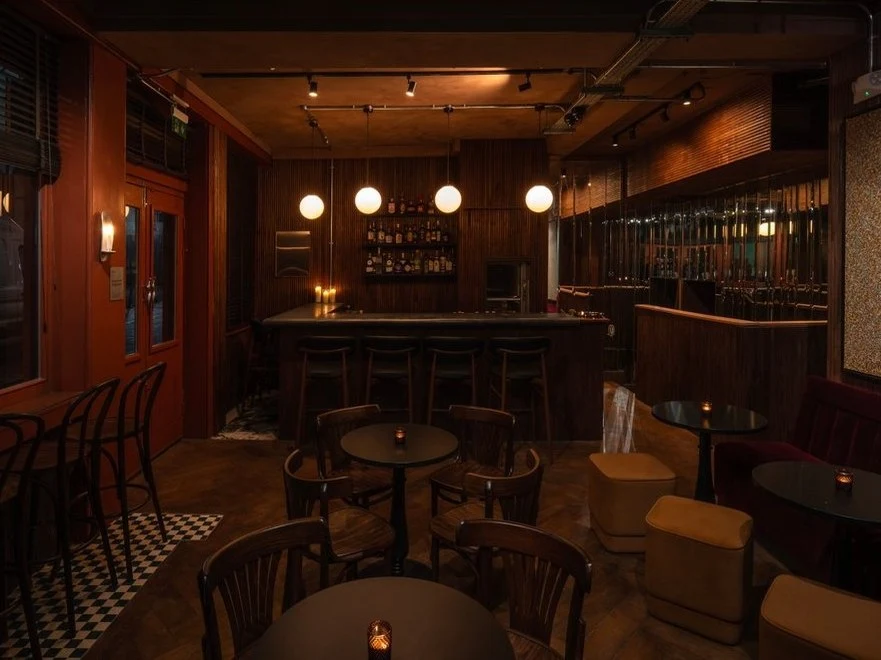
Cato occupies two floors in central London's Covent Garden. The basement houses Cato, the main bar. The ground floor is given over to House of Julep, a bar dedicated entirely to variations on the Mint Julep. The team is also planning to open the Study, an omakase-style bar for ten people that will host collaborations with chefs and other bars, along with seminars and masterclasses. The structure allows Bafas to run three distinct programs under one roof, each with a different rhythm and audience.
The venue's scale is a departure from Bafas' original goal. He had hoped to open his own place, even if it was a tiny space with five seats in southeast London. The reality is larger and more central, but the ethos remains the same: British spirits, British produce, and a program that treats both with the kind of attention usually reserved for French wine or Japanese whisky. Bafas was born and raised in Greece, which makes his commitment to British terroir somewhat ironic. But few figures in London's cocktail scene are as dedicated to defining what a great British cocktail might look like.
After leaving CRG, Bafas planned to focus on consultancy. That plan lasted until Cato became his life. He laughs when he says it, but the commitment is clear: he is spending every minute in the building, trying to get it right. The venue has started well, and Bafas is not complaining. The partnership with Bart & Taylor gives him operational support and co-ownership, a structure that allows him to focus on the program rather than the logistics of running a standalone venue. The shift from consultant to co-owner represents a bet on a single vision rather than a portfolio of projects.
House of Julep: Why an Entire Bar Dedicated to One Cocktail
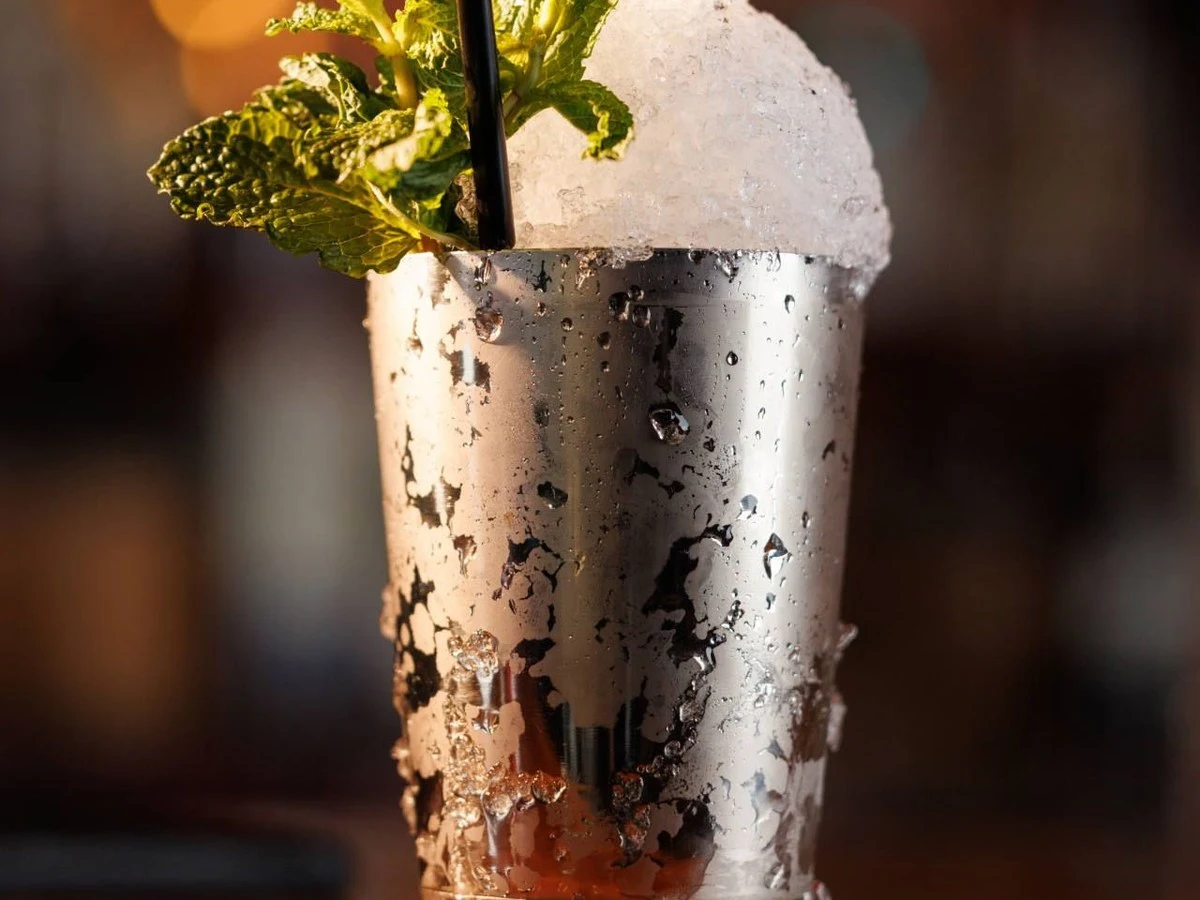
The House of Julep is the ground-floor bar at Cato, and it is dedicated entirely to the Mint Julep. The decision to build a bar around a single cocktail template is unusual, but it allows Bafas to showcase British spirits through a format that most drinkers already understand. The Mint Julep is historically associated with Bourbon and the American South, but Bafas and his team have rebalanced the recipe to make it more drinkable and to highlight the spirits they care about.
A Mint Julep cocktail, a signature dish, is served in a metal cup with crushed ice and fresh mint.
The traditional Mint Julep, as Bafas describes it, was barely drinkable: 70ml of Bourbon, a lot of mint, bitters, ice, and sugar, everything to the extreme. The team's mission was to balance it. The key changes were adding a house-made mint tincture and extra dilution, while keeping the iconic elements of the metal cup and crushed ice. The result is a template that can accommodate dozens of variations, each one spotlighting a different British spirit or seasonal ingredient. The metal cup stays cold in the hand. The crushed ice dilutes slowly. The mint tincture carries the aroma without overwhelming the spirit.
The response has surpassed expectations. The team served 160 Mint Juleps on the Saturday before the interview with The Spirits Business. That volume is good for the bottom line, but it has created a challenge for one of Bafas' desired USPs: self-sufficiency in herbs and fruits. The ideal scenario was to become self-sufficient, growing everything in house. But the volume makes that impossible. The team cannot maintain that amount of mint in house. At 160 drinks on a single Saturday, the demand for fresh mint alone would require a greenhouse operation beyond the scope of a central London bar.
Bafas has found a middle ground. The team will grow their own herbs and turn them into tinctures, ensuring every drink has a homegrown element. These include niche varieties, such as a Thai basil and mint hybrid and a strawberry mint, which could be used for weeklong activations.
The tinctures allow the team to scale production without sacrificing the ethos of terroir-driven ingredients. It is a compromise, but one that keeps the program rooted in the same philosophy that defined Bafas' work at Nipperkin. The herbs are grown in house, extracted, and bottled. The spirit base rotates to showcase British distillers.
The template remains constant, but the variations multiply.
The British Spirits Ethos Behind the Menu
Bafas' commitment to British spirits is not a marketing angle. It is the organizing principle of the entire program at Cato. That ethos was already visible at Nipperkin, where Bafas cemented his mixology reputation during his tenure from 2023. At Nipperkin, the focus was on British produce and British spirits, treated with the same seriousness that high-end hotel bars apply to imported luxury brands. Cato takes that mission a step further, building a multi-bar venue around the idea that British distillers and British ingredients deserve the same attention as their French, Italian, or Japanese counterparts.
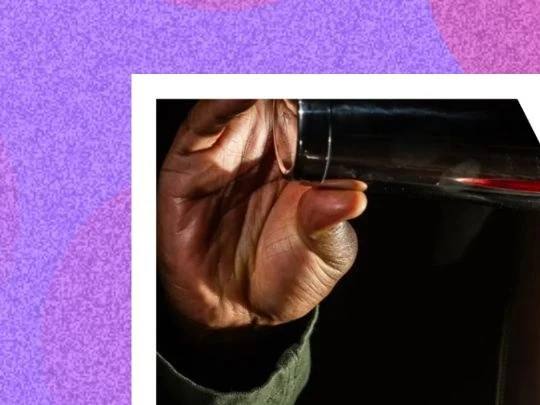
A hand holds a bottle of spirits during what appears to be a bar service or demonstration.
The British spirits movement is still young compared to the established categories that dominate most cocktail menus. But the number of distilleries in the UK has grown steadily over the past decade, and the quality of the spirits has improved alongside the volume.
Bafas is one of the few bartenders in London who has built an entire program around that growth, using British gin, British whisky, British vermouth, and British liqueurs as the foundation rather than the accent.
The menu at Cato reflects that commitment: the spirits are British, the herbs are grown in house or sourced locally, and the techniques are designed to highlight terroir rather than mask it.
The challenge is volume. As the success of House of Julep demonstrates, scaling a terroir-driven program is difficult when demand exceeds supply. The team's solution is to grow their own herbs and turn them into tinctures, which allows them to maintain the ethos of homegrown ingredients while serving 160 drinks on a Saturday night. It is a pragmatic compromise, but one that keeps the program honest. The tinctures are made from herbs grown in house, and the spirits are British. The dilution and balance are carefully calibrated. The result is a menu that feels rooted in place, even when the volume demands shortcuts.
Bafas' focus on British spirits is also a statement about what London's cocktail scene could become. For years, the city's best bars have been defined by their access to rare imports and their ability to execute classic recipes with precision. Bafas is arguing for a different kind of excellence: one that is rooted in local ingredients, local distillers, and a willingness to define what a great British cocktail might look like. That argument is easier to make when you own the venue and control the program. Cato gives Bafas the space to make that argument at scale, with two bars open and a third in development.
What to Expect: Booking, Visiting, and the Road Ahead
Cato operates two bars with different rhythms. The basement bar, Cato, is the main space, designed for longer visits and a more traditional cocktail bar experience. House of Julep, on the ground floor, is faster-paced and built around the Mint Julep template.
Cato Covent Garden offers a warm and inviting atmosphere for your next visit.
The team is also planning to open the Study, an omakase-style bar for ten people that will host collaborations, seminars, and masterclasses. The Study will allow Bafas to run a more experimental program alongside the two main bars, testing new techniques and ingredients with a smaller, more engaged audience.
The ten-seat format limits access, but it also allows for a level of detail and interaction that the larger bars cannot sustain.
The venue's egalitarian ethos extends to the door policy. Bafas states the first rule plainly: there are no VIPs. Everybody who walks in is treated the same. That principle is a direct nod to Cato Alexander's 19th-century tavern, where politicians and average patrons drank together without hierarchy. It is also a statement about what Bafas wants Cato to be: a venue where the quality of the program matters more than the status of the guest. The policy is easier to enforce when the program itself is the draw, and when the bartenders are trained to treat every order with the same attention.
For visitors, the practical details are straightforward. Cato is located in Covent Garden, one of central London's busiest neighborhoods. The venue is a five-storey building, with two bars currently open and a third space in development. The focus is on British spirits and British produce, with a menu that changes seasonally to reflect what the team can grow or source locally. The Mint Julep is the signature drink at House of Julep, but the template allows for dozens of variations, each one highlighting a different spirit or ingredient. The metal cup, the crushed ice, and the mint tincture remain constant. The spirit base rotates.
The team served 160 Mint Juleps on one Saturday, which gives a sense of the volume and pace at House of Julep. The basement bar, Cato, is likely to be slower and more focused on longer visits. The Study, when it opens, will be the most intimate space, with seating for ten and a program built around collaboration and education.
For cocktail enthusiasts who follow Bafas' work, Cato is the clearest expression yet of his philosophy: British spirits, British produce, and a willingness to define what a great British cocktail might look like. The venue is a bet on that philosophy at scale, with the infrastructure to support it and the co-ownership structure to sustain it.
Bafas is spending every minute of his life in the building at the moment, trying to get it right. The venue has started well, and the response to House of Julep's signature drink has surpassed expectations. The challenge now is to maintain that momentum while scaling the program and opening the Study.
The partnership with Bart & Taylor gives Bafas the operational support to do that, and the co-ownership structure gives him the control to keep the program honest. Cato is Bafas' first bar as co-owner, and it is the venue he has been working toward for years.
The next move is to see how far the British spirits ethos can scale, and whether the Study can push the program into territory that the two main bars cannot reach.
Made By follows the people who shape what you eat and drink. Subscribe, and the next dispatch from the bench, the cellar, or the kitchen comes to you.
The Sunday letter
Get the next Made By guide in your inbox.
We send one email every Sunday morning with the guides and profiles we published that week.