Californios Earns Three Michelin Stars: The First Mexican Restaurant Ever
San Francisco's Californios became the first Mexican restaurant in the world to receive three Michelin stars, breaking a barrier that stood for more than a century in the guide's history.
HM
Director of Editorial Standards
Hugo Marchetti
Filed July 1, 2026
8 min read
In June 2026, San Francisco's Californios received three Michelin stars, becoming the first Mexican restaurant in the world to achieve the rating in the century-plus history of the guide. The announcement, delivered during Michelin's California ceremony, placed Californios alongside just eight other three-star restaurants in the state and fewer than 150 globally. No Mexican restaurant, not in Mexico City, not in Oaxaca, not anywhere, had crossed that threshold before.
Californios Three Michelin Stars: Breaking a Century-Old Barrier
The Michelin Guide dates to 1900, and it has been awarding stars since 1926. Over more than a century, it has expanded to 40-plus territories, evaluated tens of thousands of restaurants, and elevated cuisines from Japan to Scandinavia to global prominence. Yet until June 2026, no Mexican restaurant had earned three stars. Californios, located in San Francisco's Mission District, ended that drought.
The Sunday letter
Get our new stories in your inbox every Sunday.
One email with our newest profiles and guides. See a sample before you subscribe.
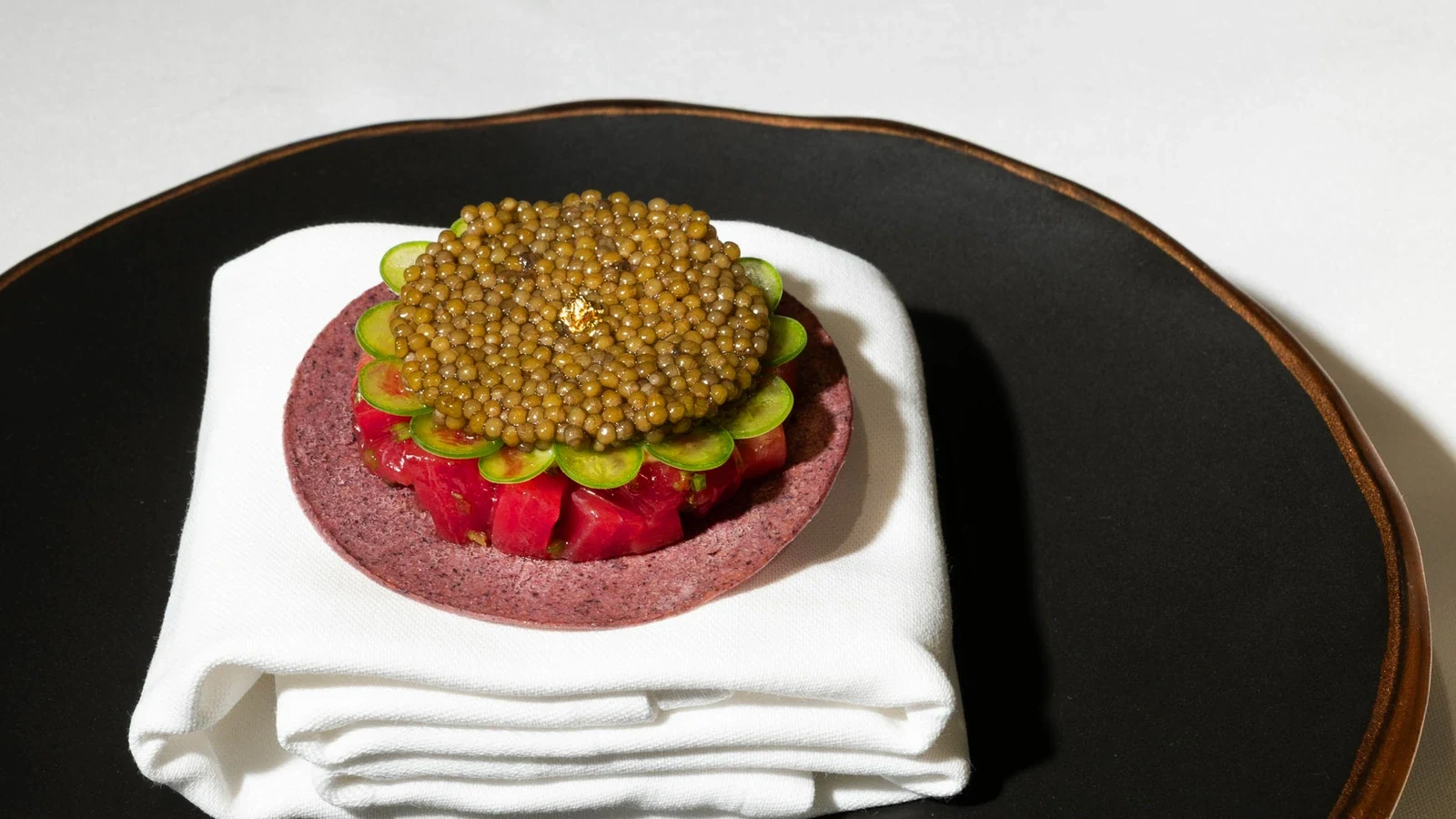
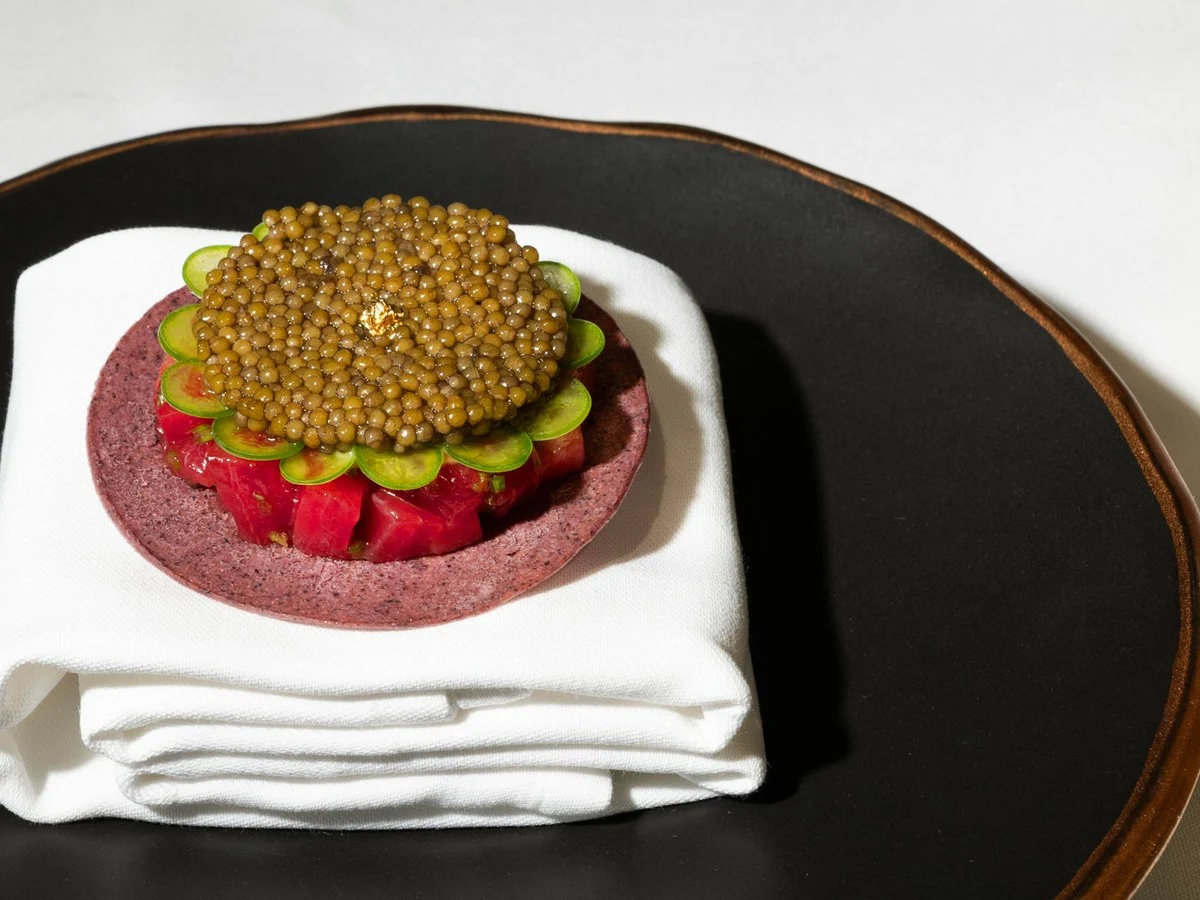
Michelin Guide materials show an elegantly plated dish from Californios' three-star announcement article.
The restaurant shares the June 2026 three-star honors with Enclos in Sonoma, which also received the top rating during the same ceremony. With those additions, California now holds nine three-star Michelin restaurants. The rarity of the designation underscores its significance: three stars signal what Michelin calls "exceptional cuisine worth a special journey," a standard applied to fewer than 150 restaurants worldwide at any given time.
The gap is striking when placed against the timeline of other cuisines. Japanese restaurants began earning three stars in Tokyo in the 2000s. Nordic cuisine gained three-star recognition in Copenhagen and Stockholm over the past two decades. French and Italian restaurants have held the rating since the guide's earliest years. Mexican cuisine, despite its depth, regional diversity, and centuries of technique, had been absent from that tier until Californios.
The delay raises questions about evaluation frameworks, inspector training, and the structural biases embedded in a guide born in early 20th-century France. Californios' achievement does not erase those questions. It does, however, mark a shift in what Michelin is willing to recognize as three-star worthy, and where.
What Sets Californios Apart from Mexico's Two-Star Restaurants
Mexican restaurants do hold Michelin stars. In Mexico City, Quintonil and Pujol each carry two stars, the highest rating awarded to any restaurant in Mexico. Both are acclaimed for their approach to Mexican ingredients and techniques, and both have shaped the conversation around contemporary Mexican fine dining. Yet neither has crossed into three-star territory, and according to Michelin's own ratings, no restaurant in Mexico has.
The distinction between two and three stars is not incremental. Two stars denote "excellent cooking worth a detour." Three stars denote "exceptional cuisine worth a special journey." The language is vague by design, but in practice, three-star restaurants tend to share certain structural traits: tasting menus, high ingredient cost and sourcing precision, technique-forward plating, and a dining experience calibrated to last multiple hours. Californios operates within that framework. It serves a multi-course tasting menu in a format that aligns with the expectations Michelin inspectors bring to three-star evaluation.
Quintonil and Pujol, while operating at the highest level of Mexican fine dining, work within different service models and culinary philosophies. The question is not whether those restaurants are less accomplished, many chefs and critics would argue otherwise, but whether Michelin's three-star criteria favor a specific kind of dining structure, one that Californios adopted and Mexico City's top restaurants have not.
Geography also matters. Michelin launched its Mexico guide in 2024, making it one of the newest territories in the guide's portfolio. San Francisco, by contrast, has been part of Michelin's California guide since 2007. Inspectors have spent nearly two decades evaluating Bay Area restaurants, building familiarity with the region's dining culture, and awarding three stars to establishments like The French Laundry, Benu, and Atelier Crenn. That institutional knowledge creates a context in which a restaurant like Californios can be understood on Michelin's terms.
The Tasting Menu That Convinced Michelin Inspectors
Californios serves a tasting menu. The format is central to how the restaurant presents its interpretation of Mexican cuisine, and it is the format that Michelin's three-star tier has historically rewarded. The menu is technique-driven, ingredient-focused, and structured to build across multiple courses. It is not a survey of regional Mexican dishes; it is a culinary argument delivered over the course of an evening.
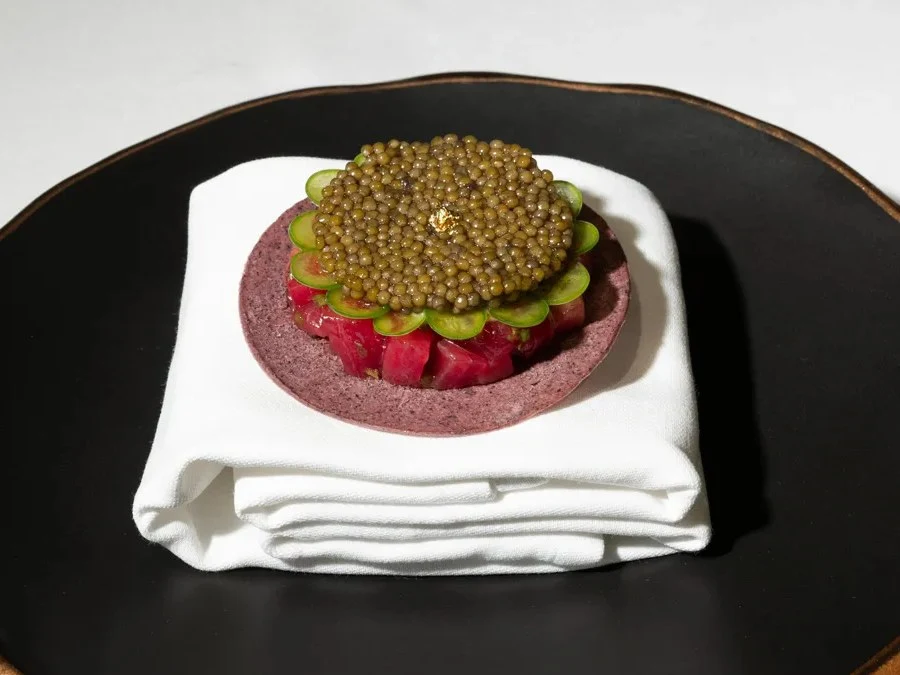
A technique-driven tasting menu course from Californios, featuring caviar and diced fish on a purple base.
The structure itself signals intent. Tasting menus allow chefs to control pacing, ingredient sourcing, and technique in ways that à la carte service does not. They also align with the expectations Michelin inspectors bring to three-star evaluation: precision, consistency, and a dining experience that justifies the "special journey" language in the guide's criteria.
Californios' location in the Mission District places it in a neighborhood with deep Mexican culinary roots. The restaurant operates in a context where Mexican food is both everyday and elevated, where taquerías and fine dining coexist within blocks of each other. That proximity to tradition and innovation may have shaped the restaurant's approach, but it is the execution, the technique, the sourcing, the consistency, that earned the stars.
Three-star restaurants are evaluated on their ability to deliver exceptional cuisine night after night. Inspectors visit multiple times, often anonymously, and assess not just the food but the entire dining experience. For Californios, that meant meeting Michelin's standards for ingredient quality, technical execution, and service precision across every visit. The tasting menu format provided the structure; the kitchen delivered the substance.
Why San Francisco, Not Mexico City, Earned the First Three Stars
The fact that the first three-star Mexican restaurant is in San Francisco, not Mexico City, is worth examining. Mexico City is home to Quintonil, Pujol, and a thriving fine-dining scene that has shaped the global conversation around contemporary Mexican cuisine. San Francisco, while home to a significant Mexican population and a rich taquería culture, is not the geographic or cultural center of Mexican food.
One explanation is structural. San Francisco has been part of the Michelin Guide since 2007. Inspectors have spent nearly two decades evaluating Bay Area restaurants, and the city already holds multiple three-star establishments. That familiarity creates a context in which a restaurant like Californios can be understood and evaluated on Michelin's terms. Mexico City, by contrast, only received its first Michelin guide in 2024. Inspectors are newer to the market, and the guide's presence is still developing.
Another explanation is format. Californios operates within the tasting-menu model that Michelin's three-star tier has historically favored. That model, multi-course, technique-forward, ingredient-obsessive, aligns with the expectations inspectors bring to three-star evaluation. Quintonil and Pujol, while operating at the highest level, work within different service frameworks. The question is not whether those frameworks are less valid, but whether Michelin's criteria favor one over the other.
There is also the question of how Michelin defines "Mexican cuisine." Californios is a Mexican restaurant in San Francisco, interpreting Mexican culinary traditions through the lens of California ingredients and Bay Area dining culture. Quintonil and Pujol are Mexican restaurants in Mexico City, working within the geographic and cultural context of Mexican cuisine's origin. Michelin's decision to award three stars to the former before the latter suggests that the guide's evaluation framework may privilege interpretation over origin, technique over tradition, or format over philosophy.
None of this diminishes Californios' achievement. The restaurant earned three stars by meeting Michelin's criteria for exceptional cuisine. But the fact that it happened in San Francisco, not Mexico City, raises questions about how fine dining is evaluated, which culinary traditions are centered, and whose work gets recognized first.
What This Means for Regional American Cuisine
Californios' three-star rating is significant not just for Mexican cuisine but for regional American cuisine as a category. The Bay Area has long been home to three-star restaurants, The French Laundry, Benu, Atelier Crenn, but those establishments have largely operated within European fine-dining traditions or pan-Asian fusion frameworks. Californios is the first three-star restaurant in California to center a non-European culinary tradition rooted in the Americas.
That shift matters. It signals that Michelin is willing to recognize regional American interpretations of global cuisines on equal footing with European fine dining. It opens pathways for other underrepresented culinary traditions, Caribbean, Indigenous, Central American, South American, to be evaluated and elevated within the guide's framework. And it challenges the assumption that three-star cuisine must be French, Italian, or Japanese in origin or inspiration.
The question now is whether Californios' achievement will accelerate that shift or remain an outlier. Will Michelin inspectors begin evaluating Mexican restaurants in Mexico City with the same three-star lens they apply in San Francisco? Will other regional American restaurants interpreting non-European cuisines receive the same level of scrutiny and recognition? Or will Californios' three stars be treated as an exception, a singular achievement that does not change the broader evaluation framework?
The answer will depend on how Michelin evolves its criteria, trains its inspectors, and expands its presence in new markets. But for now, Californios has broken a barrier more than a century old. The first Mexican restaurant in the world to earn three Michelin stars is not in Mexico City or Oaxaca. It is in San Francisco's Mission District, serving a tasting menu that convinced inspectors that Mexican cuisine belongs in the guide's highest tier.
The achievement is historic. The questions it raises are just beginning.
Frequently Asked Questions
What makes Californios the first Mexican restaurant to earn three Michelin stars?
Californios became the first Mexican restaurant in the world to receive three Michelin stars in June 2026, breaking a barrier that stood for more than a century in the guide's history. The restaurant operates a multi-course tasting menu format with technique-forward plating and high-precision sourcing that aligns with Michelin's three-star evaluation criteria.
How many three-star Michelin restaurants are in California after Californios received its rating?
California now has nine three-star Michelin restaurants following the June 2026 ceremony. Californios and Enclos in Sonoma both received the top rating during the same announcement, joining just seven other three-star establishments in the state.
Why haven't Quintonil and Pujol in Mexico City received three Michelin stars?
While Quintonil and Pujol each hold two Michelin stars, the highest rating in Mexico, they operate within different service models and culinary philosophies than the tasting-menu format Michelin typically associates with three-star restaurants. Additionally, Michelin only launched its Mexico guide in 2024, whereas San Francisco has been evaluated since 2007, giving inspectors nearly two decades more familiarity with Bay Area dining.
How rare is a three Michelin star rating globally?
Three Michelin stars are exceptionally rare, awarded to fewer than 150 restaurants worldwide at any given time. The rating signifies 'exceptional cuisine worth a special journey' and represents the highest designation in the Michelin Guide's evaluation system.
When did Californios receive its three Michelin stars?
Californios received three Michelin stars in June 2026 during Michelin's California ceremony. This historic announcement made it the first Mexican restaurant to achieve the rating in the century-plus history of the Michelin Guide.
The Sunday letter
Get the next Made By guide in your inbox.
We send one email every Sunday morning with the guides and profiles we published that week.