Château Sainte Marguerite Rosé: Five Decades of Massal Selection and Organic Viticulture
Between the Bay of Hyères and the inland valleys of Pierrefeu, the Fayard family has spent nearly fifty years building one of Provence's most distinctive cru classé estates through massal selection, organic certification, and a philosophy of minerality.
HM
Director of Editorial Standards
Hugo Marchetti
Filed July 6, 2026
11 min read
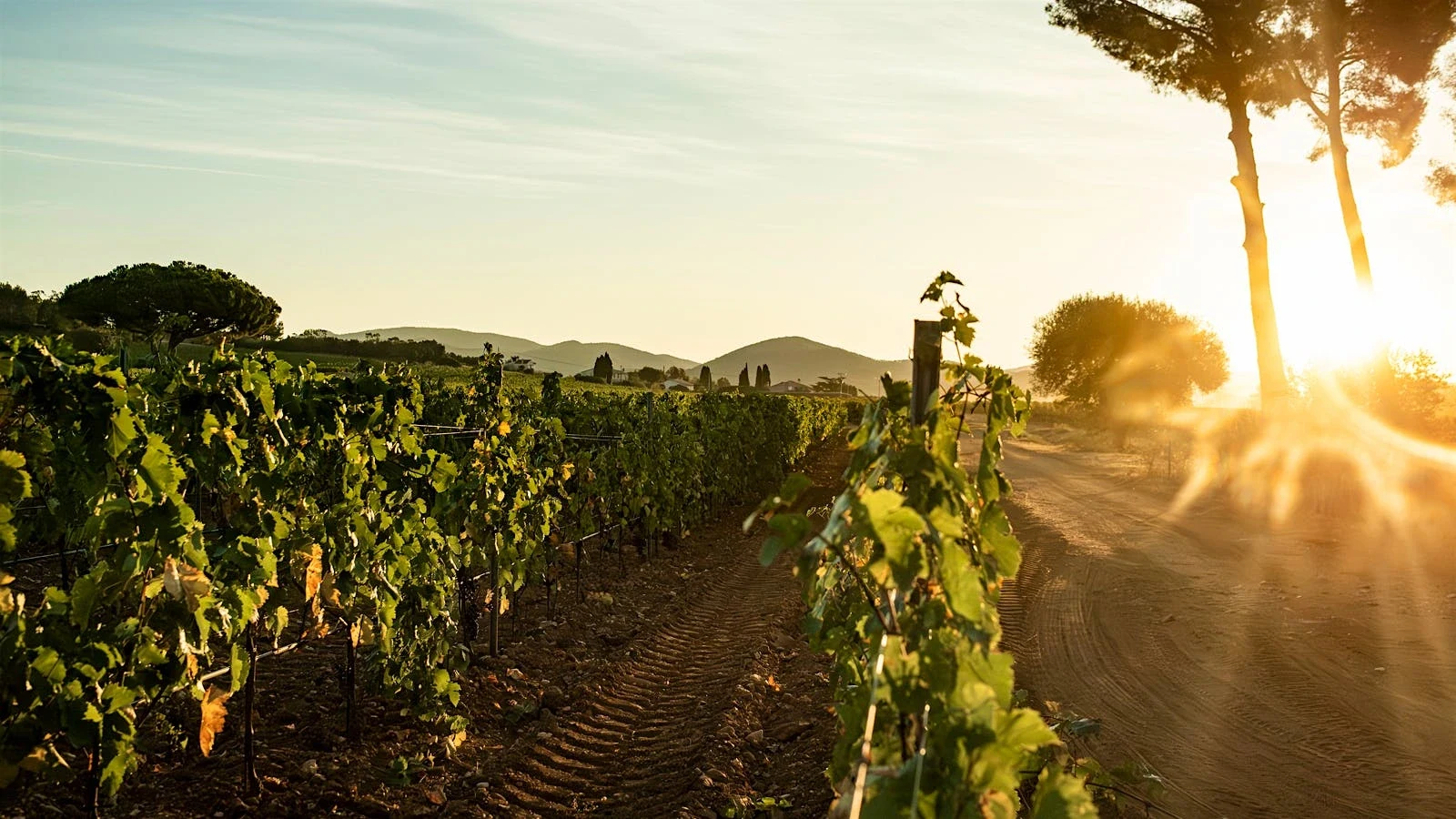
At Château Sainte Marguerite, fruit comes in at night, while the berries are still cool enough to hold their aromatic charge. The cellar team receives those grapes from estate-owned parcels set between the Bay of Hyères and the inland valleys of Pierrefeu, where maritime air moves across mica schist, siliceous clay, and limestone soils. The estate is one of only 18 crus classés of Provence. Among those, it is the only estate with both organic and vegan certifications, held since 2003. That status comes from the way the Fayard family works the vineyard, not from a line on a label.
The Château Sainte Marguerite Story: Five Decades of Family Stewardship
Brigitte and Jean-Pierre Fayard founded Château Sainte Marguerite in 1977 with seven hectares. Today, the estate cultivates more than 460 hectares of vineyards, all of them estate-owned. In a region where many producers source fruit from growers across multiple appellations, full ownership at this scale is rare. It also gives the family control of the work from parcel to press.
The Sunday letter
Get our new stories in your inbox every Sunday.
One email with our newest profiles and guides. See a sample before you subscribe.
Olivier Fayard, who now serves as CEO, leads the estate along the line his parents set nearly fifty years ago. That tenure has left the family with a working memory industrial producers cannot buy: which parcels hold through drought years, which clones answer to night harvests, which fermentation vessels keep the salinity that coastal breezes mark in the fruit. This is not romance. It is cellar literacy, the kind that lets a winemaker make a March decision that shows itself in September.
The estate's growth from seven hectares to more than 460 hectares did not come through acquisition alone. It required a method of viticulture that could scale without losing its hand. That method centers on minerality, precision, and organic practice adopted more than two decades before the market began asking loudly for sustainability.
Philosophy: Minerality, Soil, and the Work Around the Vine
Château Sainte Marguerite's pursuit of minerality is tied to the way it farms. The estate has held organic and vegan certifications since 2003, making it one of the first in Provence to champion a holistic approach to viticulture. This was not a branding exercise. It was a technical choice rooted in the link between soil health and terroir expression.
Organic viticulture at this scale asks for discipline. It means managing 460 hectares without synthetic herbicides, fungicides, or pesticides. It means accepting lower yields in difficult vintages rather than reaching for chemical interventions. It means building soil structure through cover crops, compost, and careful tillage so vines can reach the minerality in the schist and limestone beneath them.
The estate's terroir spans La Londe-les-Maures and Pierrefeu, where a mosaic of soils brings complexity to the wines. Near the coast, stony soils and cooling breezes leave salinity in the glass. Further inland, clay-limestone parcels bring texture and balance. This range of terroirs allows the estate to create rosés with both freshness and complexity, according to The Drinks Business.
Rolle, known internationally as Vermentino, drives the wines' minerality. The white variety contributes aromatic precision and a saline edge that separates Château Sainte Marguerite rosé from the fruit-forward, high-volume rosés that dominate the Provence market. The estate harvests at night, when cooler temperatures help preserve the grapes' aromatic precision.
That detail matters for gastronomic rosé. Night harvesting costs more and makes the work harder than daytime picking. It requires lighting, coordination, and a cellar team ready to receive fruit in the early morning hours. The estate does it because the aromatic compounds that define minerality are volatile. They degrade in heat. To hold the salinity of coastal breezes and the tension of limestone soils, the fruit has to arrive cool.
Massal Selection and Organic Viticulture: The Technical Foundation
Massal selection is the practice of propagating new vines from cuttings taken from the estate's finest historic parcels, rather than purchasing clonal material from a nursery. It is slower, more labor-intensive, and more expensive than clonal selection. It is also the way to preserve the genetic diversity and site-specific adaptation that define a vineyard's identity.
Château Sainte Marguerite continues to invest in massal selection, preserving and replanting vines from its finest historic parcels in order to maintain quality. The estate does not buy standardized clones selected for yield or disease resistance. It selects individual vines that have proven themselves on the estate's soils, in the estate's microclimate, under the estate's management.
"Massal selection gives us grapes with greater aromatic complexity, precision and balance, which is essential for crafting refined, gastronomic rosés"
In this way, the estate maintains what Fayard calls a living heritage that reflects the identity of the vineyard. This is not nostalgia. It is a technical strategy for carrying terroir expression across generations. Clonal selection optimizes for uniformity. Massal selection optimizes for complexity. The former produces wines that taste the same year after year. The latter allows vintage variation and site character to speak.
The link between massal selection and organic viticulture is direct. Healthy soils support diverse microbial populations that help vines access nutrients and resist disease. Vines propagated from site-adapted material are better equipped to thrive in those soils without synthetic inputs. The estate's use of both practices is a coherent technical framework for producing wines with aromatic complexity, precision, and balance.
This approach requires patience. A vine propagated from a cutting will not produce fruit of the same quality as its parent for several years. Organic certification requires a three-year conversion period during which yields often drop. The return is long-term: vines that express the estate's terroir with clarity, soils that improve rather than degrade over time, and a reputation for quality that allows the estate to command prices that reflect the cost of the work.
Signature Wines: Fantastique and Marguerites en Provence Rosé
These are not the first accolades the estate has received, but they matter because they come from blind tastings judged by sommeliers and critics who evaluate hundreds of rosés each year. In a category crowded with marketing-driven brands and celebrity endorsements, the bench work still has to hold up in the glass.
Fantastique is the estate's flagship cuvée, a wine that draws on the full range of the estate's terroir and the precision of its winemaking. The 2025 vintage's recognition as Best French Rosé by the Beverage Testing Institute places it above rosés from estates with larger marketing budgets and broader distribution. The award gives collectors and sommeliers a clear signal that Château Sainte Marguerite rosé belongs in the conversation about Provence's finest wines.
Marguerites en Provence Rosé is the estate's gastronomic cuvée, a wine built for the table rather than the terrace. The Gold Medal in the drinks business Global Rosé Masters 2026 confirms what sommeliers who have poured the wine already know: this is a rosé with structure, minerality, and aging potential. It is not a wine to drink ice-cold from a magnum on a yacht. It is a wine to serve at 12 degrees Celsius with grilled fish, bouillabaisse, or aged Comté.
The distinction matters. Provence rosé has become shorthand for a certain lifestyle aesthetic: pale color, low alcohol, high price, minimal flavor. Château Sainte Marguerite makes rosé against that stereotype. The wines are pale, yes, because the estate practices direct pressing and short skin contact. But they are not neutral. They carry the salinity of coastal vineyards, the tension of limestone soils, and the aromatic complexity that massal selection and organic viticulture produce.
Why Château Sainte Marguerite Matters to Collectors
Gastronomic rosé with aging potential and cru classé pedigree is an emerging category for serious collectors seeking value and distinction. Château Sainte Marguerite holds a particular place in that category. The estate's cru classé designation, organic and vegan certifications, and nearly fifty years of family stewardship give it credibility that newer estates cannot claim. The 2025 awards give it visibility.
Collectors who follow Provence have historically focused on a handful of estates in Bandol and a few top producers in Côtes de Provence. Château Sainte Marguerite's location between the Bay of Hyères and the inland valleys of Pierrefeu places it in a terroir that is less well-known but equally distinctive. The estate's work with massal selection and organic viticulture means that its wines will continue to improve as the replanted parcels mature.
The estate's partnership with Pernod Ricard provides financial stability and access to international distribution without compromising the family's control over winemaking decisions. This is an uncommon balance. Many family estates that partner with large spirits companies lose their identity. Château Sainte Marguerite has kept its focus on quality while gaining the resources to invest in vineyard improvements and cellar equipment.
For collectors, this means that the estate's best wines are likely still ahead. The massal selection program will continue to improve the genetic quality of the vineyard. The organic viticulture program will continue to improve soil health and terroir expression. The family's long-term orientation means that decisions are made with decades, not quarters, in mind.
The estate's rosés are not inexpensive, but they are priced below the top tier of Provence rosés from estates with comparable quality and pedigree. This creates an opening for collectors who want to build a cellar of gastronomic rosés without paying the premiums that come with the most famous names. Château Sainte Marguerite rosé is a wine to buy by the case, not the bottle.
Sourcing and Visiting: Practical Details
Château Sainte Marguerite's cru classé designation and limited production mean that sourcing the estate's wines requires advance planning. The estate's flagship cuvées are allocated to importers in key markets, but availability varies by region and vintage. Collectors interested in acquiring the estate's wines should contact specialized importers who focus on Provence or work directly with the estate.
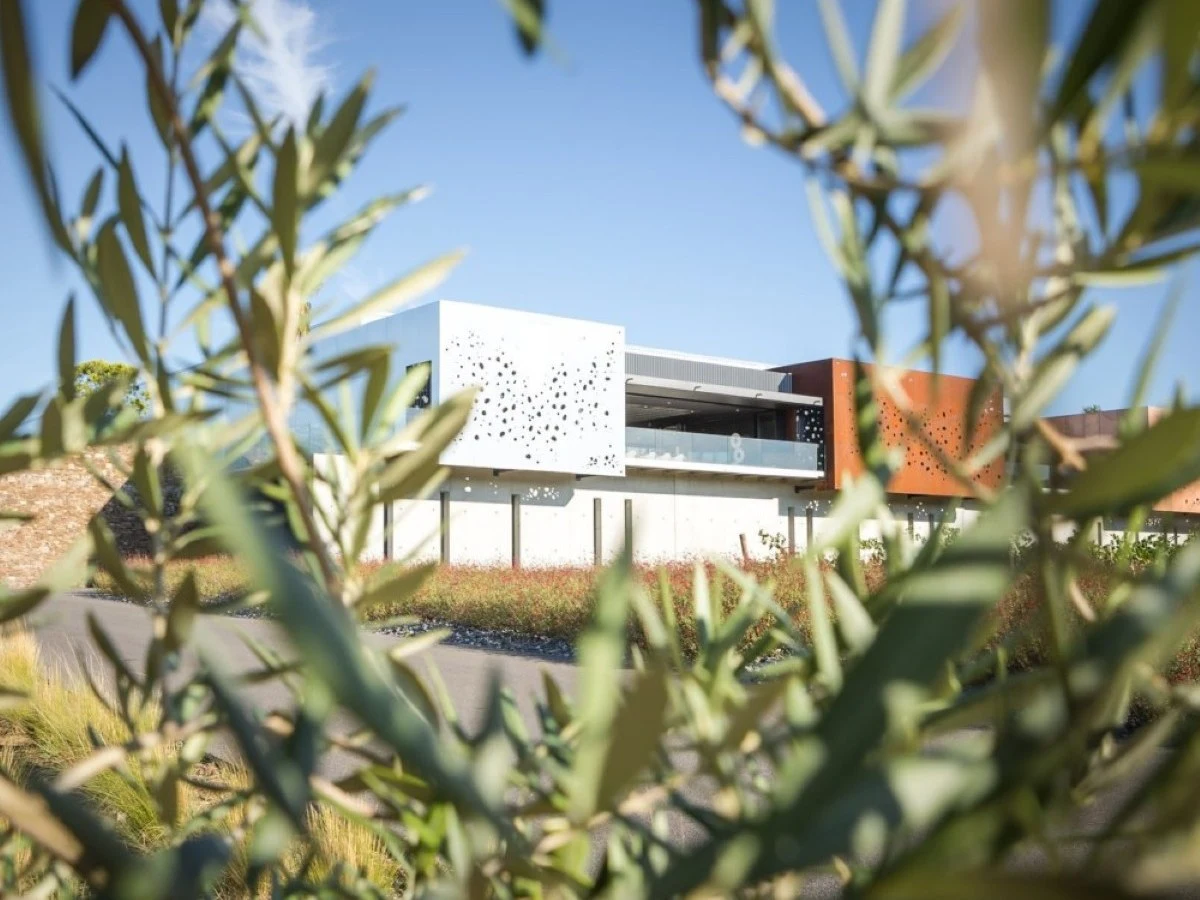
The modern Château Sainte Marguerite winery building in La Londe-les-Maures, designed for an enhanced visitor experience.
The estate is located in La Londe-les-Maures, a commune in the Var department of southeastern France. The nearest major city is Toulon, approximately 30 kilometers to the west. The estate is accessible by car from Marseille, Nice, and the Côte d'Azur. Visitors interested in touring the estate should contact the estate in advance to arrange a visit. The estate offers tastings and vineyard tours by appointment.
For sommeliers and buyers, the estate's partnership with Pernod Ricard means that the wines are available through established distribution channels in major markets. However, the estate's focus on quality over volume means that allocations are limited. Sommeliers who want to feature Château Sainte Marguerite rosé on their lists should establish relationships with importers early in the vintage cycle.
The estate's organic and vegan certification makes its wines suitable for restaurants and wine bars that prioritize sustainability. The estate's focus on gastronomic rosé makes its wines suitable for pairing with a wide range of dishes, from seafood to charcuterie to aged cheeses. Sommeliers who have poured the wines report that they hold up well by the glass and that customers respond positively to the estate's story.
Looking ahead, the Fayard family is focused on transmitting a long-term vision grounded in excellence and terroir expression. Through its partnership with Pernod Ricard and family stewardship, Château Sainte Marguerite aims to reinforce its position as one of Provence's defining estates for gastronomic rosé. Olivier Fayard has stated the estate aims to ensure that future generations inherit an estate producing wines of outstanding precision, balance and finesse, while remaining committed to environmental sustainability, according to The Drinks Business.
For collectors, sommeliers, and drinkers who follow the people behind the wines, Château Sainte Marguerite offers pedigree held together by method. Nearly fifty years of family stewardship have built the foundation. Massal selection and organic viticulture continue the work parcel by parcel. The 2025 awards show that the wines are being heard beyond Provence. Watch the estate's next releases; this is a producer to follow.
The Sunday letter
Get the next Made By guide in your inbox.
We send one email every Sunday morning with the guides and profiles we published that week.