Chef Hasung Lee Opens Oyatte in NYC After Atomix and The French Laundry
After more than a decade in Michelin-starred kitchens, Hasung Lee debuts his first solo restaurant with an eight-course tasting menu anchored by upstate New York farms.
HM
Director of Editorial Standards
Hugo Marchetti
Filed July 9, 2026
8 min read
Brett Ellis brings Crown Daisy Farm produce down from upstate New York each week, and Chef Hasung Lee builds Oyatte's eight-course tasting menu around what lands on the bench. Lee opened the New York City restaurant this June, his first solo venture after more than a decade in Michelin-starred kitchens. He spent years helping Atomix earn two Michelin stars and most recently worked at three-starred The French Laundry.
The opening follows Lee's appearance on Netflix's Korean competition cooking show, Culinary Class Wars, where a wider audience saw his technique at work. At Oyatte, that technique meets a narrow sourcing discipline: Ellis, owner of Crown Daisy Farm, delivers produce weekly, and Lee lets the menu move with the farm.
The Sunday letter
Get our new stories in your inbox every Sunday.
One email with our newest profiles and guides. See a sample before you subscribe.
Lee's lineage places Oyatte high in New York City's tasting menu field. Two Michelin stars at Atomix and time on the line at The French Laundry mean years of exacting work under chefs who measure every gesture. Lee now brings that training to a restaurant still finding its language. "I say it's a contemporary cuisine, but to be honest... I have no idea what's my cuisine yet. I think it'll take a little more time," said Hasung Lee.1
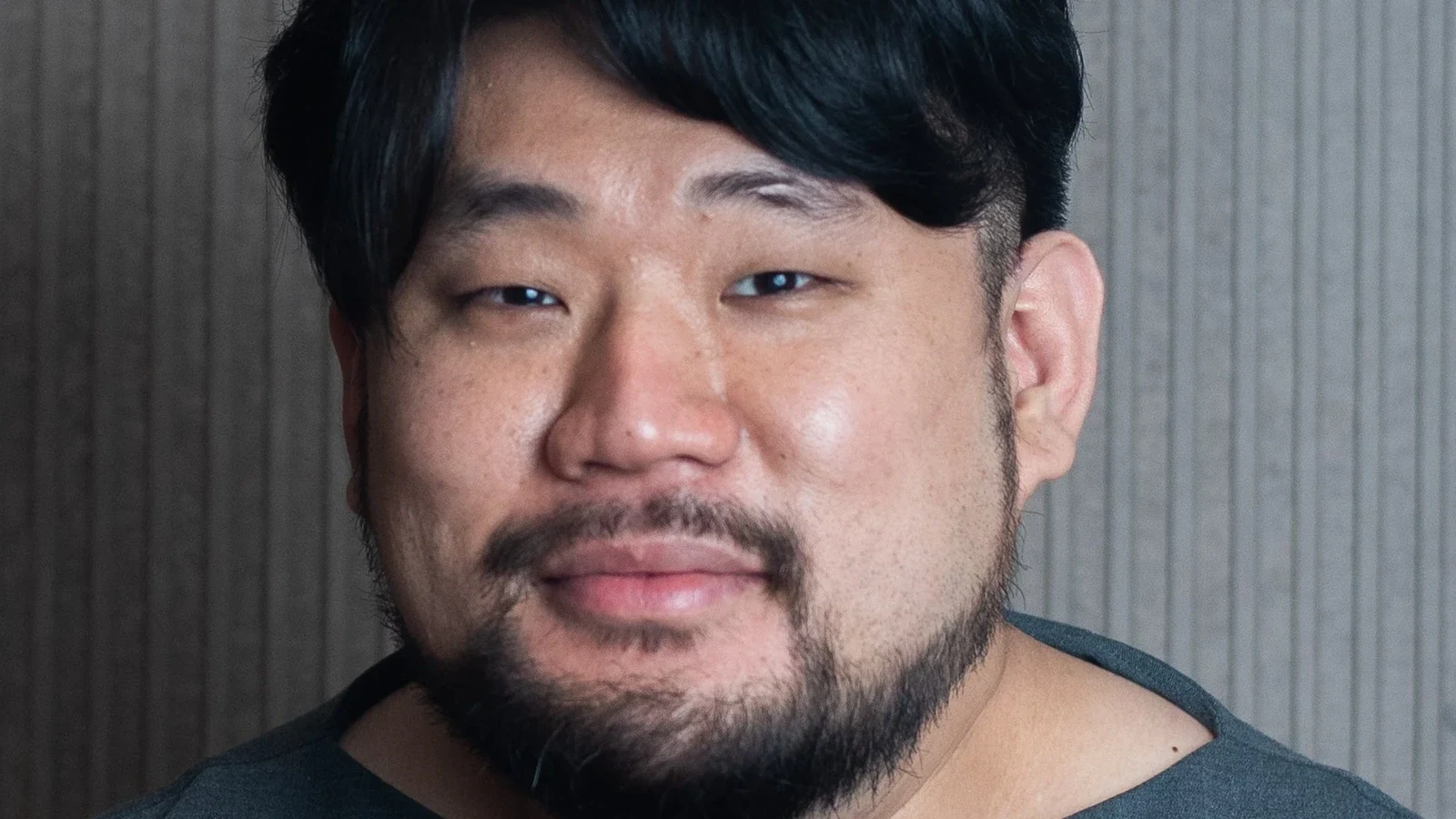
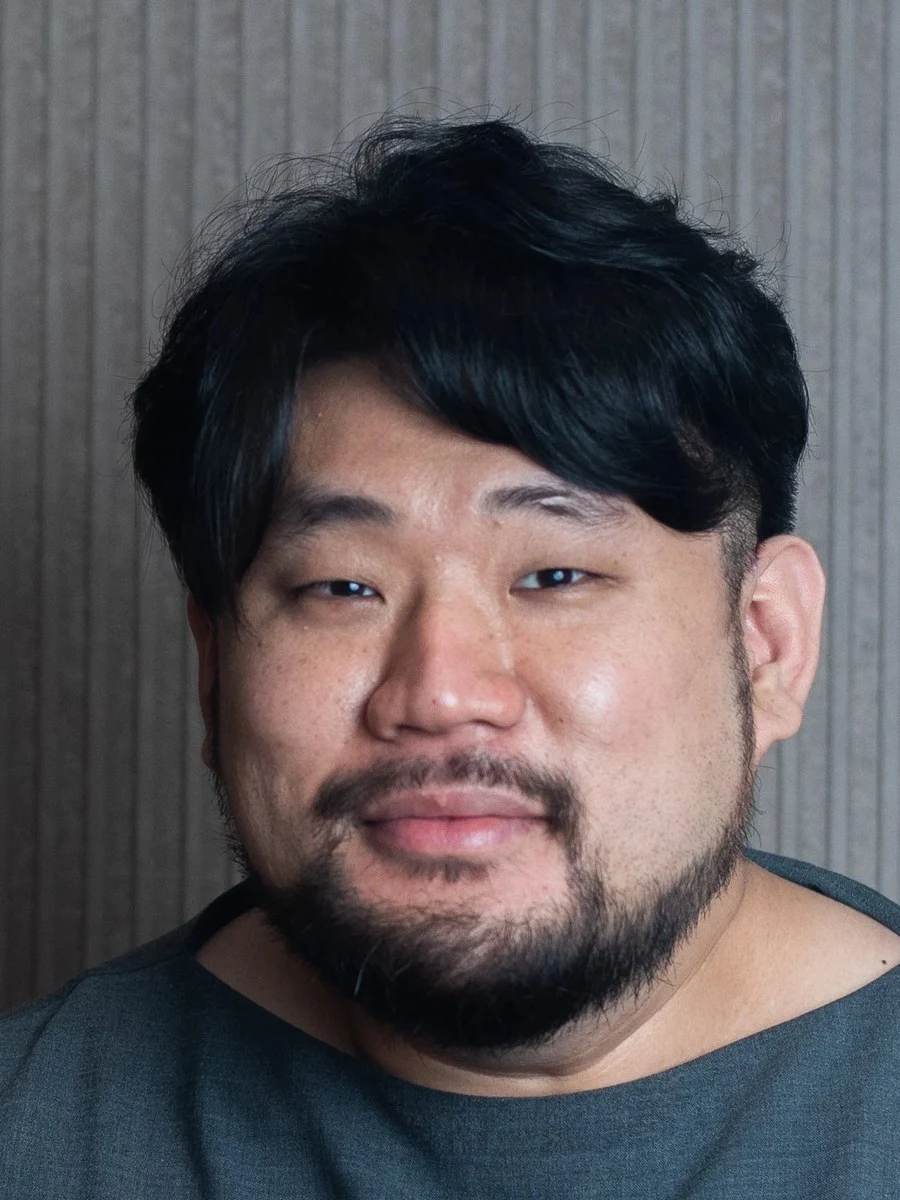
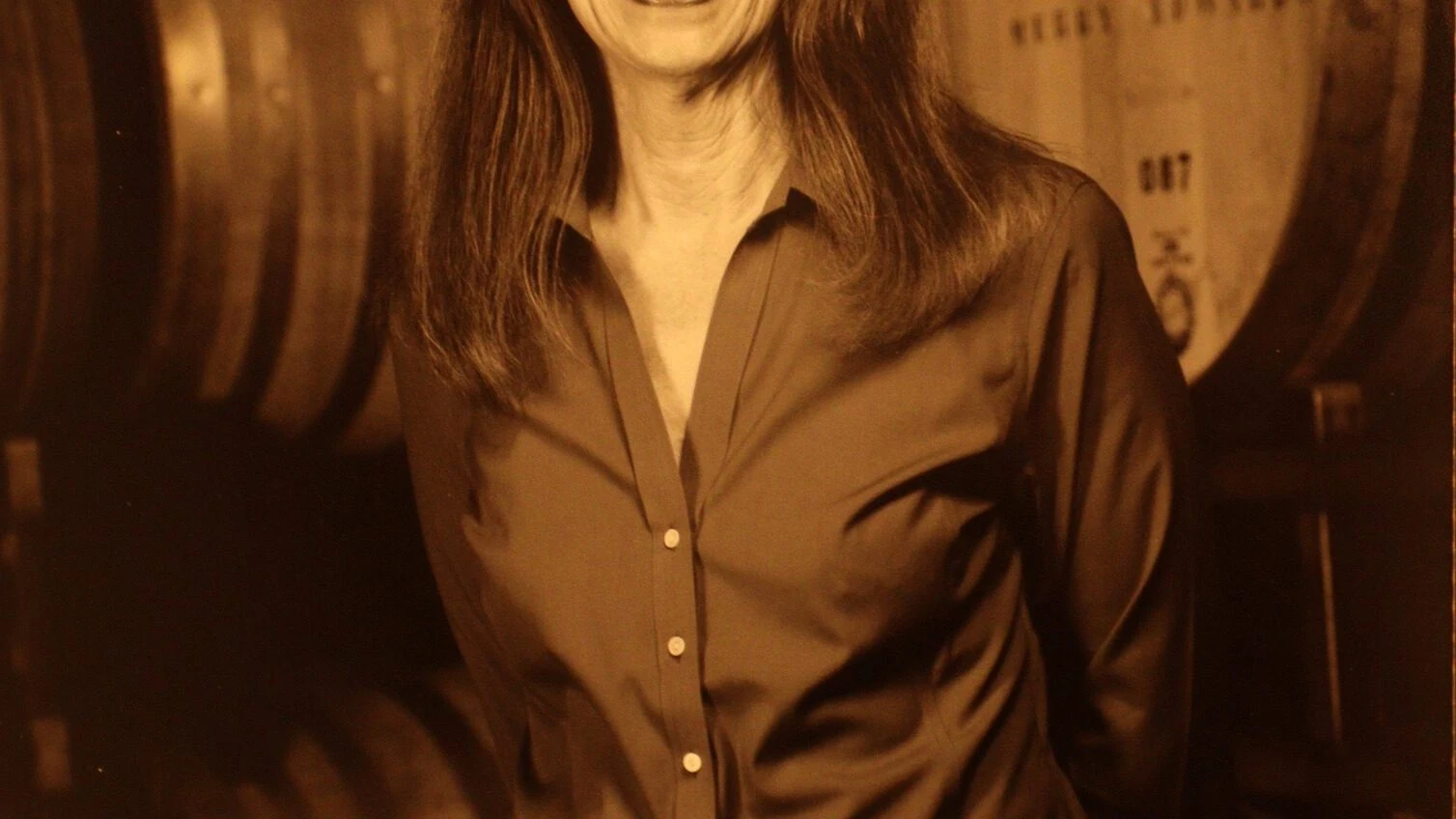
Hasung Lee, chef behind Oyatte, smiles in a portrait.
The eight-course format gives Lee room to work one ingredient, or one method, through each course, and the menu changes with what Crown Daisy Farm can supply. He is not cooking from a fixed book. He is building vocabulary in service, course by course, season by season.
The upstate New York farm focus separates Oyatte from other fine dining openings. Many chefs cite local sourcing; Lee has set the menu around the output of a single farm. Crown Daisy Farm delivers weekly, and Lee adjusts to what Brett Ellis brings. The constraint becomes the method.
Lee's training at Atomix and The French Laundry shows in how he handles those ingredients. The smoked quail dish, for instance, requires two days of brining, glazing, and smoking. The quail comes from Wolfe Ranch, and Lee pairs it with an egg-based bearnaise sauce, an einkorn base, seared white asparagus, and a fermented butternut squash hot sauce. The dish carries the multi-day prep and layered technique that define Michelin-level cooking.
The Eight-Course Menu: Upstate Farms Meet Korean Technique
The menu at Oyatte opens with five to eight canapés served downstairs before diners move to the upstairs dining room. General manager and sommelier Cécile Chastanet, who met Lee at Per Se, leads the transition. The canapés set the tone in small bites, introducing the farm's produce and Lee's work with preservation and fermentation.
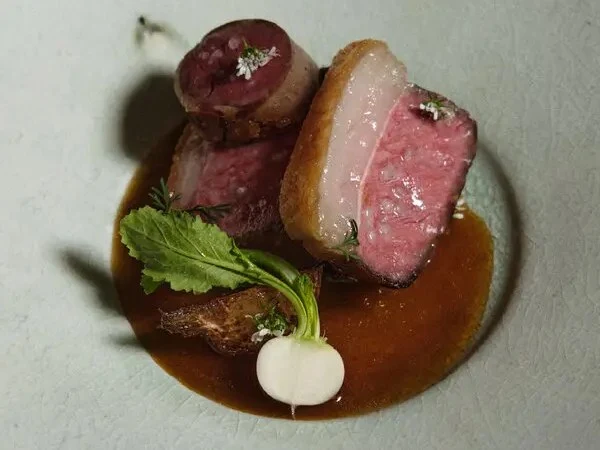
A plated dish featuring seared meat with a medium-rare center, accompanied by a small turnip garnish and rich brown sauce.
One early course uses kohlrabi from Crown Daisy Farm. Lee serves the root vegetable peeled and covered with pickled lilac flower and Amagansett sea salt. Dipping sauces use preserved produce, including kumquats and cherry blossoms. The plate rests on the kohlrabi's sweetness, the lilac's floral acidity, and the sea salt's mineral edge.
The spring green porridge is another vegetable-forward dish that Lee cooked on Culinary Class Wars. The base is a sauce made with chrysanthemum and wild water parsley. After Lee cooks the rice in that green sauce, he plates it with soy sauce-macerated truffle slices. The dish sets the bitterness of the greens against the umami depth of the truffle and soy.
A cucumber course presents the vegetable four ways. Lee uses Kirby, Persian, and English cucumbers in a beer sauce, charred, sauteed, and turned into a relish. The protein is squid, carefully butchered and aged overnight. The bowl layers smoked eel mousse panna cotta, thinly sliced charred cucumber, squid, caviar, and beer sauce. The course works through texture and temperature: cool panna cotta, warm squid, crisp cucumber, the pop of caviar.
Each course reflects Lee's time in kitchens where technique is not optional. The smoked quail takes two days. The squid ages overnight. The kohlrabi is peeled by hand. The rice cooks in a sauce made from scratch. These are the gestures of a chef who learned his craft in places where time and precision set the baseline.
The menu also reflects Lee's Korean heritage, though not in obvious ways. The spring green porridge, the fermented butternut squash hot sauce, and the soy-macerated truffle all draw on Korean flavors and techniques without announcing themselves as Korean food. Lee is cooking his own cuisine, pulled from training, heritage, and the farms he works with.
From Atomix to Solo: What Lee Brings From Michelin Kitchens
Lee's tenure at Atomix and The French Laundry shaped how he runs a kitchen. At Atomix, he worked under chefs who built a two-Michelin-star restaurant around Korean ingredients and techniques. At The French Laundry, he worked in one of the most technically demanding kitchens in the country. Both experiences taught him how to manage a tasting menu, train a team, and hold consistency through service.
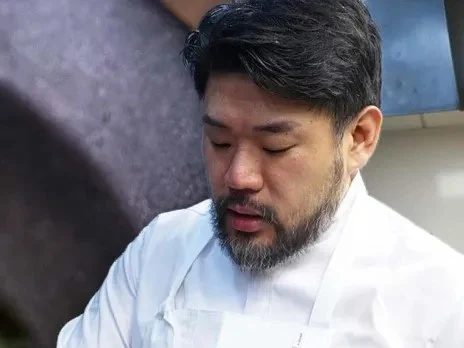
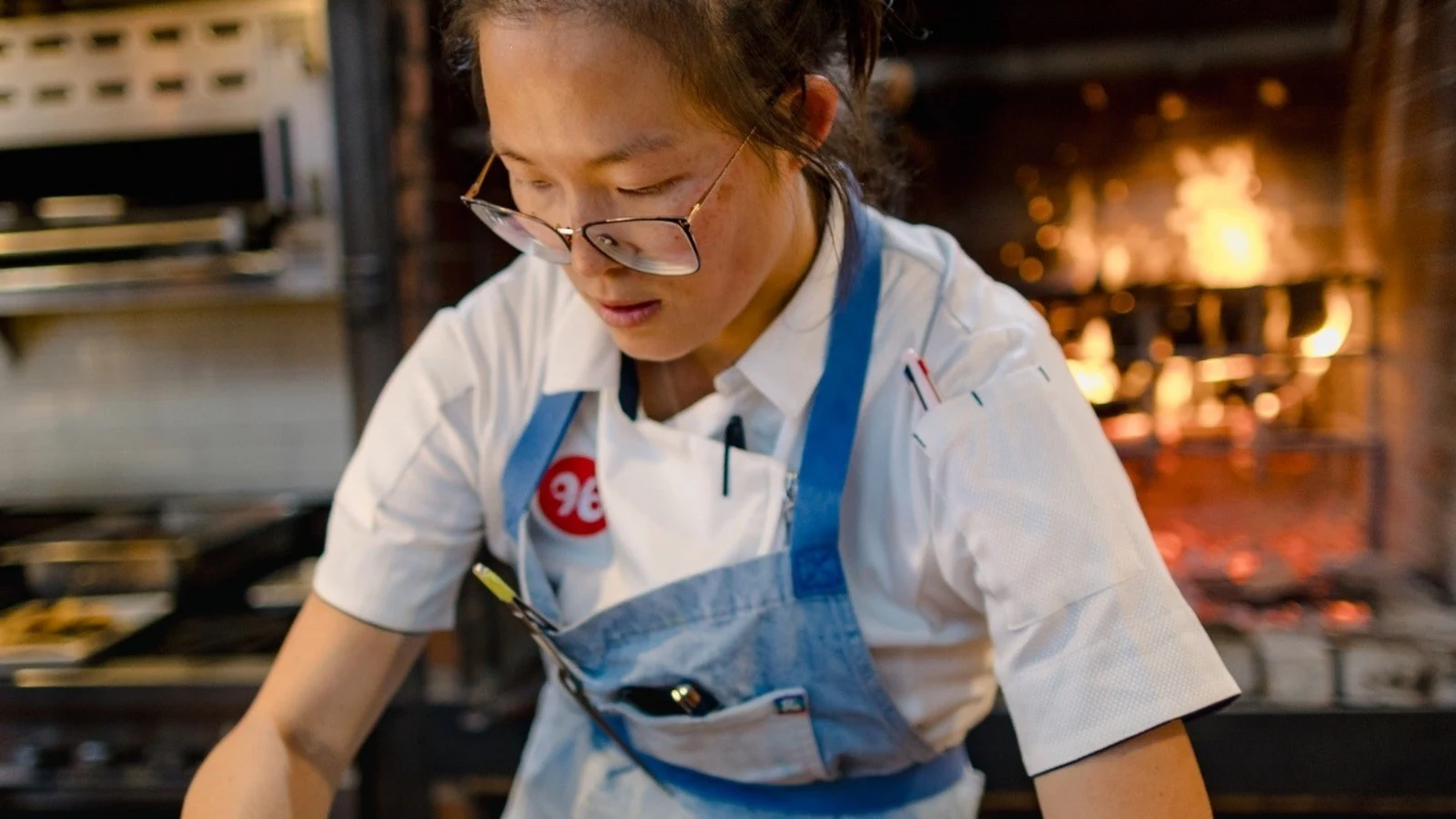
Chef Hasung Lee at work in a professional kitchen setting.
At Oyatte, Lee applies those lessons to his own menu. The two-day quail prep, the overnight squid aging, and the multi-component cucumber course all require advance planning and station discipline. Lee is not replacing the wheel; he is using the one he spent a decade learning to build.
The partnership with Crown Daisy Farm also reflects Lee's training. At The French Laundry, Thomas Keller famously works with a network of small farms and purveyors who supply ingredients to his exact specifications. Lee has adopted a similar model at Oyatte, building the menu around what Brett Ellis can grow and deliver. The farm becomes an extension of the kitchen.
Lee's approach to staff training also carries his Michelin background. In the Now Open episode documenting Oyatte's opening, Lee calmly walks his team through prep and service. The tone is patient, the standards are high, and the expectation is that every dish leaves the kitchen as Lee intends. This is the culture of a chef who learned in kitchens where precision is the only acceptable standard.
The collaboration with Cécile Chastanet, who Lee met at Per Se, adds another layer of Michelin-level service. Chastanet manages the front of house and curates the wine program, aligning beverage pairings with the food. The wine list, while not detailed in the sources, likely reflects the same farm-to-table ethos that drives the menu.
Lee's willingness to say that he is still developing his cuisine also reflects his training. Chefs at the Michelin level understand that a restaurant is not a fixed concept; it changes with the seasons, the staff, and the chef's own growth. Lee is not claiming to have arrived. He is saying he is in the process of arriving.
Booking Oyatte: Pricing, Dates, and Reservations
Oyatte opened in June 2026, and reservations are now available. The restaurant operates across two floors: diners begin downstairs with canapés before moving to the upstairs dining room for the eight-course tasting menu. The format is intimate, with limited seating that allows Lee and his team to keep the level of attention the menu requires.
The eight-course tasting menu format, the Michelin-trained chef, and the farm-to-table sourcing strategy suggest a price point in line with other high-end tasting menu restaurants in New York City. Diners should expect a multi-hour meal with beverage pairings curated by Chastanet.
For those interested in booking, early reservations are advisable. New restaurants from Michelin-trained chefs tend to fill quickly, and Lee's appearance on Culinary Class Wars has raised his profile beyond the fine dining community. The restaurant's focus on seasonal, farm-driven produce also means the menu will change regularly, giving diners a reason to return.
The two-floor format adds a staged rhythm to the meal. Starting downstairs with canapés lets diners ease in, while the move upstairs marks the shift to the main tasting menu. Chastanet's role as general manager and sommelier keeps service in step with the food.
Lee's approach to menu development means that diners who visit in the coming months will see a menu still in motion. The spring green porridge, the smoked quail, and the cucumber course are signature dishes, but Lee has made clear that he is still defining what Oyatte will become. For diners who follow chefs and restaurants over time, this is a chance to watch a Michelin-trained chef build his own cuisine from the ground up.
The partnership with Crown Daisy Farm also means that the menu will shift with the seasons. Summer will bring different produce than fall, and Lee will adapt the menu accordingly. This is not a restaurant where diners can expect the same dish on every visit; it is a restaurant where the farm dictates the menu, and the chef responds.
For those who want to understand what Lee is building, the Now Open episode documenting Oyatte's opening offers a behind-the-scenes look at the kitchen, the prep, and the service. The episode shows Lee working through the challenges of opening a new restaurant, from training staff to finalizing the menu. It is a rare look at the process behind a high-level opening.
Oyatte is best understood at the point where Lee's hands meet the farm's produce. His training at Atomix and The French Laundry, his work with Crown Daisy Farm, and his willingness to let the cuisine develop over time all point to a chef serious about the craft. The eight-course tasting menu gives him a disciplined frame, and the upstate New York farm focus gives the menu its first clear line. For diners who follow Michelin-level cooking, this debut is worth booking early.
The Sunday letter
Get the next Made By guide in your inbox.
We send one email every Sunday morning with the guides and profiles we published that week.