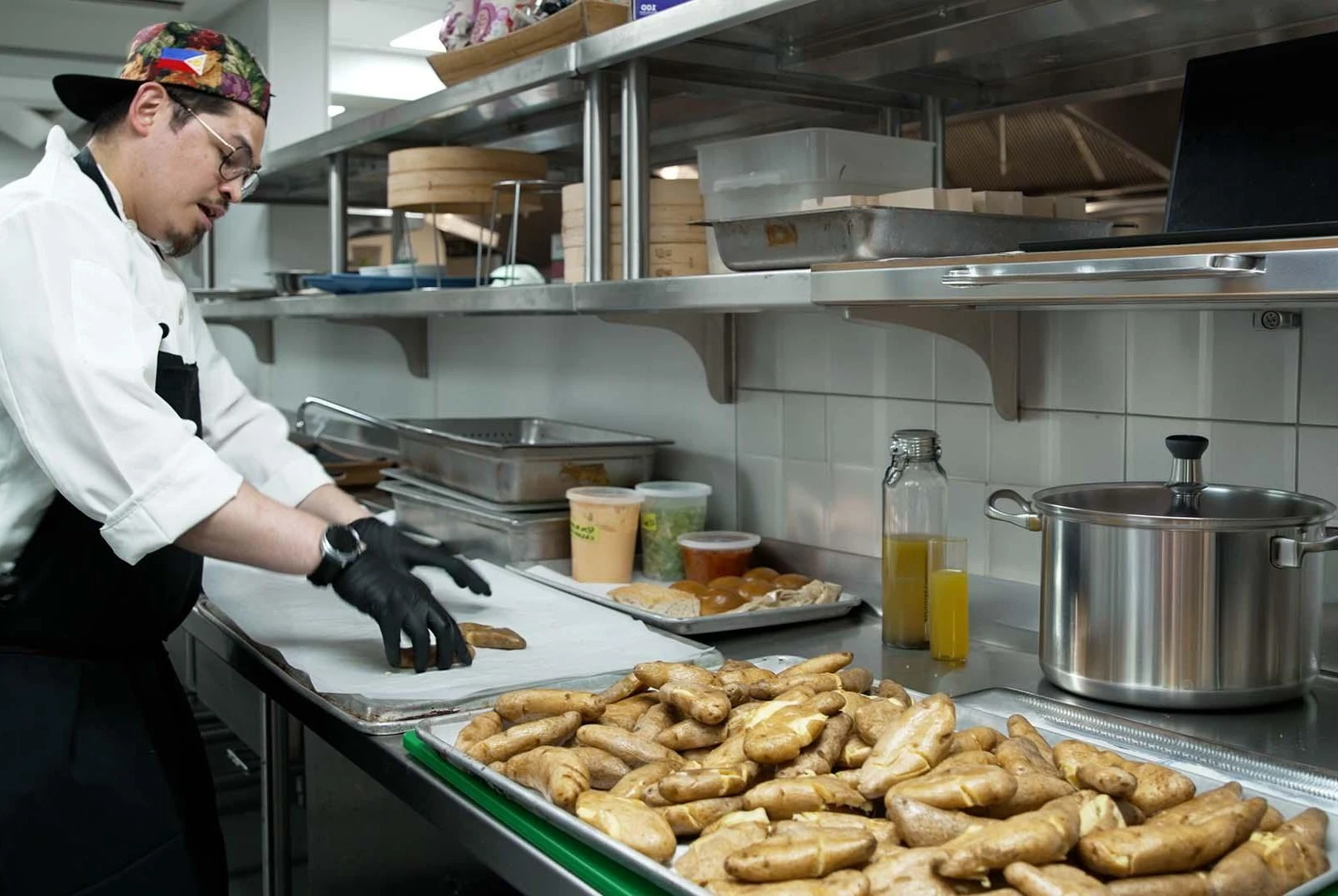
Sherry Cardoso tops a yellow masa tostada with fluke, vatapá sauce laced with shrimp and coconut, then finishes the bite with a sheet of nori. Cynthia West Village is Chef Sherry Cardoso and Claire DuBois's Brazilian-influenced New American tasting-menu restaurant with a kitchen discipline that returns ends, peels, and trimmings to the meal.
Cardoso arrives at Cynthia with the public mark of Top Chef Season 23, where she competed in the Carolinas and became a finalist. She was an opening chef at Olmsted before this West Village project. The tasting menu carries Brazil through New American form, a culinary line Cardoso has said is a love letter to her mother and to Brazil (Eater1).
Cynthia Peck, DuBois's aunt, co-ran Angelo's and Vinci's Ristorante in Fullerton, California. The plates show Brazil through corn, coconut, tomato, squash, vatapá, tepache, and brigadeiro, through ingredients handled with the restraint of a cook who has spent years in New York fine-dining kitchens.
What Cynthia in the West Village Asks of Cardoso's Hands
The tasting menu at Cynthia runs six courses for $165, with a seven-course option for $200. The tasting menu runs six courses for $165, with a seven-course option for $200. Cardoso's answer is a menu of New American dishes with Brazilian aspects and a sustainability practice that puts ends, peels, and trimmings to work (Eater1).
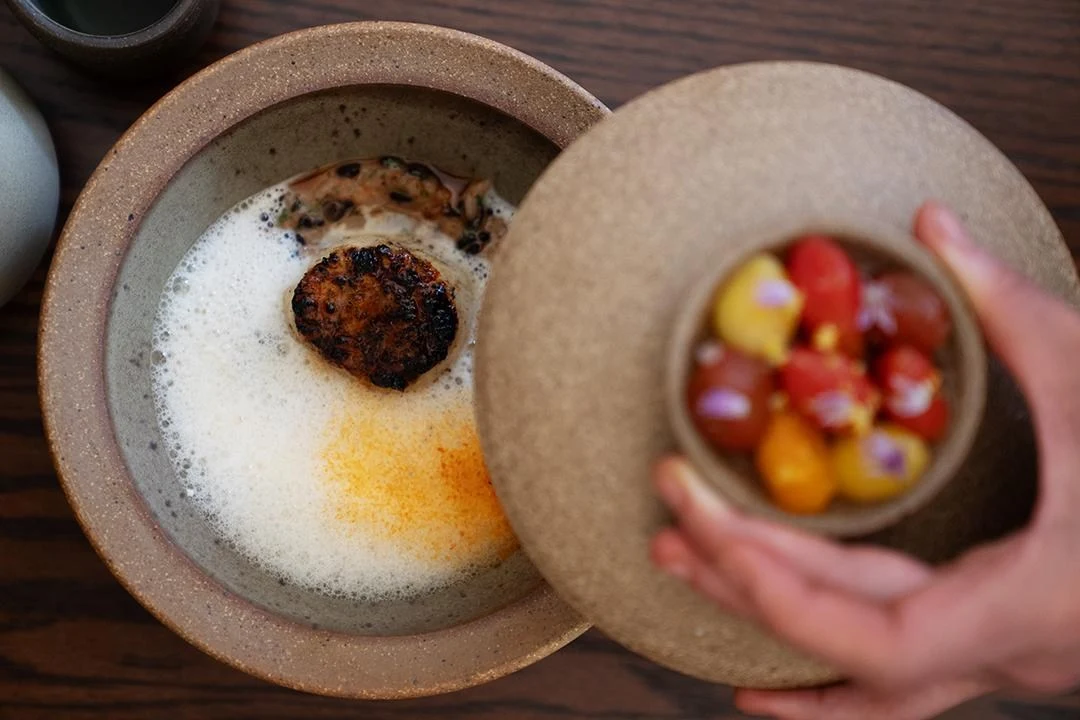
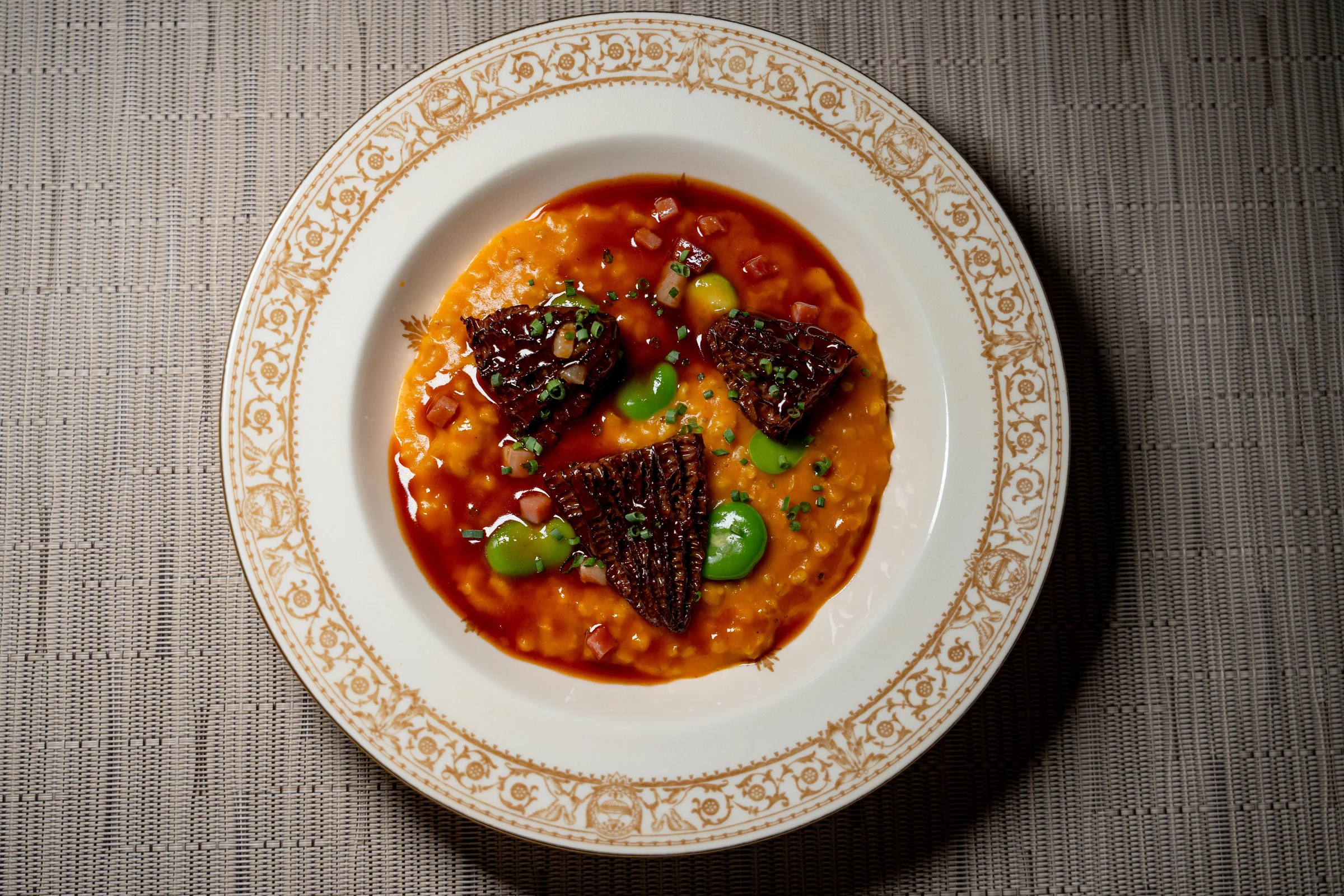
That discipline turns up in the corn course, where corn appears three ways. One pass brings corn sorbet with tiny sliced squash. Another holds a two-layer creamy corn custard topped with caviar. A third brings roasted summer squash with corn kernels and dollops of chunky XO sauce made with vegetable trim. The course combines cold, creamy, and roasted elements with sweet corn, squash, brine, and the savor of trim that would be lost in a looser kitchen.
Each meal begins with a card describing seasonal significance and produce, a working diagram for a menu that asks the diner to notice corn, squash, tomato, vegetable trim, and the season around them.
The Business Partnership and the Family Name
Cynthia was co-founded by Cardoso and Claire DuBois. DuBois brings the name that sits over the project: Cynthia Peck, her aunt, who co-ran Angelo's and Vinci's Ristorante in Fullerton, California.
DuBois's aunt, Cynthia Peck, co-ran Angelo's and Vinci's Ristorante in Fullerton, California. Peck's Fullerton restaurants form a quiet backbeat to a West Village room serving fluke with vatapá, lobster with tomato curry, and Amazonian brigadeiro.
Cynthia asks for both. Cardoso's mother and Brazil sit inside the menu. DuBois's aunt sits inside the name. The guest receives the seasonal card at the beginning and a take-home menu at the end detailing the dishes and some condiments used in the meal.
The Menu Moves: Fluke, Corn, Lobster, Brisket
The fluke tostada starts with yellow masa, then moves through vatapá, a Brazilian sauce here described through shrimp and coconut, before the nori lands on top. The tostada works by stacking the ingredients so each bite moves from masa to fish to vatapá to nori. The technique is in the stacking, and the tasting is in the order of contact.
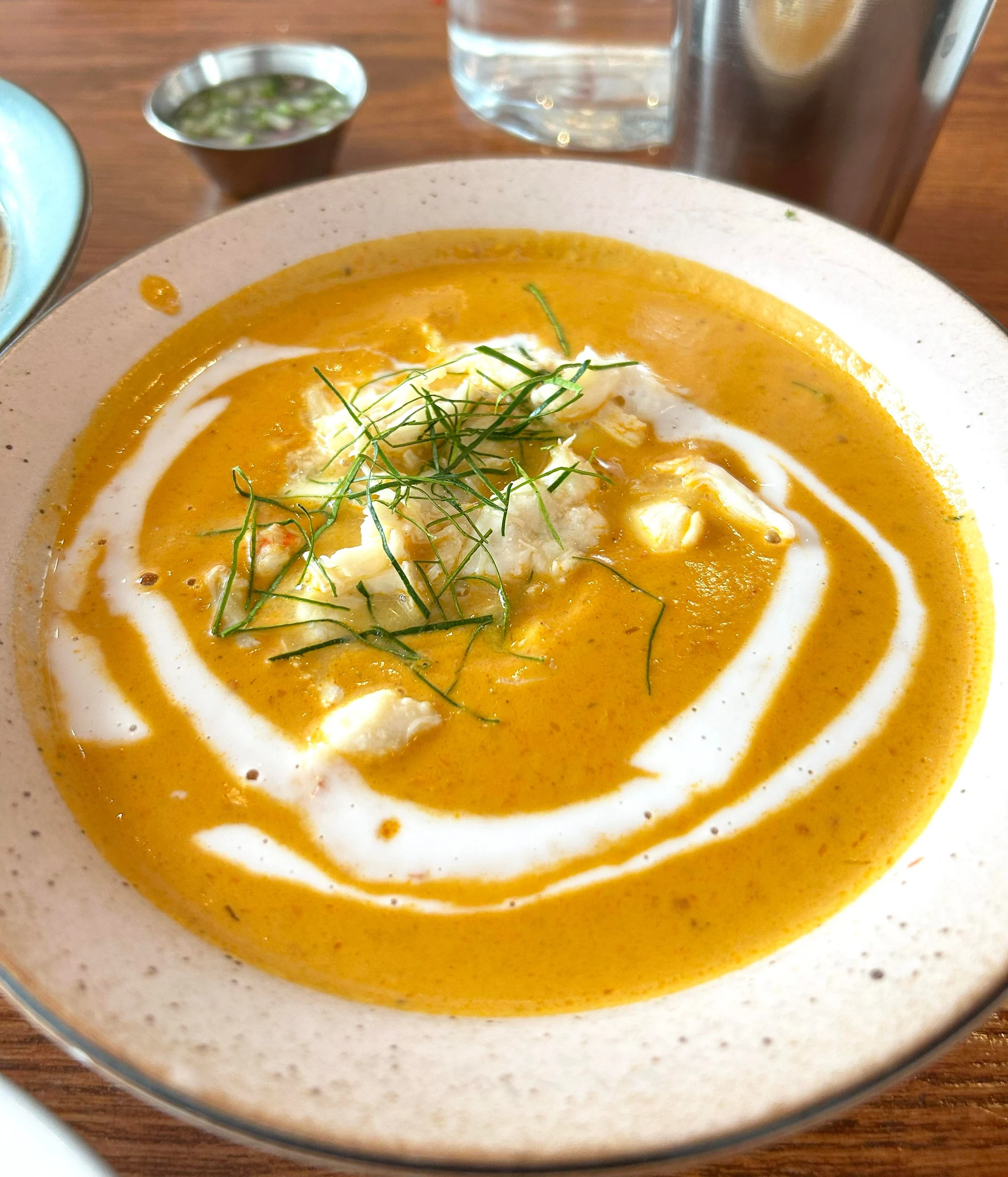
The lobster course takes a different route. A staffer arrives with a small leather satchel that opens to truffles, then shaves them over lobster paired with tomato curry. The course also comes with a charred lobster and tomato taco. The course is the room's most table-side gesture, a bit of theater with a blade and a satchel, but the plate still returns to Cardoso's tomato work. Tomato appears again at the bar in the Tomato 'Tini, a $26 martini made with tomato eau de vie, amontillado sherry, and green tomato vermouth. The drink comes with a small cherry tomato dusted with black pepper in its own holder with a toothpick (Eater1).
The brisket ravioli brings another register, shaped pasta around a beef filling. A ravioli can look worked and eat heavy; here, the point appears to be shape in service of texture, not shape as a trophy. Dessert brings Amazonian brigadeiro, kept from too much sweetness, followed by petit fours.
Drinks, Booths, and the Feel of the Room
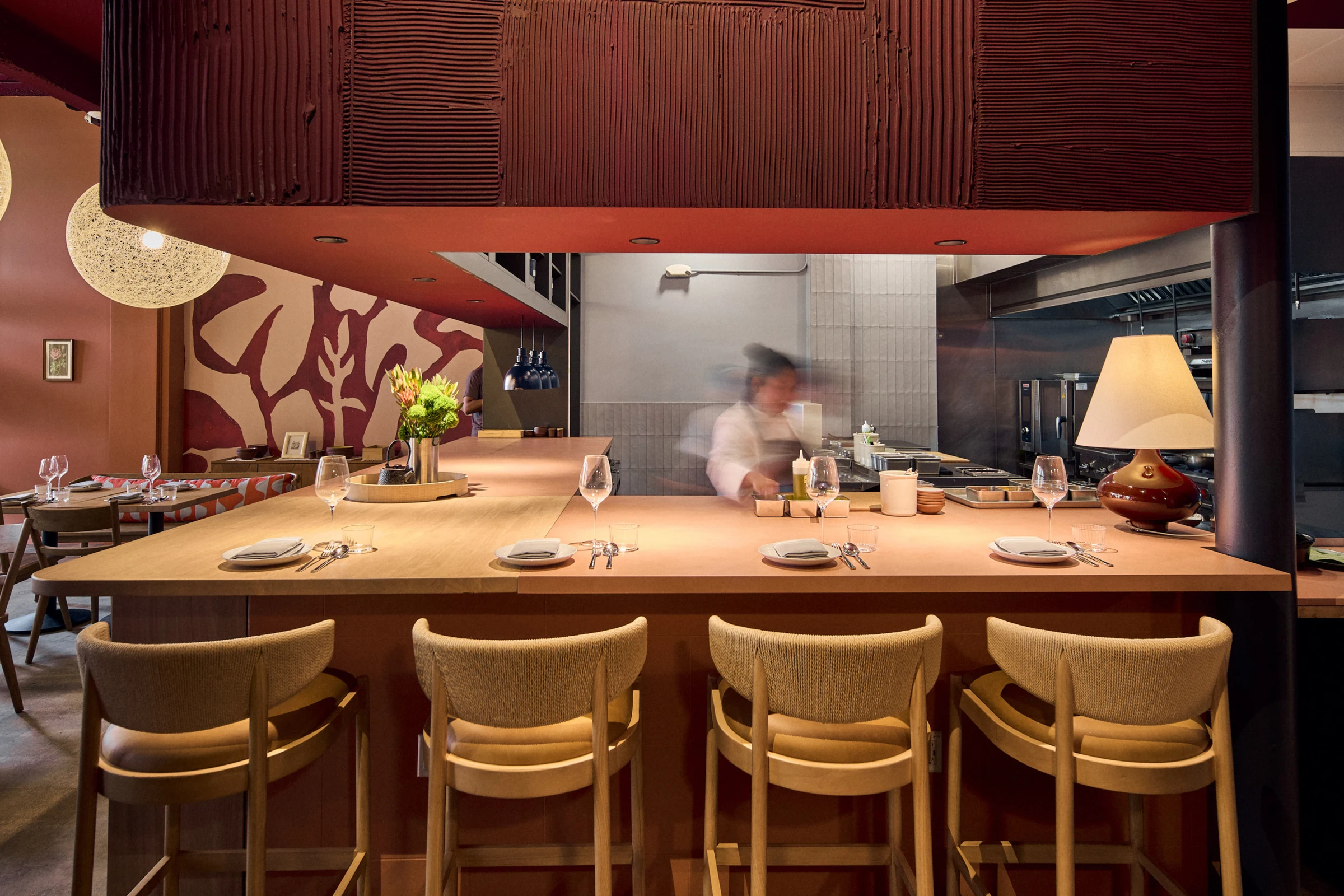
The room at Cynthia is a single airy dining room with comfortable seats, a 1990s-heavy soundtrack, and a bathroom sink seemingly carved from a large rock. The room plays a 1990s-heavy soundtrack. The sink looks carved from a large rock. The open kitchen keeps the cooks inside the guest's field of vision (Eater1).
The best seat, for a certain kind of diner, may be one of the two-person booths along the window. The booths sit side-by-side, separated by curtains, facing the dining room and open kitchen. That orientation lets you watch the room and the pass together. You can see when the next course is being set, when a staffer crosses with the truffle satchel, when the open kitchen resets between plates.
The drinks keep the kitchen's produce logic in view. The Tomato 'Tini uses tomato eau de vie, amontillado sherry, and green tomato vermouth. Batikh brings watermelon and arak into the glass. House-made tepaches arrive in flavors such as strawberry and pineapple. The drinks echo the menu's fruit, acid, and fermentation cues.
How to Read Cynthia Now
Cynthia sits in the West Village, a neighborhood Cardoso has cooked in before. That return gives the restaurant a tighter grain than a simple new opening. Cardoso has already worked in New York kitchens, left, built a résumé that includes Olmsted, then came back with DuBois to open a room named for Cynthia Peck.
The practical frame is clear where it has been made public: Cynthia serves a six-course tasting menu for $165 and a seven-course option for $200. The Tomato 'Tini is $26. The menu is Brazilian-influenced New American cooking with a sustainability practice that uses ends, peels, and trimmings. The room includes two-person curtained window booths facing the dining room and open kitchen. Guests leave with a menu that records the dishes and some condiments used during the meal.
The method at Cynthia will have to prove itself again as the produce changes, course by course, card by card, with the trim still folded back into the work. The method at Cynthia will have to prove itself again as the produce changes, course by course, card by card, with the trim still folded back into the work.