At 5 p.m. on October 22, Leicel Ros and Nancy Dominguez open Anako in Little River with partner Nidal Barake, moving the cooking they built at Sili into a 38-to-43-seat restaurant with an open kitchen in the front dining area. Anako is their first sit-down restaurant together, a modern Filipino project shaped by Ros' family table, Dominguez's Los Angeles training, and the Southeast Asian dishes the couple cooked through pop-ups before settling into Wynwood's 1-800-Lucky food hall.
The scale keeps the chefs visible. Four seats at the chef's counter will be held for the Anako Experience, a tasting menu the team plans to introduce soon after opening. Reservations drop one month in advance at midnight. This opening begins close to the bench: two cooks, a partner, a name from Ros' mother, and a menu that carries family dishes into a Miami neighborhood where the couple already spent time off the clock.
What Makes Anako in Little River a Place to Track Now
Ros and Dominguez arrive in Little River after a route through fine-dining kitchens, pop-ups, and a food hall station. The couple met while working at the now-closed Jean-Georges in Los Angeles. Ros' kitchen background includes Nobu; Dominguez worked at the former Jean-Georges Beverly Hills and in Joël Robuchon's kitchens. Anako is small enough for Ros' and Dominguez's training to show in the handling of a roll, a crudo, a sauce, and the handoff from the pass at the counter.
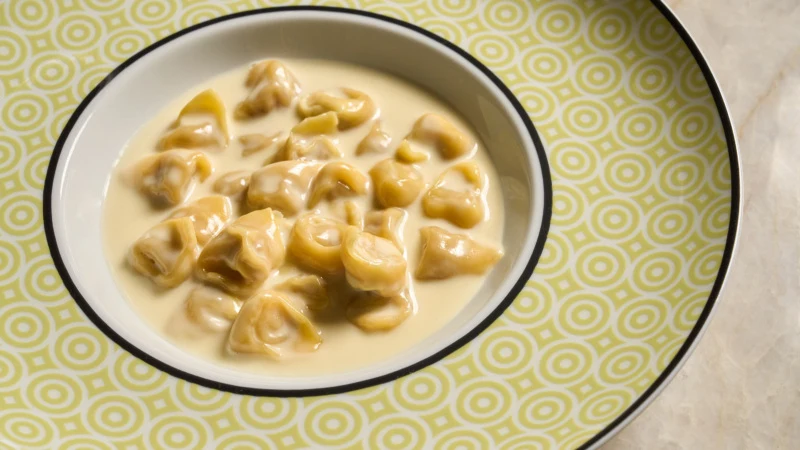
The restaurant's name comes from anak ko, Tagalog for "my child," the phrase Ros' mother uses for her. That origin gives the opening its center. Anako begins with a family form of address, then moves outward: pork-and-shrimp lumpia, kinilaw crudo, oxtail kare-kare, banana fritters with sesame caramel, and a back bar that can take a walk-in for a drink and a bite from the main menu.
Anako also gives Ros and Dominguez a dining room after the tighter service frame of Sili at Wynwood's 1-800-Lucky. At a food hall counter, the dish has to survive noise, movement, and the customer ordering on the way somewhere else. In a 38-to-43-seat restaurant, pacing becomes part of the craft. The chefs can open with a succinct menu, add dishes as the team settles into service, and build a tasting format for four guests at a time.
The reservation pressure sits in the numbers. Fewer than 43 seats. Four at the counter. A one-month booking window that turns over at midnight. Some dining room space stays open for walk-ins, and the back bar will also take walk-ins.
The Chefs, the Lineage, and the Move From Sili
Ros was born in the Philippines, grew up in Virginia Beach, and studied at Johnson & Wales in North Carolina. Her family came to the United States through her uncle's Navy service, which created the path for her mother to come over. The restaurant's hospitality thread comes from that history as much as from any station she has worked. Ros also spent four years at Cote Miami and taught at Miami Culinary Institute; one of her former students is part of the Anako team.
That teaching detail shows how Ros thinks about the kitchen beyond opening night. She has benefited from mentors and wants instruction to remain part of the restaurant's daily work, with employees preparing for whatever comes after Anako. In practice, the bench becomes a place where a former instructor can watch a young cook repeat a motion until it holds under service pressure.
Dominguez brings a different family and kitchen line into the room. She grew up in Los Angeles in a Guatemalan family, and her aunt has operated a Guatemalan bakery there for decades. Her professional path includes the former Jean-Georges Beverly Hills and Joël Robuchon's kitchens. The overlap with Ros started at Jean-Georges in Los Angeles, then moved into pop-ups during the pandemic, when the couple cooked the Southeast Asian flavors they missed from Los Angeles.
Sili gave Ros and Dominguez a public working draft. At Wynwood's 1-800-Lucky, they could test demand, sharpen dishes, and work with the speed of a food hall while holding onto the flavors they wanted to cook. Anako, with Barake as partner, gives them a room of their own. The proportions are clear: fewer than 43 diners, a four-seat counter, an opening schedule of Thursday through Monday starting at 5 p.m., and a plan to move to six days a week once the team is ready.
Menu Highlights: Filipino Foundations Meet Southeast Asian Technique
The menu at Anako starts from modern Filipino cooking and takes in Southeast Asian influence from Ros' travels and the couple's shared cravings. Ros explored Southeast Asian cooking beyond her family kitchen while studying in Singapore and Thailand, then added more dishes and flavors through later trips to Vietnam. The result follows what Ros and Dominguez have cooked, eaten, missed, and returned to.
The lumpia gives the method away. It reads first as a Filipino fried roll, then the shrimp tail changes the silhouette. The chefs combine heritage pork with a whole Gulf shrimp, draw on Japanese technique, and serve it with chile lime. The kinilaw crudo uses Japanese hiramasa with coconut-calamansi, chile, radish, and a rice cracker. The structure sits in the placement of acidity and texture: citrus and coconut against fish, chile for heat, radish and cracker for cut and snap.
Other opening dishes carry the same crosscurrent. Bistek tartare uses Wagyu. Chicken inasal brings lemongrass-marinated chicken to the table. Sisig uses crispy pig ears. Pancit noodles arrive with kohlrabi. The ingredient choices do the explaining, the way a familiar form changes through one specific decision.
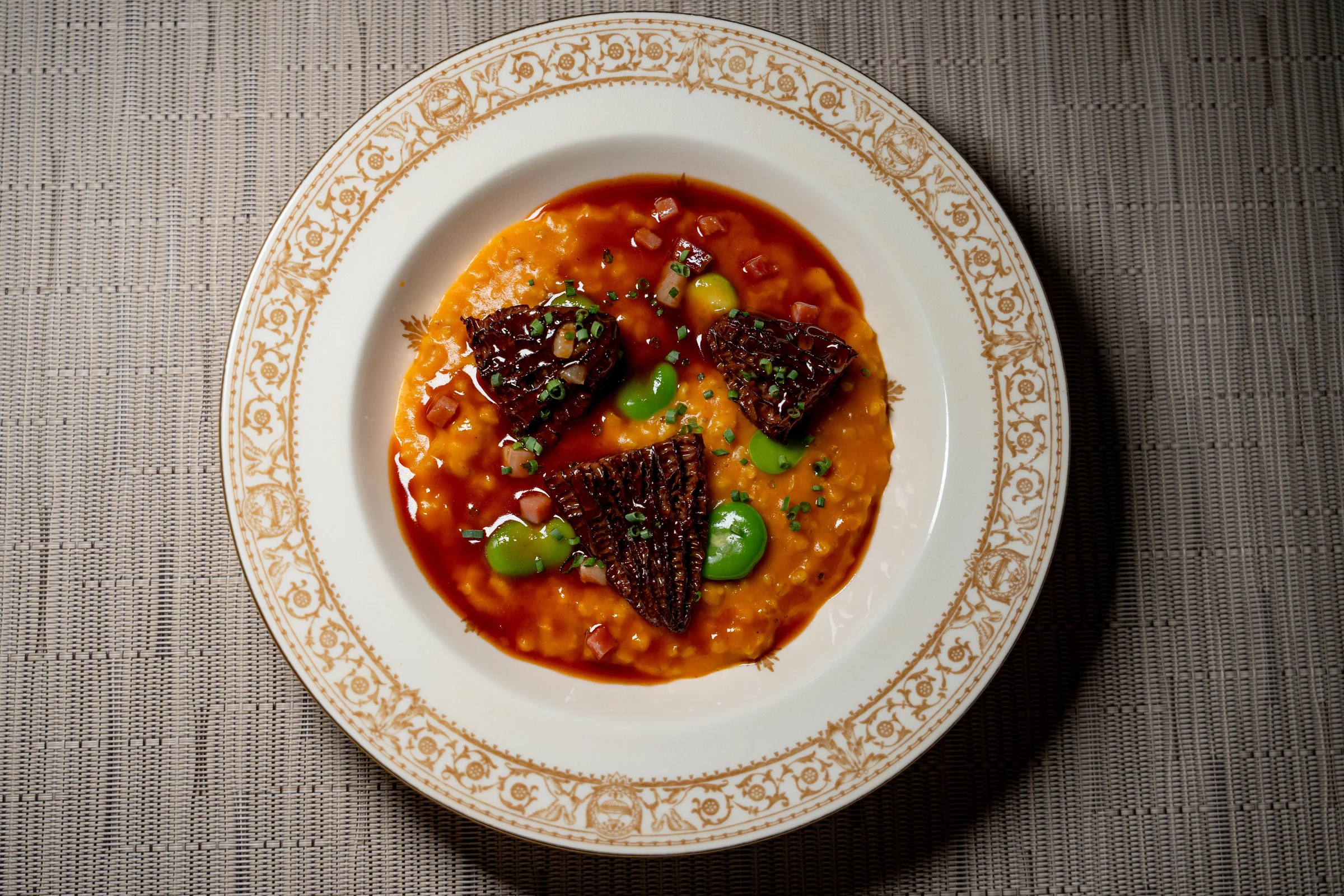
Kare-kare is the dish where the family lineage comes closest to the pass. Dominguez first tried kare-kare in Las Vegas, then tasted Ros' mother's version. "Her mother actually cooked it for us, and I just fell in love with the dish," said Nancy Dominguez.1 At Anako, the dish comes with slow-braised oxtail, Romano beans, pickled okra, and bagoong. Dominguez connects the savory peanut sauce to pepián, the Guatemalan braise from her own background, so the plate carries both households.
The banana fritters work along a similar line. The chefs describe the dish as a Thai Filipino version made with baby bananas in rice batter, crisp outside and soft inside, served with coconut and sesame caramel. A fritter lives in the short interval between fryer and table, when the shell still answers back and the banana has softened inside it.
The opening menu stays succinct while the team finds its service pace. Ros and Dominguez open with lumpia with pork and Gulf shrimp, crudo with coconut-calamansi, oxtail with peanut sauce and bagoong, and fritters with rice batter and sesame caramel.
The Room, the Back Bar, and the Four-Seat Counter
Before opening Anako, Ros and Dominguez moved from downtown Miami to Little River. They were already spending off-hours at neighborhood places including Off Site and the Citadel, and had visited Sunny's when it was a pop-up. They wanted to open among businesses they knew and admired in their own neighborhood.
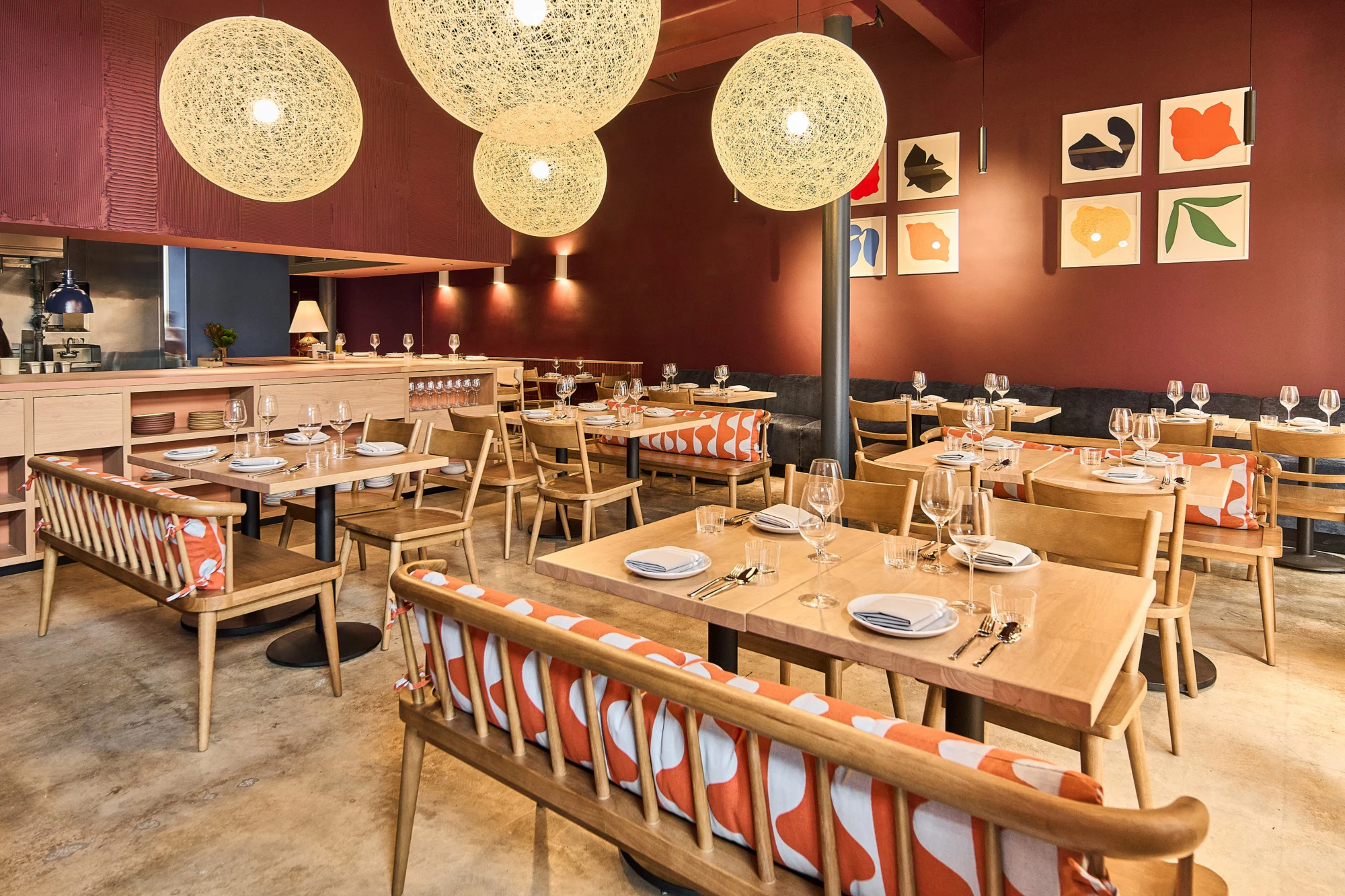
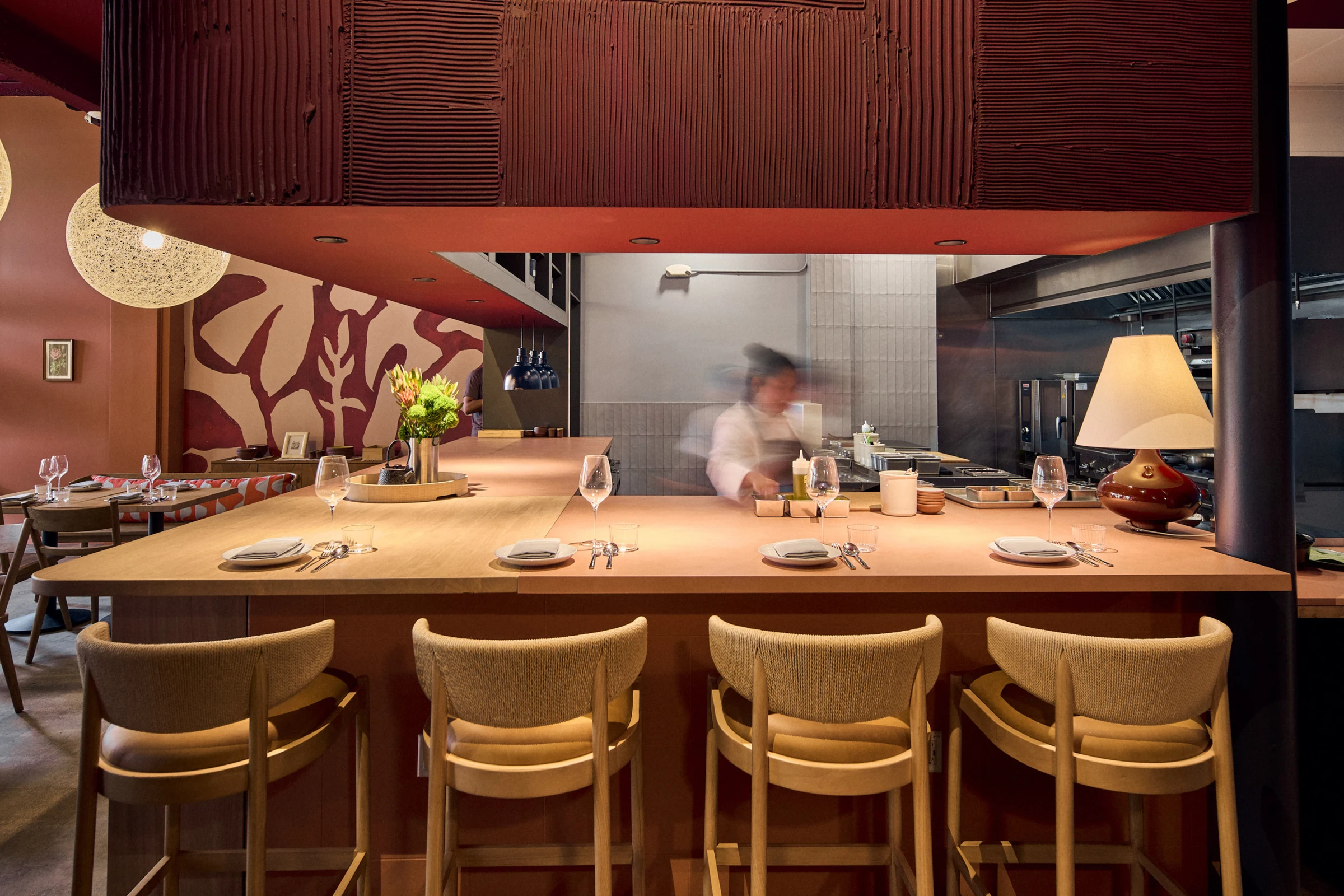
Areatonic designed the interior with natural wood, earthy terracotta, deep burgundy tones, sculptural lighting, and clean lines. Barake has described woven textures, bold patterns, and organic forms as subtle references to Filipino heritage. The front dining area holds the open kitchen, which gives the room its working face: cooks in view, dishes leaving the pass, the sound of service kept close to the table.
The back room gives Anako a second rhythm. Formerly home to an early version of Kojin, it will operate as a walk-in wine bar with low-ABV drinks, craft cocktails, natural wines, beer, and appetizers from the main menu. The team plans a dedicated bar menu later. During the opening period, the back bar gives Little River a shorter way into the restaurant: a drink, a bite, and a read on how Ros, Dominguez, and Barake want the place to move after 5 p.m.
The Night Shift is a shaken coffee cocktail inspired by a carajillo, made with cold brew, condensed milk, tawny port, Amontillado sherry, and Maldon salt. The ingredient list reads like a bar station built around bitterness, milk sweetness, fortified wine, and salt.
The chef's counter will hold four seats for the Anako Experience, a set multi-course menu with an optional wine pairing. Ros and Dominguez like to sit where they can watch chefs cook and speak with them during a meal; they are building the same exchange into their own room. Four seats changes the pace. It lets the chefs serve a few guests at a time, answer questions bench-side, and test dishes in a format that can evolve without moving the whole dining room at once.
Reservations, Hours, and What to Watch After October 22
Anako opens October 22 in Little River. The restaurant will be open Thursday through Monday starting at 5 p.m., with plans to move to six days a week.
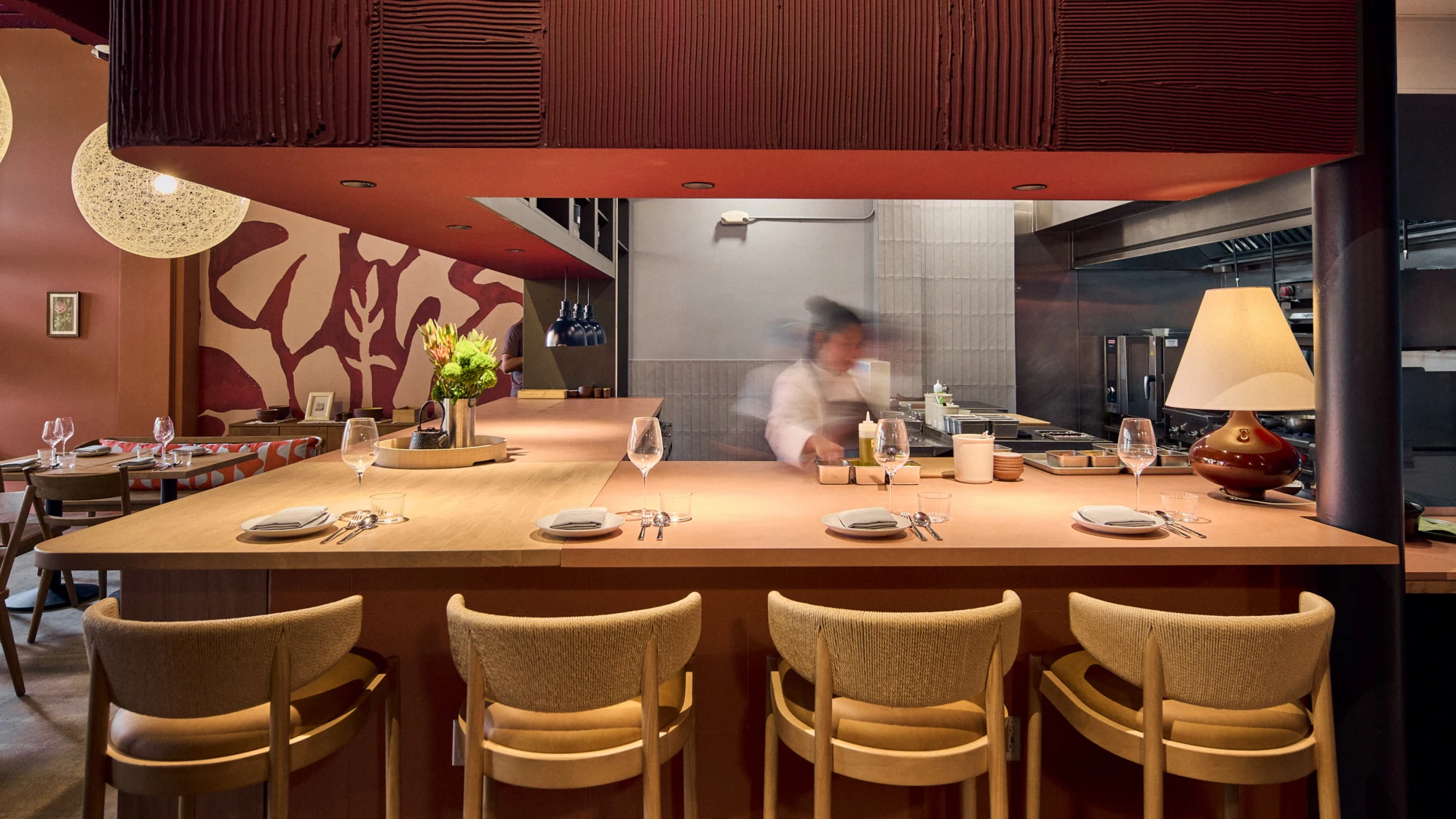
For diners tracking Anako early, the practical route is simple: watch the reservation window, then choose the dining room, the back bar, or the four-seat counter once the Anako Experience begins. Each route shows a different part of the team. The dining room gives the opening menu its full range. The bar gives a shorter read on the drink program and snacks. The counter, when it starts, will show how Ros and Dominguez speak through a multi-course format with only four diners in front of them.
The next measure of Anako will be how the team adds dishes after the opening menu settles into service. Ros has said she wants to return to devising dishes once staff can lead more of the dining room. Dominguez will run the kitchen at opening. Barake's hand is visible in the room and bar, where the textures and drink list give the restaurant its second point of entry. The names to follow are the same ones that make the opening worth tracking: Ros at the threshold between hospitality and the bench, Dominguez on the kitchen line, Barake shaping the room, and the former student inside the team who will learn the method service by service.
On October 22, Anako moves from pop-up memory and food hall practice into a room small enough for the work to stay close. Watch the lumpia, the kare-kare, the four counter seats, and the way Ros and Dominguez use the first months to turn family dishes and kitchen lineage into a restaurant that can teach its own crew.