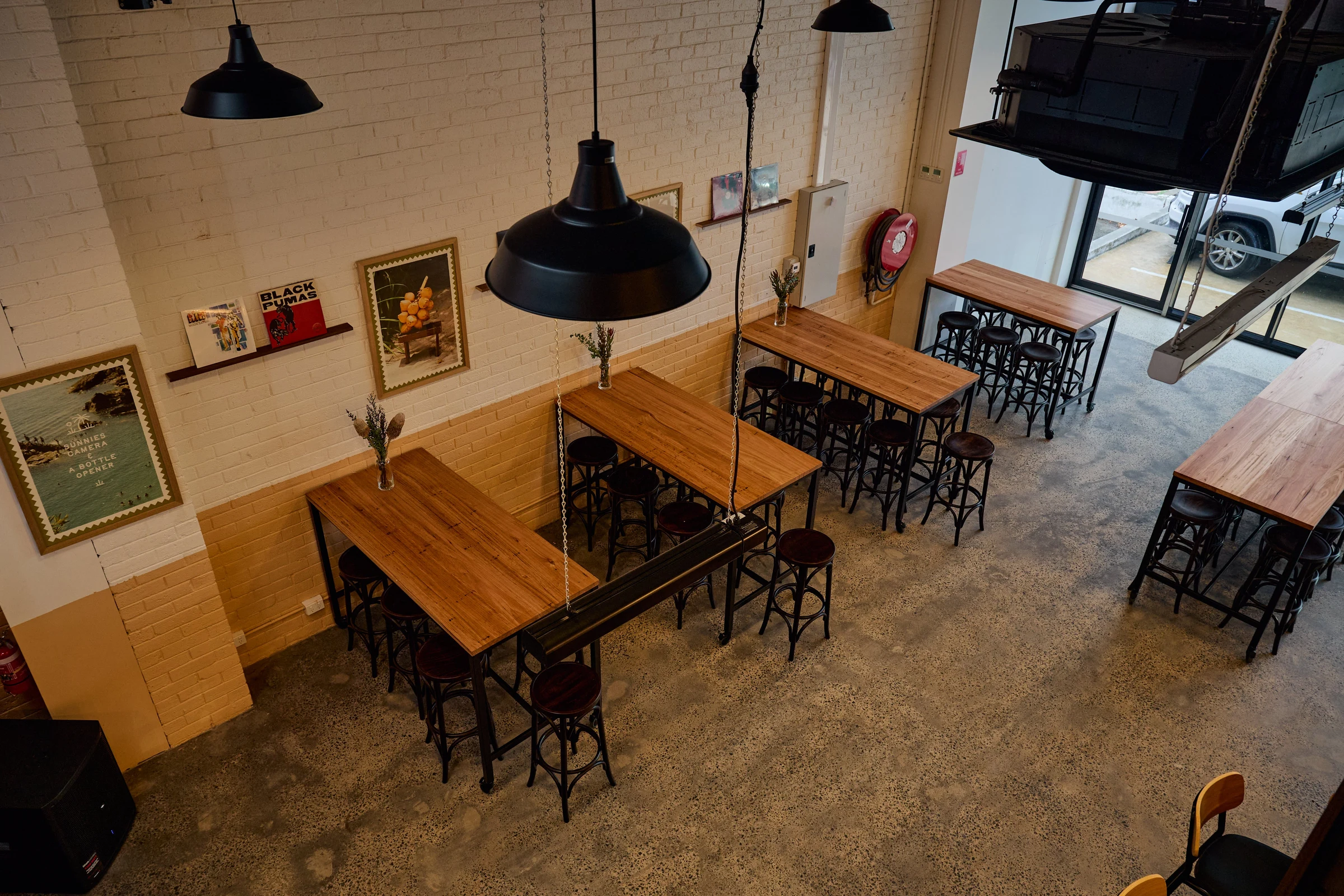
Viveik Vinoharan's lamb belly at Dutch Rules Distilling Mitcham takes the long route before it reaches the pass: slow-cooked, pressed into a skewer, then flame-licked to order inside Danny Perera's working gin bar at 1/586 Whitehorse Road. Vinoharan, formerly of Lilac Wine and named Good Food's Young Chef of the Year, is now on the pans at Dutch Rules Distilling Co, a retro-styled distillery and gin bar in Mitcham where Sri Lankan-leaning food sits beside gin-based cocktails (Smh) (Smh1).
The news lands because of the hands involved. Danny Perera founded Dutch Rules Distilling Co and has held the Mitcham room for two or three years. Vinoharan brings a different pressure to the pass: a chef with Lilac Wine on his line, now cooking dishes that ask a working distillery to behave like a dining room, a bar, and a place of production at once (Conversationwithachef2).
Why Dutch Rules Distilling Mitcham matters now
Dutch Rules Distilling Mitcham gives Melbourne 's eastern suburbs a specific proposition: a working distillery and gin bar whose food program now leans Sri Lankan under Vinoharan. The address is practical and plain, 1/586 Whitehorse Rd, Mitcham VIC 3132, but the pairing of chef and founder gives the room its shape. Perera has the distillery; Vinoharan has the station (Smh).
A distillery bar can survive on glassware, labels, and a short list of snacks. Perera and Vinoharan are working with plates that carry their own sequence of labor. Lamb biryani sausage arrives with Flinders Island lamb shoulder, preserved lemon, fermented chilli, sultanas, and rice. Rigatoni comes from an in-house extruder machine before meeting minced wallaby, pig skin curry, and grana padano. Lamb belly takes the long way, slow-cooked first, pressed into a skewer, then flame-licked to order.
Those details matter because they place the cooking on the bench, not in the margin. Preserved lemon brings acid and salt; fermented chilli brings time; sultanas bring sweetness into the lamb. The pasta dish crosses machinery and curry technique, forcing the Italian shape of rigatoni to carry wallaby and pig skin. The skewer turns slow cooking into bar service without losing the sequence that came before the flame.
For a visitor tracking Melbourne food through people rather than postcodes, Vinoharan's move is the point. Lilac Wine sits in his recent past; Dutch Rules puts him in a different room with a different set of constraints. A distillery has its own rhythm, different from a restaurant pass. Gin-based cocktails occupy the bar. The kitchen has to stand up to them without crowding the glass.
Viveik Vinoharan's Sri Lankan-leaning menu at the distillery
Vinoharan's menu at Dutch Rules Distilling Co does not reduce Sri Lankan influence to a single curry or a garnish. It works through preservation, spice, fat, and heat. The lamb biryani sausage is the clearest statement because it takes a dish often understood through rice, meat, and layered aromatics, then compresses that memory into a sausage made from Flinders Island lamb shoulder with preserved lemon, fermented chilli, sultanas, and rice.
That is a bench-side decision. Shoulder brings structure and fat. Rice changes the texture inside the casing. Preserved lemon cuts into the lamb. Fermented chilli carries its own dwell time before it reaches the plate. Sultanas sit there as a small sweetness against salt and spice. None of those ingredients needs explanation once the sausage is cut; they have already done their work.
The rigatoni shows another part of Vinoharan's method. Dutch Rules makes the pasta in-house with an extruder machine, then serves it with minced wallaby and pig skin curry, finished with grana padano. The machine matters because extruded pasta is a physical choice, dough pushed through pressure into a shape that can hold sauce. Rigatoni gives the curry places to sit, inside the tube and along the ridges. The pig skin points to collagen and body. The wallaby keeps the dish tied to Australian produce while the curry pulls the line toward Sri Lankan cooking.
The lamb belly skewer works through time first, then fire. Vinoharan slow-cooks the belly, presses it into a skewer, and finishes it to order over flame. That sequence is a cook's answer to bar timing: do the long work before service, then let the final heat bring texture and smoke when the order lands. It gives the pass a dish that can move with drinks service without being reduced to a snack.
There are smaller signals across the offering too. Charcuterie sits on the bar snacks menu. Thai gin granita appears as dessert. These details place Vinoharan's food inside a bar program rather than beside it. The kitchen has to know when to be a meal and when to be a handhold between drinks.
Danny Perera's gin bar gives the kitchen its frame
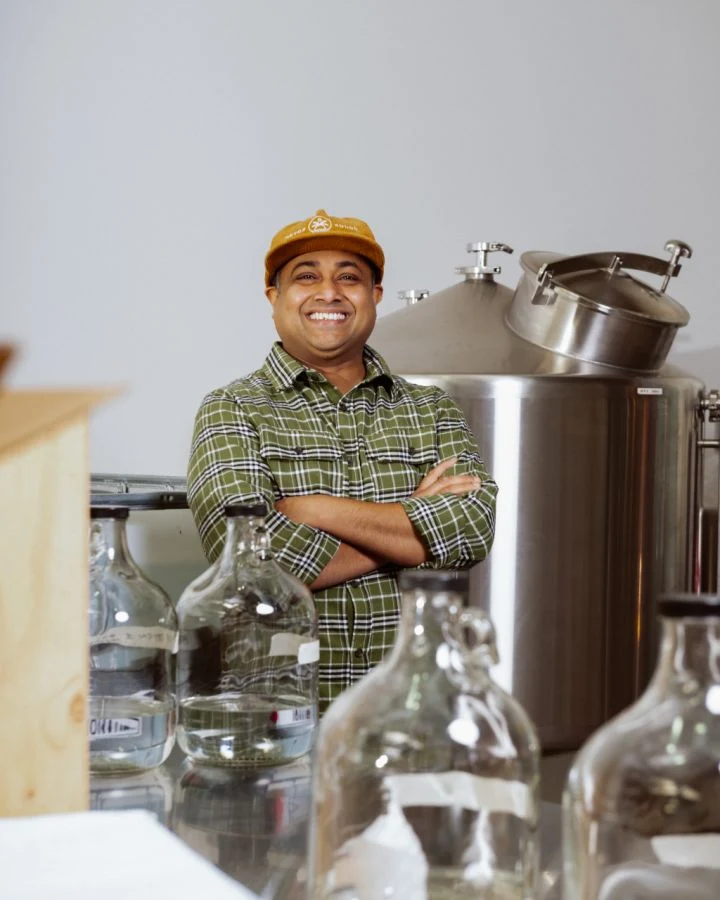
Danny Perera's role matters because Dutch Rules Distilling Co is a founder-led room. He gives Vinoharan a working distillery as a frame, not a blank restaurant space. The bar specialises in gin-based cocktails, including the Thai Ceylon mandarin martini and the Thai Welcome to Mitcham. Those names tell you where the drinks program wants to sit: close to gin, close to place, and open to South and Southeast Asian inflection.
A kitchen working beside gin has a different task from a kitchen built around wine alone. Gin carries citrus, herbs, spice, or bitterness depending on the glass in front of the guest. The menu at Dutch Rules has to meet that movement with fat, acid, heat, and salt. Lamb belly can take a martini's edge. Fermented chilli can sit beside gin's lift. Preserved lemon can bridge the kitchen and the bar without needing a speech from either side.
Perera's distillery has been in Mitcham for two or three years, long enough for the venue to have a local presence before this current kitchen chapter. Vinoharan's arrival changes the way a visitor can use the room. It can still be a gin bar. It can still be a distillery. With the former Lilac Wine chef on the pans, it also becomes a place where the food carries enough method to justify the trip.
The working-distillery format raises the stakes for the kitchen because the room already has a craft language before a plate lands. Gin-based cocktails are the specialty here, and the food cannot lean on the usual bar shorthand. The lamb biryani sausage, the extruded rigatoni, and the pressed lamb belly skewer answer with process. They give the drinker something to study between sips.
What to order when the method is the point
Start with the dishes that show process. The lamb biryani sausage contains the most information in the smallest form: Flinders Island lamb shoulder, preserved lemon, fermented chilli, sultanas, and rice. It takes a biryani reference and rebuilds it through grinding, seasoning, casing, and cooking. For a practitioner-curious diner, it is the dish to read closely.
The rigatoni deserves the same attention for a different reason. In-house extrusion is not decoration. It tells you that the kitchen has chosen a pasta structure for wallaby and pig skin curry rather than buying a neutral shape and asking sauce to do the labor. Grana padano adds the dairy-salt register; the curry supplies the deeper line. The dish's interest is in the friction between form and filling, machine and curry pot.
The lamb belly skewer is the plate to watch for timing. Slow-cooked, pressed, then flame-licked to order, it compresses prep and service into one bite. If the kitchen holds its discipline, the skewer should carry the patience of the slow cook and the immediacy of the flame. That is the kind of bar food that reveals the cook behind it.
On the drinks side, gin-based cocktails are the specialty at Dutch Rules. The Thai Ceylon mandarin martini and Thai Welcome to Mitcham sit closest to the food's vocabulary. The Thai gin granita dessert keeps gin in the meal after the main plates, moving the bar program into the final course. The visitor who wants to understand the room should order across both sides of the pass: one drink that names the house, one dish that names Vinoharan's method.
How to visit Dutch Rules Distilling Co in Mitcham
Dutch Rules Distilling Co is at 1/586 Whitehorse Rd, Mitcham VIC 3132. The venue opens for dinner Wednesday and Thursday, and for lunch and dinner Friday through Sunday. Bookings run through OpenTable, and the phone number is (03) 9100 3591 (Smh).
Those details are useful because this is a suburban distillery with a chef now shaping the food program, not a city room built around passing traffic. Plan it like a visit to a maker. Give the kitchen enough time to move from snacks to the larger dishes. Read the menu for process words: made in-house, slow-cooked, pressed, flame-licked, fermented. They are the map.
For Melbourne drinkers, the useful question is how often a working distillery asks its kitchen to carry this much weight. For cooks, the question sits closer to Vinoharan's station: how Sri Lankan-leaning technique changes when it has to work beside gin cocktails, bar pacing, and a room founded around a still. Watch the lamb belly skewer, the extruded rigatoni, and the sausage. That is where the next chapter at Dutch Rules Distilling Mitcham will show itself first.