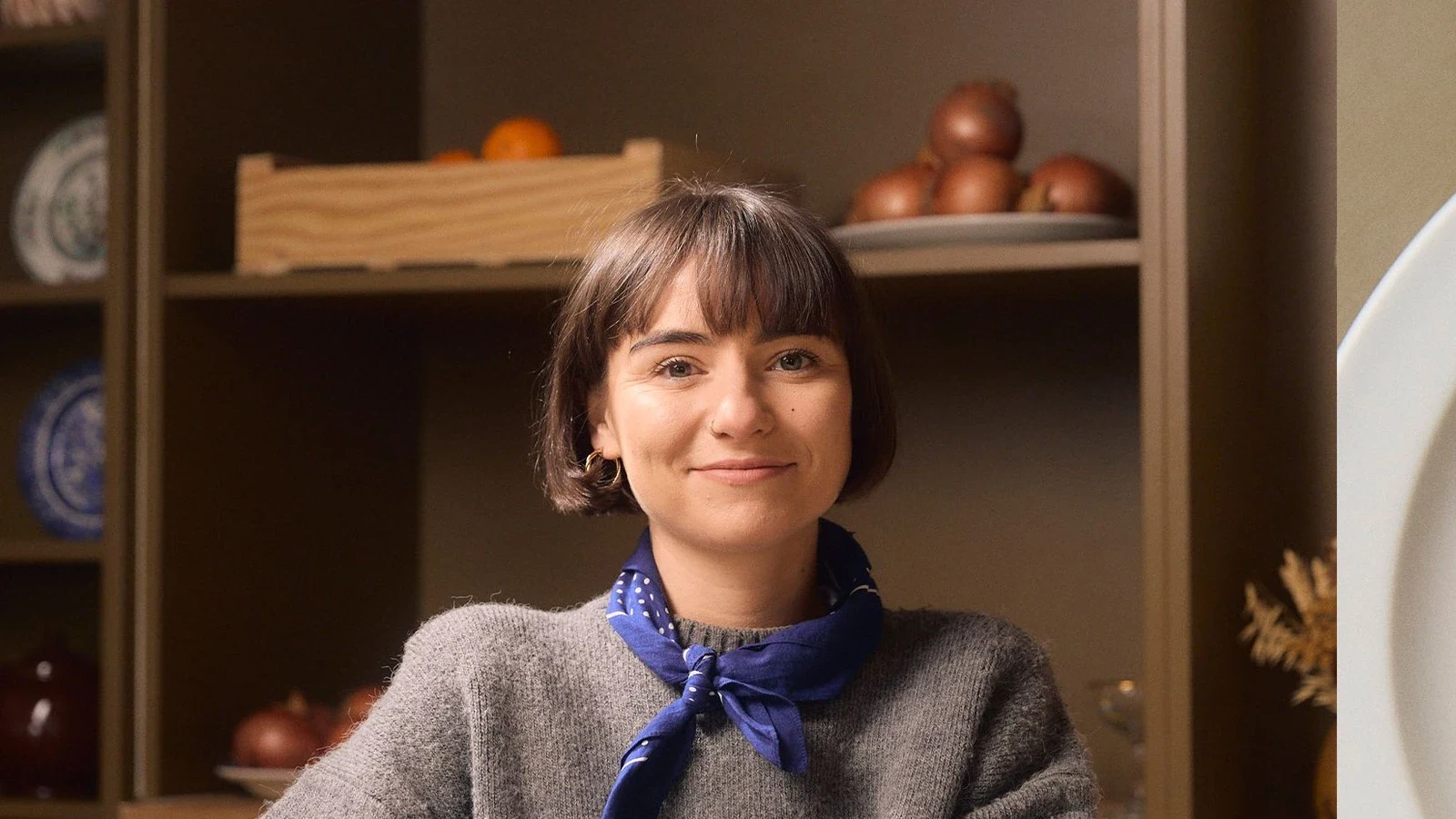
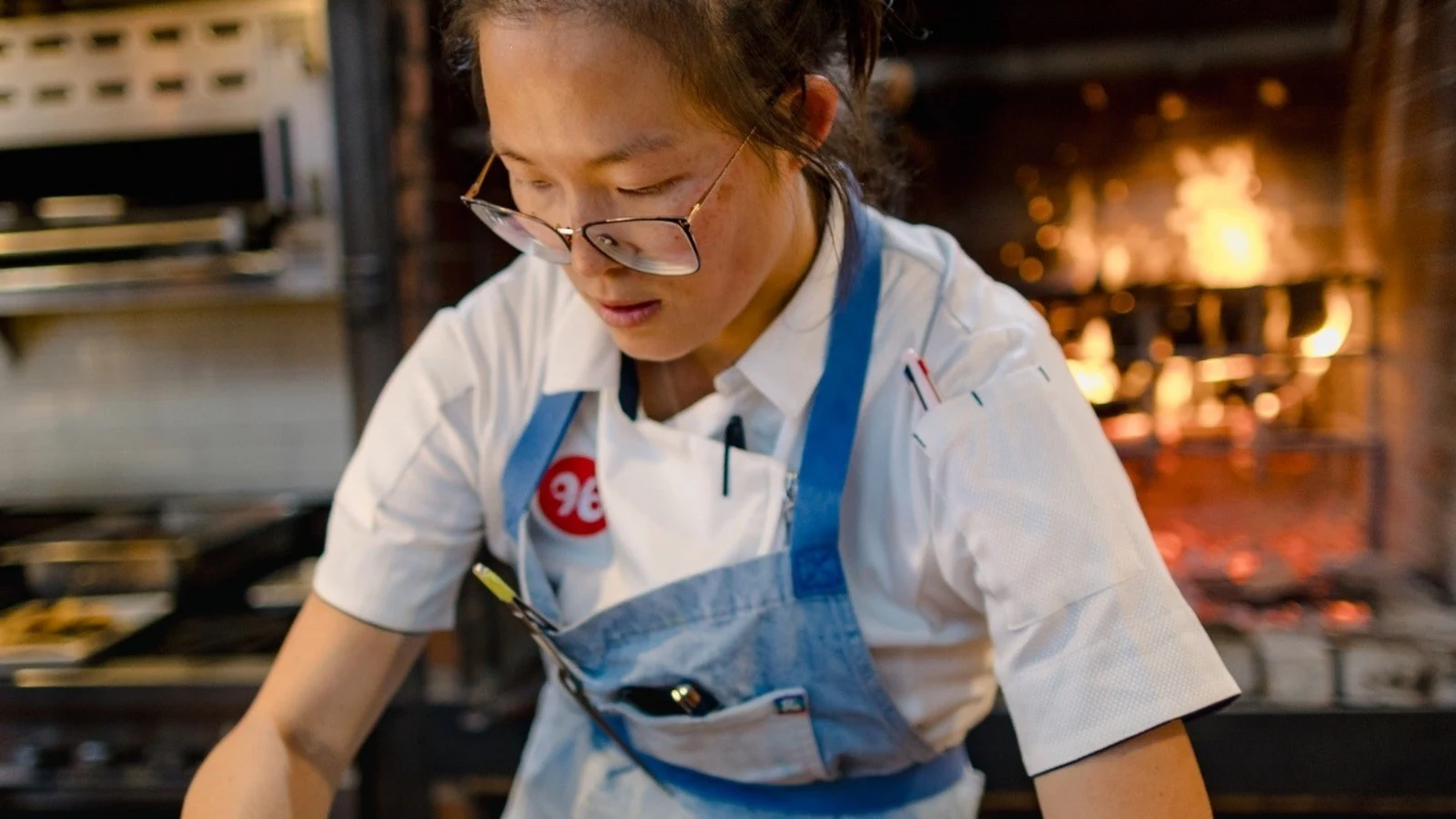
After school in Meath, Claire Hanrahan baked apple pies with her late grandmother, Norah Hanrahan. That kitchen memory now sits over the door at Norah, Hanrahan’s all-day eatery on Newhaven’s harbor front in Edinburgh. “Norah Hanrahan was my grandmother and one of the formative influences on me growing up,” Hanrahan says. “If we can give even 10 percent of the hospitality she made us feel, then we’re doing okay.”
Inheritance at Norah arrives by detail rather than costume. Hanrahan works with the food she grew up around, the Scottish produce now available to her, and the discipline of a cook who has waited for a room of her own.
Claire Hanrahan's Norah, Recognised in Its First Year
Open for less than a year, Norah brought Hanrahan national attention as One To Watch in Condé Nast Traveller's Best New Restaurants awards. The recognition came early for a restaurant built without paid PR or backing. “We just wanted to open somewhere people would enjoy,” she says.
The restaurant’s assurance comes from that narrow focus. It does not try to declare itself through scale. It asks whether direct cooking, repeated service, and a clear sense of purpose can become part of people’s ordinary rhythm.
Meath, Culinary Arts, Ardfern, The Palmerston
Hanrahan comes from Meath, 20 minutes outside Dublin. She studied Culinary Arts before moving to Edinburgh to escape the rents in Ireland’s capital, then worked in kitchens including Ardfern and The Palmerston.
Those professional stations sit beside the domestic one. Culinary school gave her formal training; restaurant work gave her the pace and pressure of service. Norah Hanrahan gave her the first model of welcome. At Norah, that lineage is translated through an Edinburgh working life, not rebuilt as an Irish theme.
Hanrahan is precise about the balance. “I didn’t want it to scream ‘Irish restaurant,’” she says. “It’s about subtle nods, soda bread, ham and parsley sauce, the Tayto poster hanging on the wall, or the St Bridget’s Cross that Irish people recognize.”
The Menu as a Working Memory
On the blackboard, smoked haddock chowder sits near tartiflette with mustard salad, pork sausage with chips and egg, and panisse with ribbons of shaved courgette and chili. The breakfast plate brings Irish cheese, soda bread, a boiled egg, crisp cucumber, and butter into one plain arrangement. Porridge arrives with brown sugar. Elsewhere, spinach and ricotta gnudi, seafood chowder, and soda-bread ice cream extend the same grammar.
Irish cheeses sit alongside Scottish eggs and dairy; local fish gives the chowder its base. The cooking does not need a speech at the table. Hanrahan’s restraint gives the menu its line: dishes move between inheritance and location without flattening either one.
Andrew Ainslie and the Work Around the Pass
Andrew Ainslie, Hanrahan’s partner and business partner, runs the logistical side of the restaurant while she leads the kitchen. His work belongs to the same craft system as the cooking. Logistics decide whether a small restaurant can keep its promises: who is in the building, how the day holds together, and how pressure reaches the pass.
Norah also came together through a wider circle. Hanrahan’s parents tended the front garden. Friends painted walls and helped build furniture. The pub next door kept spirits up during long preparation days. That labor is not separate from the restaurant’s identity; it is one of the reasons the room feels built rather than styled.
Pushing Back Against Old-School Hospitality
Hanrahan speaks plainly about the structure she wants to resist. As a female chef-owner in Scotland, she thinks about how few women in the industry have children. “I can name maybe two or three,” she says.
Her ambition is operational, not abstract. “There’s just so little in place to make it work,” she says. “And people don’t really talk about it.” She wants Norah to prove that another model can exist, one where a cook or team member could have a family and still belong in the work.
That means pushing back against a culture of long hours, rigid hierarchy, and burnout worn as proof of seriousness. “People have lives outside of work,” Hanrahan says. “We work so that we can enjoy our free time. Work shouldn’t be more important than everything else.”
At Norah, rotas account for musicians, artists, weddings, and commitments. The standard is not lowered. The definition of strength changes. “You can run a successful restaurant without making people miserable,” she says. “That shouldn’t be revolutionary.”
How to Read the Restaurant From the Table
From the table, Norah asks for attention to joins rather than declarations. A reference may be Irish, a product Scottish, a form domestic, a service rhythm commercial. Hanrahan’s task is to make those elements feed the guest before they explain themselves.
Simple food leaves fewer places to hide. If the bowl is thin, if the bread loses its purpose, if the plate leans too heavily on sentiment, the work shows. Norah’s early strength lies in refusing that looseness.
What to Watch Next
Hanrahan may open a second site one day, but she is in no rush. For now, she measures success through people leaving happy, a team that feels listened to, and a business that works in real life.
The next test is already in motion on the harbor front: maintaining the cooking, protecting the team, and proving that a gentler kitchen can still keep its edge.