Craft Restaurant Closing After 25 Years in New York
Tom Colicchio will close Craft after 25 years, ending one of New York's most influential fine-dining addresses and marking a shift in the city's restaurant culture.
HM
Director of Editorial Standards
Hugo Marchetti
Filed June 25, 2026
8 min read
Tom Colicchio has announced that Craft, his flagship New York restaurant, will permanently close after 25 years in operation. The chef and judge on Top Chef said that running a restaurant in New York and the clientele had changed in the last couple of years. That framing is spare, but the weight behind it is not: when a 25-year flagship closes with that kind of language attached, it is not a quiet administrative decision. It is a reckoning.
Tom Colicchio Closes Craft After 25 Years
The Craft restaurant closing ends one of the longer continuous runs in New York's notoriously volatile fine-dining market. Twenty-five years is not an accident of luck in this city; it is the product of sustained conviction, a kitchen that held a point of view across multiple economic cycles, and a chef-owner whose name carried enough cultural authority to keep a room full across decades. Colicchio built that authority not through reinvention for its own sake but through consistency of method and a refusal to drift from the principles that opened the place.
The Sunday letter
Get our new stories in your inbox every Sunday.
One email with our newest profiles and guides. See a sample before you subscribe.
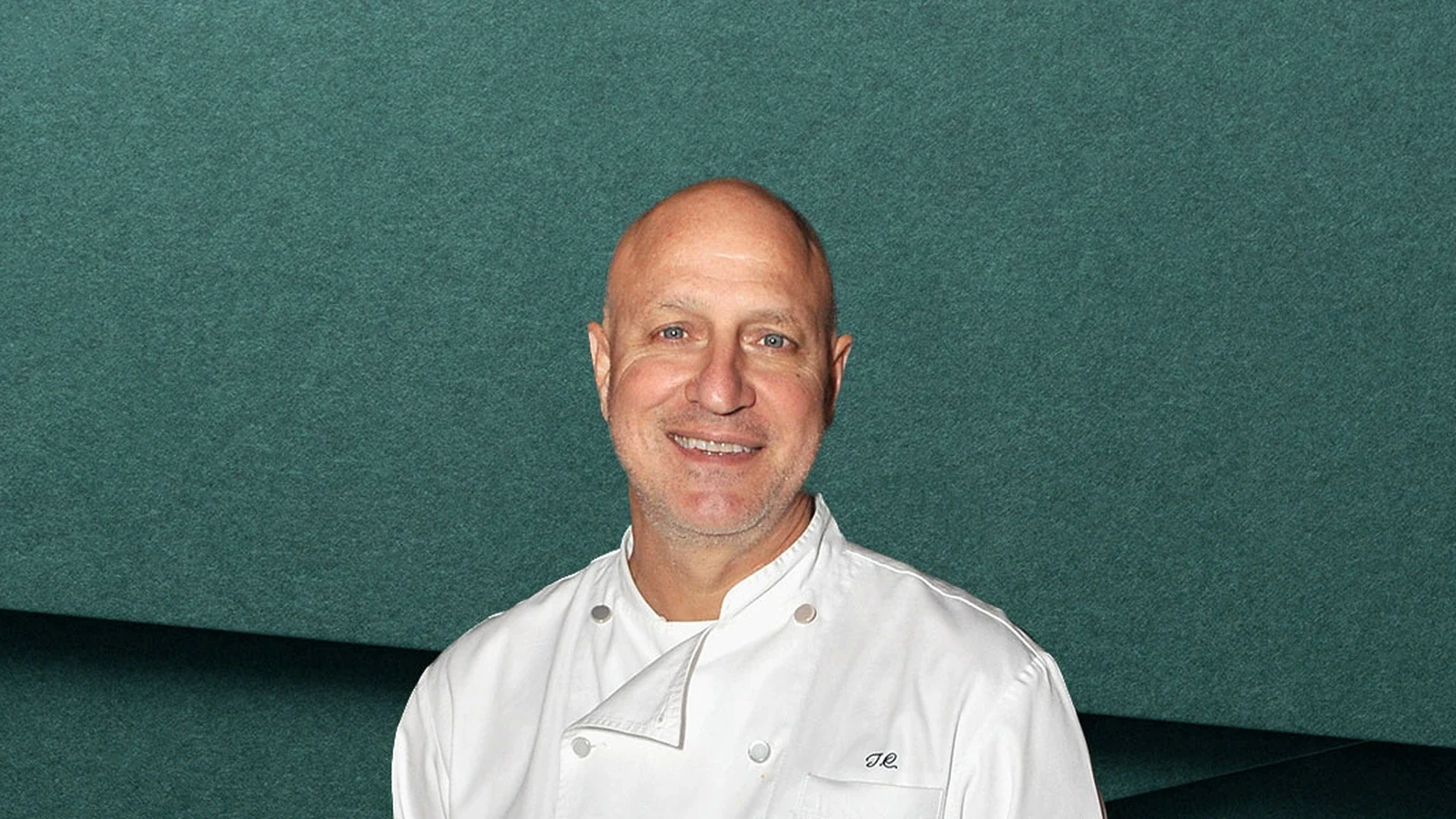
Tom Colicchio, chef-owner of Craft, in a warmly lit restaurant interior.
That the closure comes now, framed around changes in both the operational realities of running a New York restaurant and the character of the clientele, places it squarely within a pattern that has been building since the early 2020s. The pandemic rewired how New York eats, who goes out, how often, and what they expect when they do. The fine-dining flagship, a format that depends on a specific density of regulars, corporate accounts, and occasion diners, has been under structural pressure ever since. Colicchio's announcement does not stand alone; it stands at the end of a longer line.
For the people who cooked at Craft, staged there, or simply ate there across those 25 years, the closure is a marker of something more personal. Kitchens like Craft produce lineage. The cooks who came through its pass carry a particular set of habits, a particular relationship to the ingredient, a particular understanding of what it means to let the thing on the plate speak without excessive intervention. That lineage does not disappear when the doors close, but the source does.
What Made Craft a New York Dining Institution
Craft opened at a specific moment in American fine dining, when the conversation was beginning to shift away from the architectural plate and toward the sourced ingredient. The restaurant's philosophy was built around a simple but demanding premise: find the best version of a thing, treat it with precision, and let the diner encounter it as directly as possible. That sounds straightforward now because a generation of restaurants has absorbed it into the mainstream. In the early 2000s, it was a position that required defending.
Colicchio's standing as a chef gave Craft the credibility to hold that position without apology. His reputation was not built on television, though his long tenure as a judge on Top Chef eventually made him one of the most recognized chef-owners in American food culture. It was built in kitchens, on the bench, through years of work that gave him the authority to make a restaurant that asked diners to trust the cook's sourcing as much as the cook's technique. That trust, extended over 25 years, is what made Craft something more than a successful address.
The ingredient-first approach that Craft championed has since become so widely adopted that it no longer reads as a philosophy; it reads as a baseline. Seasonal menus, named farms, market-driven daily changes: these are now the common grammar of serious American cooking. The irony built into the Craft restaurant closing is that the restaurant's own influence may have contributed to the conditions that made its original proposition feel less urgent. When every serious kitchen in the city is doing a version of what you pioneered, the pioneer's room no longer carries the same charge of discovery.
That is not a failure of the restaurant. It is the natural arc of influence. The ideas travel; the originating space becomes one address among many that share its DNA. What Craft held onto, through that arc, was the standard of execution. The discipline of the kitchen, the quality of the sourcing, the seriousness of the wine program: these did not soften as the philosophy became common property. That consistency is what kept Craft in the conversation for a quarter century, long after the novelty of its founding premise had dissolved into the broader culture.
What the Closure of Craft Tells Us About New York Restaurants Now
Colicchio's stated reasons for closing are worth reading carefully, not for what they reveal about Craft specifically, but for what they describe about the city. Running a restaurant in New York had changed. The clientele had changed. Both shifts, he noted, had accelerated in the last couple of years. Those are not complaints; they are observations from someone who has been watching the same room for 25 years and can see the delta between what it was and what it is now.
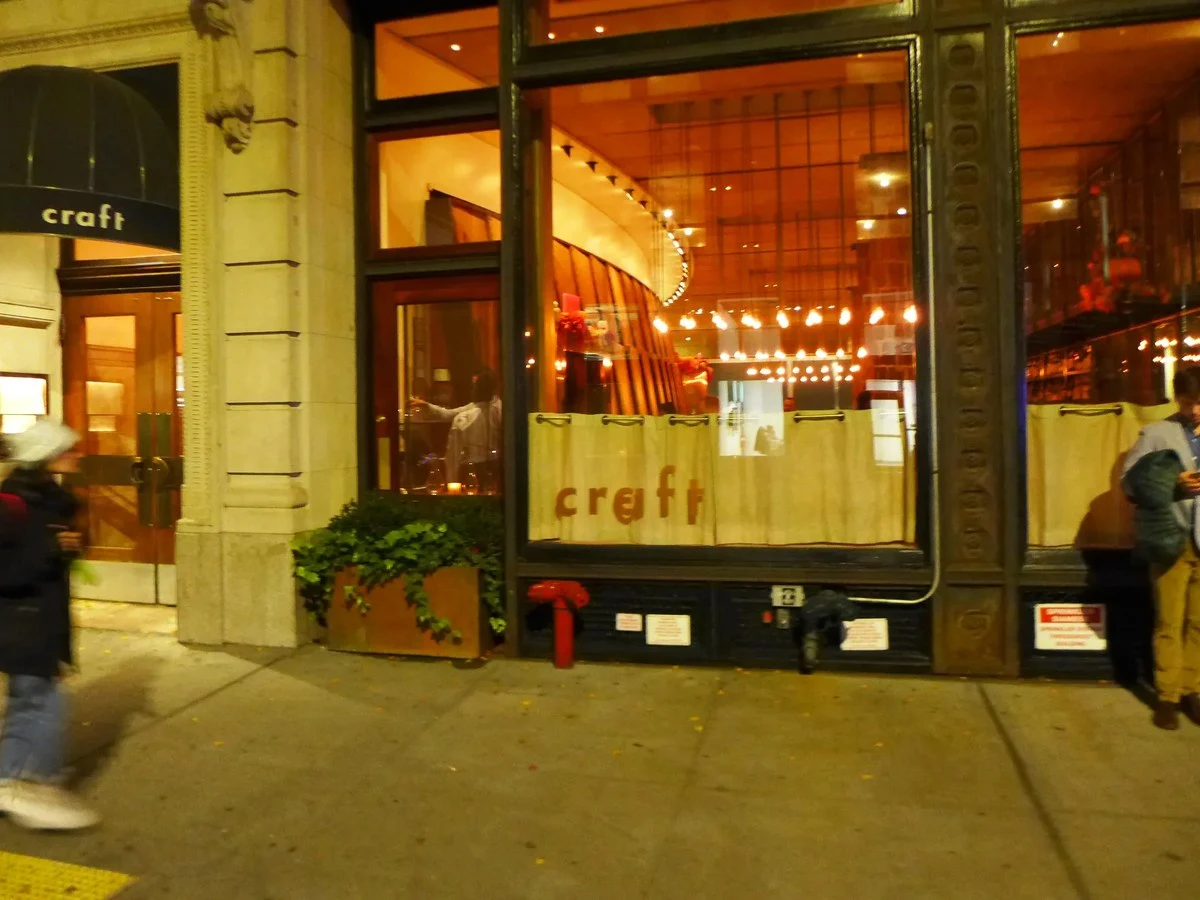
Nighttime on East 19th Street, New York, outside Craft restaurant, which is closing within the broader city context.
The economics of the New York fine-dining flagship have been under pressure from multiple directions simultaneously. Labor costs have risen sharply.
The post-pandemic dining public redistributed itself: some diners moved toward casual and counter formats; others consolidated their fine-dining spending into fewer, higher-profile occasions at a smaller number of rooms. The middle ground, where a serious flagship could count on a steady rhythm of regulars and corporate tables, compressed.
Restaurants that had operated comfortably in that middle ground found themselves either pushing upmarket into tasting-menu territory or watching their covers thin.
The clientele shift Colicchio referenced is harder to quantify but no less real. The diner who built a relationship with a room over years, who knew the sommelier by name, who came back for the same dish across seasons, is a less common figure in New York now than they were in 2005 or 2010. The occasion diner, who arrives once, photographs the plate, and moves on, does not sustain a flagship in the same way. A room built on the assumption of return visits and deepening familiarity is a different proposition when the culture of dining has shifted toward novelty and rotation.
None of this is unique to Craft. Long-running New York fine-dining institutions have been closing or fundamentally reinventing themselves at a rate that would have seemed improbable a decade ago.
The post-pandemic period accelerated retirements, prompted lease renegotiations that did not resolve in the restaurant's favor, and surfaced a generational question about who the audience for serious, expensive, ingredient-driven cooking actually is in 2026.
Colicchio's decision to close rather than pivot or rebrand is itself a statement: some restaurants are not meant to be reinvented. They are meant to be what they were, for as long as that is possible, and then to close with their identity intact.
The Lineage That Leaves With the Room
What closes with Craft is not just a dining room. It is a specific kind of training ground, a kitchen where a particular set of values about sourcing, technique, and restraint was transmitted from one generation of cooks to the next. The apprentices who came through that kitchen, who learned to cook on Craft's terms, carry the method forward in their own restaurants, their own programs, their own stations. That is how craft knowledge travels: not through manuals but through proximity to the work, through years on the tools, through the accumulated pressure of a kitchen that held a standard.
Colicchio's own lineage, the training and the influences that shaped the philosophy he brought to Craft, will continue to propagate through the cooks he shaped. That is the long way that serious cooking works. The room closes; the method does not. But the room matters too, because it is where the method is tested daily, where the standard is enforced not by aspiration but by service. Without the room, the discipline becomes harder to maintain at the same pitch.
The cooks who trained at Craft and have since opened their own places carry a specific inheritance: a commitment to the ingredient over the concept, a patience with simplicity that is harder to sustain than complexity, a kitchen culture shaped by a chef-owner who spent 25 years proving that a single clear idea, executed without compromise, could hold a room for a generation. That inheritance is the most durable thing Craft produced, and it will outlast the closing.
What Comes Next, and Why It Matters
The Craft restaurant closing will prompt the usual round of retrospectives, the lists of dishes, the accounts of meals remembered, the tributes from the cooks who passed through the kitchen. Those are earned. But the more useful response, for anyone who cares about how New York eats, is to look at what the closure signals about the conditions that are now shaping which restaurants can survive a long run in this city.
The flagship format, a single serious room built around a chef's name and a coherent culinary identity, sustained over decades, is not extinct. But it is operating in a city that has become less hospitable to it, economically and culturally.
The restaurants that will hold for 25 years from now are likely to be structured differently: smaller rooms, tighter cost bases, more direct relationships with their audience, less dependence on the corporate and occasion traffic that once underpinned the flagship model. The lesson from Craft is not that the format failed.
It is that the format ran its course, on its own terms, and that is a different thing entirely.
Colicchio's decision to close Craft rather than hand it to a new concept or sell the name is consistent with the restaurant's founding logic: the room was always about the work, not the brand. When the conditions for doing the work at the standard he set no longer held, closing was the honest response. Twenty-five years is not a short run. It is, by any measure of New York restaurant time, a full career. Made By follows the people who shape what you eat and drink. Subscribe, and the next dispatch from the bench, the cellar, or the kitchen comes to you.
The Sunday letter
Get the next Made By guide in your inbox.
We send one email every Sunday morning with the guides and profiles we published that week.