E.J. Lagasse, Youngest Two-Michelin Star Chef, Values One Thing More
E.J. Lagasse became the youngest chef in history to helm a two-Michelin star restaurant when Emeril's earned two stars in November 2025. Four years into leading the New Orleans restaurant, he's increased revenue 167% and landed on the World's 50 Best list, but the accolade he values most is working alongside his father.
HM
Director of Editorial Standards
Hugo Marchetti
Filed July 5, 2026
8 min read
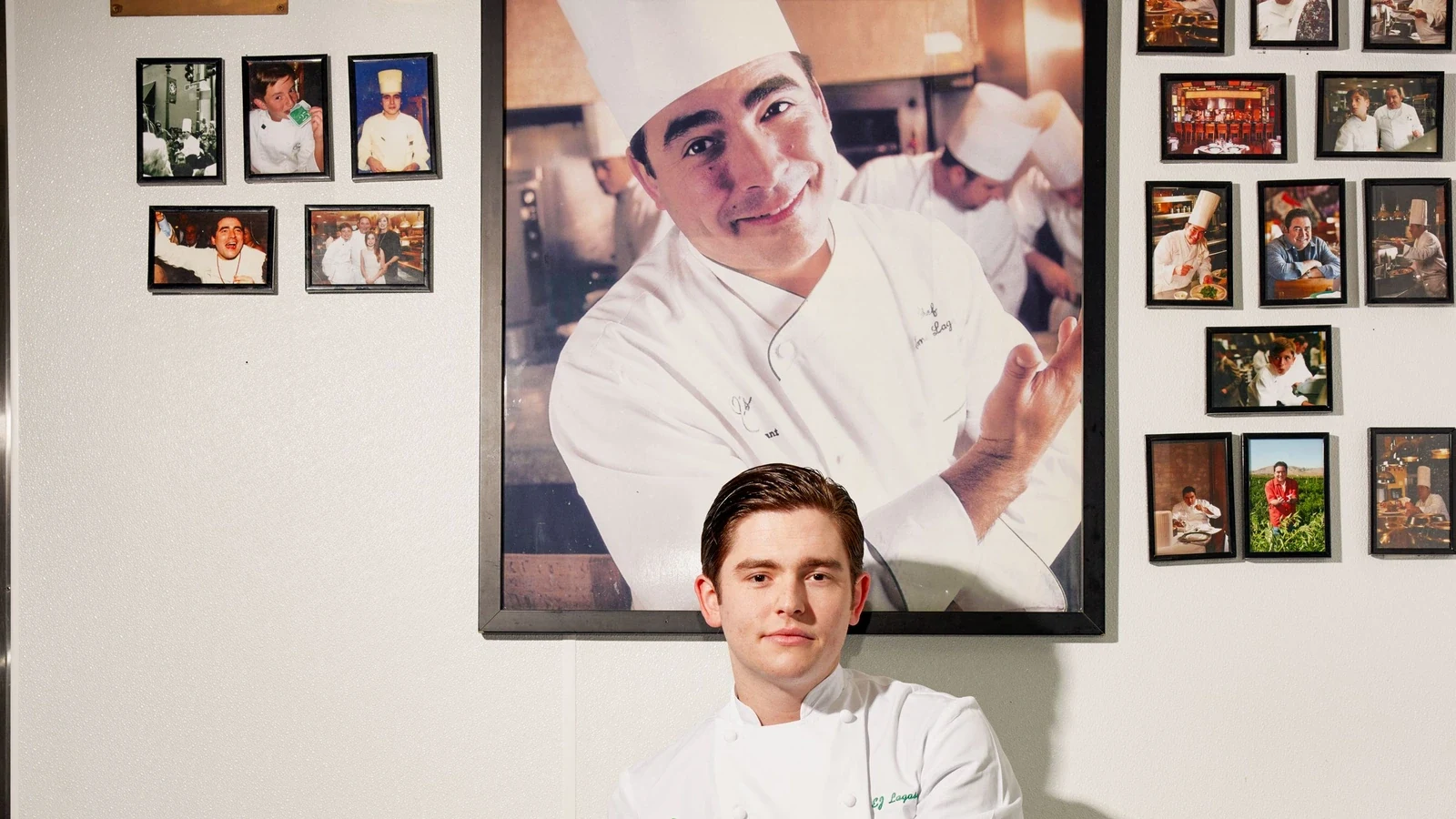
E.J. Lagasse stands in the main dining room of Emeril's, the New Orleans Warehouse District restaurant his father founded in 1990, and reduces the whole thing to one sentence. The two Michelin stars came last November, making him the youngest two-star chef in Michelin history. Emeril's sits at No. 20 on North America's World's 50 Best list. In his four years as head chef and co-owner, revenue has risen 167% to an estimated $5 million annually. Still, Lagasse names the part that matters most.
"The most fulfilling thing of it all, it's not the stars, it's not the 50 Best, it's not any of that stuff. The most fulfilling thing out of it is that I get to do this with my dad."
How E.J. Lagasse Became The Youngest Two-Michelin Star Chef In History
When the Michelin Guide came to New Orleans for the first time in November 2025, Emeril's earned two stars. The recognition made E.J. Lagasse the youngest chef in Michelin history to helm a two-star restaurant. His father, Emeril Lagasse III, never reached that mark, though he spent nearly four decades shaping New Orleans cooking.
The Sunday letter
Get our new stories in your inbox every Sunday.
One email with our newest profiles and guides. See a sample before you subscribe.
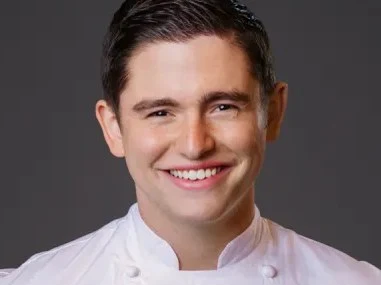
Lagasse, a professional chef, smiles in his white chef's coat.
Emeril's began in 1990, after Emeril III transformed the kitchen he inherited from chef Paul Prudhomme at Commander's Palace in the 1980s. He called the method "new New Orleans cooking," and the restaurant grew alongside his television presence. When he gave up his toque at the flagship, one chef could follow him: his namesake, E.J., who had been moving toward that station for years.
E.J. took over as head chef and co-owner four years ago. The Michelin stars arrived after he had rebuilt the restaurant from the inside out. In the American South, two stars remain uncommon; Michelin's Gulf Coast expansion has only recently begun to include the region. For a young chef to earn that rating at a restaurant carrying his father's name brings pressure few chefs inherit.
E.J. does not dismiss the weight of those marks. He tells Forbes, "I'm not going to sit here and tell you the accolades don't matter, because I think each chef that tells you that they don't probably isn't telling the truth."1 But he points back to the work, the team, and the father-son collaboration that now defines Emeril's.
Transforming Emeril's: The Menu Overhaul And Complete Renovation
E.J. Lagasse and his father spent ten years planning the transformation of Emeril's. They wanted the restaurant to return to what it opened to be: a fine dining destination rooted in Creole and Cajun technique, not a holdover from 1990s celebrity chef culture.
Emeril's now serves 50 tables a night. The pace is controlled; the pass depends on repetition and memory. E.J. runs a kitchen where some staff have worked the line for 30 or 35 years, and others have been there two weeks. He describes the team as having "this great sense of responsibility and this great sense of intention behind everything that they do."2 The restaurant's current form rests on that continuity: veterans who accepted the changes, new hires who arrived after the stars, and the chef holding the station between them.
The transformation was not cosmetic. E.J. rebuilt the restaurant's identity while preserving its soul. The menu comes from years spent studying the craft, not from a legacy hire trading on a famous surname. The renovation and menu overhaul positioned Emeril's as a serious fine dining destination, rather than a nostalgia play.
Working With Dad: Why Family Matters More Than Accolades
Emeril Lagasse III remains only a phone call away. E.J. says his father is at the restaurant "quite a bit."3 The father-son dynamic is not a marketing angle. It is part of the restaurant's structure.
E.J. Lagasse and his father attend an event, highlighting the bond discussed in "Working With Dad.
E.J. and his father spent a decade planning the Emeril's transformation together. The menu, the renovation, the pricing strategy, the decision to pursue Michelin recognition, all of it was collaborative. E.J. leads the kitchen day to day, but the elder Lagasse's influence remains in the technique, the philosophy, and the decision to keep the restaurant rooted in New Orleans rather than chasing trends.
The collaboration is what E.J. values above the stars and the rankings. He says so plainly. The accolades matter, but they are not the point. The point is the work itself, done alongside the chef who built the restaurant and the lineage E.J. now carries forward.
This is not a story of a young chef stepping out of his father's shadow. It is a story of a young chef stepping into the work his father started, with his father still present, still invested, still part of the team. The Michelin stars and the World's 50 Best ranking are the outward validation. The father-son partnership is the foundation.
The Numbers Behind The Stars: 167% Revenue Growth And A Spot On The World's 50 Best
Under E.J. Lagasse's leadership, Emeril's increased its revenue 167% to an estimated $5 million annually. The growth followed the renovation, the menu overhaul, and the arrival of the Michelin stars. A new generation of diners moved to book tables. The restaurant's profile shifted from legacy institution to fine dining destination.
Emeril's also debuted on the World's 50 Best list, where the restaurant is now No. 20 in North America. The ranking places Emeril's among the continent's most recognized fine dining establishments, a peer group that includes multi-starred kitchens in New York, San Francisco, and Chicago. For a New Orleans restaurant to land in the top 20 gives the city another marker beyond its traditional Creole and Cajun strongholds.
The revenue increase followed the stars and the accolades, but it also followed the work. E.J. rebuilt the restaurant's reputation through the kitchen's discipline, the menu's consistency, and the team's time on the tools. The numbers record how diners responded to a restaurant that earned attention through service, plate by plate.
Keeping Two-Star Dining Accessible: The Pricing Philosophy That Sets Emeril's Apart
E.J. Lagasse tells Forbes that Emeril's is "still the least expensive two-star restaurant in the country, something we did intentionally."4
"We're still the least expensive two-star restaurant in the country, something we did intentionally"
The pricing decision comes from E.J.'s view that "restaurants are a team sport."5 The restaurant depends on the team, the city, and the diners who support it. Keeping the menu at a level reachable to a broader audience, even at the two-star tier, is part of that thinking.
The decision also comes from the realities of New Orleans dining. The city's fine dining scene is competitive, but it is not New York or San Francisco. Diners expect quality, and they also expect value. E.J. and his father understood that pricing Emeril's at the high end of the two-star range would push away the local diners who have supported the restaurant for decades.
The pricing strategy has paid off. The restaurant serves 50 tables a night, and reservations are difficult to secure. The revenue increase to $5 million annually suggests that diners are willing to pay for a tasting menu at a two-Michelin star restaurant, especially when the chef is 23 and the restaurant is Emeril's.
E.J.'s approach to pricing and accessibility separates Emeril's from the typical two-star playbook. Most chefs at this level price their menus at the top of the market, using scarcity and exclusivity to drive demand. E.J. chose another path: keep the price lower, serve more diners, and build the restaurant's name on the work rather than on how hard the experience is to enter.
The Next Move: What E.J. Lagasse Is Building Beyond The Stars
The answer, for E.J., is the same as it has always been: the work. The father-son collaboration continues. Emeril III is still present, still invested, still part of the team. E.J. leads the kitchen day to day, but the partnership is the foundation. The restaurant is not a stepping stone to a larger empire. It is the work itself.
E.J. has already shown he can lead a two-Michelin star kitchen at an age when most chefs are still working the line under someone else. The challenge now is to sustain it. The Michelin stars and the World's 50 Best ranking are not permanent. They must be earned every year, every service, every plate. E.J. understands this. He describes the team's "great sense of responsibility and this great sense of intention" as the foundation of the restaurant's success.
The next move for E.J. Lagasse is not a new restaurant or a television show or a cookbook. It is the continued refinement of the work at Emeril's. The menu will evolve. The team will change. The city's dining scene will shift. But the core of what E.J. is building, a two-Michelin star restaurant rooted in Creole and Cajun technique, led by a 23-year-old chef working alongside his father, will remain.
The Sunday letter
Get the next Made By guide in your inbox.
We send one email every Sunday morning with the guides and profiles we published that week.