George Cleverley1 on the Royal Arcade still takes the first measurement by hand. A paper insole pressed to the floor, a pencil tracing the foot's outline, then the calipers: instep, waist, heel. The commission begins there, not at the last, not at the fitting. It begins with that tracing. Getting a pair of bespoke shoes made by one of the Northampton or St James's houses is genuinely possible for anyone willing to contact the maker directly, pay a deposit, and wait. Most houses do not publish lead times or costs on their public-facing sites; confirm both directly at the first inquiry.
Why the Bespoke Shoemaking Calendar Stays Compressed
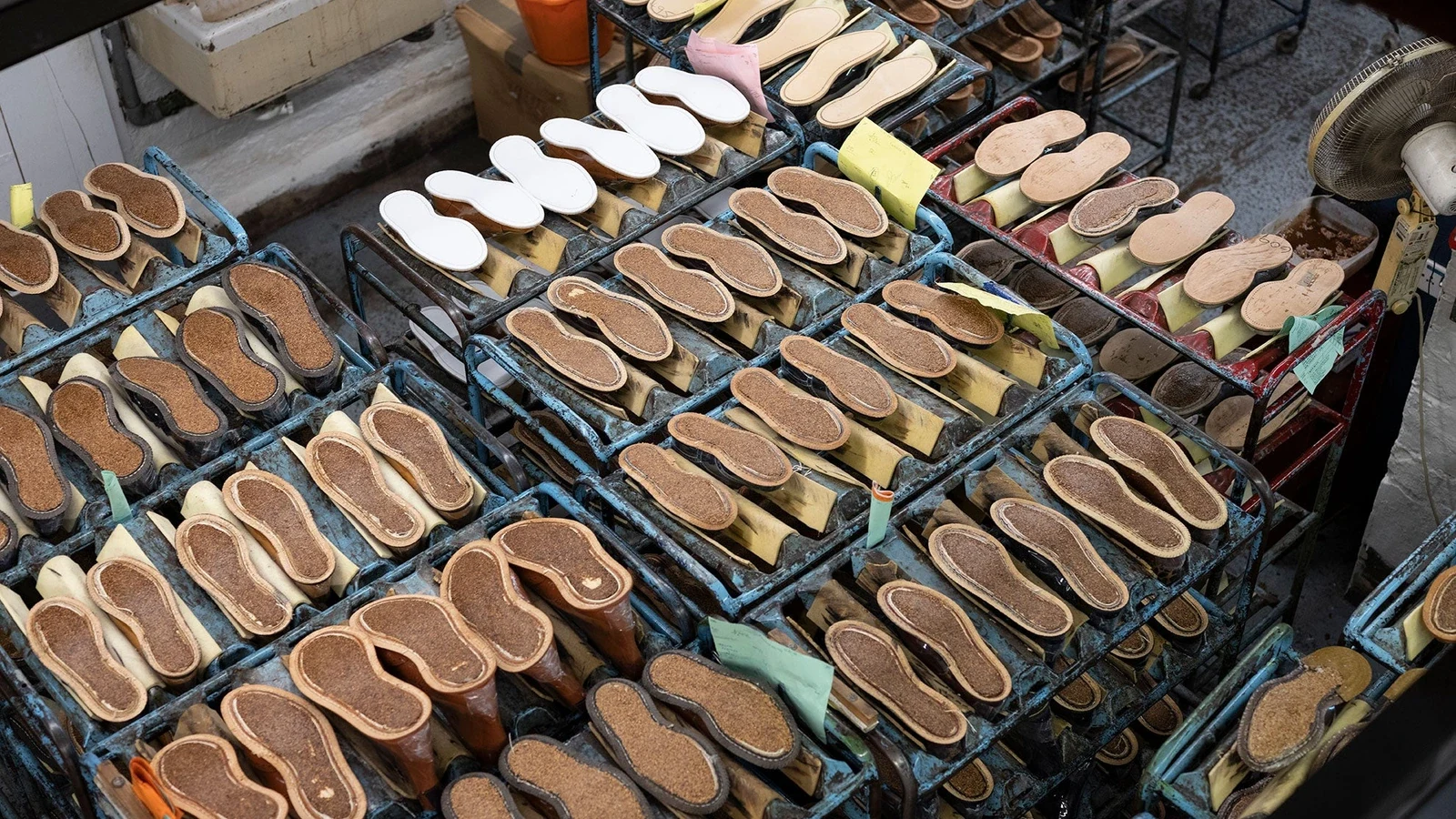
The constraint is not demand alone. It is hands. A single bespoke last takes a skilled lastmaker several hours to carve and correct across multiple fittings. The clicking, closing, lasting, and finishing of one pair of shoes passes through multiple pairs of hands in a traditional Northampton workshop, each a specialist: the clicker who cuts the upper leather, the closer who stitches it, the laster who pulls the upper over the last, the welt sewer, the sole layer, the finisher. At George Cleverley, each pair takes over 100 man hours to make, with five different artisans involved.2 At the St James's houses more broadly, the making is typically contracted to Northampton workshops, with the fitting and design consultation held in London. The bottleneck is the same across all of them: the number of trained hands at each stage is finite, and the apprenticeship to reach competence at any one of them runs several years.
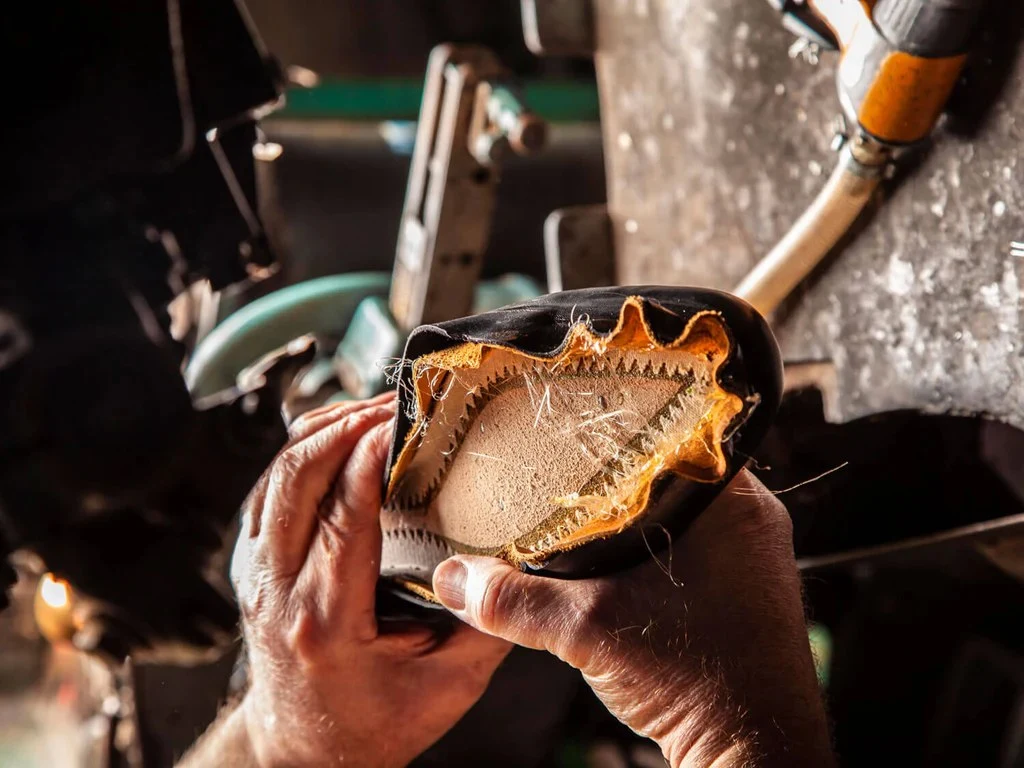
The houses that have survived are not large. Most employ fewer than a dozen craftspeople directly involved in making. A house producing several hundred pairs a year bespoke is operating at the outer edge of what its bench can sustain without compromising the work. That is why the wait exists. It is not theatre.
When the Books Open and How the Process Actually Starts
None of the principal Northampton or St James's bespoke houses publish a fixed calendar for new commissions in the way a restaurant publishes a reservation window. The process begins with a direct inquiry, either by telephone or email, to the house. Most houses do not publish a waitlist status online; the only way to know whether books are open is to ask.
The sequence, once accepted, runs roughly as follows. First appointment: the measurer takes a full set of foot measurements and discusses lasts, leathers, and construction. A deposit is taken at this stage; the amount is not uniformly published, so confirm the figure directly before the appointment. The last is then carved or pulled from an existing pattern and modified. A new George Cleverley customer is invited to attend a preliminary fitting after the last is made, to check that the last and fit are correct.1 A trial shoe, sometimes called a "fitting shoe," is made in an inexpensive leather to test the last shape before the final leather is cut. Most houses schedule one to three fittings before the final pair is made. Delivery follows the last fitting by several weeks, as the finishing work, including edge staining, burnishing, and any patination, is completed.
The houses do not publish specific deposit amounts or payment schedules on their public-facing sites as a rule; confirm these directly at the first inquiry stage.
The Makers and How to Reach Them
The principal St James's houses with active bespoke programs include G.J. Cleverley on the Royal Arcade, John Lobb on St James's Street,3 and Gaziano & Girling, which operates its bespoke consultations from its London premises. In Northampton, the tradition runs through houses including Edward Green,4 Crockett & Jones (which offers a made-to-order rather than fully bespoke program), and the smaller specialist workshops that supply the St James's trade.
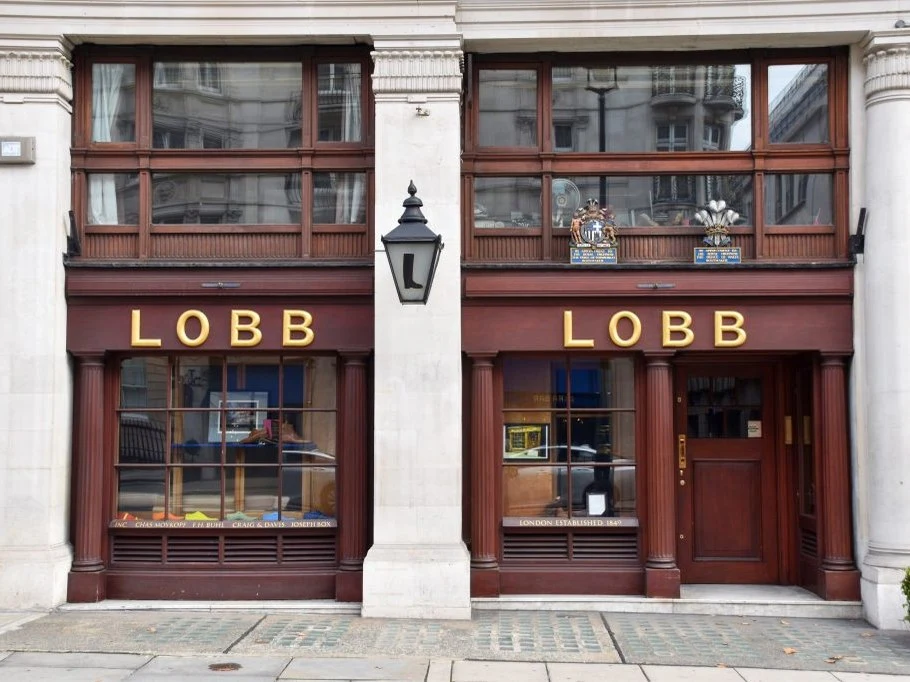
John Lobb on St James's Street holds a Royal Warrant and is among the oldest continuously operating bespoke shoemakers in London. Their bespoke department operates separately from the ready-to-wear John Lobb brand owned by Hermès; the St James's house remains family-connected and independent in its bespoke operation. John Lobb offers in-shop, at-home, and international consultation visit formats;3 inquiries go directly to the St James's Street shop.
G.J. Cleverley, where the house's current leadership continues the lineage George Cleverley himself established through the Northampton tradition, takes inquiries by telephone and in person at the Royal Arcade. The house's bespoke process runs through five stages: measuring and last making, pattern cutting and clicking, closing, making, and finishing.1
Gaziano & Girling, founded by Tony Gaziano and Dean Girling, both of whom trained at Northampton houses before establishing their own program, takes bespoke inquiries through their London shop. Their making is rooted in the Northampton bench tradition. Gaziano & Girling bespoke shoes are priced at around £5,000 including VAT for a first fully bespoke commission,5 though pricing shifts; confirm current figures directly with the house.
For all three, the first step is the same: contact the house directly by telephone or visit in person.
Inside the Fitting Room: What the Commission Actually Feels Like
The first appointment's length varies by house and by how much discussion the client wants; the venue does not publish a fixed duration, so treat any figure as approximate. The measurer works methodically: both feet, standing and seated, because the foot spreads under load. Notes are taken on gait, any asymmetry between left and right (almost universal), and the client's existing shoes, which the fitter will often ask to examine. The leather room, or the sample boards, come out next: calf, cordovan, suede, exotics. Construction choices follow, welt type, sole material, heel height, toe shape.
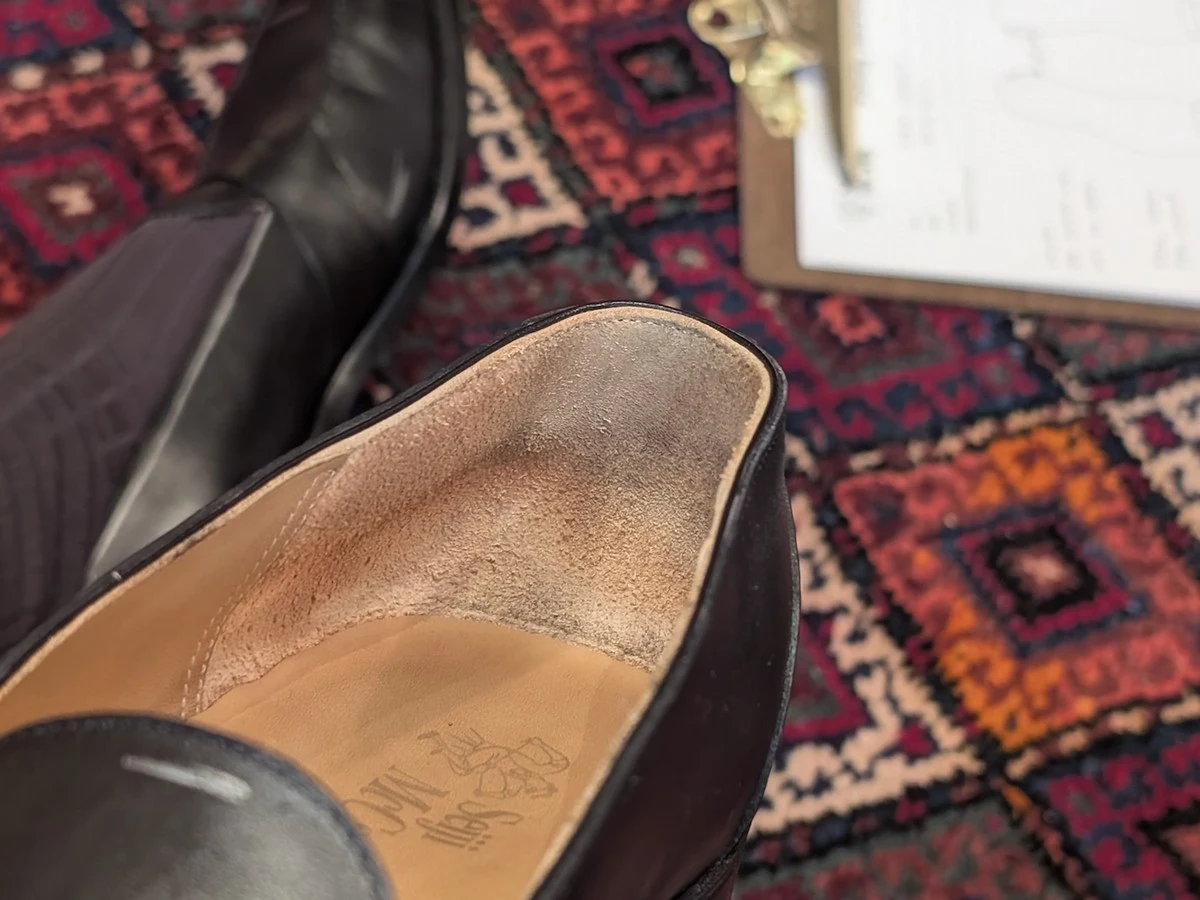
The trial fitting, when it comes, is the moment the commission becomes real. The trial shoe fits differently from any ready-to-wear shoe the client has worn, because it is built to their last, not to a size. The fitter marks corrections in chalk or pen directly on the leather. A second trial may follow. By the final fitting, the shoe should require only minor adjustment.
The room itself, at any of the St James's houses, is quiet. There is no sales pressure in the conventional sense; the client has already committed. The conversation is technical: where the waist needs to come in, whether the toe spring is correct, how the heel seat sits. The last holds the foot's shape; the shoe does not need to be broken in.
Delivery, when it arrives, is typically by hand at the shop or by courier in a wooden or cloth-lined box. The house will have kept the last, which means a second pair can be made from it without a new round of fittings, usually at a reduced lead time.
Commission Strategy: How to Improve Your Odds and Your Outcome
The single most useful thing a prospective client can do is contact multiple houses simultaneously. Books close without notice; a house that was taking new clients in January may have filled its bench by March. Contacting three houses and taking the first available appointment is not disloyal; it is practical.
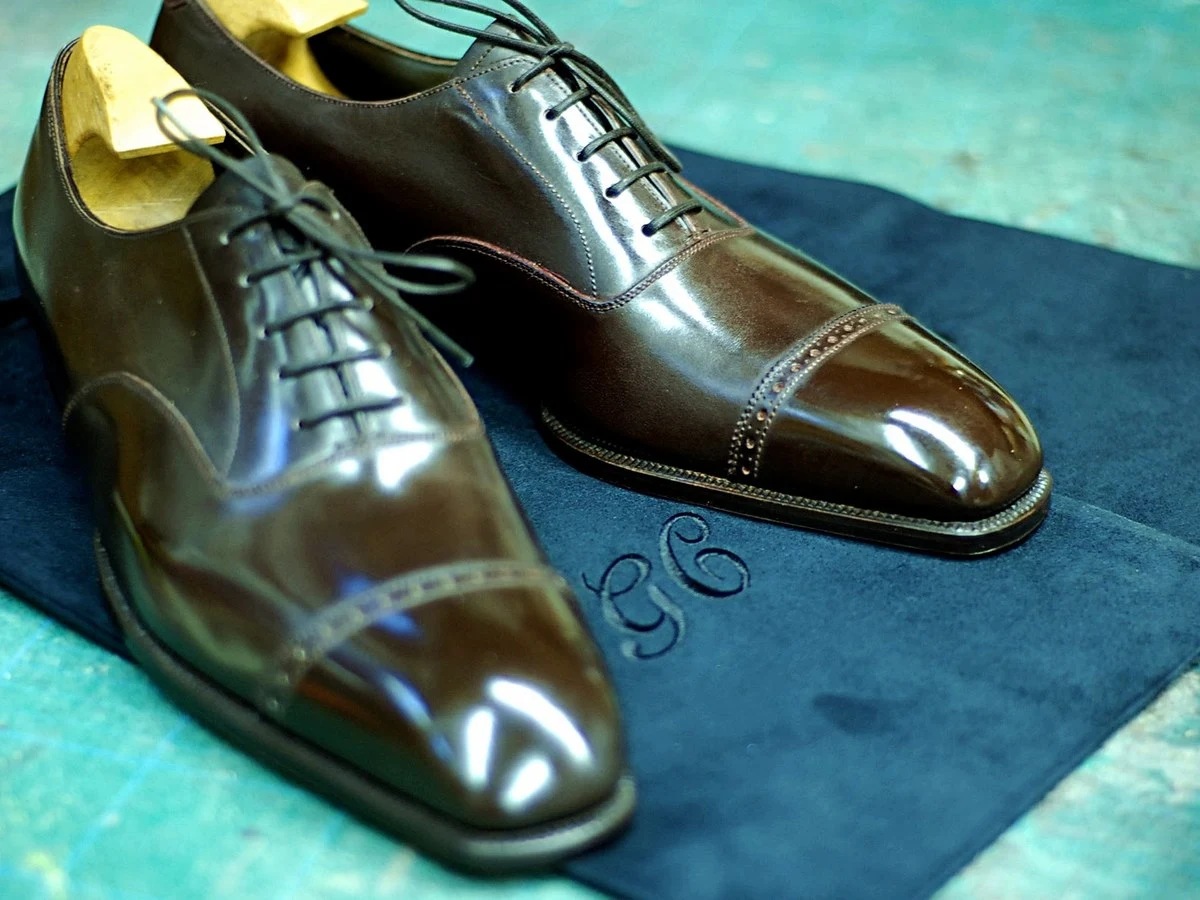
On the money-versus-time tradeoff: the fully bespoke route at a St James's house, with a carved last and multiple fittings, is the longest and most expensive path. George Cleverley bespoke shoes carry a retail value of £3,950,6 and John Lobb bespoke shoes typically start at around $6,500 per pair;7 costs at other houses are not uniformly published, so confirm current pricing directly with each house, as figures shift.
A faster and less expensive route is the made-to-order or "bespoke-adjacent" program offered by some Northampton houses, where a client selects from existing lasts with modifications, rather than commissioning a new last from scratch. The Foster & Son bespoke process from measurement to finished shoe, including a fitting, takes around six to nine months,8 and comparable made-to-order programs at other Northampton houses run on similar timelines. Costs are lower than full bespoke, though the degree of customization is narrower. These are not fully bespoke in the traditional sense, but for a client whose foot fits reasonably close to an existing last, the result is close.
The client who wants to shorten the wait on a second pair should ask, at the first appointment, whether the house retains lasts indefinitely. Most do. A last held in the archive means the second commission skips the trial fitting stage entirely.
Who Else Is in the Fitting Room: The Real Clientele
The bespoke fitting rooms at St James's houses are not exclusively occupied by the old-money English establishment, though that lineage is present.
The current client base, by most accounts from the houses themselves, is international: Japanese clients have been a significant part of the Northampton and St James's bespoke trade for decades, drawn by the craft lineage and the specific construction methods. American clients, particularly those in finance and law, make up another consistent segment.
There is also a younger cohort, typically in their thirties, who have studied the craft through specialist publications and online communities and arrive at the first appointment already conversant in welt types and last shapes. The fitting room is not a social club; it is a workshop consultation. The conversation is about the shoe.
Alternatives When the Wait or the Cost Is the Obstacle
Bespoke and Made-to-Order Shoemakers: Access, Cost, and Lead Time Compared
| Maker | Program Type | Reported Cost Range (first pair) | Reported Lead Time | How to Start |
|---|---|---|---|---|
| G&G Cleverley (St James's) | Fully bespoke (carved last) | ~£3,950 retail value reported6 | Not published, confirm directly | Book a Bespoke Appointment via their website1 or in person, Royal Arcade |
| John Lobb (St James's Street) | Fully bespoke (carved last) | From ~$6,500 per pair reported7 | Not published, confirm directly | Submit name and address via the John Lobb website form3 or in person, St James's Street |
| Gaziano & Girling | Fully bespoke | ~£5,000 including VAT reported5 | Not published, confirm directly | Telephone or in-person, London shop |
| Edward Green (Northampton) | Made-to-order (last modification) | Lower than full bespoke, confirm directly | ~6 to 9 months (reported) | Order in store, at a trunk show, or online via Edward Green4 |
| Crockett & Jones (Northampton) | Made-to-order | Lower than full bespoke, confirm directly | Up to 10 weeks for hand finishing (Hand Grade)9 | Direct inquiry to Northampton factory or London shop |
| Foster & Son | Fully bespoke | Not published, confirm directly | ~6 to 9 months reported8 | Direct inquiry; trunk shows in the US including Dallas8 |
For clients who want Northampton construction quality without the full bespoke lead time, Edward Green's made-to-order program and Crockett & Jones's equivalent are the most direct substitutes. Both houses make on the Goodyear welt, use English calf from the same tanneries that supply the bespoke trade, and have been on the bench in Northampton for well over a century. Crockett & Jones shoes go through over 200 highly skilled operations in manufacture.9 The fit will not be as precise as a carved last, but the construction is the same tradition.
For clients interested in the craft lineage without the commission cost, both Edward Green and Crockett & Jones operate factory shops in Northampton where their ready-to-wear range is available, and both offer factory tours by appointment. The tours are a way into the making before committing to a commission.
Who Should Commission and When
The bespoke commission makes most sense for a client who has a specific fit problem that ready-to-wear cannot solve, or who intends to wear the shoes for twenty or more years and wants the option of resoling and repair by the original maker. It also makes sense for a client who has already worn the best ready-to-wear the Northampton houses produce and wants to go further. It does not make sense as a first shoe purchase, or for someone who needs shoes within six months.
The occasions that justify the commission: a wedding, a professional context where the client will wear the shoes daily for years, or a deliberate decision to own fewer things of higher quality. The commission is not an event; it is a relationship with a maker that, if the last is retained, can extend across decades.
Worth the Wait?
The bespoke commission from a Northampton or St James's house is one of the few remaining contexts in which a client can have something made entirely to their body by hands that have spent years learning one specific discipline. The wait is real, the cost is real, and neither should be minimized. But the object that arrives is also real in a way that ready-to-wear, however well made, cannot replicate: a last that holds your foot's exact shape, held in a workshop archive, available for the next pair and the one after that.
The allocation of effort here is clear. Contact multiple houses simultaneously; take the first available appointment; ask about made-to-order programs if the full bespoke wait is prohibitive. The made-to-order route at Edward Green or Crockett & Jones is not a consolation prize; it is a different point on the same tradition, and for most feet, it is close enough to justify the shorter wait and lower cost.
For the client who wants the full thing, the carved last and the multiple fittings and the relationship with a specific maker, the St James's houses are the route. There is no shortcut, and the houses that have survived long enough to matter are not interested in inventing one. The discipline that keeps these workshops running is the same one that makes the shoes worth having: the long way, done by the right hands, is the only way the work holds.
Frequently Asked Questions
How far in advance should I contact a Northampton or St James's bespoke shoemaker to start a commission?Most houses are currently running twelve to eighteen months from first appointment to delivery, by most accounts from the trade. Contact the house directly to confirm current availability; books can close without public notice, and the only reliable way to know the current wait is to ask. Contacting two or three houses simultaneously is the most practical approach.
Do G&G Cleverley, John Lobb, or Gaziano & Girling publish their bespoke prices online?None of the principal St James's bespoke houses publish a full price list for bespoke commissions on their public-facing sites. Reported figures in the specialist press suggest a first pair at a London house runs from approximately £4,000 upward, with complex commissions or exotic leathers pushing costs higher, but these figures are not confirmed by the houses themselves. Confirm current pricing directly at the first inquiry.
What separates a fully bespoke George Cleverley commission from a Northampton made-to-order program?A fully bespoke commission at George Cleverley involves carving or pulling a new last to the client's exact foot measurements, with multiple fittings before the final shoe is made. A made-to-order program, such as those offered by Edward Green and Crockett & Jones, starts from an existing last that is modified to the client's measurements. The construction method, Goodyear welt, English calf, Northampton bench, is the same; the degree of fit customization is narrower. Made-to-order programs typically run shorter lead times and lower costs than full bespoke.
Can I visit the Northampton shoemaking workshops before committing to a commission?Edward Green and Crockett & Jones both offer factory tours in Northampton, typically by appointment. These are a practical way to see the bench work before committing to a commission. Contact each house directly to arrange a visit; tour availability and format are not published on a fixed schedule.
Does John Lobb St James's Street retain the last after a bespoke commission is completed?John Lobb St James's is known to retain lasts in their archive, as is standard practice among the principal bespoke houses. A retained last means a second commission can be made without a new round of trial fittings, typically at a shorter lead time. Confirm the house's specific retention policy at the first appointment.