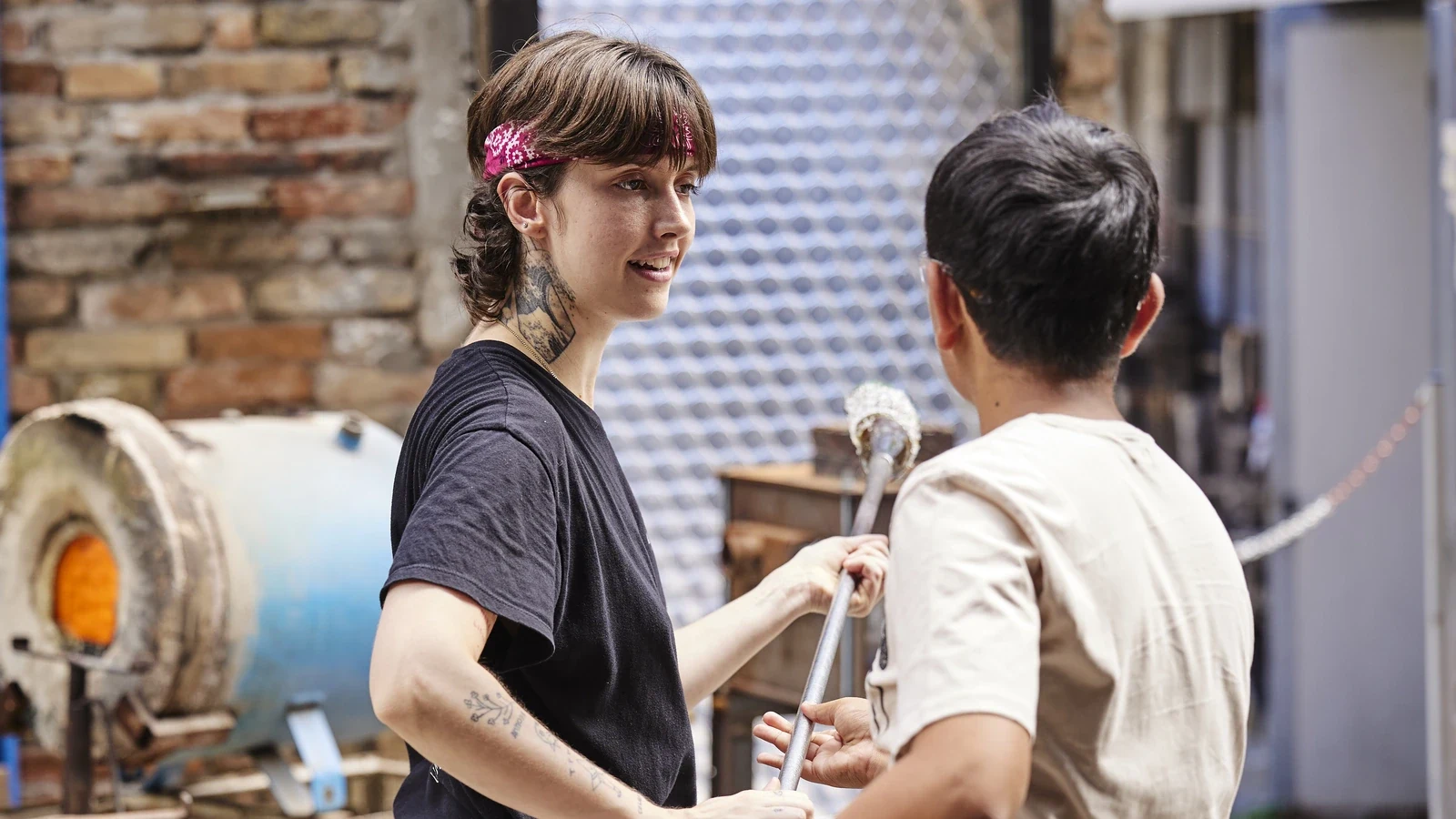
A maestro at a working Murano fornace lifts a gather of molten glass on a blowpipe, rotates it once against the lip of the furnace, and hands it to his garzone without a word. The transfer takes under two seconds. You can watch this from roughly two metres away, standing on a viewing platform above the furnace floor, if you have arranged access in advance.
Most of the island's working fornaci do receive visitors; getting into a serious working workshop, rather than a tourist-facing showroom, requires a phone call or a direct email, not a walk-in. The best route for most readers is to contact the workshop directly, ask whether they are blowing that day, and confirm a time.
Why the Furnace Door Is Not Always Open
Murano's glass industry is built around the fornace, a wood- and gas-fired furnace that runs at roughly 1,400 degrees Celsius and cannot simply be switched on for a visitor's convenience. The maestri work in teams, the garzoni (apprentices) and serventi (assistants) timed to the furnace's rhythm, not to a tour schedule. Many of the island's workshops are small family operations, some of them in their third or fourth generation on the same site, and the working floor is a production space first. Interruptions cost glass.
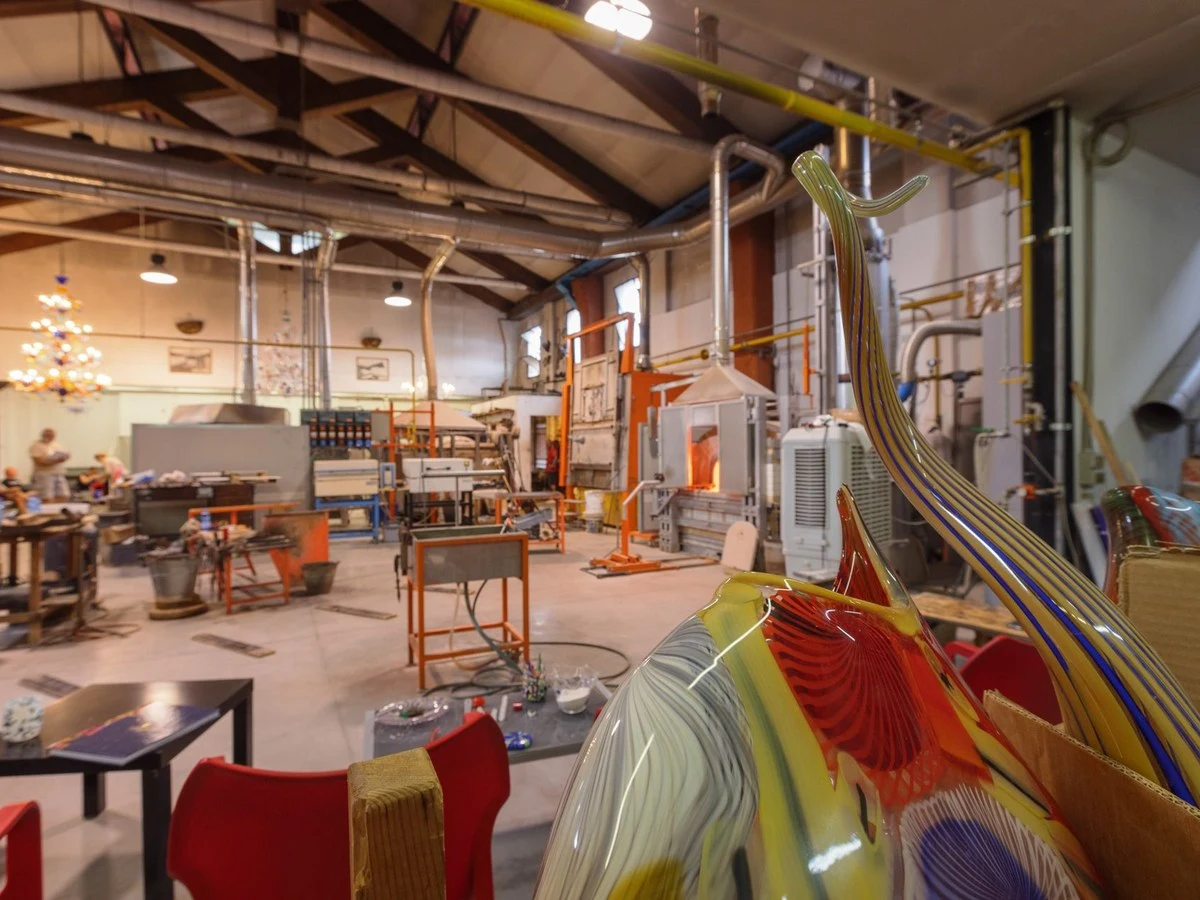
There is also a structural split on the island between the vetro d'arte workshops, which produce signed, limited work and guard their methods closely, and the larger commercial houses, which have built visitor infrastructure into their business model. The former are harder to enter; the latter are easier but offer a more mediated view of the craft. Neither is wrong, but they are different experiences, and the distinction matters if you have come to watch the work rather than to buy a chandelier.
The island's visitor economy has historically concentrated around a handful of houses that actively court tour groups, which means the working fornaci that do not advertise visits are often the ones where the most serious craft is happening. Knowing which category a workshop falls into before you arrive saves a wasted trip across the lagoon.
When Murano Workshops Open Their Doors and How Schedules Work
Murano's working fornaci typically blow glass in the morning, with furnace activity running from around 8 a.m. through early afternoon. By mid-afternoon, many workshops have finished production for the day. The island does not publish a unified visitor calendar, and individual workshops do not maintain public booking systems in the way a restaurant does. The release window for visits is effectively unpublished at the industry level; confirm directly with each workshop before planning your day around a specific time.
Seasonal rhythm matters. August is the traditional ferie period across Venetian industry, and a number of fornaci close entirely or run reduced crews. January and February, by contrast, are working months, and the furnaces run full schedules. If you are travelling specifically to watch glass being made, the shoulder months of March through June and September through November offer the most reliable access to active production.
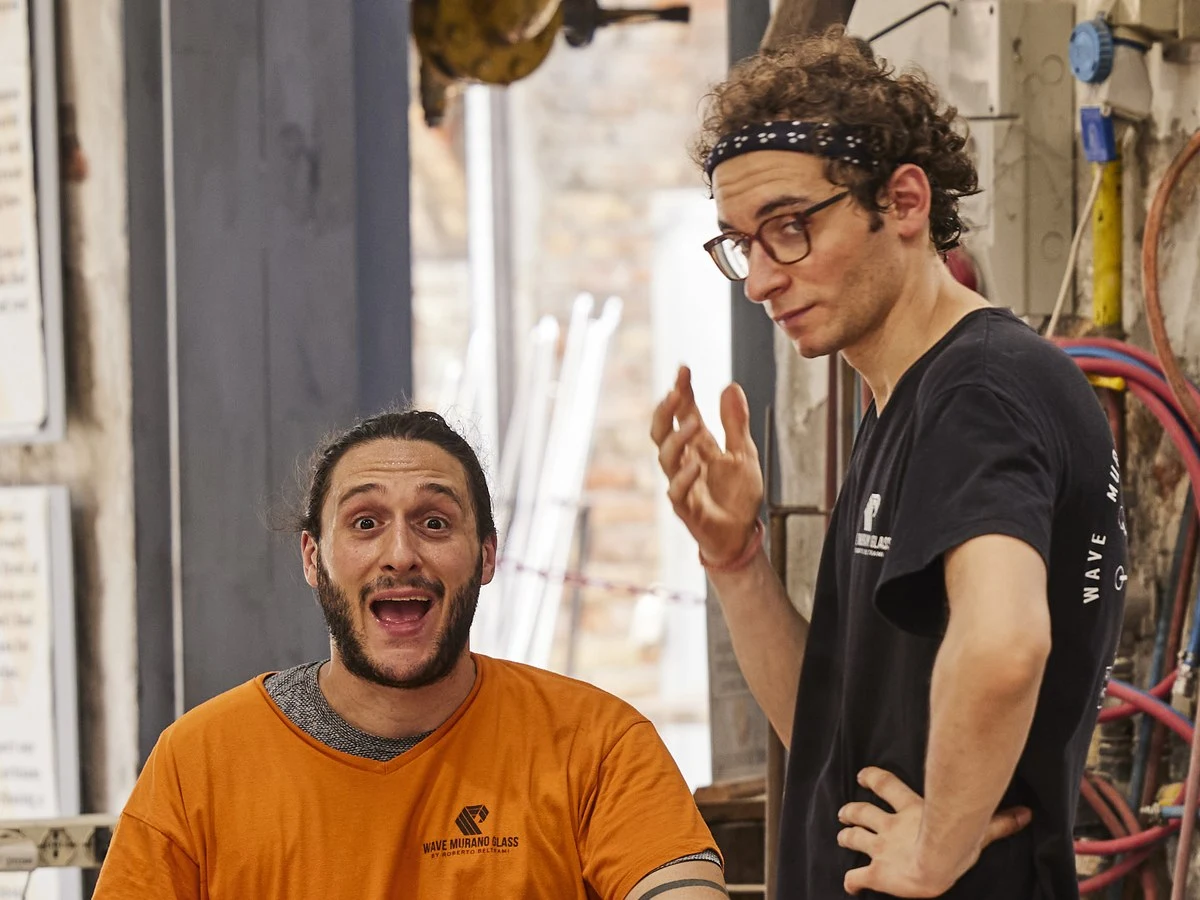
Workshops that have built formal visitor programs, including Wave Murano Glass, do accept advance bookings online. Wave Murano Glass caps its guided tour at eight participants, runs approximately 45 to 60 minutes,1and starts from 29€ per person.1Free cancellation is available up to 24 hours before the experience starts.1The tour is not wheelchair accessible,1and a maximum of one non-participating companion is allowed per booking.1Visitors staying outside Venice who are visiting for the day may also be subject to a €5 access fee on certain dates.1Check in at the front desk inside the store at Fondamenta da Mula, 152, not inside the factory itself.1For workshops without a formal online system, the venue does not publish a fixed booking window; contact the workshop directly to confirm availability and whether a maestro will be working that day.1
The Channels That Actually Work
There is no central Murano booking platform. The access routes, ranked by reliability, are as follows.
Direct contact with the workshop. A phone call or email in Italian, or in English to the larger houses, is the most reliable route. Ask specifically whether the furnace will be active on your intended date, and whether a maestro will be demonstrating. Some workshops charge a small entry fee for the demonstration area; Vetreria Murano Arte (VMA), for instance, charges a 3€ fee to see the glass-blowing demonstration, with children under 11 admitted free.2VMA's demonstration runs weekdays between 9am and 4pm2at Calle San Cipriano 48.2Other workshops do not publish fee structures uniformly online, so ask when you call.2
Your hotel concierge. In Venice and on the Lido, a concierge with established relationships on Murano can arrange access to workshops that do not advertise publicly. Vetreria Artistica Colleoni, for example, accepts bookings via the hotel concierge route. This route costs nothing extra and occasionally opens doors to smaller family operations that do not appear in any guide.3
Organised tours from Venice. Several operators run half-day tours that include a furnace visit, a glass-blowing demonstration, and time in a showroom. These are the easiest entry point and the most crowded. The demonstration is real, but it is choreographed for groups, and the maestro is often working a simplified piece rather than a production run. The Colleoni factory tour, bookable through platforms including Musement, starts from $12.00, runs 40 minutes, and includes €10 credit per adult toward purchases in the shop.4Verify current rates directly with the tour company before booking.4
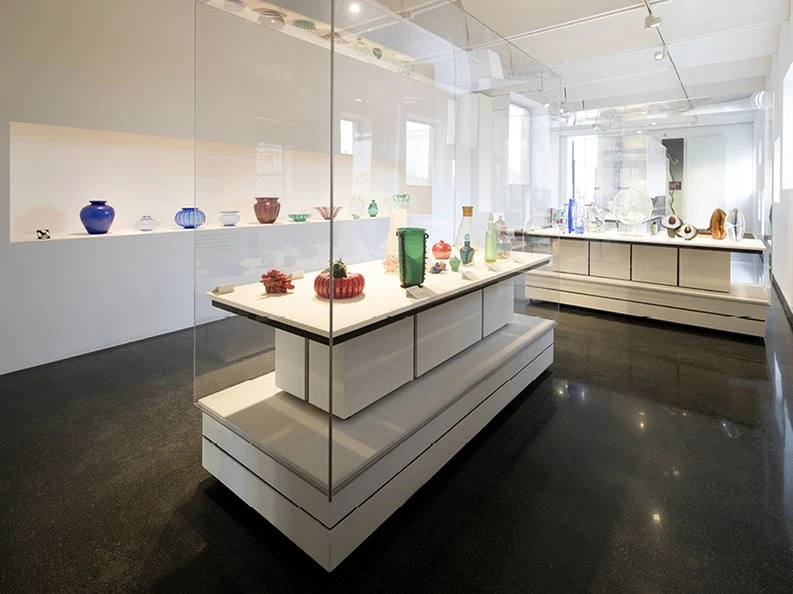
The Museo del Vetro. The Glass Museum on Murano, housed in the Palazzo Giustinian, holds the island's documentary record: furnace tools, historical pieces, and the lineage of techniques from the fifteenth century forward. It does not offer furnace access, but it is the single best place to understand what you are looking at before you walk into a working workshop. Admission fees are published on the museum's site; check the Museo del Vetro website for current pricing and opening hours.
The Money-vs-Time Tradeoff
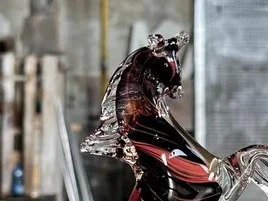
The expensive-but-instant route is an organised tour booked through a Venice-based operator. You pay a per-person fee, you arrive at a set time, and you see a demonstration the same day. The tradeoff is that you share the floor with a group, the piece being made is usually a simple horse or vase, and the showroom visit that follows is structured around a sale.
The patient route is direct contact, ideally made several weeks before your visit. You may wait for a date when a specific maestro is working, but you are more likely to see production glass being made rather than a demonstration piece, and you may be the only visitor on the floor. Some workshops charge no entry fee for this kind of visit. The cost is time and the willingness to write an email in advance.
On the Furnace Floor: What You Actually See
The working area of a Murano fornace is organised around the furnace mouth, the glory hole (a secondary reheating port), and the annealing oven, where finished pieces cool slowly over several hours to relieve internal stress. The maestro works standing, the blowpipe balanced across one forearm, rotating constantly. The garzone hands tools, holds the punty rod, and manages the timing of reheats. In a serious workshop, the two work without spoken instruction; the choreography is learned over years of apprenticeship, some of it running to a decade or more before a garzone is trusted with a gather of his own.
What you see depends on what is being made. The time from gather to punty transfer varies by piece; the venue does not publish production timings, and the pace is set by the work, not by a schedule. A complex murrine piece, built from cross-sections of pre-formed glass cane, takes longer and involves a different set of tools: the jacks, the battledore, the wooden block soaked in water that shapes the gather without sticking. The hiss of the water hitting hot glass is the sound you remember.
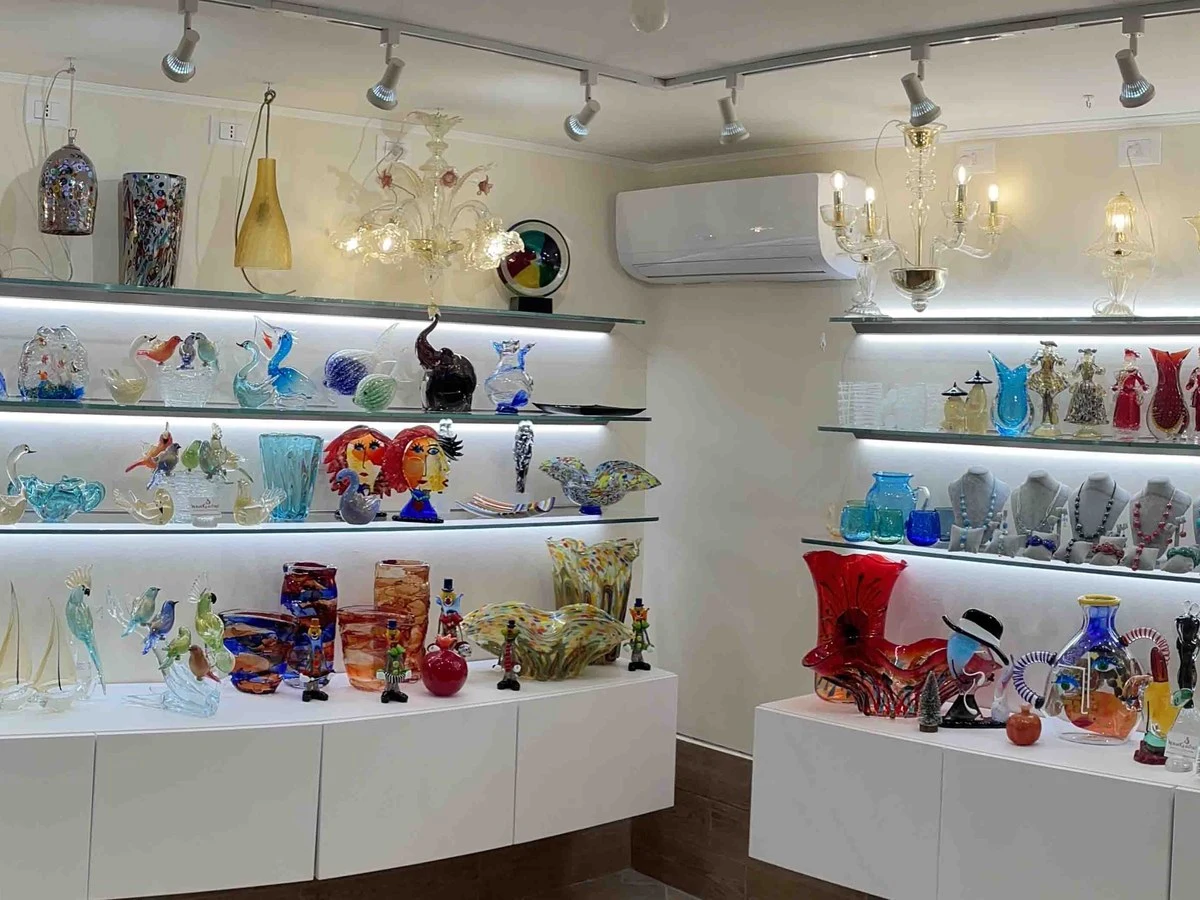
The showroom, in most workshops, is adjacent to the furnace floor. One room carries the smell of hot silica and wood ash; the next is lit for display. The pieces on the shelves range from signed art objects to production ware. In the better workshops, the maestro's name is on the label. In the larger commercial houses, it is not.
Visits typically run between thirty minutes and an hour, depending on whether you have arranged a private viewing or arrived with a group. There is no formal seating; you stand at the railing above the furnace floor or at the edge of the working area. Wear closed shoes. The floor is uneven and the ambient temperature near the furnace is significant.
How to Improve Your Odds of Seeing Real Work
The single most useful thing you can do is ask, when you make contact, whether the maestro will be working on production pieces or demonstration pieces that day. The answer tells you what kind of visit you are booking. A production day means the team is making glass for inventory or for a commission; the pace is faster, the pieces are more complex, and the visit is less narrated but more honest.
Ask also about the workshop's lineage. The island's craft tradition runs through specific family names and through the apprenticeship relationships between maestri. A workshop in its third generation, where the current maestro trained under his father and grandfather, is a different place from one established in the last decade. Neither is illegitimate, but the older houses carry a different weight of accumulated method.
If you are interested in a bespoke commission, raise it during the visit rather than before. The conversation about what is possible, what the lead time looks like, and what the cost range might be is better had in front of the furnace than over email. Most workshops that accept commissions will discuss the process openly; the ones that do not are usually the ones whose production is already committed months ahead.
Avoid the high-season tour groups if you can. The furnace demonstrations run for groups of twenty or thirty people, and the maestro is working to a script. The same workshop, visited on a Tuesday morning in March with a direct booking, is a different experience entirely.
Murano Workshop Access: A Practical Comparison
| Route | Difficulty | Typical Cost | Lead Time | How to Book |
|---|---|---|---|---|
| Wave Murano Glass guided tour | Low | From 29€ per person1 | Advance online booking; free cancellation up to 24 hours before1 | Wave Murano Glass booking page |
| Colleoni factory tour (via Musement) | Low | From $12.00; includes €10 shop credit per adult4 | Same day to 48 hours; full refund if cancelled 24+ hours before5 | Musement or hotel concierge |
| Vetreria Murano Arte (VMA) walk-in | Low | 3€; children under 11 free2 | Walk-in; weekdays 9am to 4pm2 | No booking required; arrive during open hours |
| Direct contact (smaller family fornaci) | Medium | Often free; verify with workshop | 2 to 4 weeks; depends on production schedule | Phone or email; Italian preferred |
| Bespoke commission visit | High | N/A (commission cost negotiated separately) | Weeks to months; production schedule dependent | Direct contact with workshop; raise during visit |
What to Do If the Furnace You Want Is Closed
The Museo del Vetro is the most underused resource on the island. Its collection runs from Roman-era pieces through the fifteenth-century revival of filigrana technique to twentieth-century design commissions, and the curatorial notes are specific about method. An hour there before any furnace visit sharpens what you are looking for on the floor.
The Fondazione Giorgio Cini, on the island of San Giorgio Maggiore, holds archival material on Venetian craft traditions including glass, and occasionally mounts exhibitions that contextualise the Murano lineage within broader Italian decorative arts. It is not a furnace visit, but it is a serious alternative for the craft-curious reader who arrives to find the workshops closed.
If you are specifically interested in the murrine and millefiori traditions, the workshops that specialise in these techniques are fewer and tend to be smaller. They are worth the extra effort of direct contact; the process of building a murrine cane, cross-sectioning it, and incorporating the sections into a blown piece is one of the more technically demanding things you can watch being done by hand anywhere in Europe.
Who Should Make the Trip and When
The visit rewards anyone who has a prior interest in process: cooks who understand mise en place will recognise the logic of the furnace team's choreography immediately. Ceramicists and potters will find the temperature management and the annealing logic familiar. Jewellers who work with torch will understand the gather and the reheat cycle. You do not need to be a glass specialist to follow what is happening; you need to be the kind of person who watches hands.
The trip is less suited to visitors who want a passive cultural experience with narration and a clear endpoint. The furnace floor is loud, hot, and not narrated in real time unless you have arranged a guided visit. The work proceeds on its own schedule.
The best occasions are a dedicated half-day from Venice, ideally on a weekday morning in the shoulder season, with a specific workshop confirmed in advance. Combining a furnace visit with the Museo del Vetro makes a full morning. The afternoon, when the furnaces are cooling and the maestri have finished, is better spent in the showrooms or on the island's quieter fondamente.
Worth the Vaporetto Ride?
Yes, with preparation. The unmediated version of this visit, a direct booking at a working fornace on a production morning, is one of the few places in Europe where you can stand two metres from a craft tradition that has run continuously for centuries and watch it happen in real time. The mediated version, an organised tour with a group, is still worth doing if it is your only option, but it is a different thing.
The practical split is this: a direct email to two or three workshops, sent before your trip, asking whether they will be blowing on your intended date, is the difference between watching a maestro make a demonstration piece for a tour group and watching a team work through a production run for a commission. The former is fine. The latter is the reason to go.
The Museo del Vetro is not optional if you care about the lineage. Go there first. A furnace visit reads differently once you have seen what the technique has produced across the same island, the same silica, the same family names on the same benches, across a long and documented history.
For the commission route, lead times and pricing are negotiated directly and are not published; contact the workshop, raise the conversation in person if you can, and expect the timeline to be measured in months rather than weeks for anything serious. The access problem here is solved the same way it always is: by knowing whose hands you are looking for before you arrive.
Frequently Asked Questions
Can you walk into a Murano glass workshop without a booking?Some of the larger commercial workshops on Murano allow walk-ins to their showrooms and demonstration areas, particularly during peak tourist season. Vetreria Murano Arte (VMA) at Calle San Cipriano 48 accepts walk-ins on weekdays between 9am and 4pm for a 3€ fee, with children under 11 admitted free. Working fornaci without a formal visitor program are generally not open to unannounced visitors; confirm whether the furnace will be active on your intended date before making the trip.2
What is the best time of year to visit a Murano furnace and see active glass-blowing?The shoulder months, March through June and September through November, offer the most reliable access to active production. August is the traditional ferie period and many workshops close entirely or run reduced crews. January and February are full working months. Avoid high summer if you want to see production work rather than a demonstration choreographed for tour groups.
How do you commission a bespoke piece from a Murano maestro?The commission process begins with direct contact with the workshop. There is no published booking system for bespoke commissions; pricing and lead times are negotiated individually and are not listed online. The most productive conversation happens in person, ideally during a furnace visit, where you can discuss what is technically possible with the maestro directly. Expect lead times to be measured in months for complex work. Contact the workshop by phone or email to begin the conversation.
Does the Museo del Vetro on Murano offer furnace access or glass-blowing demonstrations?The Museo del Vetro, housed in the Palazzo Giustinian on Murano, is a collection and exhibition space, not a working furnace. It holds historical pieces, archival material, and documentation of the island's techniques from the fifteenth century forward. It does not offer furnace access or live demonstrations. Current admission fees and opening hours are published on the Museo del Vetro website. It is best visited before a furnace visit, not instead of one.
How large are the groups at Wave Murano Glass compared with a Colleoni factory tour?Wave Murano Glass caps its guided tour at eight participants, making it one of the smaller structured options on the island.1 The Colleoni factory tour, bookable through platforms such as Musement, is designed for larger groups and runs approximately 40 minutes. If the composition of the group matters to you, Wave Murano Glass's eight-person cap gives you more control over the experience.5