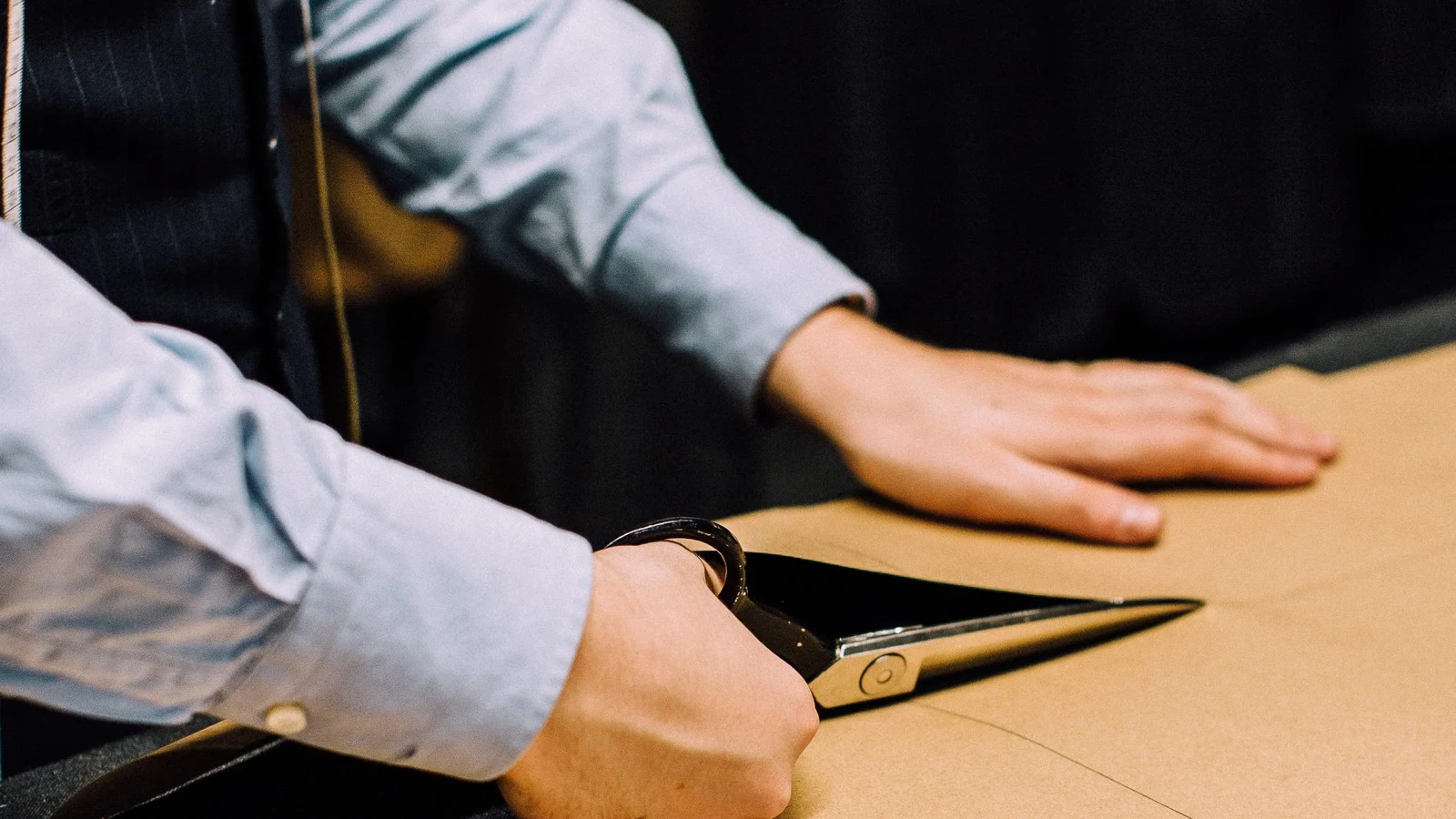
A tape measure comes out at the cutter's bench, numbers are called aloud, and the cutter writes them in a ledger by hand. That quiet procedure is the beginning of a bespoke commission.
The bespoke suit commission process rewards the client who plans ahead, pays a deposit at the first fitting, and arrives ready to make decisions. The clearest route is a direct approach to the house, by phone or email, before you need the suit.
What the Bespoke Suit Commission Process Requires
A bespoke suit is cut from a pattern drafted specifically for one body, by one cutter, and sewn by hand through a sequence of fittings that cannot be compressed without compromising the result. The cutter who takes your measurements is also the person who draws the pattern, cuts the cloth, and supervises the make. At the established London houses on Savile Row, a single cutter typically carries a full book of active clients. Each commission requires a minimum of three fittings1 spread across months. The arithmetic is unforgiving: capacity is fixed, and the waiting list at the senior houses reflects years of accumulated client relationships, not a queue that clears quickly.
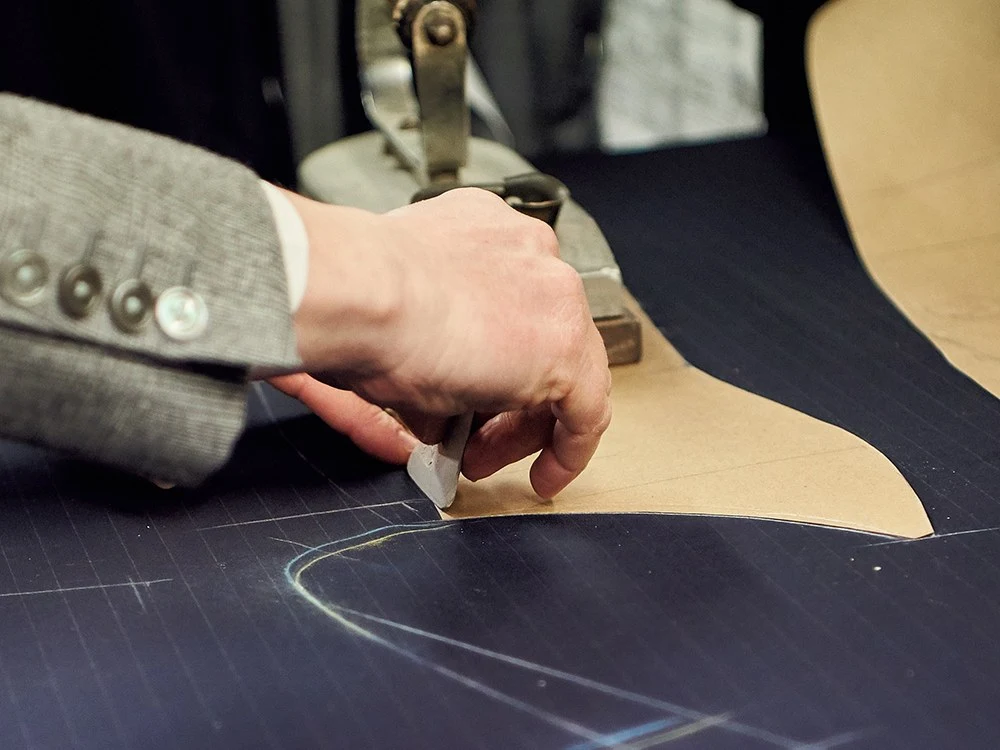
The cloth itself adds time. A bespoke commission begins with cloth selection from the house's bunches or from a mill's sample book. Mills weave to order for certain weights and patterns; delivery from the mill to the house can add several weeks before a single cut is made. The canvas interlining, hand-padded by the coat maker over many hours, requires its own drying and settling time between stages. None of this is padding. It is the method.
When Savile Row books are open
The bespoke houses do not publish a universal booking calendar. There is no drop time, no Resy window, no allocation release date. The books open and close on a cutter-by-cutter basis, and the only reliable way to know whether a particular cutter is taking new clients is to contact the house directly, by telephone or by email, and ask. Some houses maintain a waiting list for new clients; others ask you to call back in six months. A few of the most senior cutters on Savile Row are not accepting new commissions at all, and the house will tell you so plainly if you ask.
If you need a suit for a specific occasion, work backward from that date with a generous horizon, and contact the house before you have settled on a cloth or a silhouette. Arriving with a fixed deadline and a fixed idea is the fastest way to be told the timeline will not work. A bespoke suit takes at least twelve weeks on average to make,2 and during busy periods the process can run to five or six months,2 before any waiting-list time is counted.
How to Contact a Bespoke Tailoring House
A direct telephone call to the house remains the most effective first contact. It signals seriousness in a way that an inquiry form does not, and it gives you an immediate read on whether the cutter you want is available. Most of the established houses list a main number and, increasingly, an email address for new client inquiries. Use both if you do not reach someone on the first call. Huntsman, for instance, begins every bespoke commission with an appointment with a client manager, bookable via their website.1
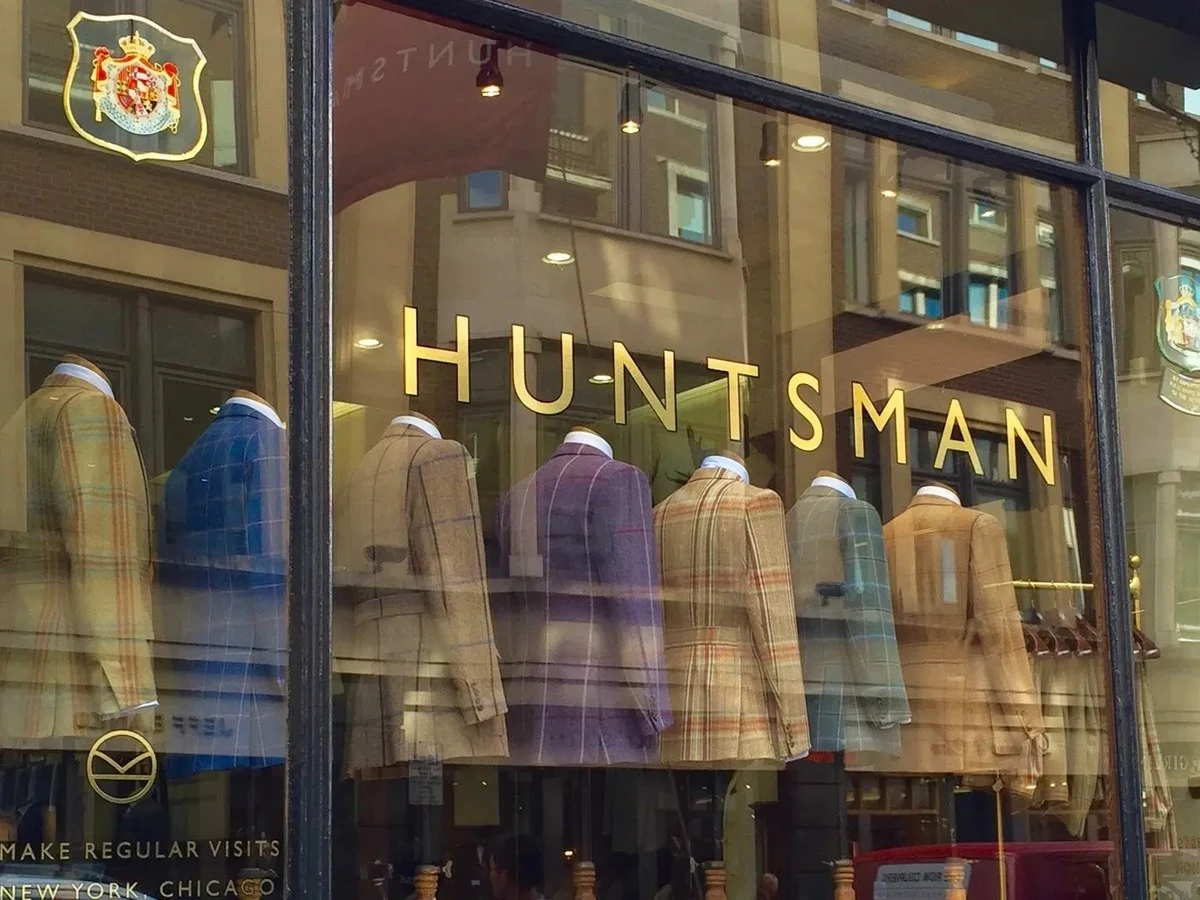
For houses with a transatlantic trunk-show program, the waiting list is often shorter for clients who book during a trunk show visit in New York, Chicago, or Hong Kong than for those who travel to London cold. The cutter travels with cloth bunches and a measuring kit; the first appointment happens in a hotel suite or a private room, and the subsequent fittings are scheduled around future trunk-show dates or a London visit. This route adds logistical complexity but can shorten the wait for a first appointment by several months.
Word of mouth from an existing client remains the most reliable introduction at the senior houses. If you know someone whose suits you have admired, ask directly who made them and whether they would be willing to introduce you. A warm introduction does not guarantee a shorter wait, but it does mean the cutter already has a reference point for your taste and your seriousness.
Bespoke Suit Cost, Deposit, and Payment Stages
Bespoke pricing is not published uniformly across houses, and few firms post a full current price schedule. What is consistent across the established London houses is the structure: a deposit is taken at the first appointment, typically representing a significant portion of the total commission cost, with the balance due on delivery.
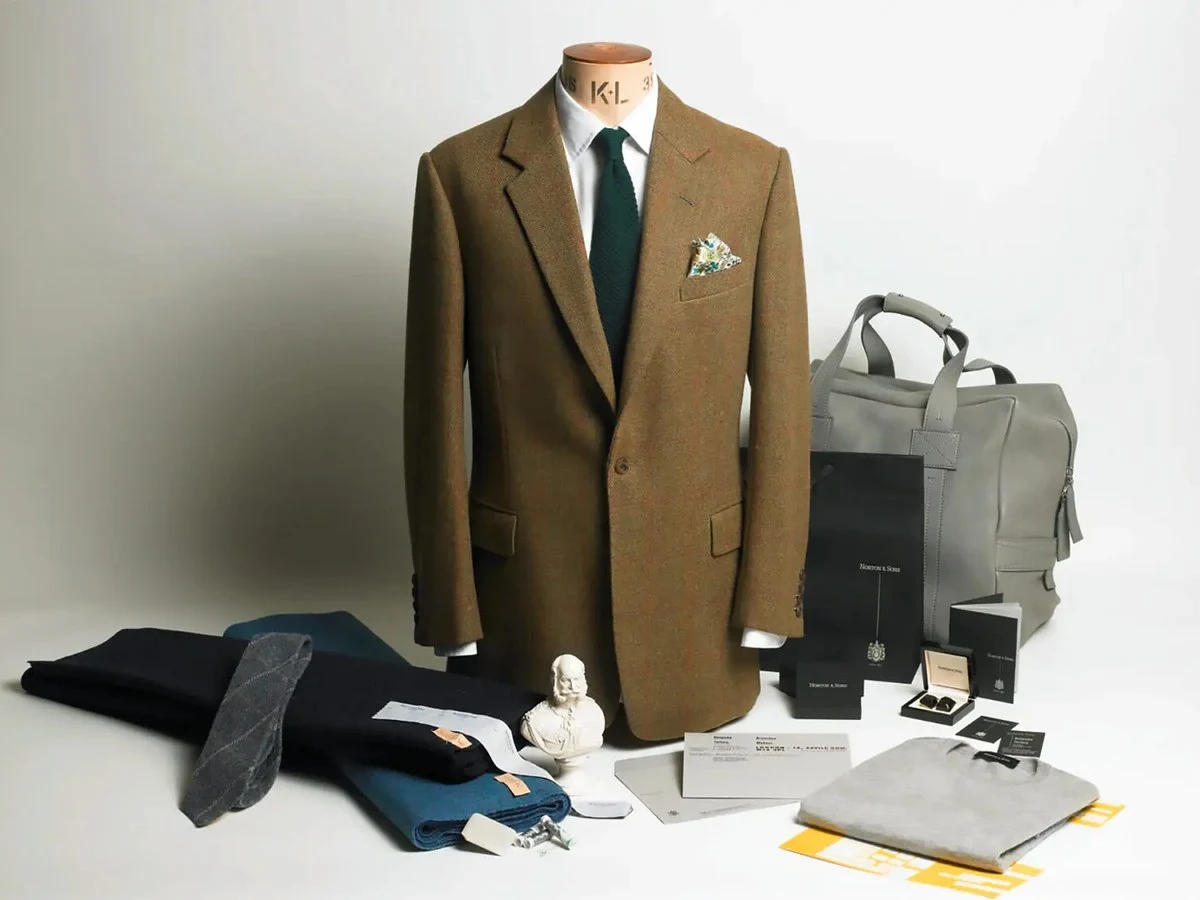
As a working orientation, authentic hand-made bespoke Savile Row suits start upwards of £3,500 and can cost more than £10,000 depending on cloth choices.3Reported entry points for individual houses vary: Norton & Sons from £6,000, Richard Anderson from £5,900.4Huntsman's own published starting point is £7,000.1 Treat these figures as a floor for budgeting purposes rather than a quoted price; contact the house directly for a current estimate before committing to a cloth or a timeline.
The cloth itself is a separate cost at some houses and bundled at others. If you are selecting from a mill's special-order book rather than the house's stock bunches, factor in the mill's minimum length requirement and any surcharge for a single-length cut.
How Experienced Clients Work With the Cutter
Clients who get the most from a bespoke commission tend to arrive at the first appointment having worn their existing suits carefully for several months beforehand. They know which shoulder sits higher, which trouser seat pulls, which jacket length they have been told is wrong by three different people. That specificity gives the cutter something to work against. A client who says "I want it to fit better" is harder to dress than one who says "the right sleeve always twists forward and I want the chest to close without pulling."
Insiders also keep their fittings. Cancelling a basting fitting and rescheduling it several months later disrupts the cutter's book and can push the delivery date by a full season. The houses are too polite to say this directly, but the cutters remember it.
The third habit is patience with the forward fitting. A basting coat looks nothing like a finished suit. The cloth is tacked together with long stitches, the canvas is loose, the sleeves are pinned. Clients who panic at this stage and ask for radical changes before the cutter has had a chance to mark and adjust are working against the process. Trust the fitting sequence; it exists because the work requires it.
Mistakes that can cost you the commission
Arriving with a photograph of someone else's suit and asking for that suit is the most common error. The cutter is not copying a garment; they are building a pattern for your body. A reference image is useful for discussing silhouette and detail, but treating it as a specification creates friction from the first appointment onward.
Choosing cloth before you have spoken to the cutter is the second mistake. The weight, structure, and drape of the cloth affect the cut. A cutter who has been working with a particular mill's 11-ounce fresco for twenty years will have opinions about how it behaves on a narrow shoulder or a high seat. Those opinions are part of what you are paying for.
The third mistake is underestimating the fitting commitment. A Savile Row bespoke suit involves a minimum of three fittings,1 and the full sequence across an established house can run considerably longer; if your schedule cannot accommodate a London visit in that window, discuss the trunk-show option at the outset rather than discovering the conflict after the cloth has been cut.
The fourth is treating the deposit as a retainer rather than a commitment. A bespoke commission begins the moment the deposit is paid and the cloth is ordered. Changing your mind about the cloth after the mill has cut the length, or asking to pause the commission for months, creates real costs for the house. The deposit exists partly to ensure that both parties are serious.
Bespoke vs. Made-to-Measure vs. Off-the-Peg
Access, lead time, and fitting stages separate full bespoke from made-to-measure and off-the-peg tailoring.
| Route | Lead Time | Cost Range | Fitting Stages | How to Book |
|---|---|---|---|---|
| Full bespoke (Savile Row senior cutter) | 12 to 18 months | £5,900 to £10,000+3 | Minimum 3 fittings1 | Direct contact with house; no public booking platform |
| Full bespoke (junior cutter / emerging house) | 6 to 12 months | £4,000 to £6,0004 | Minimum 2 fittings5 | Direct contact; some accept email inquiries |
| Made-to-measure (established house) | Around 2 months; some tailors offer 4 weeks2 | N/A | 1 to 2 fittings | In-store appointment; some online configurators |
| Off-the-peg (alterations) | 1 to 4 weeks | Alterations £75 to £2006 | 1 alteration fitting | Walk-in or appointment; widely available |
All cost figures are drawn from trade press reporting and should be treated as orientation only; contact each house directly for current pricing.
Alternatives When Senior Savile Row Books Are Closed
The junior cutters at the established houses are often the most practical entry point. A cutter in their fifth or sixth year on the Row, trained under a senior partner, is working from the same pattern-drafting tradition and the same cloth suppliers. The wait is shorter, the price is lower, and the relationship you build now compounds over time: the cutter who makes your first suit at thirty-two is likely to be a senior partner by the time you need your most important commission.
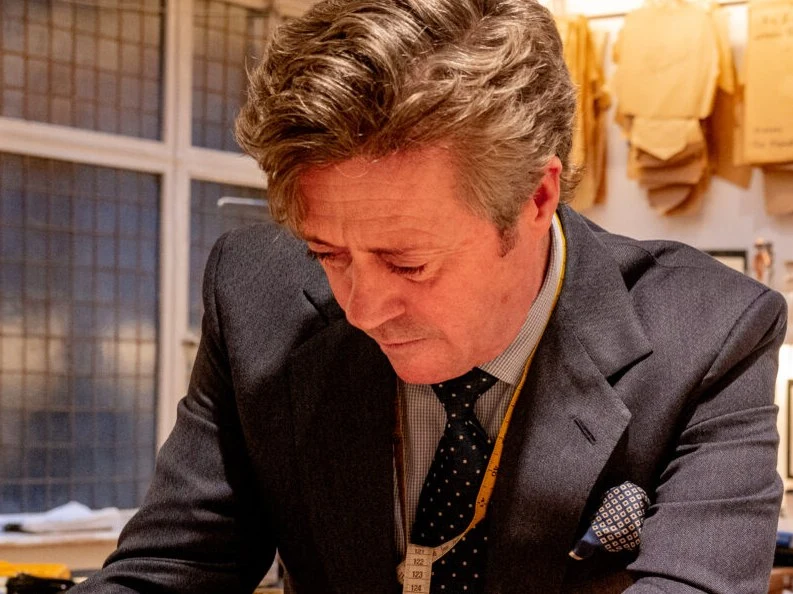
The emerging independent houses, many of them founded by cutters who trained at the established Row firms before setting up their own workshops, offer full bespoke at prices that reflect lower overhead rather than lower craft. Their books are more accessible, and the work is traceable to the same lineage. Richard Anderson, for instance, takes 19 measurements and works through a plain baste, a forward fitting, and a final fitting,7 the same three-stage sequence used across the Row tradition.
For clients outside London, the trunk-show circuit run by both Row houses and independent cutters covers New York, Chicago, Tokyo, and Hong Kong on a seasonal basis. A trunk-show commission is full bespoke; the only difference is that the fittings are scheduled around the cutter's travel calendar rather than your own London visits.
Made-to-measure from a house with a strong cutting tradition is not bespoke, but it is not a compromise either. The pattern is adjusted to your measurements from a block, not drafted from scratch, but the cloth is the same and the fit, for most bodies, is close enough that the distinction matters less than the tailoring press suggests. A high-quality made-to-measure suit takes around two months to make, with some tailors offering it in as little as four weeks.2
What Happens Across the Fittings
The first appointment is mostly listening. The cutter takes measurements, asks about your existing wardrobe, watches how you stand and sit, and looks at the shoulders of whatever jacket you are wearing when you walk in. The cloth selection follows: you handle the bunches, hold them to the light, and the cutter tells you what each weight will and will not do. You leave having chosen a cloth, agreed on a silhouette, and paid a deposit. The suit does not yet exist.
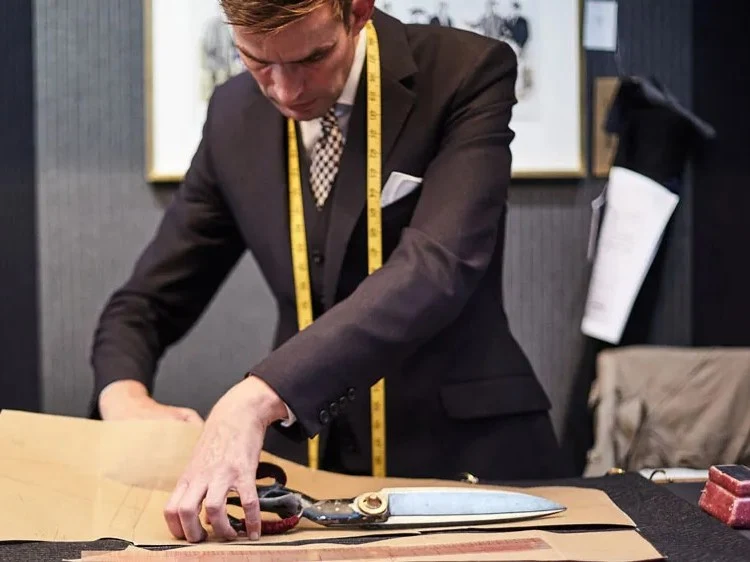
The basting fitting, some weeks later, is the most disorienting stage. The coat is assembled in long tacking stitches, the canvas floating inside the chest, the sleeves pinned at the head. The cutter marks it with chalk and pins while you stand still. The conversation is technical: the pitch of the sleeve, the suppression at the waist, the roll of the lapel. You are not being asked whether you like it; you are being asked whether it fits, which is a different question. Roughly two to three weeks separate each fitting stage.8
By the forward fitting, the coat is beginning to look like itself. The canvas has been padded and shaped, the sleeves set, the collar fitted to the neck. This is the stage where the silhouette becomes legible and where most clients feel, for the first time, that the commission was worth the wait. The final fitting is largely confirmatory: the buttonholes are worked, the buttons sewn, the trousers pressed. The suit is delivered in a cloth bag, on a wooden hanger, with a card noting the cutter's name and the date of completion.
Who should commission bespoke
Bespoke is the right choice for a body that does not fit standard sizing well, for a client who will wear the suit regularly over many years, and for anyone who wants a relationship with a maker rather than a transaction with a retailer. It is not the right choice for a one-occasion suit with a short deadline, for a client whose measurements are likely to change significantly in the near term, or for anyone who finds the fitting process tedious rather than interesting.
The occasions that justify the investment are the ones that recur: a professional wardrobe built over a decade, a wedding suit that will be worn again, a cloth that will outlast the occasion it was made for. The clients who get the most from bespoke are the ones who treat the commission as the beginning of a long relationship with a cutter, not as a one-time purchase of a garment.
Verdict: Plan Long, Contact Early
The bespoke commission is not difficult to access; it is difficult to time. The houses are not secretive, the cutters are not precious, and the process is well-documented. What it requires is a long horizon, a willingness to pay a substantial deposit at the first appointment, and the discipline to show up for every fitting without rescheduling. The clients who find it frustrating are almost always the ones who arrived too late or with too fixed an idea of what they wanted before the cutter had a chance to look at them.
The single most reliable route is a direct telephone call to the house, made well before you need the suit. If the senior cutter's books are closed, ask about the junior cutters; the lineage is the same and the wait is shorter. If London is not practical, ask about the trunk-show schedule. The work is the same wherever the fitting happens.
For most clients, the junior cutter at an established house or an independent from the same training tradition is the smarter first commission; the senior partner rewards the client who has already learned how to be fitted. The bespoke commission is, at its core, a relationship with one cutter's hands and judgment over time, and the clients who understand that from the outset tend to be the ones who come back.
Frequently Asked Questions
How far in advance should I contact a Savile Row house to commission a bespoke suit?At least twelve months before you need the suit, and eighteen months is safer if you have a fixed occasion in mind. The senior cutters at the established houses carry full books, and the cloth-ordering and fitting sequence cannot be meaningfully compressed. Contact the house directly by telephone to confirm current availability before planning around a specific delivery date.
Do bespoke tailoring houses publish their prices online?Most do not publish current price schedules. Trade press has reported entry-level bespoke from junior Savile Row cutters starting around £4,000 to £5,000 for a two-piece suit, with senior cutters at established houses commanding £6,000 to £10,000 and above, but these figures are reported rather than confirmed by the houses themselves. Contact the house directly for a current estimate before selecting cloth or committing to a timeline.
Can a Savile Row bespoke commission be completed via trunk show without traveling to London?Yes. Most of the established Savile Row houses and many independent cutters run seasonal trunk shows in New York, Chicago, Tokyo, and Hong Kong. The commission is full bespoke; fittings are scheduled around the cutter's travel calendar. The process takes longer than a London-based commission because fitting appointments are spaced by the trunk-show schedule, but the cloth, the pattern-drafting, and the hand-tailoring are the same. Ask the house about their trunk-show calendar when you make first contact.
What separates a bespoke suit from made-to-measure, and does the distinction matter for most bodies?Bespoke means a pattern drafted from scratch for your body by a named cutter, assembled through multiple hand-fitting stages. Made-to-measure adjusts a standard block to your measurements, typically with one or two fittings. For bodies that fit standard sizing reasonably well, a strong made-to-measure program from a house with a cutting tradition can produce a suit that is close in fit to bespoke at a fraction of the cost and lead time. For bodies with significant asymmetry, unusual proportions, or posture considerations, the bespoke pattern is the only route that addresses the underlying fit problem rather than working around it.
Is a Huntsman bespoke deposit refundable if I change my mind after the first fitting?Deposit policies vary by house and are not published uniformly. In most cases, once the cloth has been ordered from the mill, the deposit is non-refundable because the house has incurred a real cost. Some houses will apply the deposit to a future commission if the client needs to pause. Confirm the deposit and cancellation terms with the house before the first appointment, not after.