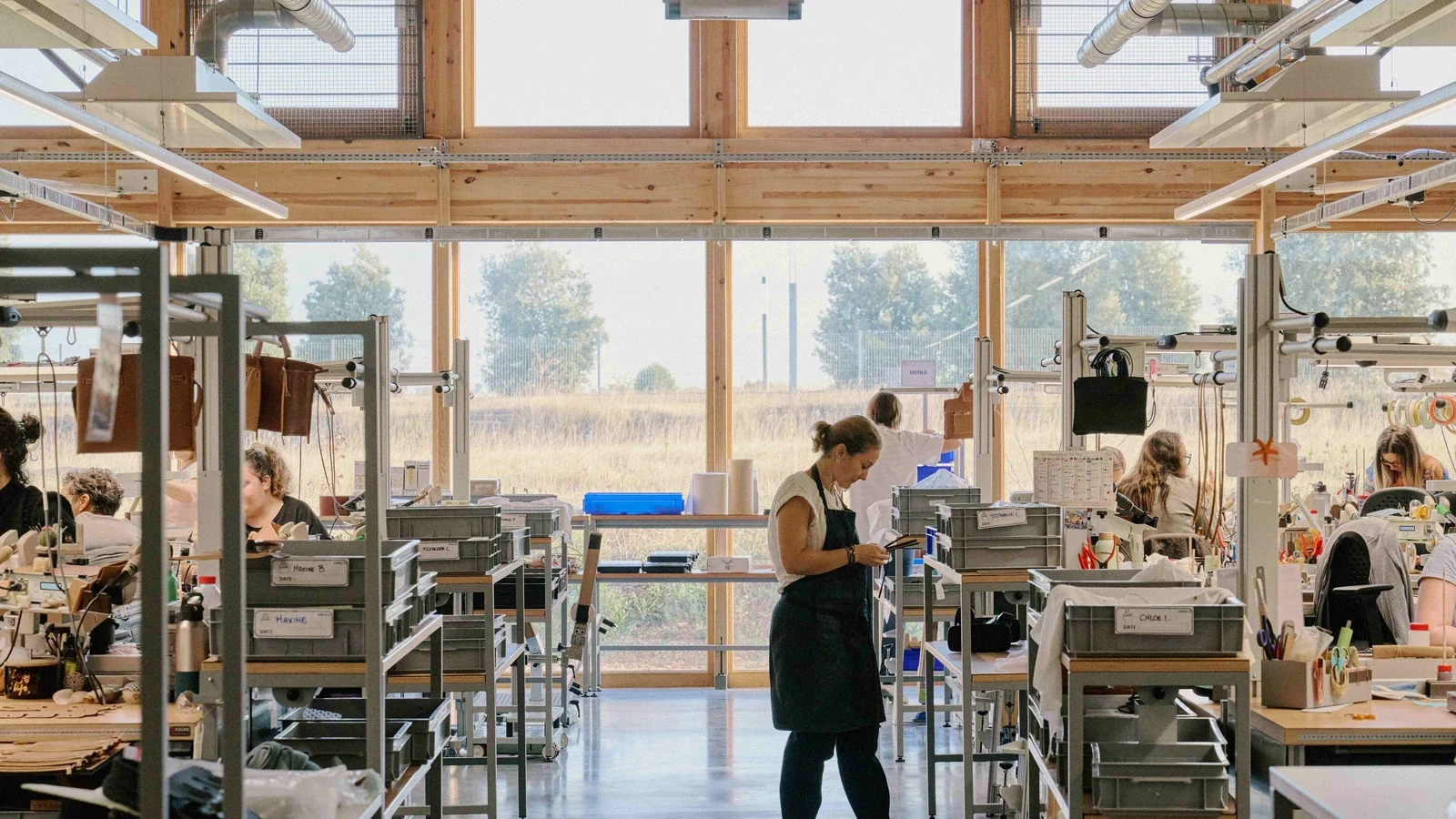
A craftsperson at the Hermès atelier in Pantin, just northeast of Paris, spends roughly eighteen months learning to saddle-stitch a single bag before touching a client piece. The needle goes through the same hole twice, from opposite sides, pulled to equal tension by hand. No machine replicates the angle. That process, and the workshops built around it, are not open to the public. Whether you can visit an Hermès production atelier comes down to this: almost certainly not, and not through any channel you can book today. What you can access, with planning, is a curated set of alternatives that get closer to the craft than most people realize.
Why the Hermès Atelier Door Stays Shut
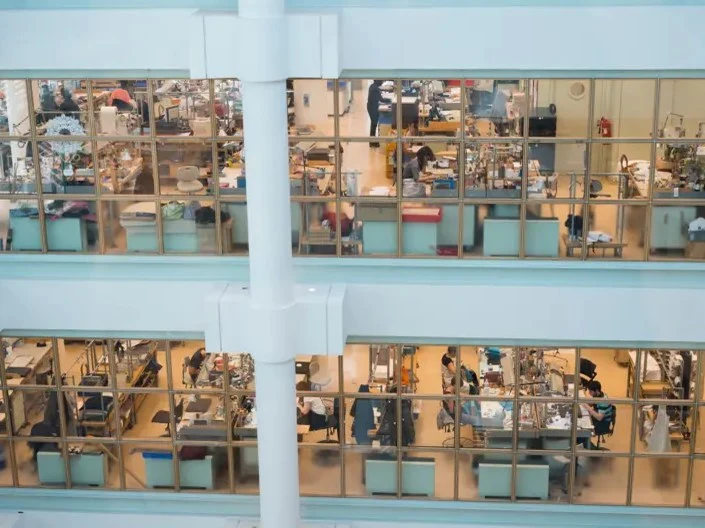
Hermès1 operates its leather goods production across a network of ateliers in France, including the flagship site at Pantin and a growing number of regional workshops opened over the past two decades as the house expanded capacity while keeping production domestic. Each atelier functions as a working studio, not a showroom. The artisans, called artisans selliers, are mid-apprenticeship or senior craftspeople on active production schedules. A visitor moving through the floor disrupts the rhythm of work that the house has spent generations calibrating.
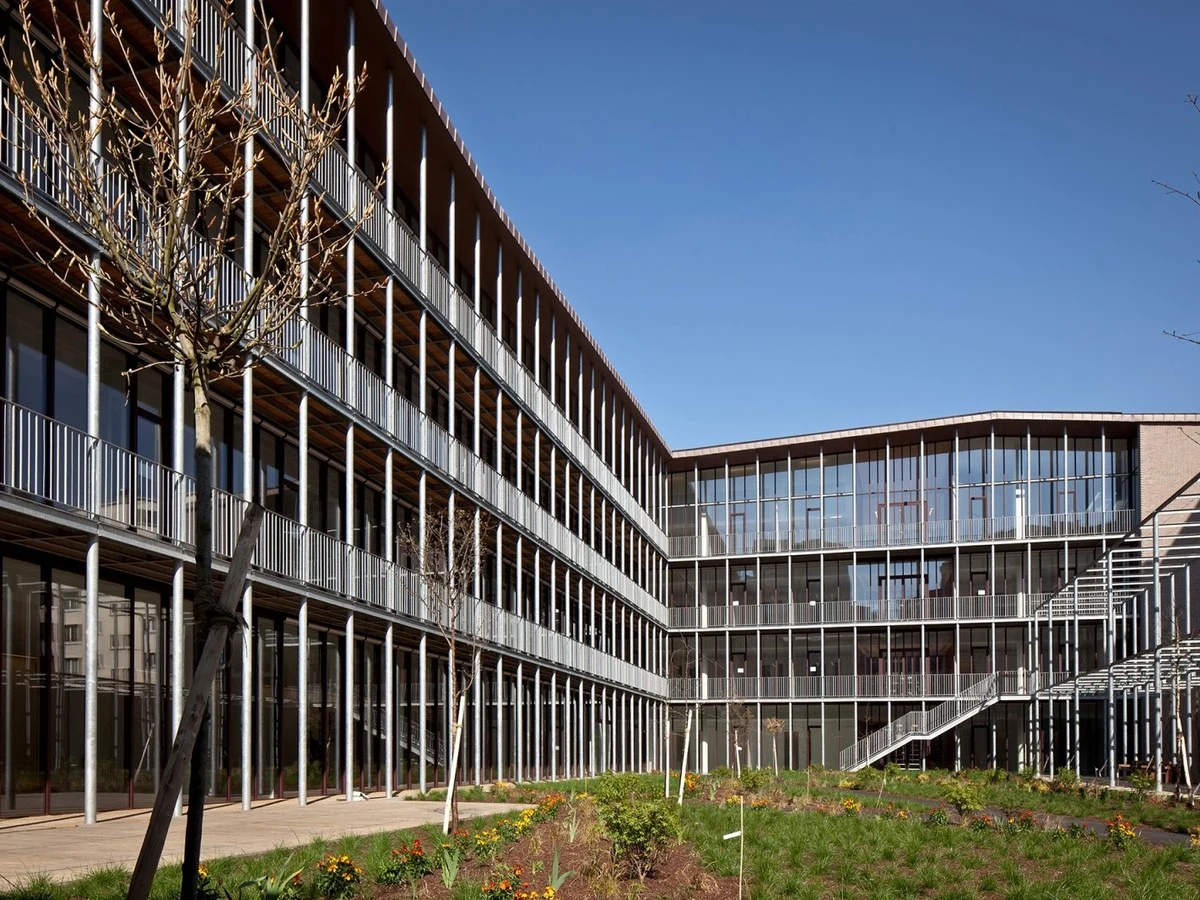
The house does not publish a public visit program for its production ateliers. There is no booking page, no ticket system, and no waitlist that a private individual can join through normal channels. Journalists and institutional partners receive access through Hermès communications, and a small number of clients with long relationships at the highest tier of the house occasionally receive invitations, but these are extended by the house, not requested by the client. The books, in any conventional sense, are not open.
This is not a capacity problem. It is a deliberate position. Hermès has consistently framed its ateliers as places of work, not heritage tourism, and the distinction matters to how the house presents its craft lineage to the outside world. The house employs over 16,000 people in France, a figure that underscores how seriously it treats the atelier as an active manufacturing environment rather than a heritage display.1
When Hermès Opens Its Doors, and to Whom
Once a year, Hermès participates in the Journées Européennes des Métiers d'Art (European Days of Craftsmanship), a France-wide open-atelier event that typically falls in early April. During this period, some Hermès sites have opened to the public in limited capacity, offering supervised visits to working floors. The specific sites, dates, and registration windows for 2026 have not yet been confirmed; the program is announced through the official Hermès website and through the Journées des Métiers d'Art national program. Confirm directly with Hermès communications or monitor the official event site before planning travel around this window.
Separately, Hermès runs Hermès Horizons and various cultural programming tied to its foundation, the Fondation d'entreprise Hermès, which supports craft education and occasionally stages public-facing events where artisans demonstrate technique. These are not atelier visits, but they are the closest publicly accessible version of the house's craft culture. Registration for foundation events is handled through the Fondation d'entreprise Hermès website; availability varies by program and city.
The release schedule for any of these programs is not published in advance in a way that allows reliable planning. Hermès does not publish a standing reservation window; confirm directly with the house or the relevant event organizer before building a trip around a specific date.
The Channels That Actually Work
For most people, the realistic routes to proximity with Hermès craft fall into three tiers.
The Journées des Métiers d'Art registration. Monitor the official Journées Européennes des Métiers d'Art program at journeesdesmetiersdart.fr from late January onward. When Hermès participates, spots fill within hours of announcement. Set a calendar reminder for early February and check weekly through March.
The Fondation d'entreprise Hermès. The foundation runs craft-focused programming, residencies, and public events under its Manufacto educational initiative, which brings artisan demonstrations to schools and cultural institutions. Public-facing events are listed on the foundation's site. This is not an atelier visit, but a senior artisan demonstrating saddle-stitch technique in a controlled setting is closer to the bench than any museum display.
The flagship store experience. The Hermès store at 24 rue du Faubourg Saint-Honoré in Paris occasionally stages in-store craft demonstrations, particularly around the house's annual Hermès Festival des Métiers, a touring event that has visited cities including Paris, Tokyo, New York, and Shanghai. The festival brings working artisans and their benches into retail spaces, with live demonstrations open to visitors. Dates and cities for 2026 are not yet announced; monitor the Hermès events page directly for announcements as they are made.
What Insiders Actually Do
People who follow Hermès craft closely do not wait for a single annual window. They track the Fondation d'entreprise Hermès programming year-round, attend the Festival des Métiers in whichever city it lands nearest, and build relationships with a single store's directeur artistique or senior sales associate over years. The relationship tier matters: clients who have purchased consistently at one address, and who have expressed sustained interest in the craft rather than the object, are occasionally invited to private demonstrations or previews that never appear on any public calendar.
This is the long way, and it is the only way that reliably yields access beyond the public program. It takes years, not months, and it requires treating the store relationship as a craft conversation rather than a transaction.
Seasonally, the best windows are early April (Journées des Métiers d'Art), the autumn period when the Festival des Métiers has historically toured, and the weeks around Paris Craft Week, which draws artisan-focused programming from houses across the city. Summer and the January sales period are the worst times to pursue any craft-adjacent access; the house's attention is elsewhere.
Realistic Alternatives That Reach the Same Craft
The following alternatives are not consolation prizes. Several of them offer more sustained access to working craft than a supervised atelier walk-through would.
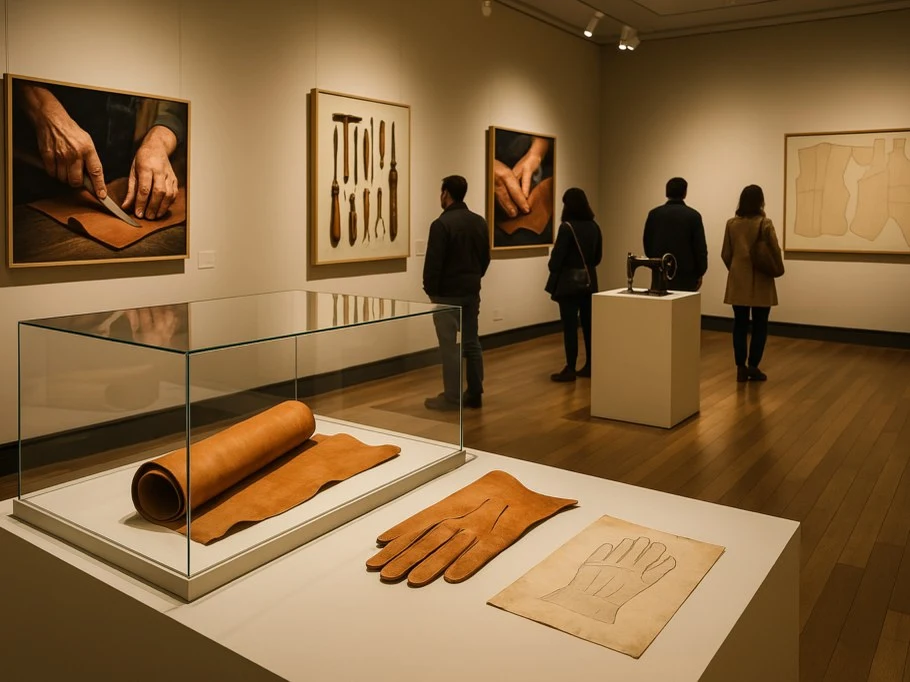
Musée du Cuir et de la Maroquinerie, Graulhet. This leather and leathergoods museum in Graulhet, in the Tarn well south of Paris, documents the technical history of the craft with tools, patterns, and process documentation. It is not Hermès-specific, but the saddle-stitch lineage is present throughout.
Saumur and the French saddlery tradition. The Saumur region, home to the Cadre Noir and a long equestrian craft tradition, has working saddlers whose ateliers are more accessible than any luxury house. A visit to a working sellier-bourrelier in the Loire Valley puts the same needle-and-thread technique in front of you without the institutional gatekeeping.
The Institut Français de la Mode and craft schools. Several Paris craft schools with ties to the luxury trades run open days and public demonstrations. The Institut Français de la Mode, which absorbed the École de la Chambre Syndicale de la Couture Parisienne in 2019, and associated programs occasionally stage events where students trained in luxury-house methods demonstrate technique.
Goyard, Paris. The trunk and leathergoods house on rue Saint-Honoré, a few minutes' walk from Hermès, operates a more accessible client-facing culture. The store itself functions partly as a working atelier, with hand-painting of the house's chevron pattern visible from the floor. No appointment required to observe; the work happens in the open.
Hermès Atelier Access vs. Realistic Alternatives in 2026
| Access Point | Difficulty | Cost | Lead Time | How to Book |
|---|---|---|---|---|
| Hermès production atelier (Pantin) | Effectively closed to public | N/A | N/A, invitation only | Not bookable; institutional/press only |
| Journées des Métiers d'Art (Hermès sites) | High, spots fill within hours | Free (when offered) | Register in Feb, Mar; event in April | journeesdesmetiersdart.fr (when listed) |
| Hermès Festival des Métiers | Medium, walk-in or light registration | Free | Monitor Hermès events page; dates unconfirmed for 2026 | hermes.com events section |
| Fondation d'entreprise Hermès events | Low to medium | Free to low cost | Announced per program; no standing calendar | fondation.hermes.com |
| Goyard store, Paris | Low, walk in | Free to observe | None | Walk in; 233 rue Saint-Honoré, Paris |
What the Festival des Métiers Actually Looks Like, Bench by Bench
When the Hermès Festival des Métiers arrives in a city, the house installs working artisans inside a retail or event space, each at a bench configured for their specific discipline. A sellier works a piece of vegetable-tanned leather with a two-needle saddle-stitch, the thread pulled to the same tension on each pass. A maroquinier cuts a handle blank with a clicking knife against a steel rule. A silk-scarf printer explains the screen-registration process for a design that may use thirty or more separate color passes.
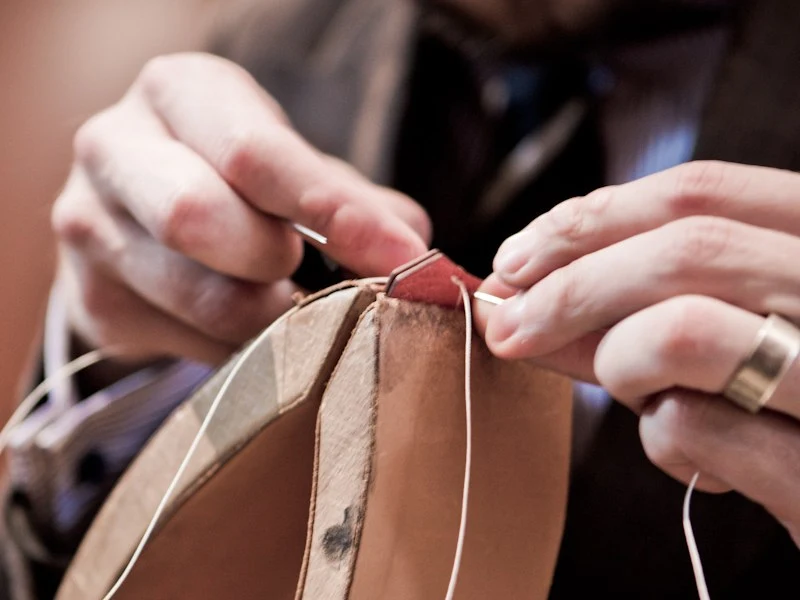
The format is open and unhurried. Visitors move between stations at their own pace. Artisans answer questions directly, and the conversations tend toward the technical: how many stitches per centimeter, why the thread is linen rather than synthetic, what happens to a piece that fails the tension test. The crowd at these events skews toward people who already own Hermès pieces and want to understand what they hold, alongside students from design and craft programs, and a smaller number of visitors who arrived without prior knowledge and stayed longer than they planned.
This is not the production floor at Pantin. The bench is staged, the pace is demonstrative rather than industrial, and the artisan is there to communicate as much as to produce. But the technique is real, the tools are the same, and the lineage, the same saddle-stitch method the house has used since its founding as a harness workshop, is present in every pass of the needle.
Who you share the room with: at Festival des Métiers events, the mix is broad. Long-standing clients stand next to craft students. Visitors who wandered in from the street ask the same questions as those who have spent years building a relationship with a single store address. The artisans treat both the same way.
Who Should Chase This, and When
If your interest is the object, the store is the right destination. If your interest is the craft, the Festival des Métiers and the Fondation programming are worth building a Paris trip around, particularly in April or autumn. If you are a student of leatherwork, saddlery, or luxury production methods, the Journées des Métiers d'Art window is the single highest-value access point in the calendar, and it is free.
If you are hoping to walk through the Pantin atelier on a private basis because you are a significant client, that access is possible in theory and not pursuable in practice. The house extends those invitations; clients do not request them. Spending years building a relationship with one address, and demonstrating consistent interest in the craft rather than the status of the object, is the only behavior that compounds toward that kind of access over time.
Skip the chase entirely if what you want is a behind-the-scenes tour in the heritage-tourism sense. That product does not exist at Hermès, and the alternatives that do exist reward a different kind of attention.
A Clear-Eyed Verdict on Hermès Access
The Hermès production ateliers are not open to the public, and no booking channel exists that changes that. With a global production workforce running into the thousands,1 the house runs its ateliers as active manufacturing environments, not visitor destinations. The Journées des Métiers d'Art is the one annual window where access becomes possible, and it requires monitoring from February onward and moving fast when spots appear. The Festival des Métiers is the more reliable route: it travels, it is free, and it puts working artisans and their tools in front of you without the institutional friction of an atelier visit.
For most people, the Festival des Métiers is the smarter chase. The craft is present, the artisans are there to talk about it, and the experience of watching a saddle-stitch pulled to tension by hand is not diminished by the fact that it happens in a retail space rather than on a production floor. The Pantin atelier rewards only the patient, the well-connected, and the genuinely long-term. For everyone else, the bench is closer than it looks, if you know which calendar to watch.
The access problem here resolves the same way the craft itself is learned: by showing up consistently, paying attention to the right windows, and letting the relationship build at the pace the house sets. That is not a workaround. It is the method.
Frequently Asked Questions
Can you book a visit to the Hermès atelier in Pantin as a private individual?No. The Pantin atelier does not operate a public visit program, and there is no booking channel, waitlist, or ticket system available to private individuals. Access is extended by the house to journalists, institutional partners, and occasionally long-standing clients, but it cannot be requested or purchased. If you are interested in atelier-level access, the Journées Européennes des Métiers d'Art in April is the one annual window where some Hermès sites have opened to the public in limited capacity.
When does the Hermès Festival des Métiers come to Paris or other cities in 2026?Hermès has not yet confirmed 2026 Festival des Métiers dates or cities. The festival has historically toured Paris, Tokyo, New York, and Shanghai, typically in autumn, but the schedule varies year to year. Monitor the events section of hermes.com directly for announcements; no third-party calendar reliably carries confirmed dates in advance.
How do you register for the Journées des Métiers d'Art if Hermès is participating?Registration is handled through the national program at journeesdesmetiersdart.fr. Hermès participation is not guaranteed each year and is announced close to the event, which typically falls in early April. Check the site from late January onward and register immediately when spots appear; availability at Hermès sites fills within hours of announcement. Hermès does not publish a separate registration window; the national program site is the primary channel.
Does the Fondation d'entreprise Hermès offer public craft events open to book?Yes, the Fondation d'entreprise Hermès runs public-facing programming, including its Manufacto craft education initiative and cultural events tied to its residency and exhibition programs. These are not atelier visits, but they include artisan demonstrations and craft-focused programming. Events are listed on the foundation's site at fondation.hermes.com; there is no standing calendar, and availability varies by program and city.
Is there anywhere in Paris where you can watch Hermès-style leatherwork without an invitation?The closest open alternative is the Goyard store at 233 rue Saint-Honoré, where hand-painting of the house's chevron pattern is visible from the shop floor with no appointment required. For the saddle-stitch tradition specifically, working saddlers in the Saumur region and the Loire Valley operate accessible ateliers where the same needle-and-thread technique is practiced on an active production schedule. Neither is Hermès, but both put the craft in front of you without institutional gatekeeping.