James Halliday Wine Critic: 140 Dinners, 50 Years, One Final Book
James Halliday closes a 50-year career with a 448-page book documenting 140 wine dinners, from 1970s Bordeaux with Len Evans to grand cru Burgundies with Prime Ministers.
HM
Director of Editorial Standards
Hugo Marchetti
Filed July 2, 2026
8 min read
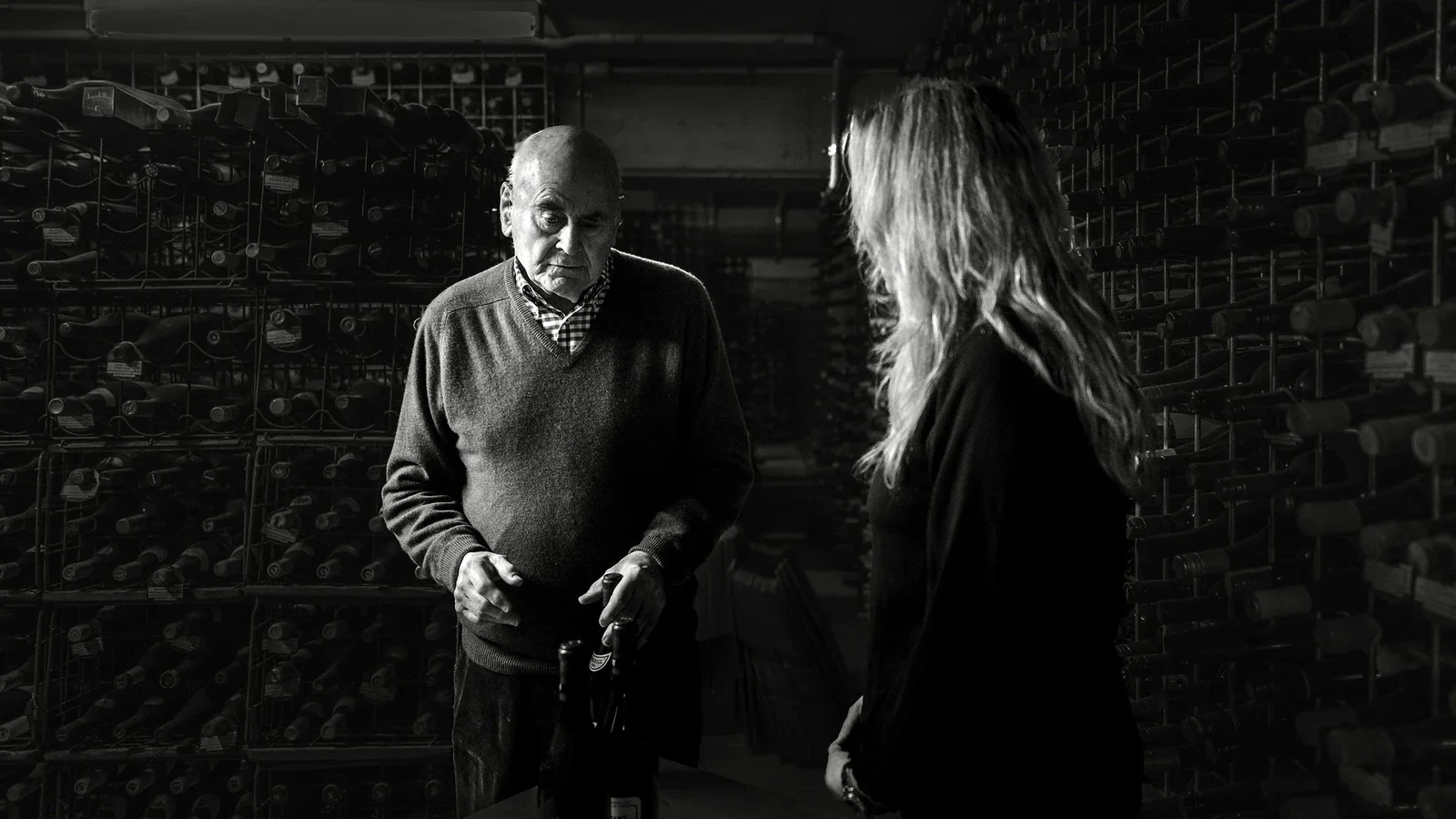
James Halliday sits at Coldstream Hills on a hot autumn afternoon, his teeth stained from tasting another 150 wines for the annual guide. The deadline is close. Altogether, approximately 5,000 wines need sampling each year, a task more arduous than it sounds. He fetches two ice-cold Coopers and settles in to talk about the work that has defined Australian wine criticism for more than half a century.
In his late eighties, Halliday has one final book to his name: 50 Years of Great Wine Dinners, a 448-page hardback documenting 140 wine dinners from 1970 through five decades. The book chronicles grand cru Burgundies, classed growth Bordeaux, and top Australian bottles shared with wine luminaries and Prime Ministers. Two years after his retirement from wine writing in 2024, the project stands as his swansong, a testament to the philosophy that has guided his entire career.
The Sunday letter
Get our new stories in your inbox every Sunday.
One email with our newest profiles and guides. See a sample before you subscribe.
"I never once sat alone with a bottle of Domaine de la Romanée-Conti or first growth Bordeaux to drink by myself. The real joy is opening these bottles with others and hoping they see what you see in the glass."
, James Halliday, wine critic, The Drinks Business1
The James Halliday Lifetime Achievement Award and Final Book
In 2025, the Institute of Masters of Wine granted Halliday its Lifetime Achievement Award, a recognition that placed him among the most honored voices in global wine criticism. The award followed decades of work that began in 1968, when Halliday founded the Halliday Wine Companion, a guide that would become the benchmark for Australian wine evaluation. His commitment to the industry earned him national recognition in 2010 when he was appointed to the Order of Australia.
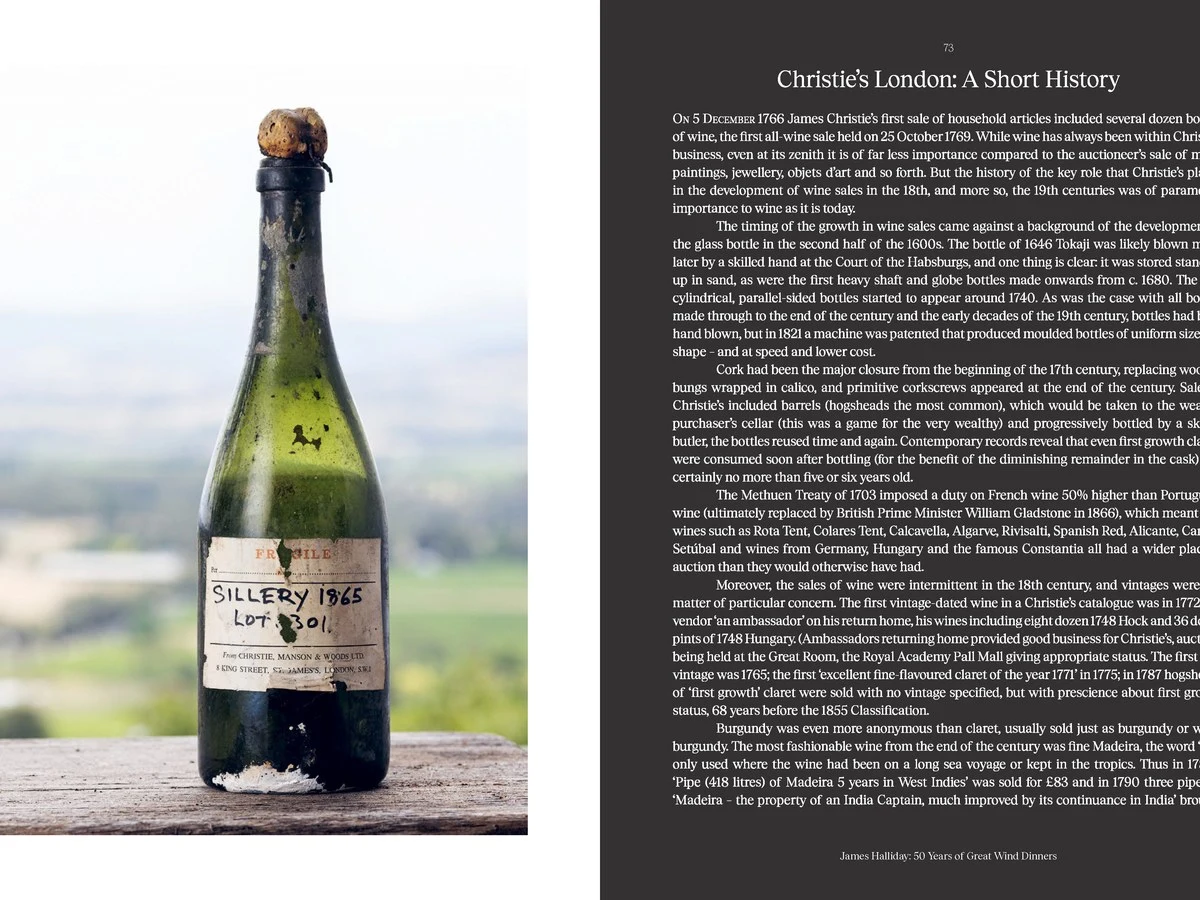
The SILLERY 1865 bottle, a testament to wine history, featured in James Halliday's '50 Years of Great Wine Dinners'.
The new book, 50 Years of Great Wine Dinners, documents a practice that began in the late 1960s, when first growth Bordeaux and grand cru Burgundies were little known or understood in Australia. The dinners were initially just wine tastings with food, organized by Halliday and his mentor Len Evans AO OBE, who introduced him and much of Australia to the world of fine wine at a time when Australians were typically drinking fortified expressions. Evans would send a note to the group, a core gathering of about 20 attendees, to see who wanted to attend. The total cost of buying wines, sourcing them from auctions or from Halliday's own cellar, and paying the restaurant was divided among those present.
Over time, the dinners gained momentum and sophistication, yet the wines remained the primary focus. The book reads as a chronicle of bottles opened, people gathered, and moments preserved. To read the 140 dinners in sequence is to travel back to a very different Australia, one where French greats dominated the table and Australian wine was still finding its voice on the global stage.
From Lawyer to Winemaker: The Coldstream Hills Origin Story
Halliday's path to wine criticism was not direct. He began as a lawyer, a profession that gave him the discipline and analytical rigor that would later define his tasting notes. His father, a doctor, created a small cellar in the Halliday family home in Bellevue Hill, Sydney, during the postwar years. That early exposure planted the seed, but it was Len Evans who cultivated it into a career.
Halliday founded Coldstream Hills winery in Australia's Yarra Valley, a move that gave him producer perspective at a time when most critics remained at arm's length from the cellar. The winery became a proving ground for the techniques and philosophies he would later champion in his writing. Working the bench, managing fermentation, and making decisions about oak and aging gave him the vocabulary and credibility that separated his criticism from that of writers who had never held a hydrometer or walked a vineyard at dawn.
The dual role of winemaker and critic shaped his editorial voice. He wrote with the authority of someone who understood the stakes of a late harvest decision, the risk of a barrel selection, the patience required to wait out a slow fermentation. His notes carried the weight of firsthand knowledge, and the Australian wine industry responded by treating his scores and recommendations as benchmarks.
140 Dinners, 5 Decades: The Philosophy Behind Sharing Great Bottles
The dinners documented in 50 Years of Great Wine Dinners were never about solitary evaluation. Halliday's philosophy, stated plainly in interviews, is that great wines are meant to be shared. The book lists bottles that would make any collector's pulse quicken: grand cru Burgundies, classed growth Bordeaux, top Australian expressions from vintages that have since passed into legend. But the names on the guest lists matter as much as the names on the labels.
Len Evans appears throughout the book, a formidable presence on the global wine scene and a mentor whose influence shaped Halliday's approach to both criticism and hospitality. The dinners also included wine luminaries and Prime Ministers, gatherings where the conversation around the table was as carefully curated as the bottles opened. The mechanics were deliberately informal, but the intent was serious: to understand these wines not as isolated artifacts but as catalysts for connection and memory.
The book reveals what Halliday learned from opening bottles of this caliber in the company of people who could speak to their provenance, their context, and their place in the lineage of great winemaking. The 1970s dinners, in particular, capture a moment when Australian wine culture was still forming its identity, looking to France for guidance but beginning to assert its own voice. The dinners became a laboratory for that conversation, a place where the old world and the new world met over glasses that held both tradition and ambition.
What Halliday Learned Tasting 5,000 Wines a Year
The annual ritual of tasting approximately 5,000 wines for the Halliday Wine Companion was more arduous than it sounds. The deadline loomed each year, and the work required stamina, focus, and a palate calibrated to detect flaws and virtues across a spectrum of styles, regions, and price points. Halliday's teeth would be stained from the volume, his notes filling pages with the kind of specificity that only comes from sustained attention.
The sheer volume of wines tasted each year gave Halliday a perspective that few critics could match. He saw the arc of vintages, the evolution of regions, the rise and fall of winemaking trends. He tasted the same producers year after year, tracking their progress or decline with the kind of longitudinal data that only comes from decades on the bench. The work taught him to distinguish between wines that impressed in the moment and wines that would hold their structure and interest over time.
That discipline carried over into his writing. The Halliday Wine Companion became a trusted resource for both consumers and producers. He did not inflate scores to please advertisers, and he did not soften criticism to preserve relationships. The guide's authority rested on the consistency of his voice and the rigor of his method.
The annual tasting cycle also reinforced his belief that technical evaluation, while necessary, was not the whole story. A wine could score well on paper and still fail to create a memorable moment. The dinners documented in his final book represent the other half of the equation: the context, the company, the conversation that turns a bottle into an experience. Halliday's career demonstrates that both halves matter, that criticism without connection is incomplete.
The Halliday Wine Companion Legacy: 1968 to Today
The Halliday Wine Companion, launched in 1968, has been publishing ever since, a run that spans the entire modern era of Australian wine. When Halliday founded the guide, Australian wine was still finding its footing on the global stage. Fortified wines dominated domestic consumption, and the fine wine culture that would later define regions like the Yarra Valley, Margaret River, and the Barossa was still in its infancy.
The guide became the voice that narrated that transformation. Halliday's scores and recommendations shaped consumer behavior, influenced producer decisions, and provided a framework for understanding Australian wine as a category worthy of serious attention. His editorial voice, friendly and authoritative, made wine accessible without dumbing it down. He wrote for readers who wanted to learn, not for readers who needed to be impressed.
The guide's influence extended beyond Australia. International collectors and critics began to take Australian wine seriously in part because Halliday had already done the work of identifying the producers, the regions, and the vintages that mattered. His writing introduced a generation of wine drinkers to Australian expressions, and his credibility as both a critic and a winemaker gave his recommendations weight.
Campbell Mattinson, a wine writer who has followed Halliday's career closely, noted that no one has given more to the wine community. Halliday has been the head of Australian wine for all the time Mattinson has been involved in it, a marker and a guide whose retirement represents the end of an era. The announcement of Halliday's retirement in 2024 was a day that many in the industry never wanted to arrive.
The Halliday Wine Companion continues without him, but the voice that defined it for more than five decades is now silent. The final book, 50 Years of Great Wine Dinners, stands as a coda to that voice, a reminder that wine criticism's lasting value lies not in scoring systems but in the shared experiences and human connections that great bottles create.
In his late eighties, James Halliday has closed a career that reshaped Australian wine criticism and elevated the global perception of Australian wine. His philosophy, that great wines are meant to be shared, runs through every page of the new book. The 140 dinners documented there are not just a record of bottles opened but a record of friendships formed, conversations held, and moments preserved. The real joy, as Halliday has said, is opening these bottles with others and hoping they see what you see in the glass. That hope, sustained over 50 years, is the legacy he leaves behind.
The Sunday letter
Get the next Made By guide in your inbox.
We send one email every Sunday morning with the guides and profiles we published that week.