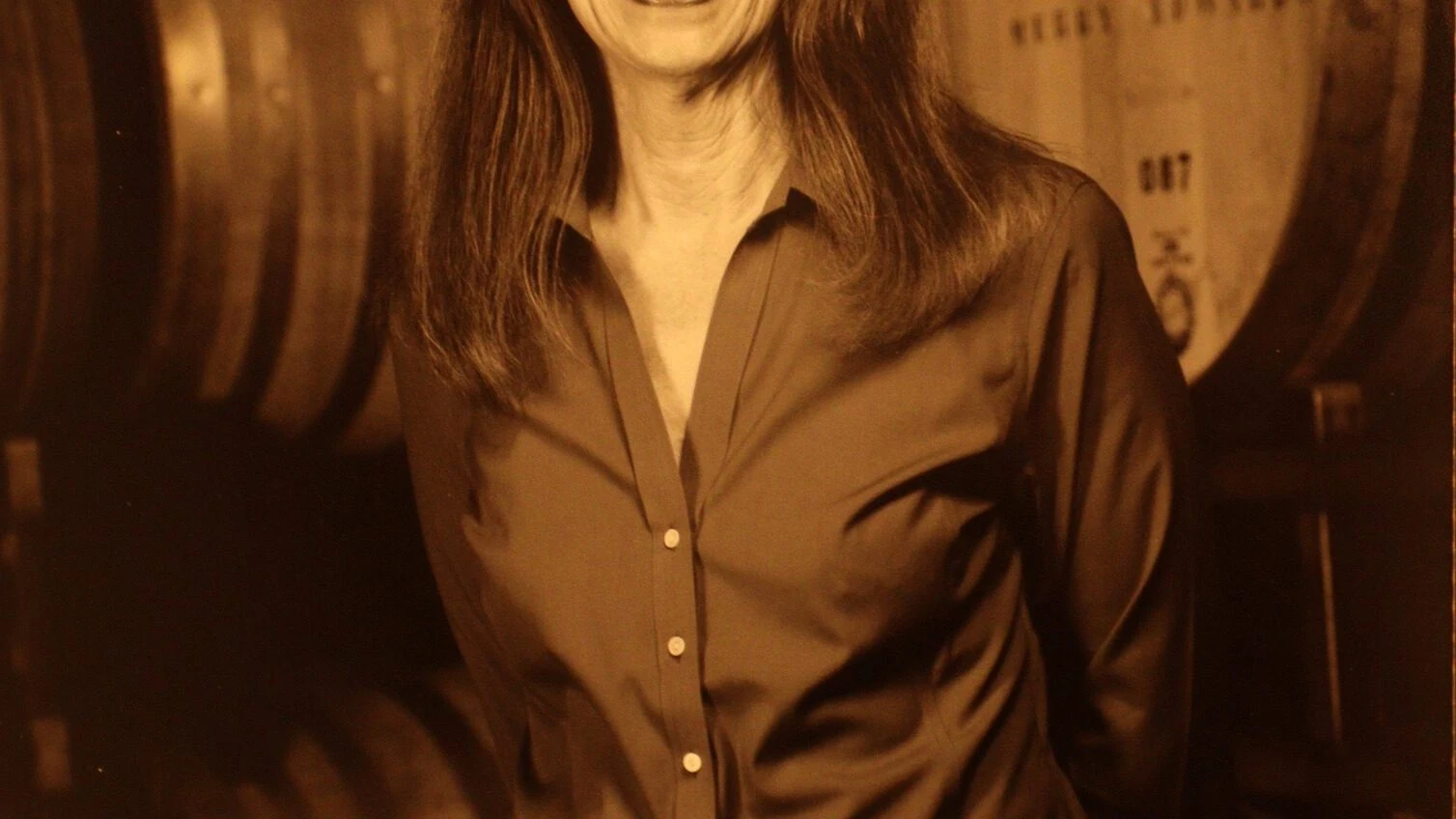
La Ponca's organic Malvasia and Chef Paolo Dalla Torre's Lobster Catalana unite to distill Friuli Venezia Giulia's sea-and-land identity in one summer pairing.
HM
Director of Editorial Standards
Hugo Marchetti
Filed June 26, 2026
11 min read
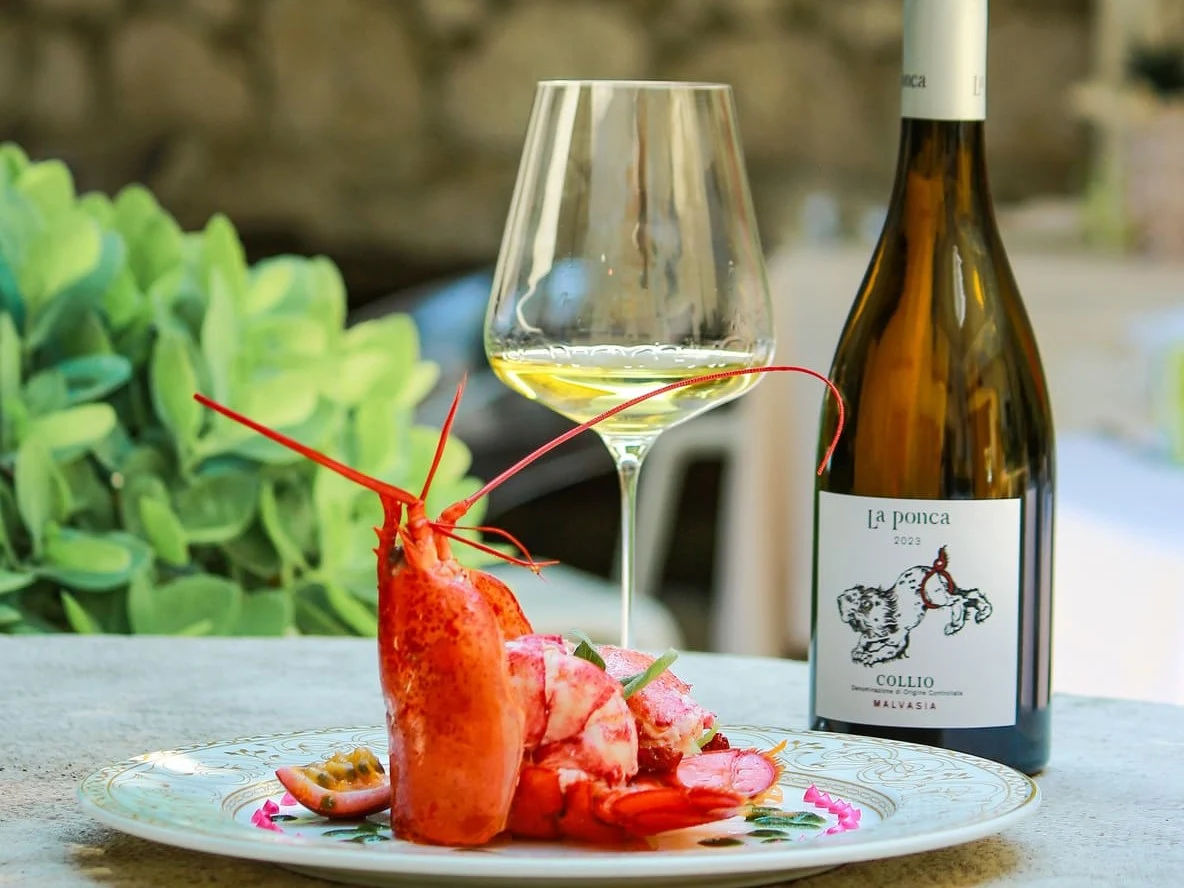
The lobster arrives cold, dressed in olive oil and citrus, laid over crisp raw vegetables. The wine in the glass is straw-yellow with a thread of gold at the rim. On the nose: salt, balsam, a suggestion of something tropical just beneath the surface. Paolo Dalla Torre has been cooking seafood in Sacile long enough to know what the dish needs. La Ponca has been farming Malvasia in Friuli long enough to know what the wine is. On June 8, 2026, from Scrio in northeastern Italy, the two announced what happens when those two certainties sit across from each other at the same table.
The collaboration between La Ponca and Chef Paolo Dalla Torre of Il Pedrocchino is framed, by both parties, as an expression of Friuli Venezia Giulia's connection between sea and land. That framing is not incidental. It is the thesis of the pairing, and it holds up under scrutiny.
The Sunday letter
Get our new stories in your inbox every Sunday.
One email with our newest profiles and guides. See a sample before you subscribe.
Friuli Venezia Giulia is a region that has always lived between registers: Alpine to the north, Adriatic to the south, Central European in its cultural memory, distinctly Italian in its table manners. The wines and the cooking that emerge from this crossroads carry that complexity in their structure.
La Ponca's Malvasia Friulana is one of the clearest examples of what that means in a glass.
La Ponca and the La Ponca Malvasia Friulana Identity
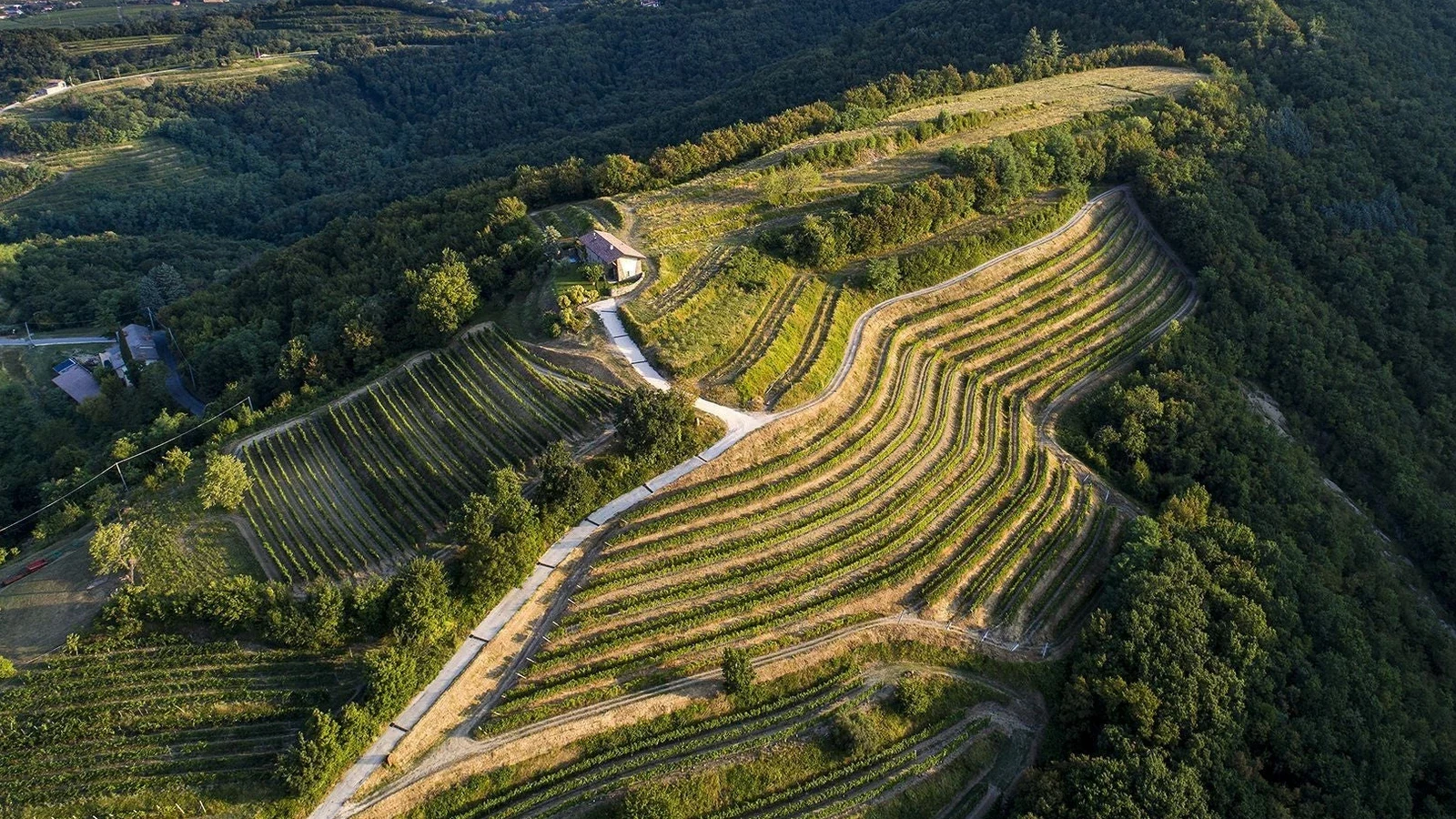
Malvasia Friulana is not a grape that announces itself loudly. It is aromatic without being showy, mineral without being austere, and it carries a salinity that seems to remember the Adriatic even when the vineyard sits well inland. La Ponca, based in Scrio, has built its identity around indigenous Friulian varieties, and the Malvasia is the wine through which that identity speaks most directly.
The farming is organic. La Ponca's Malvasia is the result of vineyard work carried out with full respect for the land through organic farming practices that preserve its balance and identity. That phrase, balance and identity, is worth sitting with. In a region where the temptation to chase international styles has pulled many producers toward heavier extraction or more obvious oak, a commitment to preserving varietal identity through organic viticulture is a position, not just a method. It means the wine in the glass is shaped first by the vine and the soil, and only then by the cellar.
In the glass, La Ponca's Malvasia Friulana shows a bright straw-yellow color with golden reflections. The nose opens with saline and balsamic notes alongside hints of exotic fruit. On the palate, the wine reveals a rich, creamy texture supported by vibrant acidity. That acidity is the structural key. It is what makes the wine work at the table, what allows it to cut through richness without losing its own aromatic thread, and what makes it both drinkable and versatile.
Malvasia Friulana belongs to a broader family of Italian white varieties that have spent decades in the shadow of more internationally recognized grapes.
The recent turn toward indigenous Italian whites, driven partly by sommeliers and partly by a generation of producers who refused to abandon their local varieties, has brought grapes like Malvasia Friulana, Ribolla Gialla, and Vitovska back into serious conversation.
La Ponca's Malvasia sits comfortably in that company: wines that reward attention, that have something specific to say about where they come from, and that age with more grace than their aromatic profiles might initially suggest.
Chef Paolo Dalla Torre and Il Pedrocchino's Lobster Catalana
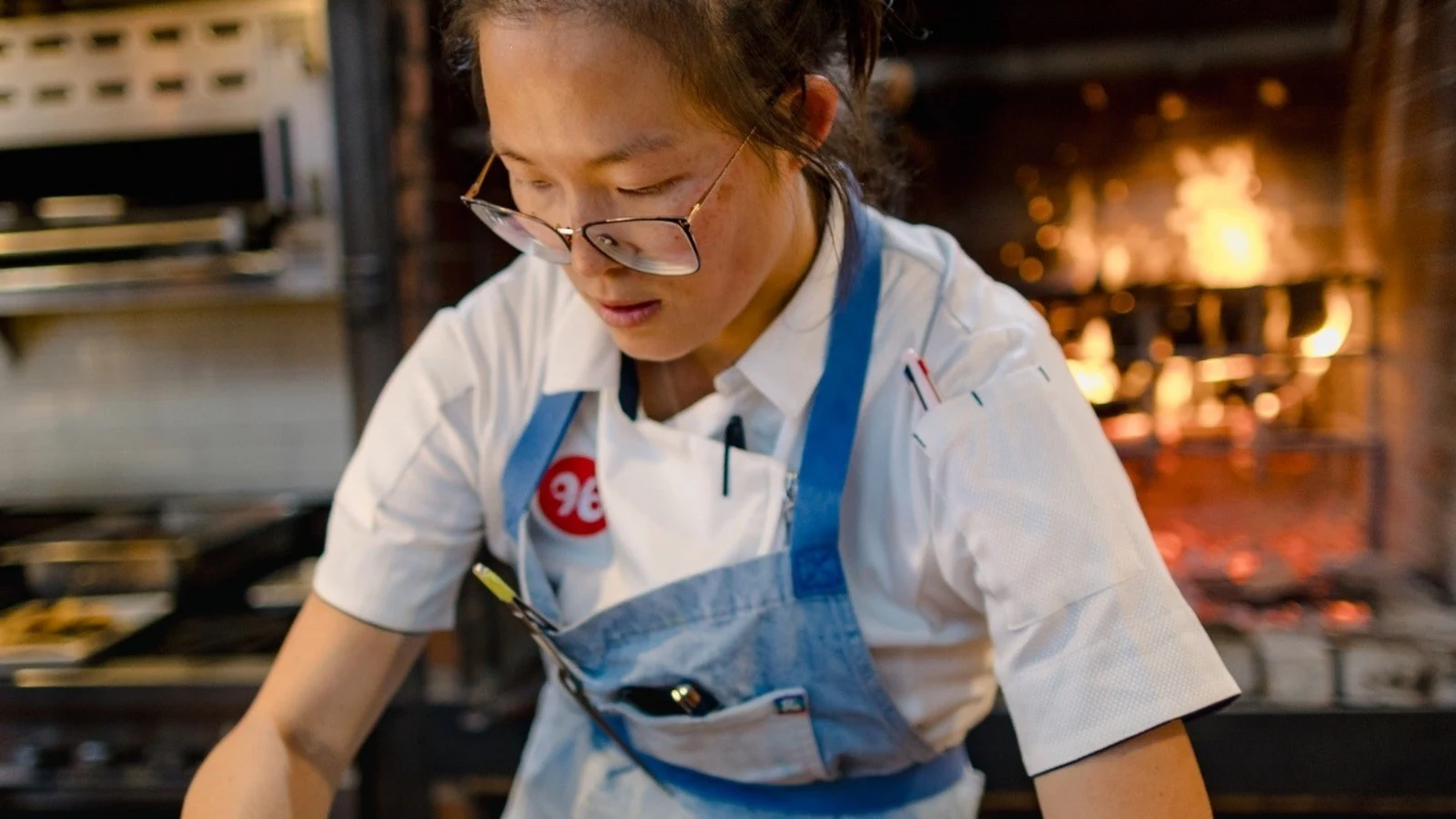
Paolo Dalla Torre did not arrive at Il Pedrocchino by the short route. Before returning to lead the kitchen of his family's restaurant in Sacile, he trained at Alain Ducasse's culinary school in Paris, worked at the Hotel Danieli in Venice, and spent time at Ristorante Perbellini. Each of those stages left a mark: the Ducasse school for classical rigor and precision, the Danieli for the particular demands of high-volume luxury service, Perbellini for the kind of creative discipline that distinguishes a cook who has absorbed technique from one who is still performing it.
The return to Friuli was a choice, not a retreat. Dalla Torre came back to a restaurant with history and a region with a seafood tradition that most of Italy overlooks. Sacile sits inland, in the Livenza river valley, but Il Pedrocchino's identity has always been oriented toward the sea.
It is one of Friuli's historic seafood restaurants, and the Lobster Catalana on the current menu is the dish that best concentrates what Dalla Torre has built there: a Mediterranean preparation, rooted in Catalan maritime tradition, executed with the precision of someone who trained in Paris and the restraint of someone who grew up eating in Friuli.
Lobster Catalana, in its classical form, is cold lobster served over a base of tomato and onion, dressed simply, the sweetness of the crustacean allowed to lead. Dalla Torre's version pairs the lobster with the crispness of fresh vegetables, building a dish in which texture and temperature are as important as flavor. The sweetness of the lobster, the crunch of the vegetables, the acidity of the dressing: these are the structural elements that the wine has to meet. They are also the elements that make Malvasia Friulana the right answer rather than a convenient one.
Through a personal style combining technique, sensitivity, and absolute respect for ingredients, Dalla Torre has helped establish Il Pedrocchino as a benchmark for contemporary seafood cuisine in the region. That is a position earned over years at the pass, not declared from the outside. The Lobster Catalana is the dish that makes the argument most clearly.
Why La Ponca Malvasia and Lobster Catalana Work Together
The pairing logic here is not complicated, but it is precise. Lobster Catalana is a dish built on sweetness, salinity, and acidity. The lobster itself is sweet and briny. The vegetables add crunch and a vegetative freshness. The dressing brings citrus acidity. The whole dish is cold, which means the flavors are clean and defined rather than diffuse. What the wine needs to do is meet each of those elements without flattening any of them.
La Ponca's Malvasia Friulana does this through its structure. The saline and balsamic notes on the nose echo the briny character of the lobster without competing with it. The hints of exotic fruit add a complementary aromatic register that lifts the dish rather than redirecting it. The rich, creamy texture on the palate has enough weight to stand beside the lobster's density, and the vibrant acidity does the work that acidity always does in a food pairing: it cleans the palate, refreshes the appetite, and makes the next bite as good as the first.
The pairing is built on balance, freshness, and depth: the sweetness of the lobster and the crisp texture of fresh vegetables harmonize with the wine's aromatic profile, creating a seamless dialogue and continuity of flavor. That continuity is the point. A pairing that creates continuity is one where the wine and the dish are speaking the same language. Here, that language is the language of the Adriatic: salt, freshness, clean acidity, and the particular sweetness that comes from seafood pulled from cold water.
It is also worth noting what the pairing is not doing. It is not using the wine to contrast with the dish, to shock the palate with an unexpected juxtaposition. It is using the wine to extend the dish, to carry its flavors forward and give them a longer finish than the food alone would provide.
That is a more demanding kind of pairing to execute, because it requires the wine to have genuine complexity rather than just sufficient weight. La Ponca's Malvasia Friulana has that complexity. The saline minerality, the aromatic lift, the creamy texture held in check by acidity: these are not simple characteristics.
They are the result of organic farming, careful vinification, and a grape variety that has spent centuries adapting to this specific corner of northeastern Italy.
Friuli Venezia Giulia: The Region Behind the Pairing
To understand why this collaboration matters beyond the specific dish and the specific wine, it helps to understand the region that produced both of them. Friuli Venezia Giulia occupies the northeastern corner of Italy, bordered by Austria to the north, Slovenia to the east, and the Adriatic to the south. It is a region that has changed hands repeatedly across its history, absorbing Austro-Hungarian, Slavic, and Venetian influences without losing its own character. That layered identity shows up in the food and the wine in ways that are sometimes subtle and sometimes unmistakable.
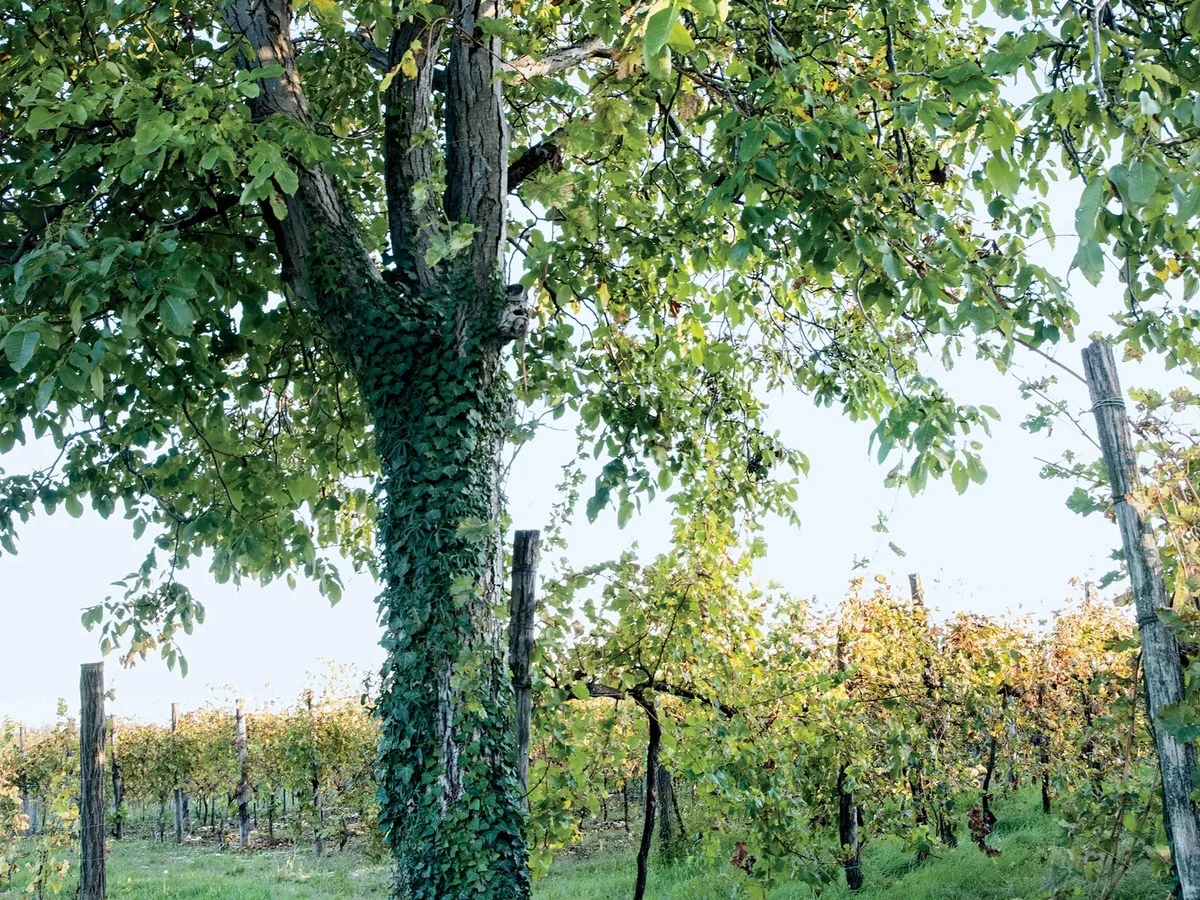
Grapevines trained on wooden posts in a vineyard, with ivy-covered support structures typical of traditional European wine regions.
The wine tradition in Friuli is among the most serious in Italy for white varieties. The Collio and Colli Orientali del Friuli appellations have long been reference points for aromatic whites, and the region's producers have maintained a commitment to indigenous varieties, including Malvasia Friulana, Ribolla Gialla, Friulano, and Vitovska, that has become increasingly important as the broader Italian wine conversation turns back toward local grapes. La Ponca, working in Scrio with organic practices, is part of that tradition.
The seafood tradition in Friuli is less widely known outside the region, but it is equally serious. The Adriatic coast, the rivers that run down from the Alps, and the lagoons around Grado and Marano have supplied Friulian kitchens with fish and shellfish for centuries. Il Pedrocchino in Sacile sits within that tradition, drawing on Adriatic seafood while applying the kind of technique that Dalla Torre brought back from Paris, Venice, and Verona. The result is a restaurant that is rooted in place but not limited by it.
The collaboration between La Ponca and Dalla Torre, announced at the start of summer 2026, is a deliberate statement about that dual identity. It is a distinctly Italian story of the table, one rooted in territory, conviviality, and respect for raw ingredients, and in Friuli Venezia Giulia this tradition finds one of its most authentic expressions, thanks to a gastronomic heritage deeply connected to local knowledge, the sea, and the borderland territory. That framing is accurate. Friuli is a borderland, and its food and wine carry the complexity that borderlands produce.
A Summer Pairing Worth Seeking Out
For anyone traveling through northeastern Italy this summer, the collaboration between La Ponca and Il Pedrocchino offers a concrete reason to make the detour to Sacile. Il Pedrocchino's position as one of Friuli's historic seafood restaurants means it is not a new discovery; it is an established kitchen with a clear point of view, now sharpened by Dalla Torre's return and his years of training under some of the most demanding kitchens in Europe. The Lobster Catalana is the dish to order. The wine to ask for is La Ponca's Malvasia Friulana.
La ponca malvasia friulana with lobster, a perfect summer pairing.
For collectors and buyers tracking the indigenous Italian white category, La Ponca's Malvasia Friulana is the kind of wine that rewards attention now and patience later. The organic farming, the varietal focus, and the structural complexity suggest a wine with more to offer than its immediate aromatic appeal. The saline minerality and vibrant acidity that make it work so well with Lobster Catalana are also the qualities that allow white wines to develop over time, gaining texture and depth without losing their freshness.
The broader signal here is one that the Italian wine world has been sending for several years: indigenous white varieties, farmed with care and vinified to express their origins rather than conform to an international template, are producing some of the most interesting bottles on the peninsula. Malvasia Friulana, in the hands of a producer like La Ponca, is part of that argument. The collaboration with Dalla Torre makes the argument in the most direct way possible: put the wine next to the right dish, and the case is made without a word of explanation.
The pairing was announced on June 8, 2026, timed to the arrival of the summer season. That timing is deliberate. Lobster Catalana is a summer dish: cold, clean, built for warm evenings and long tables.
La Ponca's Malvasia Friulana is a summer wine in the same way, aromatic and refreshing without being light, complex without demanding the kind of attention that heavier wines require.
Together, they make the case for Friuli Venezia Giulia as a summer destination for anyone who takes food and wine seriously, not as a backdrop for tourism, but as a reason to travel in the first place. Made By follows the people who shape what you eat and drink. Subscribe, and the next dispatch from the bench, the cellar, or the kitchen comes to you.
The Sunday letter
Get the next Made By guide in your inbox.
We send one email every Sunday morning with the guides and profiles we published that week.