The Clean Dirty Martini arrives with a single Castelvetrano olive suspended inside a frozen orb of olive juice. As the orb melts, it pulls the drink through a slow transformation, saltier and more mineral with each sip, until the last third of the glass is something different from the first. The technique was originally developed in Paris by Colin Field. That it now anchors the opening menu of Limo Bar NYC, a new cocktail bar in New York's East Village opening the week of 11 June, tells you something about the ambitions of the people behind it.
Limo Bar NYC: Dead Rabbit Pedigree Comes to the East Village
Ian Alexander and Mario Firmani are the beverage partners at Limo Bar. Both previously served as bar directors at The Dead Rabbit, the Financial District institution that spent years at the top of the World's 50 Best Bars list and trained a generation of American bartenders in the discipline of historically grounded, technically precise cocktail work. Their arrival in the East Village, as partners rather than employees, is the kind of move that tends to matter in this city's bar scene: two people who spent years running one of the most scrutinised bar programs in the world, now building something on their own terms.
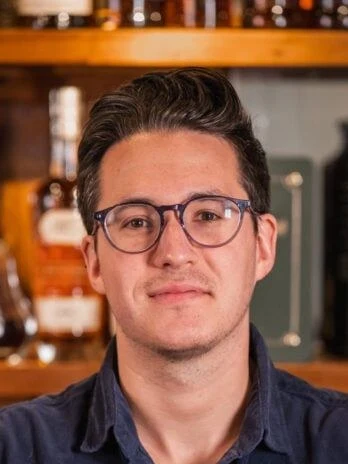
The bar is co-founded by Reed Adelson and Jack Berry. Adelson owns Virginia's, the East Village bar and restaurant he has operated for ten years, including three years on East 3rd Street. Berry is behind Ray's bar and Original Henry Lambert's Beer. Between them, they bring a specific kind of neighbourhood credibility: not the credibility of the press cycle, but the slower kind that comes from staying in one place long enough to understand what it needs.
Adelson has been direct about his reasoning. After a decade on the same streets, he said he wanted to invest more in the neighbourhood, not as an extension of Virginia's, but as what he called "a straightforward, comfortable, cocktail-focused space that I felt the neighbourhood needed." That framing matters. It positions Limo Bar NYC not as a concept imported from somewhere else, but as something grown from ten years of watching the East Village and deciding what was missing.
The Martini Program: A Focused Identity in a Crowded Bar Scene
The drinks program at Limo Bar is built around Martinis, and the menu treats that focus seriously. Classic expressions sit alongside what the bar describes as more playful signatures: a Pickle Martini, a Pornstar Martini, and the Clean Dirty Martini with its melting olive orb. The rest of the menu runs through Negronis, Cosmopolitans, and Bloody Marys, the kind of canon that rewards execution over novelty.
The Martini's current moment in cocktail culture is not accidental. After years of menus built around obscure spirits, elaborate garnishes, and conceptual frameworks that required explanation, the Martini has reasserted itself as the drink that most clearly separates a good bar from a great one.
There is nowhere to hide in a Martini: the ratio of gin or vodka to vermouth, the temperature of the glass, the quality of the dilution, the choice of olive or twist, all of it is visible.
For Alexander and Firmani, who spent their time at The Dead Rabbit working within a program that treated cocktail history as a living discipline, centering a new bar on the Martini is a statement about what they think good bar work actually looks like.
The Clean Dirty Martini is the clearest signal of that thinking. Colin Field's original version, developed in Paris, has circulated among bartenders for years as a benchmark of technique applied to a familiar form. Bringing it to Limo Bar NYC as a signature is not a nostalgic gesture; it is a choice about what kind of conversation the bar wants to be part of.
The Room: 1980s Limousine Glamour and the Design Logic of Julie Roberts
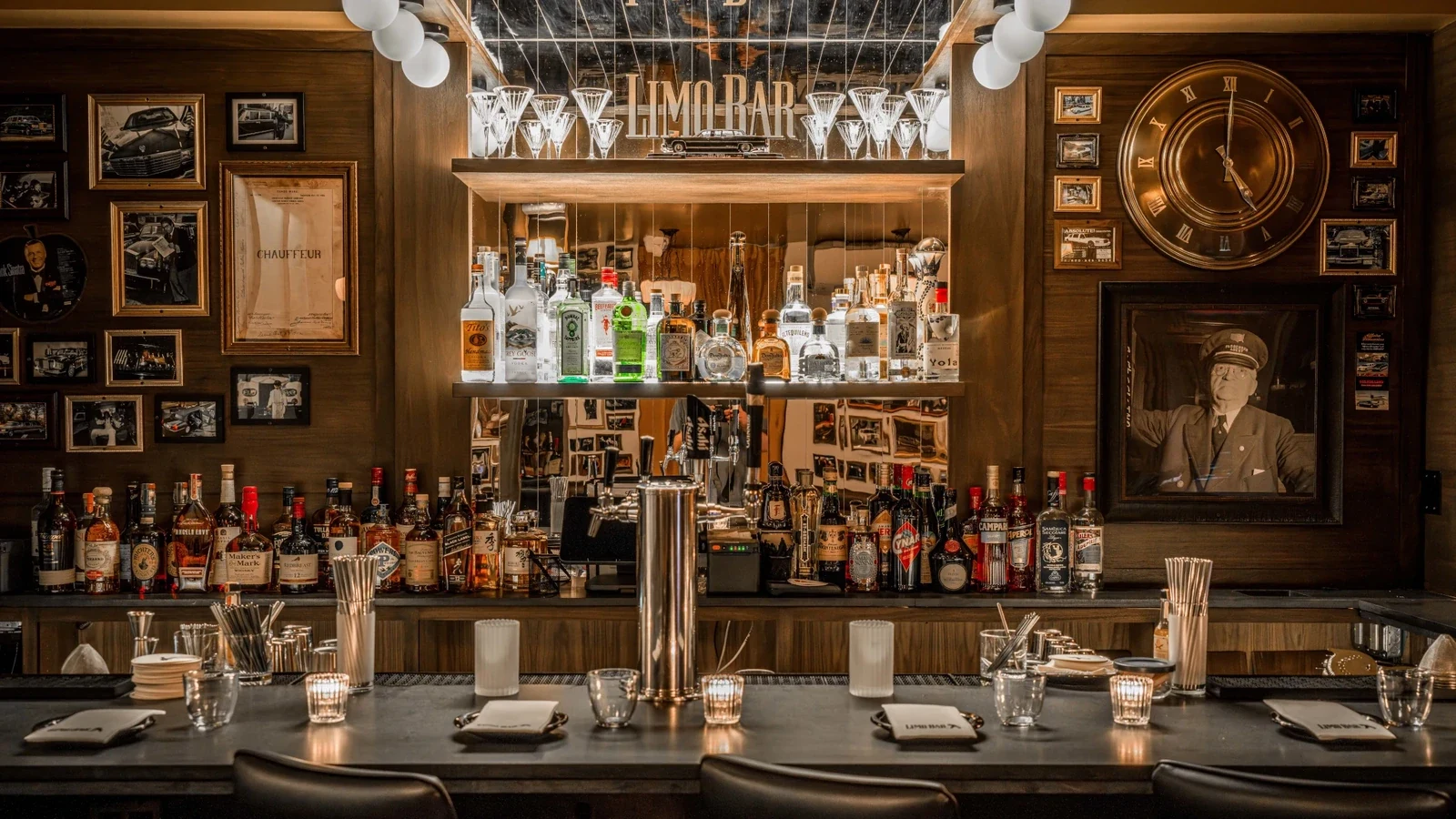
Julie Roberts designed the interiors in collaboration with Jack Berry, and the brief was specific: the inside of a 1980s stretch limousine. The result is wraparound banquettes, warm wood panelling, mirrors, and privacy curtains.
The walls carry scans of vintage private car service brochures, automobile auction catalogues, paparazzi photographs of iconic limousine moments, and personal photographs of friends and family in limos. The reference is not ironic.
It is taken seriously as a design language, and the effect is a room that feels enclosed and celebratory in the way that the back of a limousine actually does: a space set apart from the street outside, where the occasion is whatever you decide it is.
Berry has described the feeling he was after with precision. "New York has this addictive ability to make you feel like you've made it, even when you're still on the way," he said.
"When you're sitting at Limo Bar, it feels like you've made it, and that's what's so New York about it." He was equally clear about what the bar is not trying to be: "We weren't interested in building a place that ends up on a list.
We wanted to build a room with a personality of its own that New Yorkers come back to, with outstanding classic cocktails, inarguably good food, and the kind of atmosphere that gives you that same 'oh yeah… this is why I live here' feeling you get when you cross the bridge to Manhattan coming home from the airport."
That is a harder thing to build than a list placement. Lists reward novelty and timing. The room Berry is describing rewards repetition: the bar that works on a Tuesday in November as well as it works on a Saturday in June. The design, rooted in the specific warmth of banquette seating and low light and the privacy that curtains create, is built for that kind of return visit.
The Food: Alex Baker and the Grand Hotel Tradition
The food program at Limo Bar is the work of Alex Baker, who comes from Rebelle and Yves, two New York restaurants that operated at a level of kitchen seriousness that makes Baker's presence here more than a supporting detail. The menu draws from grand hotel and bar dining: prawn cocktail, mozzarella sticks, club sandwiches, steak frites, classic desserts. These are dishes that have been ordered in hotel bars and supper clubs for decades, and their presence on the Limo Bar menu is deliberate. They are not ironic throwbacks. They are the food that belongs in a room built around the Martini and the long evening.
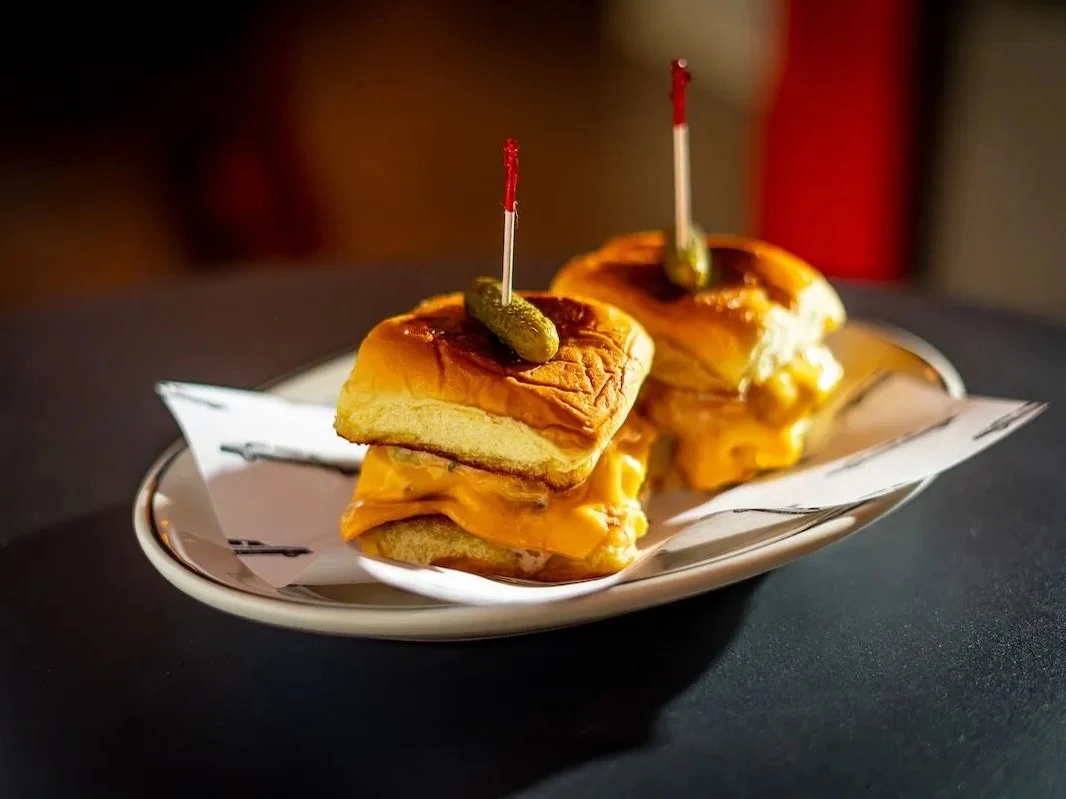
The pairing of Baker's kitchen sensibility with Alexander and Firmani's bar program gives Limo Bar a depth that single-focus openings often lack. A bar that can hold a table for two hours, through drinks and food and more drinks, is a different kind of proposition from one that turns guests after a round or two. The grand hotel reference in Baker's menu is also a reference to a certain pace: unhurried, course-structured, attentive to the table as a whole rather than the drink in isolation.
The East Village as a Proving Ground
The East Village has a specific role in New York's bar history. It has been the neighbourhood where bartenders open their first rooms, where concepts get tested before they travel uptown or across boroughs, and where the city's drinking culture has repeatedly renewed itself. Adelson's ten years at Virginia's are part of that history. The neighbourhood absorbs a high rate of turnover and rewards the places that stay, that become part of the texture of the streets rather than a destination that people travel to once and photograph.
Limo Bar NYC is opening into that context with a team that has the credentials to be taken seriously from the first week and the neighbourhood roots to sustain beyond it. Alexander and Firmani's Dead Rabbit lineage signals a bar program built on technique and consistency, not opening-week theatre. Adelson's decade on the same streets signals an operator who understands what the neighbourhood will actually support. Berry's involvement with Ray's and Original Henry Lambert's Beer signals someone who has thought carefully about what New York drinking culture is and what it is still missing.
The bar opens the week of 11 June. The Martini menu is the place to start, and the Clean Dirty Martini, with its melting olive orb and its Paris lineage, is the drink that will tell you most quickly what Alexander and Firmani are doing behind the bar. Made By follows the people who shape what you eat and drink. Subscribe, and the next dispatch from the bench, the cellar, or the kitchen comes to you.