Avish Naran’s Lomi Lomi brings South Asian-spiced temaki and shochu highballs to a 60-seat Lomita room planned for early fall.
HM
Director of Editorial Standards
Hugo Marchetti
Filed July 24, 2026
11 min read
At 26344 S. Western Avenue, a former churro shop in Lomita is being turned toward hand rolls: Avish Naran’s Lomi Lomi is planned for an early fall arrival with South Asian temaki, shochu highballs, and approximately 60 seats across a main room and outdoor patio.
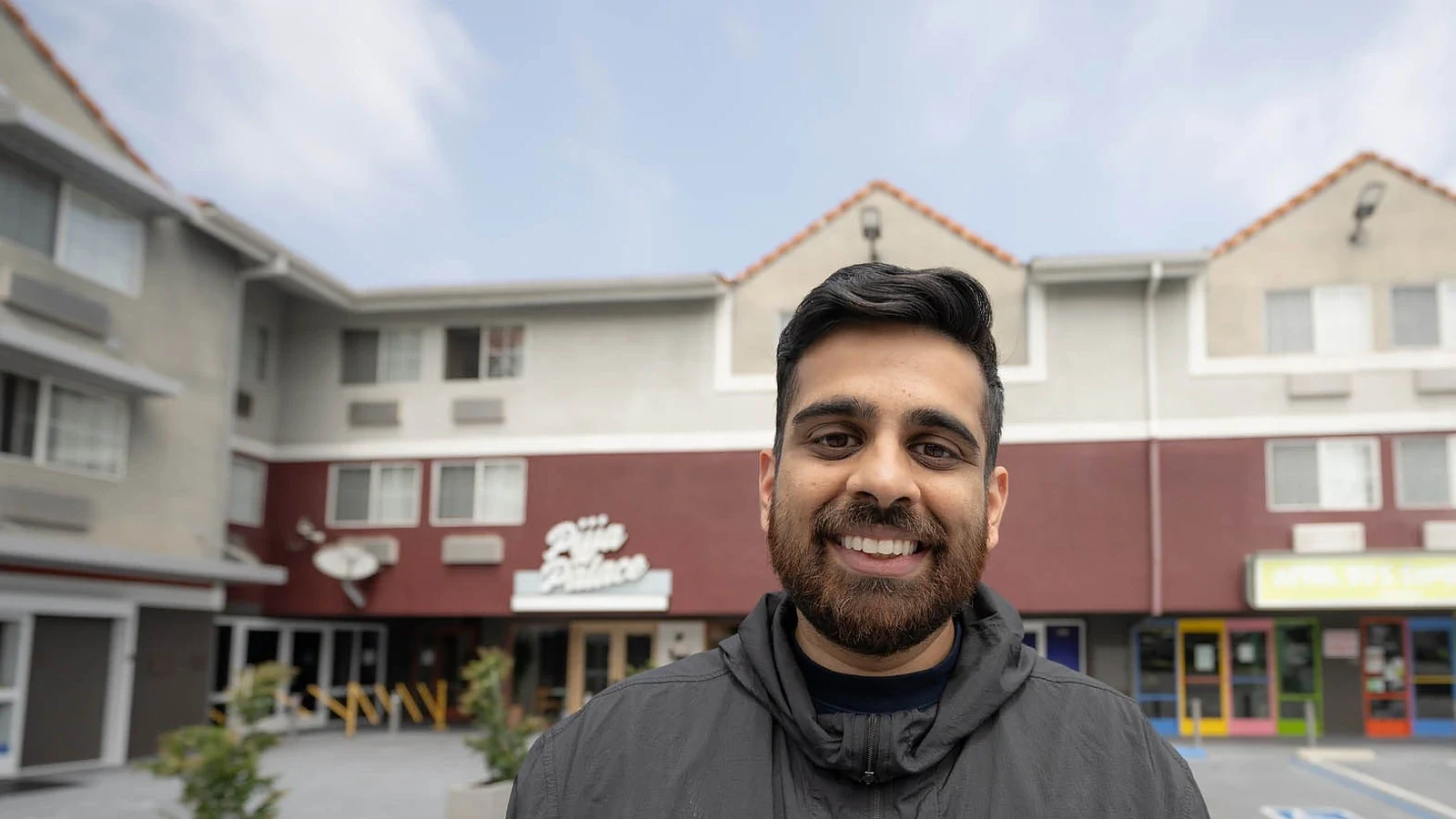
Naran is not making a second Pijja Palace, the Silver Lake Indian sports bar named Eater Los Angeles’s 2022 Restaurant of the Year.1 He is choosing another compact social format and giving it a different charge. Lomi Lomi spans just over 1,000 square feet, will open for lunch and dinner, and is planned around more than a dozen hand rolls, snackable plates, desserts, and a drinks program focused exclusively on shochu highballs.
The Sunday letter
Get our new stories in your inbox every Sunday.
One email with our newest profiles and guides. See a sample before you subscribe.
The move says something about how Naran works: he would rather repeat an idea than repeat a restaurant. He is extending the restless logic that made Pijja Palace feel distinct without copying its room or its menu. Masala-cured salmon, peppery crab Chettinad, fried pakoras, and shochu highballs give Lomi Lomi its early outline: a small restaurant built on repetition, spice, speed, and restraint.
What to Know About Lomi Lomi Lomita
Lomi Lomi is planned for Lomita, California, away from the Silver Lake room most closely associated with Naran. The address, 26344 S. Western Avenue, places it in a former churro shop on a quieter stretch of Western Avenue. The name nods to Lomita itself, not to the Hawaiian salmon dish that shares it.
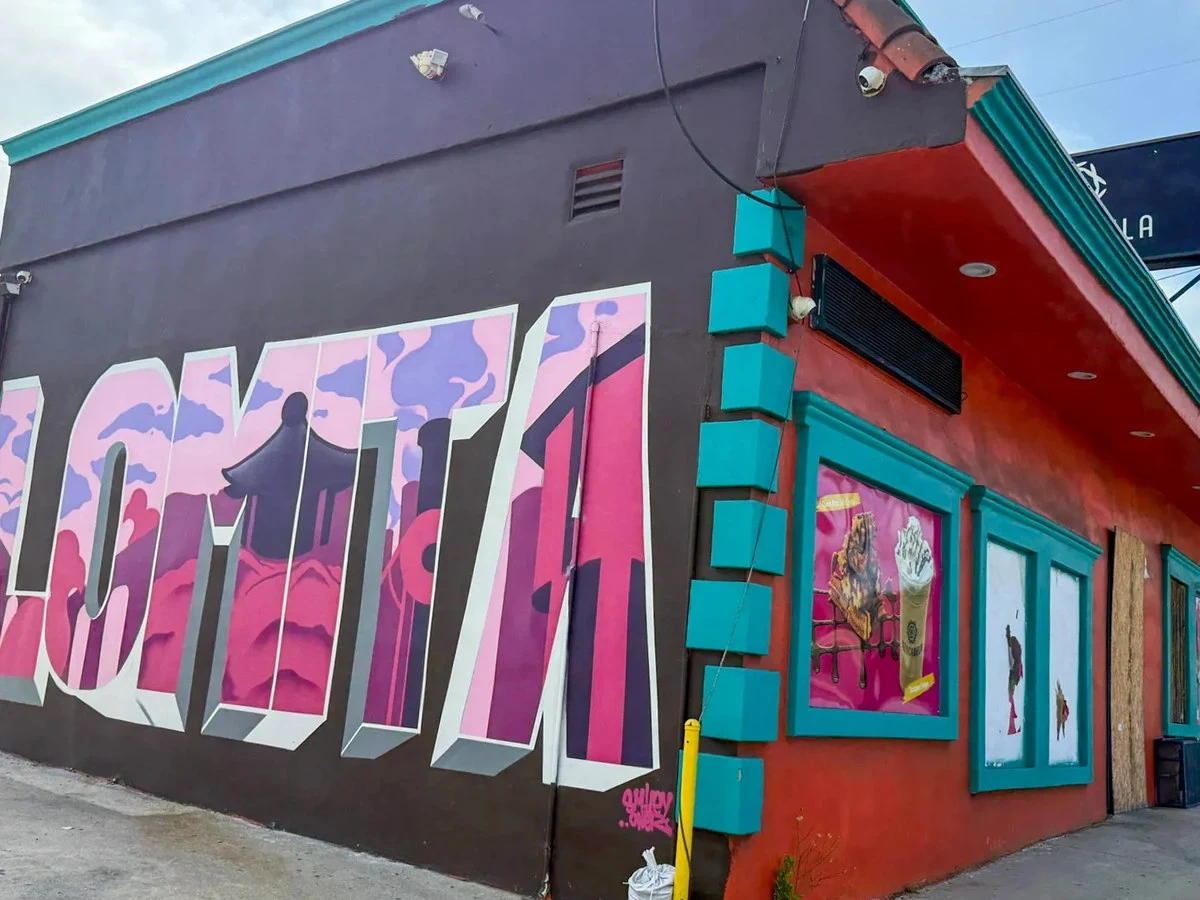
The mural and painted facade of the former churro shop at 26344 S. Western Avenue, soon to become Lomi Lomi.
The main room and outdoor patio together make for a small space. In a hand-roll restaurant, that scale matters. Temaki depends on short timing: assemble, pass, eat. The format rewards a room where the path from hand to guest is tight, and where rolls, snacks, desserts, and highballs can move without the drag of a large dining room.
The practical frame is already defined. The building measures just over 1,000 square feet. Service is planned for lunch and dinner. The core menu will include more than a dozen hand rolls. Lunch is estimated at around $30 per person, while dinner is estimated at $50 per person.2 At those prices it is built for regulars, not occasions, and the question is whether the rolls and highballs are good enough to bring people back.
Preen Inc.’s Alexis Readinger will lead the design. Early treatments show minimalist warm wood furnishings and an L-shaped terrazzo bar in a golden glow. Naran has described the inspiration as drawn from “the haze of India,” with an amber interior. In a room this small, design cannot sit at the edges. The bar, the wood, the light, and the patio all become part of how closely a guest watches the hand roll come together.
The discipline of Lomi Lomi sits in its limits: more than a dozen rolls, a few snacks, desserts, and one cocktail lane. The restraint is not decorative. It is the structure the restaurant will have to live inside.
How South Asian-Spiced Temaki Expands the Pijja Palace Universe
Pijja Palace gave Naran a public identity in Los Angeles dining: an Indian sports bar in Silver Lake that earned Eater Los Angeles’s 2022 Restaurant of the Year. Lomi Lomi carries forward his interest in putting South Asian flavor into a familiar social format, then resists being reduced to a tidy label.
Naran has been direct about that refusal. He said, "I’m not saying it’s Indian straight out, I’m just doing what I want. I don’t like the conversations surrounding ethnicity. Why is food boiled down to your ethnic makeup?"
That sentence matters because it pushes back before the food can be flattened into a single category. Lomi Lomi will serve South Asian-influenced hand rolls, including masala-cured salmon and peppery crab Chettinad. The more useful question is how those ideas behave in the hand: cured fish against rice and seaweed, Chettinad-style pepper and crab in a compact roll, fried pakoras beside a shochu highball, dessert after a meal built on quick assembly and assertive seasoning.
Temaki exposes timing. A hand roll loses force when it sits too long, and a filling has to be handled with enough precision to keep the bite clear. That board will ask Naran’s team for disciplined prep and a steady sequence at the station. The menu cannot rely only on flavor ideas. The hand doing the rolling will decide whether the format holds.
Fried pakoras give the meal another tempo. Where temaki moves through assembly and immediacy, fried snacks bring heat, crunch, and a shorter clock between kitchen and table. Desserts give the meal a final turn without asking the restaurant to become something larger than its footprint. Naran has also said he might put a churro on the menu because the space was formerly a churro shop, a small acknowledgment of the room’s previous life.
The shochu highballs supply another constraint. A cocktail program focused exclusively on one style keeps the bar aligned with the kitchen’s pace. Spirit, ice, length, and temperature can work beside masala, pepper, crab, and fried batter without pulling attention away from the rolls. In a small room, that focus can become a form of craft.
Why Lomita Is the Next Move
Naran’s best-known restaurant sits in Silver Lake. Lomi Lomi moves him to Lomita, in the South Bay, into a building he purchased with his sister and brother-in-law. That ownership detail matters because restaurants are built not only from menus but from leases, walls, patios, labor, square footage, and control over the shell.
When discussing the purchase, Naran has pointed to his Gujarati upbringing and Ray Kroc’s real-estate playbook. He has also said, “I think you need to own land to really do well in the restaurant space.”4 For him, property control is part of the operating logic. It does not make the food better by itself, but it changes the pressure around the room before service begins.
The South Bay placement changes the audience as well. A Silver Lake dining room carries one set of expectations; a quieter stretch of Western Avenue carries another. The former churro shop gives Lomi Lomi a smaller starting point, less tied to the habits around Pijja Palace and more open to its own lunch rhythm, patio weather, and regulars.
Schezwan Club adds another track to Naran’s year. The Indian-Chinese restaurant is set to debut this summer next door to Pijja Palace, while Lomi Lomi is planned for early fall in Lomita. One project stays beside the Silver Lake center of gravity. The other tests a South Bay room, a hand-roll format, and a different service pattern.
Expansion is often described as scale. Here the sharper word is control: of the building he owns, and of a menu and bar kept deliberately narrow. A compact restaurant leaves fewer places for a weak station to hide.
The Method Inside the Hand Roll
Temaki gives Lomi Lomi a plain service grammar: order, assemble, hand over, eat. Naran’s version adds South Asian flavor influences rather than treating the roll as an empty vessel. Masala-cured salmon points to seasoning before assembly. Peppery crab Chettinad brings heat and spice into a seafood filling. Each roll has to carry those decisions without becoming heavy in the hand.
The roll list is not only a menu count. It is a craft problem. A board that size can feel scattered unless prep, sequence, and restraint keep it in line. Fillings have to be ready at the right moment. Fried snacks have to land hot. Desserts have to close the meal without breaking the scale of the place. The diner sees the finished roll; the work begins well before the hand closes around it.
The South Asian influence also changes the appetite around the format. Hand-roll bars often depend on clean progression, while Lomi Lomi’s early examples suggest more assertive seasoning. That makes the highball choice important. Shochu highballs can bring lift and length to a meal moving through cured fish, crab, pakoras, and dessert, while keeping the bar in step with a kitchen working in short intervals.
The room reinforces the method. A space this tight leaves little room for disconnected ideas. Warm wood, an L-shaped terrazzo bar, and an amber glow can pull attention back to the roll and the person making it. That is useful pressure for a new restaurant: the concept has to survive contact with the station.
Naran has said he had been obsessed with temaki for a year. Before Lomi Lomi became a hand-roll restaurant, he had planned an Indian seafood restaurant modeled after Trishna in Mumbai called Little Spear. The size of the space pushed him toward something more casual.
What to Watch Before the Early Fall Arrival
The opening questions are practical ones. The roll lineup needs a clear internal order. The snacks need to fit around the roll sequence. The shochu highballs need to remain focused enough to support lunch and dinner. Readinger’s warm wood, terrazzo, and amber-light treatments need to make a small room feel deliberate rather than crowded.
Schezwan Club will keep Naran’s Silver Lake orbit active while Lomi Lomi opens a separate South Bay line. Together, the two restaurants show him working in different directions in the same year: Indian-Chinese next door to Pijja Palace, South Asian temaki in Lomita.
The concrete details are enough to follow closely. Lomi Lomi is planned for 26344 S. Western Avenue in Lomita, in a former churro shop, with approximately 60 seats, lunch and dinner service, South Asian-spiced temaki, snackable plates, desserts, and shochu highballs. The early fall arrival will test the hand-roll format against Naran’s refusal to let ethnicity become the only frame through which the food is read.
Watch the counter when the first rolls go out. The next signal will not be the sign on Western Avenue. It will be the first sequence of hand rolls, highballs, snacks, and desserts moving through a room small enough for every gesture to count.
The Sunday letter
Get the next Made By guide in your inbox.
We send one email every Sunday morning with the guides and profiles we published that week.