Lynx Pizzeria Los Angeles: A Three-Star Chef's Risky Arts District Bet
Chef Joshua Skenes brings conveyor belt ovens and three-Michelin-star technique to the Arts District, but his one-year LA closure pattern suggests a narrow window to visit.
HM
Director of Editorial Standards
Hugo Marchetti
Filed July 13, 2026
9 min read
Inside Joshua Skenes's Fourth Los Angeles Kitchen
Joshua Skenes sends the dough through a conveyor belt oven at Lynx, a moving heat chamber more often associated with Domino's than a three Michelin star kitchen. It is the same chef who opened Angler in Los Angeles in 2019, where the Angler potato, built crisp and architectural, the bleeding radicchio salad, roasted prawns, and soft serve topped with embered caramel became core memories for Kang. Angler closed a few years later, largely due to the pandemic and the restaurant's poor location on the ground floor of the Beverly Center. The San Francisco original remains open.
Skenes moved on to open Leopardo in Los Angeles in mid-2024. There, neo-Neapolitan pizza baked in an oven that turned faster than a record player, sending out puffy-crusted pies. Raphael Brion, then restaurant editor at Food and Wine, considered it one of his best dishes of 2024. Kang went to Leopardo an inordinate number of times. Eater considered it for an Eater Award. Leopardo closed very quietly in 2025.
The Sunday letter
Get our new stories in your inbox every Sunday.
One email with our newest profiles and guides. See a sample before you subscribe.
In 2025, Skenes opened Happies Hand Made in the Arts District. The restaurant first worked around a McDonald's cheeseburger-like burger, but miles better. Weeks later, the kitchen pivoted to chile-dusted chicken tenders and crisp waffles. Happies closed without much warning after just a few months. Skenes says both Leopardo and Happies were projects he did as favors for a friend, though the explanation feels like there is something he is unable to tell. The pattern remains: in Los Angeles, Skenes has opened Angler, Leopardo, and Happies, and all three have closed.
Lynx occupies the former Happies space. Skenes keeps his French bulldog in the dining room. He says he is all in on Lynx. Now the work sits in plain view: the chef, the same Arts District room, the conveyor belt oven, and a fourth attempt to keep his Los Angeles cooking alive past the second anniversary.
The Conveyor Belt Oven and the Method Behind the Crust
Skenes uses a conveyor belt oven at Lynx, the kind one might see in Domino's. He calls it one of the best ovens out there. The choice is deliberate. Conveyor belt ovens allow consistent high-volume output at temperatures and speeds impossible with traditional wood-fired methods. The dough travels through the heat chamber on a moving belt, baking evenly without the hot spots and char variability of a Neapolitan dome oven. For a chef who built his reputation on precision at Saison, the conveyor belt is a tool, not a compromise.
The pizzas have a structure lighter than pan de cristal, a Spanish high-hydration loaf that shatters like glass. One person could easily house their own pie. The crust is not the chewy, blistered Neapolitan standard. It is not the foldable New York slice. It is something else: a high-hydration dough pushed to the edge of structural integrity, baked fast enough to set the crumb before the weight collapses it. The technique is Skenes applying Saison discipline to a format most chefs treat as casual.
Lynx feels like an improved version of Leopardo, according to Kang. The conveyor belt oven is the difference. Leopardo's oven turned faster than a record player, sending out puffy-crusted pies. At Lynx, that speed becomes consistency. The dough fermentation, the flour sourcing, the hydration percentage, the belt speed, the oven temperature: each part is calibrated to produce a crust that makes the drive to the Arts District feel tied to the work, and to a chef whose LA track record suggests a narrow window.
This is the kind of technical obsession that separates a three-Michelin-star chef from a neighborhood pizzeria. Skenes is not making pizza because it is easy. He is making pizza because the format rewards the same precision he brought to the fire beet in the sky at Saison. The conveyor belt oven is the tool that makes that precision scalable. The remaining question is practical: whether enough diners will pay for craft at pizza prices, or whether Lynx will join Leopardo and Happies in the closure column before the year ends.
What Three Michelin Stars Bring to a $25 to $29 Pie
Saison began as a pop-up in 2009. Skenes earned three Michelin stars in San Francisco. The fire beet in the sky, the smoky, sweet whole beet topped with molten marrow, became the kind of dish critics reference years later. Kang ranks the meal in his top five of all time. That level of technique does not vanish when the chef moves to pizza.
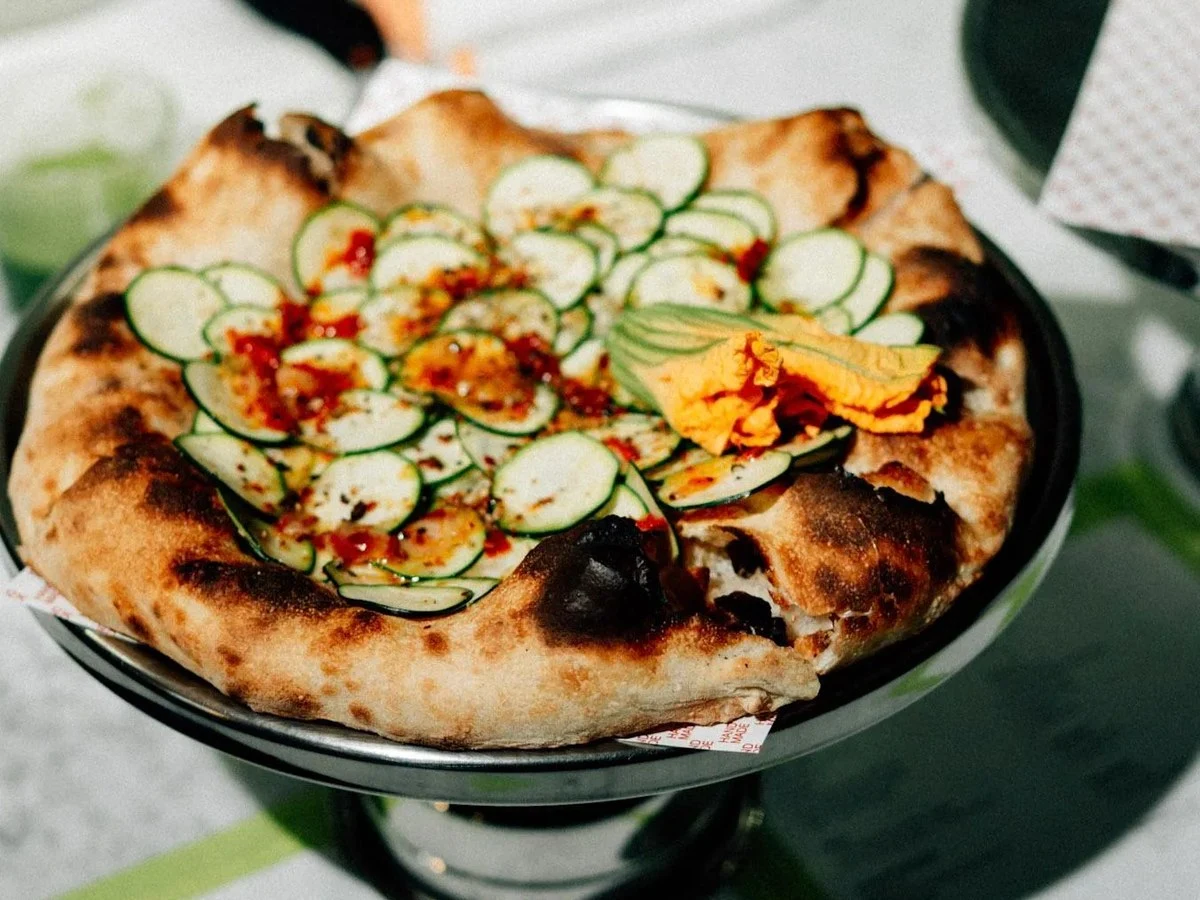
Lynx Pizzeria serves a finished pizza with thinly sliced zucchini ribbons, edible flowers, and chili flakes.
At Angler, Skenes built the Angler potato, a crispy architectural marvel. He made a bleeding radicchio salad, roasted prawns, and soft serve topped with embered caramel. At Leopardo, he baked neo-Neapolitan pizza so good that Brion, a Food and Wine editor, considered it one of his best dishes of 2024. At Happies, he made a McDonald's cheeseburger-like burger, but miles better, then pivoted to chile-dusted chicken tenders and crisp waffles. Each concept showed Skenes's ability to remake familiar dishes so they stayed with the people who ate them.
Lynx applies that same discipline to pizza. The dough is not a commodity. The fermentation is not rushed. The toppings are not an afterthought. Skenes is treating pizza the way he treated the fire beet: as a format that rewards attention to process. The conveyor belt oven is the tool. The dough is the craft. The result is a pie that one person can eat alone, light enough to finish without the leaden fullness of a thick-crust Neapolitan, structured enough to hold toppings without collapsing into a puddle.
The Arts District has watched Skenes open and close three times. Lynx is the fourth attempt. The difference is that Skenes is attaching his name to it. He is not doing it as a favor for a friend. He is not pivoting the menu weeks after opening. He is committing to the format, the location, and the technique. Whether the market commits back will become clear soon enough. The window is narrow: if the pattern holds, Lynx has a year, maybe less, before the space goes dark again.
The Arts District Context and the LA Pizza Lineage
Los Angeles is a pizza destination. The scene grew from Wolfgang Puck's smoked salmon creation at Spago in the 1980s and the birth of California Pizza Kitchen. Nancy Silverton's Pizzeria Mozza ushered in a new wave of wood-fired pizza-making throughout the Southland. Recent years brought a rise in non-Californians introducing New York, Detroit, tavern, Indian, and Neapolitan styles. Locals threw their formidable hats into the pizza ring. The results are beyond delicious.
The Arts District is part of that evolution. The neighborhood has become a dining hotspot, with new openings tracked by critics and collectors. Skenes chose the Arts District for Happies, then reopened the same space as Lynx. The location gives and takes. The foot traffic is strong. The rent is high. The competition is fierce. The margin for error is thin.
Lynx is not competing with Pizzeria Mozza or the Detroit-style pizza at Dtown in West Hollywood. It is competing with the expectation that a Skenes concept will close within a year. That expectation is grounded in fact. Angler closed. Leopardo closed. Happies closed. Each closure was explained by circumstance: the pandemic, the poor location, the favor for a friend. But the pattern is the pattern. Lynx has to break it.
The Arts District has the audience for what Skenes is doing. The neighborhood attracts diners who follow chefs across openings, who track Michelin stars and Eater Awards, who want to taste the next iteration of a technique before it vanishes. Lynx is built for that audience. The question is whether that audience is large enough to sustain a pizzeria that uses a conveyor belt oven and charges for the craft behind the crust. The answer will come within a year, one way or another.
How to Visit While the Oven Is Running
Kang visited Lynx in late April 2026 and returned a week before publication. He confirmed everything about his first experience. The pizzas are light enough for one person to house their own pie. The crust structure is lighter than pan de cristal. The conveyor belt oven is the best oven out there, according to Skenes. The space feels like an improved version of Leopardo, part avant-garde art project, part new-school pizzeria, and part cocktail den.
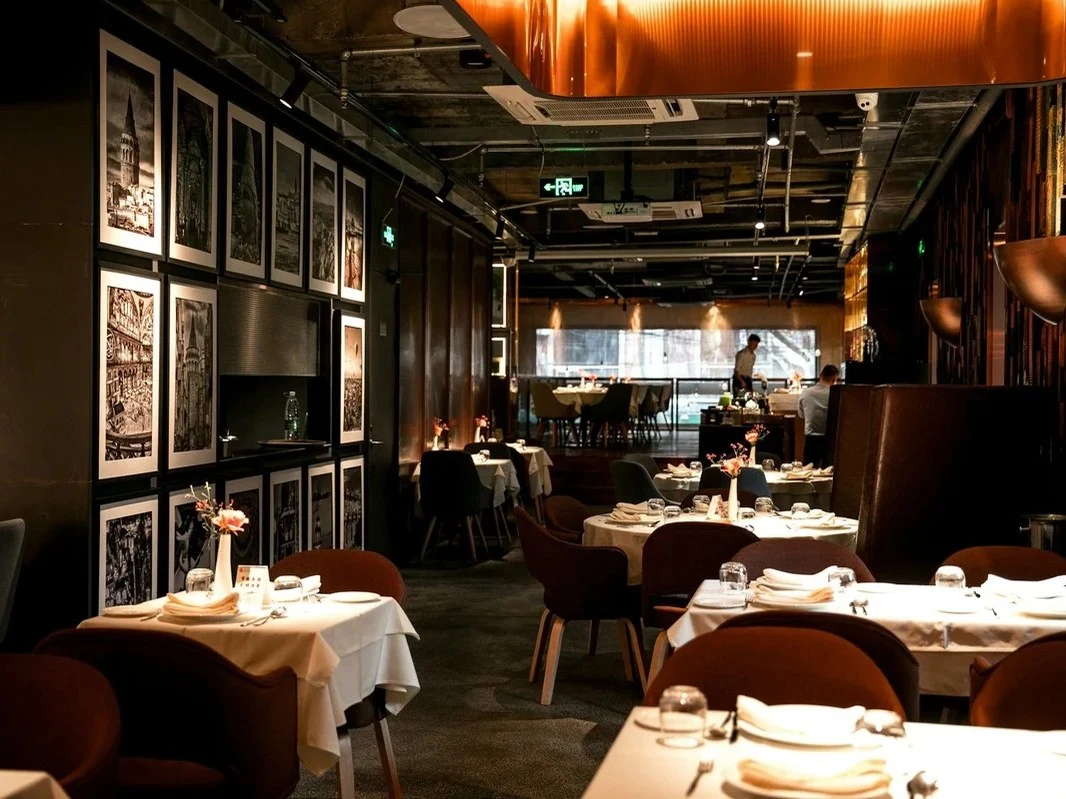
Lynx Pizzeria's dining room showcases a cocktail den aesthetic with warm lighting and comfortable seating.
Lynx is located in the former Happies space in the Arts District. The address is the same. The chef is the same. The commitment is different. Skenes says Lynx is the first Los Angeles project he feels confident attaching his name to. That confidence is the hook. If Skenes is all in, the window to visit is now.
The track record suggests urgency. Angler opened in 2019 and closed a few years later. Leopardo opened in mid-2024 and closed in 2025. Happies opened in 2025 and closed after just a few months. The longest run was Angler at a few years. The shortest was Happies at a few months. Lynx opened in 2026. The math is simple: if the pattern holds, Lynx has a year, maybe less.
Kang hopes Lynx can leave a lasting mark on Los Angeles's dining scene. He also just wants it to stick around. That tension is the story. Skenes has the talent. He has the technique. He has the conveyor belt oven and the high-hydration dough and the three Michelin stars from Saison. What he does not have is a proven ability to sustain a Los Angeles concept past the one-year mark. Lynx is the test, set in the Arts District, with the belt already moving.
The fire beet in the sky lives rent-free in Kang's head. The Angler potato, the bleeding radicchio salad, the roasted prawns, the soft serve topped with embered caramel: all core memories. The Leopardo pizza that Brion considered one of his best dishes of 2024: gone. The Happies burger that was miles better than McDonald's: gone. Lynx is the next iteration. The dough is lighter than pan de cristal. The oven is a conveyor belt. The chef is Joshua Skenes. The question is whether Los Angeles will let him stay long enough to prove that this time is different.
Made By follows the people who shape what you eat and drink. Subscribe, and the next dispatch from the bench, the cellar, or the kitchen comes to you.
The Sunday letter
Get the next Made By guide in your inbox.
We send one email every Sunday morning with the guides and profiles we published that week.