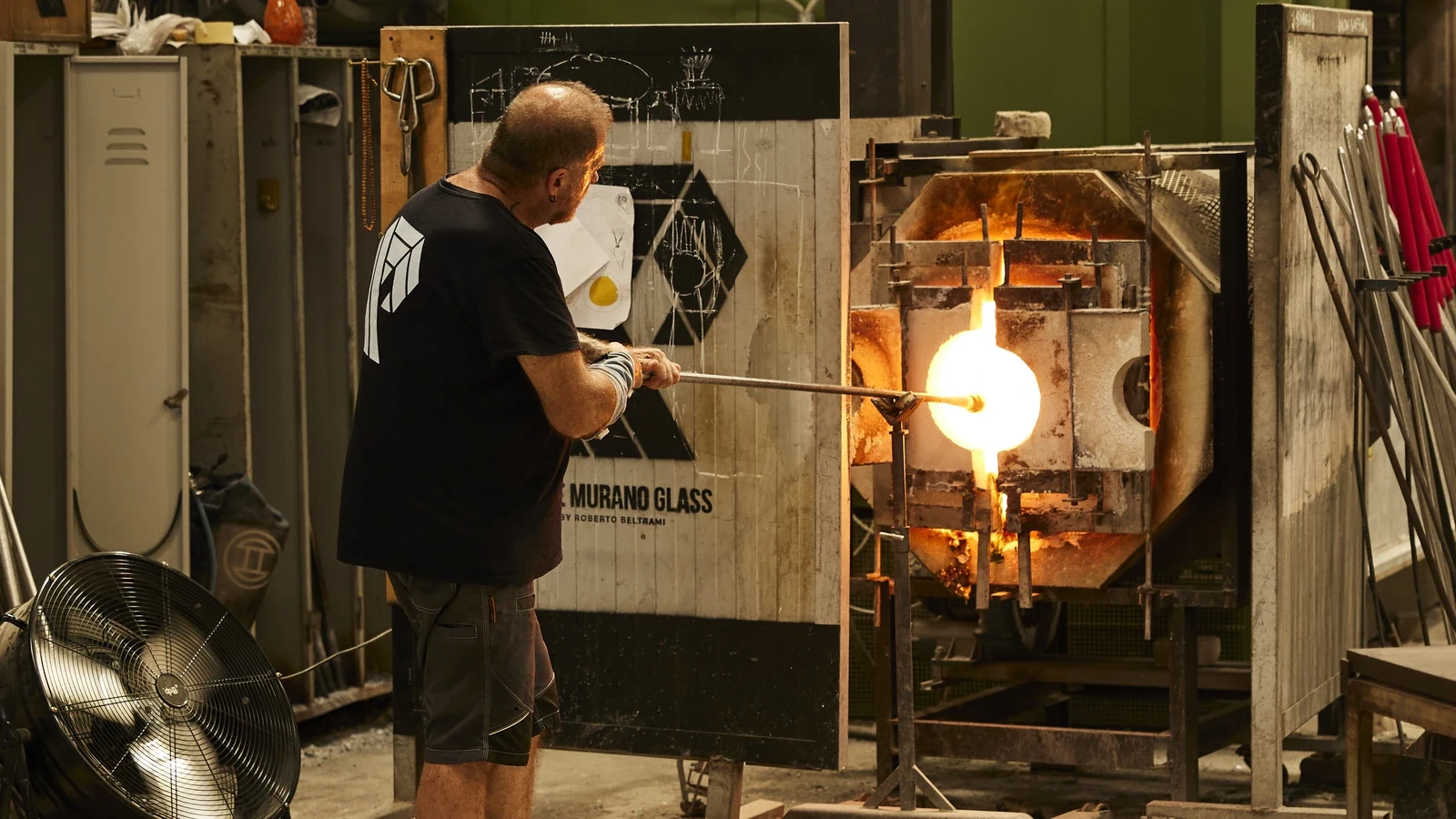
At the glory hole, a Murano maestro turns the blowpipe a quarter turn at a time, keeping the gather centred while the glass moves from orange-yellow toward red. You can stand close enough to feel that heat in a working Murano furnace, but only at the right furnace, with the right maestro, and with an appointment rather than a cold knock. The island's top studios, the ones where a named master still works the bench, do not keep open doors for tourism. A handful accept small groups by appointment; a few run structured visits that put you within arm's reach of the gather and the blow. For most readers, the sound route is direct: contact the studio, name the maestro you want to watch, and ask about scheduled demonstrations before you book your vaporetto.
Why the Furnace Door Is Usually Closed
Murano's glass tradition rests on guarded knowledge. The Republic of Venice confined glassmakers to the island in 1291 partly to contain the fire risk, and partly to contain the method. That instinct has not left the island entirely. Working furnaces run at temperatures around 1,400 degrees Celsius; the rhythm of a melt does not follow a visitor schedule. A maestro mid-gather cannot stop for a late arrival.

The studios that carry the most weight, the ones where a master with forty or fifty years on the bench still pulls molten glass into form, are also the least likely to advertise a visitor slot. Their work goes to galleries, private collectors, and commissions that take months to negotiate. Tourism is not the model. The furnaces that welcome visitors are often mid-tier operations, which is not a dismissal: watching any skilled gaffer work a gather is worth the trip. But if you want to see a named maestro at the height of practice, you need another approach.
Simone Cenedese, whose Murano studio has become one of the island's more visible contemporary addresses, has spoken about drawing colour from the island itself: "I can see it walking through the streets of Murano, looking at the colours of the houses, the flickering flames of the ovens, the smoky smell of the forges."1 That kind of absorption does not sit easily beside a revolving door of visitors. The studios that protect their masters' time are, in practice, protecting the work.
When Visits and Demonstrations Actually Open
The island's larger commercial furnaces, Fornace Mian, Vetreria Artistica Colleoni, and a handful of others along Fondamenta dei Vetrai, run demonstrations on a rolling basis, often several times a day during the tourist season. These are not appointment-only. You walk in, you watch, then someone guides you through the showroom. The demonstrations are real: the glass is hot, the tools are in use, the gather is genuine. They are not intimate.
For access to a named maestro's studio, the booking mechanics are not gathered in one place. The studios do not list demonstration slots on a booking platform. Contact is direct: email or phone the studio, say clearly that you want to observe a working session rather than browse the showroom, and ask what is possible. Some studios will accommodate small groups of two to four people for a fee; others will not. The Murano Glass Museum (Museo del Vetro) on Fondamenta Giustinian occasionally coordinates access to working demonstrations as part of its programming, and its events calendar is worth checking before you travel.
The island's consortium, Promovetro, maintains a registry of studios and can sometimes make introductions. Its contact details are publicly listed; a direct inquiry naming the specific tradition you want to observe (murrine, sommerso, sculpted figural work) will get a more useful response than a general tourism request.
The Channels That Actually Yield Access
Ranked by realistic return:
Direct studio contact. The only route to a named maestro's working session. Write in Italian if you can; it signals that you are not a casual tourist. Name the specific technique or the specific master. Ask about a paid private demonstration rather than a public tour.
The Museo del Vetro. The museum runs its own programming and has institutional relationships with working studios. Its events are publicly listed and occasionally include live demonstrations by masters who do not otherwise accept visitors. Check the calendar at least six weeks before your trip.
Promovetro and the Consorzio Promovetro Murano. The island's trade body. They can point you toward studios whose books are open and, in some cases, introduce you to masters who do not advertise publicly.
Specialist travel operators. A small number of Venice-based cultural tour operators have standing relationships with working furnaces and can place small groups inside studios that would not answer a cold inquiry. The quality varies; ask specifically whether the demonstration involves a named master or a studio employee.
Walk-in commercial furnaces. Reliable for a genuine demonstration of the craft; not reliable for access to the island's senior practitioners.
Inside a Working Murano Furnace: What You Actually See
The heat arrives before the glass. A working furnace keeps its melt at temperature around the clock; the room is warm from the moment you step through the door, and the glory hole at the centre of the floor glows somewhere between orange and white, depending on the hour and the fuel load.
A maestro at the bench works with a team. The servente hands tools, manages the punty, keeps the gather rotating so gravity does not pull the molten mass off-centre. The maestro blows, shapes, and reads the glass by colour: a bright orange-yellow means the piece is workable; as it cools toward red, the window closes. The sequence from gather to finished piece can take under three minutes for a simple form, or stretch across multiple reheats for complex sculpted work.
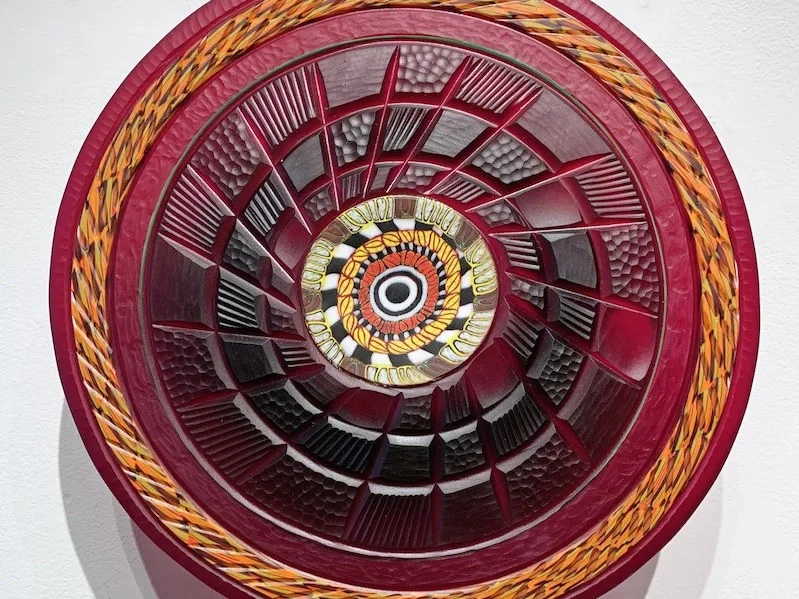
Davide Salvadore, who has spent decades working murrine (the cross-section cane technique that produces patterned glass), has described what he wants from an audience watching his work: "I encourage my audience to have a real encounter with each piece. I want them to touch it, caress it, and to understand the shapes and movements."2 That instruction to touch the finished piece is not standard in most studios; it reflects a particular philosophy about the relationship between maker and viewer. Not every maestro shares it, but the impulse behind it, that glass is a material understood through the hand as much as the eye, runs through the island's best work.
In a private or small-group demonstration, you will typically stand within two to three metres of the bench. You will see the gather pulled from the furnace on the blowpipe, the first breath of air opening the bubble, the shaping at the marver (the flat steel table), and the transfer to the punty for finishing. If the studio works murrine, you may see the cane preparation separately; the assembly of a murrine gather is slower, more architectural, than free-blown work.
The late Pino Signoretto, one of the island's most celebrated figural sculptors, put the required absorption plainly: "I was born like this. I eat, I drink, I live glass."3 Signoretto's figural work ran to life-scale human forms pulled entirely from molten glass without molds. He died in 2017. His students and collaborators are still on the island, and some of them are now the masters whose studios are worth seeking out.
How to Improve Your Odds Before You Arrive
The studios that matter are not booking through any platform. Your preparation happens before you leave home.
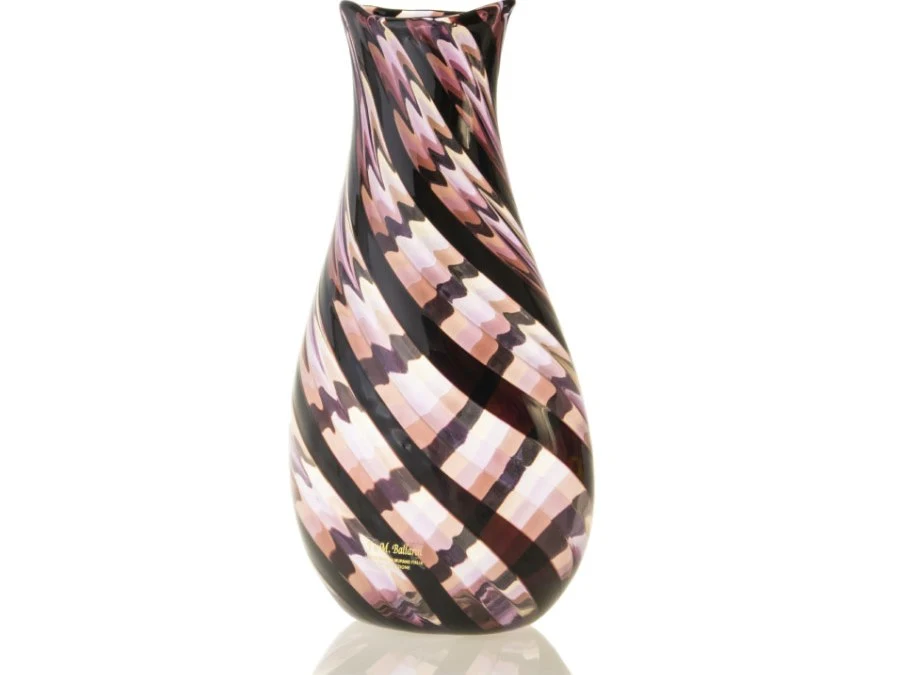
Research the specific tradition you want to watch. Murrine, sommerso (layered colour), sculpted figural work, and filigrana (twisted cane) are distinct techniques practiced by different studios. A letter that names the technique and asks a specific question about the master's current work will be read differently from a generic tourism inquiry.
Travel in the shoulder season. April, May, and October see fewer group tours on the island; studios that might turn away a visitor in August are more likely to accommodate a small group in spring. The furnaces run year-round; the melt does not take a summer holiday, but the masters' patience with interruption varies by season.
Budget for a private demonstration fee. The studios that accept visitors for a named-master session typically charge for the time. The fee is not published; it is negotiated directly. Approaching the conversation as a commission inquiry rather than a tourism request often opens a different door. Most studios accept commissions through direct contact; the consultation covers form, colour, scale, and technique. Lead times and pricing are not published and should be confirmed directly with the studio.
Where to Go If the Named Studios Are Closed to You
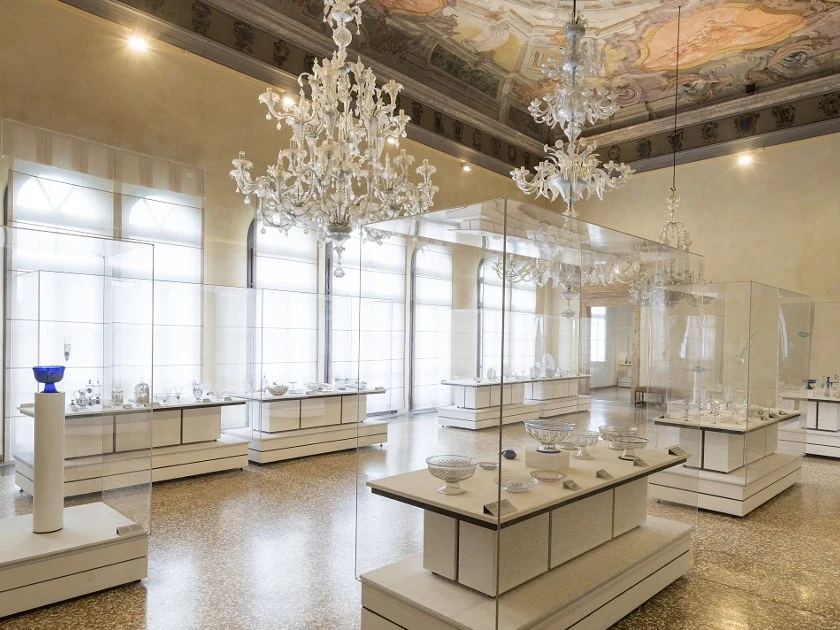
The Museo del Vetro, Murano. The permanent collection covers five centuries of island production and includes pieces by the masters whose studios you cannot enter. The museum's own demonstration programming is the closest public equivalent to a studio visit.
Fornace Mian. One of the island's more visitor-accessible working furnaces, with demonstrations that involve genuine production rather than staged performance. Not a named-master studio, but the craft is real and the access is reliable.
The Corning Museum of Glass, New York. For readers who cannot travel to Murano, Corning holds the most significant collection of Murano glass outside Italy and runs its own hot-glass demonstrations. Salvadore has taught there; the museum's master class series documents techniques that are otherwise only visible inside island furnaces.
Berengo Studio. Adriano Berengo has spent three decades bringing international artists to Murano to work with island maestros. The studio's output is contemporary and collaborative; visits are by appointment, and the work on the bench is often more experimental than traditional production studios.
Who Should Make the Trip, and When
If you are a practitioner, a collector, or someone who has already spent time in glass studios elsewhere, Murano repays the effort. The island's techniques are not replicated at scale anywhere else; the murrine tradition in particular requires accumulated knowledge that takes decades to build. Watching a master work a gather is not a tourist activity; it is a study session.
If you are visiting Venice for a few days and want to add a glass demonstration to the itinerary, the commercial furnaces on Fondamenta dei Vetrai will give you a true encounter with the craft without the friction of a private booking. That is a clear read on what the trip can yield on short notice, not a consolation prize.
The effort of securing a named-master visit is worth it for a commission, for serious research, or for a trip built specifically around the island's craft tradition. It is not worth it for a half-day excursion from Venice.
Worth the Chase?
Yes, but only if you do the work before you arrive. The island's best studios are not closed to outsiders; they are closed to visitors who have not made a case for why they should be let in. A cold walk-in at a named maestro's furnace will get you the showroom. A direct letter, written in Italian, naming the technique and asking a specific question about the master's current work, will sometimes get you the bench.
The commercial furnaces are not a fallback; they are a genuine entry point into the craft. If you have never watched glass blown before, start there. If you have, and you want to understand what forty years of practice looks like in a single gather, you need a private booking and you need to negotiate it directly with the studio.
Do this now: identify the specific technique you want to watch (murrine, sommerso, figural sculpture), find the two or three studios on the island that practice it at the highest level, and write to them directly before you book your travel. Do not wait until you are on the island. The studios that matter do not have walk-in slots, and the masters whose time you want are not waiting for you to arrive.
madeby follows the people behind this kind of work, the maestros, the serventi, the students who have spent years at the bench before they are trusted with a gather. If access to Murano's working studios is the problem you are trying to solve, the profiles and studio contacts gathered here are where that research starts.
Frequently Asked Questions
Can you walk into a Murano glass studio without a booking?At the larger commercial furnaces along Fondamenta dei Vetrai, yes. These studios run demonstrations throughout the day during the tourist season and do not require advance booking. For access to a named maestro's working session, a walk-in will typically get you the showroom, not the furnace floor. A direct booking inquiry, made before you travel, is the only reliable route to a private demonstration.
How far in advance should you contact a Murano studio to arrange a visit?Studios do not publish booking windows. As a general guide, contacting a studio four to six weeks before your travel date gives enough lead time for a response and a negotiation. For a commission-linked visit, allow more time; the conversation about the piece and the visit often run in parallel. Confirm all arrangements directly with the studio, as no centralised booking platform covers the island's working furnaces.
Is there a fee to watch a Murano glass demonstration?The commercial furnaces typically do not charge a separate entry fee for demonstrations, though a purchase is often expected. Private demonstrations at named-master studios involve a fee that is negotiated directly; no studio publishes a standard rate. Contact the studio to confirm current terms before your visit.
Which Murano studios are most accessible to outside visitors?The studios along Fondamenta dei Vetrai are the most visitor-accessible, with Fornace Mian among the more frequently cited for genuine production demonstrations. Berengo Studio accepts visits by appointment and works with an international roster of artists alongside island maestros. For the island's senior traditional masters, access is by direct arrangement only and is not guaranteed.
Can you commission a piece from a Murano maestro, and does that help with studio access?Most studios accept commissions through direct contact. Lead times, pricing, and the scope of client involvement in the design process are not published and should be confirmed with the studio. A commission inquiry does, in practice, often open the door to a working visit; studios are more likely to show a client the furnace than a general visitor. If a studio visit is your primary goal, framing your initial contact as a commission inquiry is a reasonable approach.