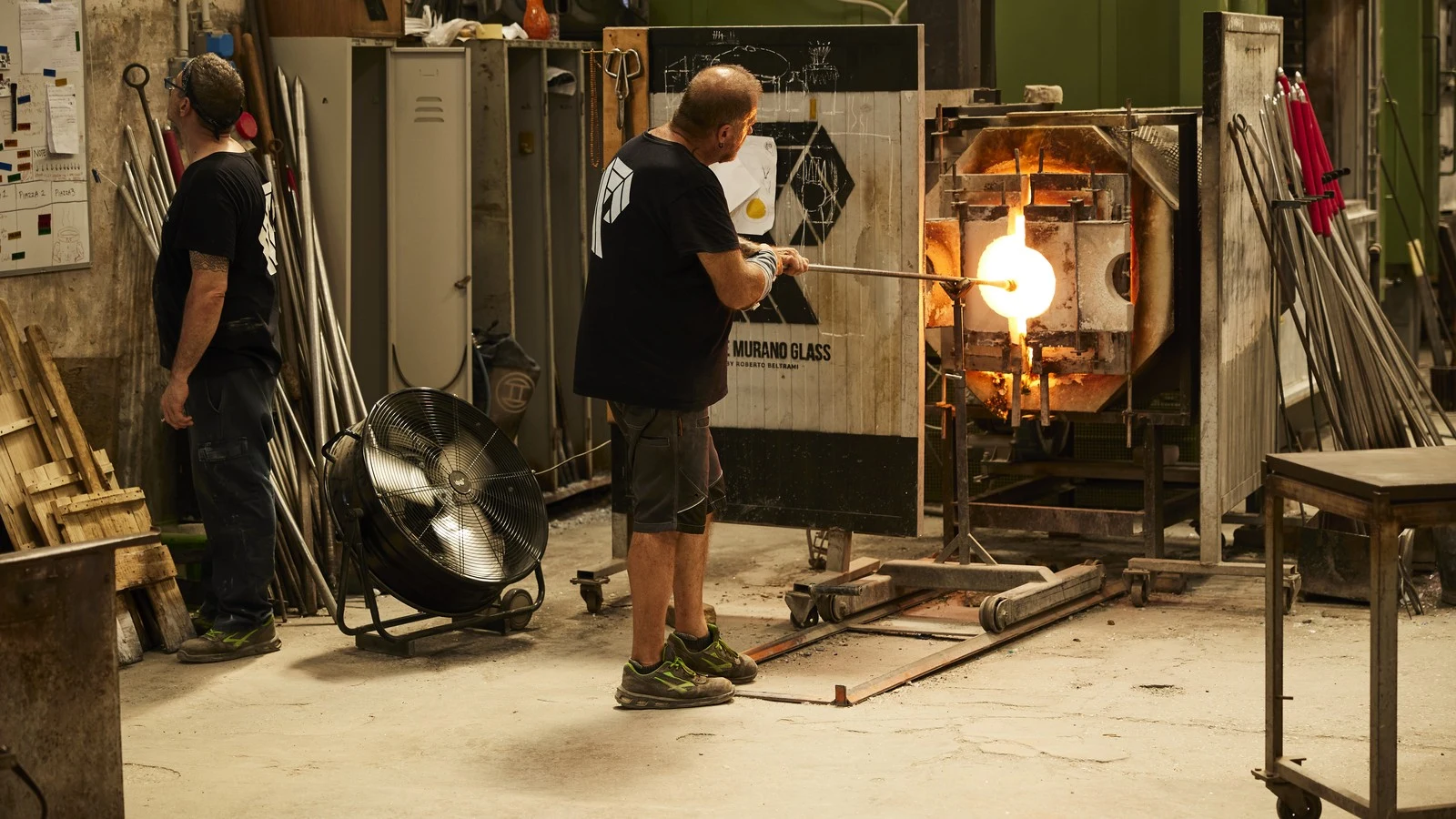
A maestro scores a gather of molten glass from the furnace at roughly 1,040 degrees Celsius, rolls it once against the marver, and hands it to his apprentice without looking up. The whole sequence takes under four seconds. Most visitors to Murano never see it.
The island's workshop doors are not uniformly open: a handful of the oldest fornaci run public demonstrations on a fixed schedule, a smaller number accept private visits by appointment, and a few of the most serious ateliers, where the lineage runs three or four generations deep, do not admit the public at all.
For most travelers, the practical route is to book a scheduled demonstration at one of the working fornaci that publish visiting hours, then layer a private appointment at a smaller studio on top. That combination is achievable in 2026 without a trade contact, but it requires planning the visit around the furnace calendar, not the tourist calendar.
Why the Furnace Floor Is Harder to Reach Than the Showroom
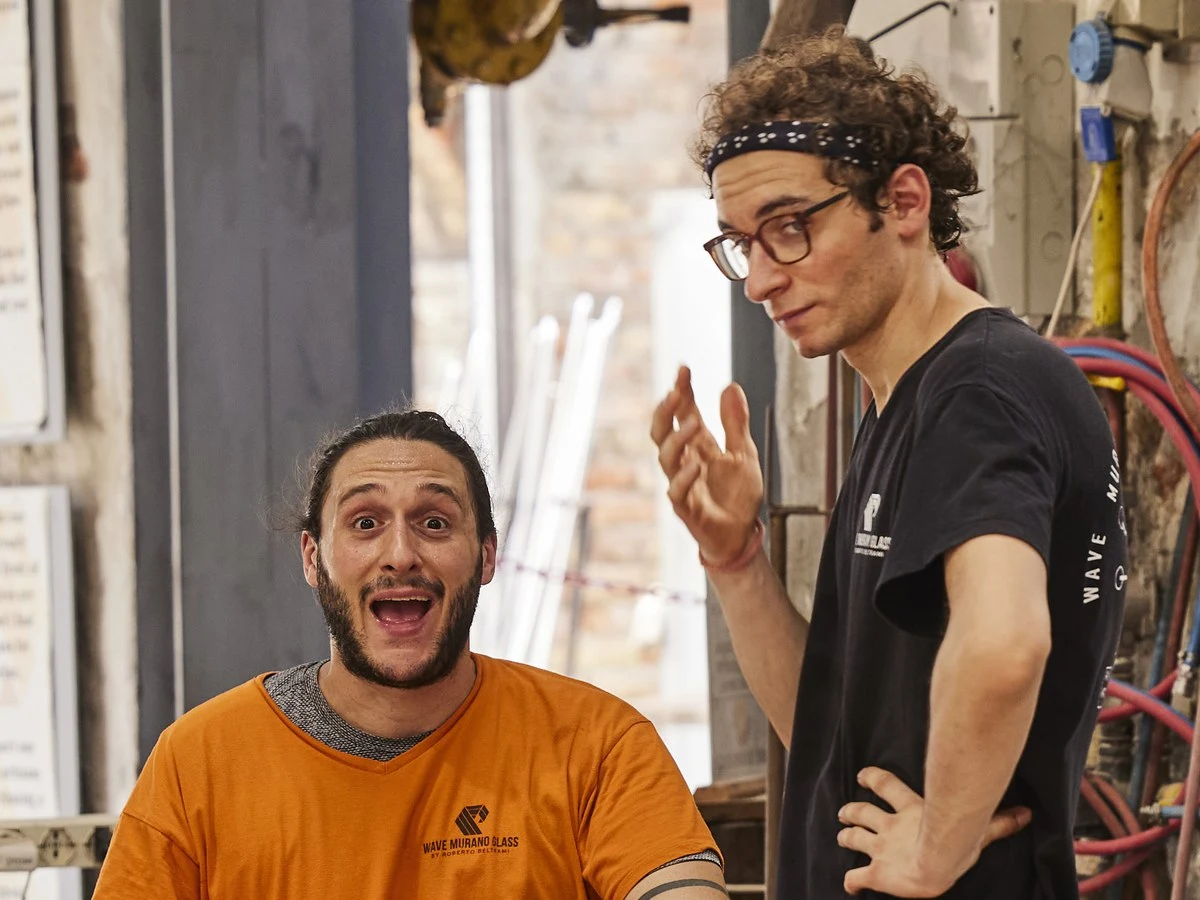
Murano's glass industry is built around the fornace, the working furnace that runs continuously and cannot be paused for a tour group. The maestro at the bench is producing work, not performing it. Studios that do open their floors typically run one or two demonstration windows per day, timed around the production schedule, not visitor convenience. Capacity on the floor itself is limited by safety clearance around the furnace; most working demonstrations accommodate groups of ten to twenty at most, and the serious private ateliers keep that number far lower. Wave Murano Glass, for instance, caps its factory guided tour at eight participants.1
The second constraint is seasonal. Murano's furnaces traditionally observe a summer shutdown, the ferragosto closure, running through much of August, when the heat of the furnace combined with the Venetian summer makes continuous production impractical. Visitors planning a floor visit in August will find the majority of working fornaci dark; the demonstration studios that do stay open in summer are typically the larger, more tourist-oriented operations rather than the production ateliers where the serious craft happens. The working season runs most reliably from September through June.
The third constraint is the gap between the showroom and the bench. Every fornace on Murano has a retail floor, and most of those are open without appointment. But standing in a showroom looking at finished pieces is not the same as watching a maestro work a gather at 1,040 degrees. The access question is specifically about the bench, and the bench requires either a published demonstration slot or a direct relationship with the studio.
When the Fornaci Open Their Floors
The studios that run public demonstrations generally publish their schedules on their own websites and through the Consorzio Promovetro Murano, the island's glass industry consortium. The consortium does not publish a centralized booking platform, but it lists member studios with contact details.
The demonstration schedule at most working fornaci is not published far in advance. Studios typically confirm availability within a week of the requested date, and private appointments at the smaller ateliers are arranged directly by email or phone. Each fornace sets its own terms; those terms are best confirmed directly with the studio. For private visits to the serious production ateliers, the studios do not publish a standard lead time; contact each studio directly to confirm current availability.
The seasonal calendar matters here. September and October are the strongest months for floor access: the furnaces are back from the August shutdown, the production season is in full swing, and the summer tourist peak has passed.
A visit booked by direct email to the studio in that window gives the best combination of active furnaces and manageable crowd size; confirm timing directly with each studio, as schedules are not published in advance. March and April are the second window, before the spring tourist surge.
January and February offer the quietest floors and the most direct access to the maestri, but some smaller studios reduce their demonstration schedule in the deep winter months.
The Channels That Actually Work
Three routes exist, and they are not equally reliable.
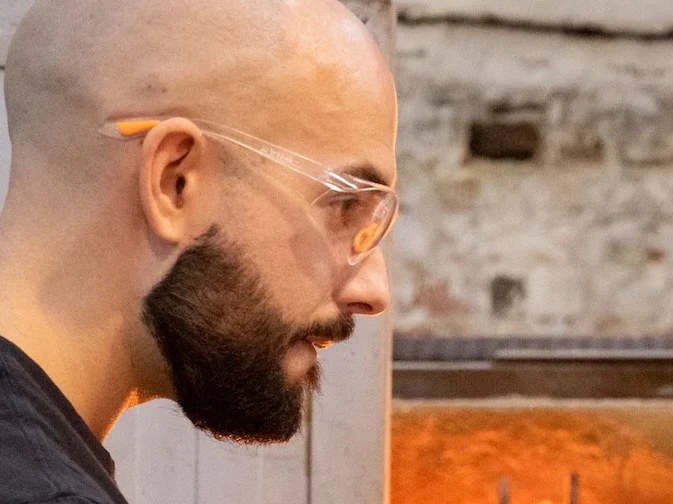
Direct contact with the studio. For the working fornaci that accept visitors, a direct email in Italian (or clear, simple English) to the studio's contact address is the most effective route. The Consorzio Promovetro Murano2 member directory lists studios with contact information. This route takes more effort but yields the most direct access, including the possibility of a private floor visit rather than a group demonstration.
Vetro Artistico Murano certification studios. The Vetro Artistico Murano trademark, administered by Promovetro on behalf of the Regione Veneto, identifies pieces made by hand on Murano by Murano maestri. Studios that carry this certification are, by definition, working production ateliers rather than import showrooms. Visiting a certified studio is the clearest way to ensure you are watching actual Murano craft rather than a demonstration staged for tourism. The certification registry is publicly searchable.
Guided specialist tours. Several Venice-based operators run small-group visits to working fornaci and have standing relationships with studios that do not advertise public access. Wave Murano Glass runs a glassblowing class from 245 euro per person,3capped at four participants,3 which is among the more structured private-access formats available. That program books up at least one month in advance on average,3 so early contact is essential. Pricing and availability vary by operator; word-of-mouth from the craft travel community is more reliable than general listings for identifying which operators have genuine bench access versus showroom-only arrangements.
Getting the Most from a Floor Visit
Ask specifically for the production floor, not the demonstration room. Some larger studios have separated their visitor experience from their actual production: the demonstration happens in a purpose-built space adjacent to the working furnace, with a maestro assigned to the visitor program rather than the production line. The distinction matters if you want to watch the work that actually ships. When booking, ask whether the visit is to the working fornace or to a dedicated demonstration space.
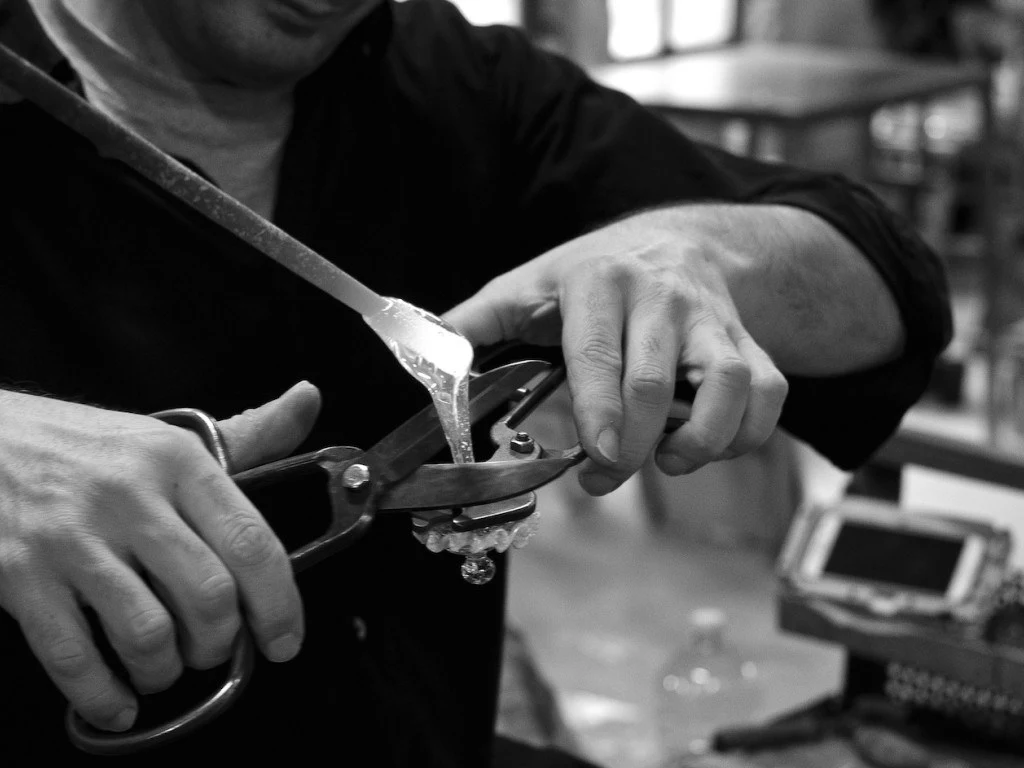
The money-versus-time tradeoff.Vetreria Murano Arte charges 3 euro to watch a glass-blowing demonstration,2open daily between 9am and 4pm,2 making it one of the most accessible entry points on the island. A private visit arranged through a specialist operator costs more (operator pricing is not standardized and should be confirmed directly), but typically yields a smaller group, a longer floor visit, and access to studios that do not run public programs. For a serious practitioner-curious visit, the private route is worth the premium.
Learn the lineage before you go. The maestri who matter on Murano are not interchangeable. The Barovier family has been working glass on the island since the thirteenth century; the Toso and Seguso names run through multiple generations of the island's production history. Knowing whose bench you are standing at, and what that lineage means technically, changes what you see. A gather that looks like a simple rotation is, in the hands of a third-generation maestro, the product of a specific wrist angle refined over decades.
Realistic Alternatives When the Serious Ateliers Are Closed
Murano Glass Access: Workshops and Alternatives Compared
| Option | Access Difficulty | Cost Range | Lead Time | How to Book |
|---|---|---|---|---|
| VMA public demonstration | Low | 3 euro2 | Walk-in (weekdays 9am, 4pm) | Walk-in to Calle San Cipriano 482 |
| Wave Murano Glass glassblowing class | Medium | From 245 euro per person3 | At least 1 month in advance3 | Wave Murano Glass website |
| Wave Murano Glass factory guided tour | Low-Medium | From 29 euro per person1 | Confirm directly | Wave Murano Glass guided tour page |
| visitlido.it private glass tour | Medium | N/A (confirm directly) | N/A (confirm directly) | visitlido.it organizer page4 |
| Museo del Vetro, Murano | Low | Published on museum site | Walk-in | Direct or online |
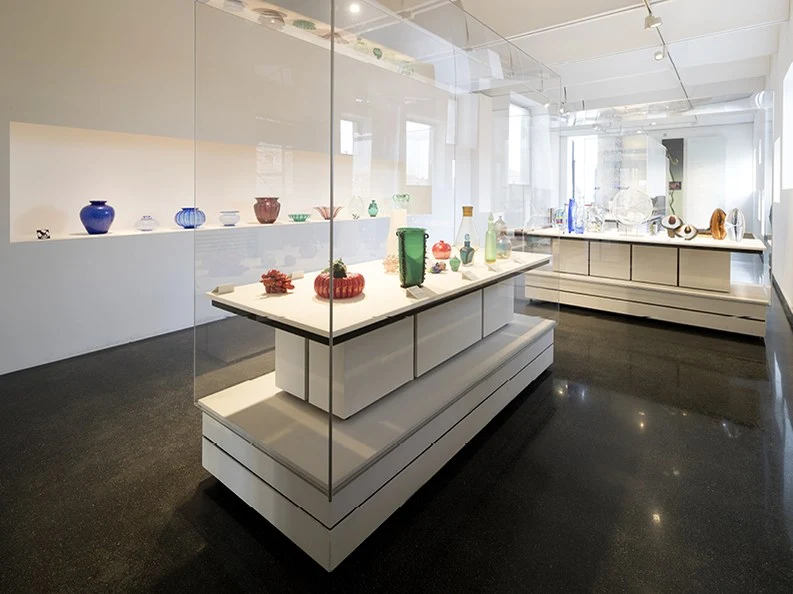
Museo del Vetro, Murano. The island's glass museum holds the deepest public collection of Murano production across five centuries, including pieces from the Barovier workshop dating to the fifteenth century. It does not offer bench access, but the technical range on display, from filigrana to sommerso to murrine, gives a practitioner-level grounding in what the technique can do. The museum is the right first stop before any floor visit.
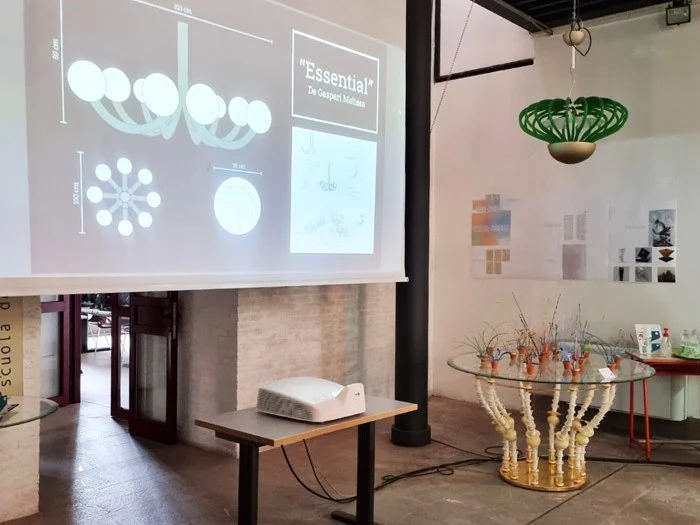
Le Stanze del Vetro, Venice. The exhibition space on the island of San Giorgio Maggiore runs rotating shows focused on twentieth and twenty-first century Murano glass, often with a strong design and craft angle. No bench access, but the curatorial depth is serious.
Abate Zanetti glass school, Murano. The school runs courses for practitioners at various levels, from short introductory sessions to longer programs. For anyone who wants to work the glass rather than watch it, this is the most direct route to the bench. Course schedules and pricing are published on the school's own site and should be confirmed directly.
On the Fornace Floor: What a Working Demonstration Actually Looks Like
The heat registers before the light does. A working Murano furnace runs at temperatures that make the air above the glory hole shimmer visibly, and the maestro's movements around it are calibrated to that heat: the gather is pulled, rolled, and shaped in a continuous sequence that cannot be interrupted without losing the piece. A demonstration at a serious production atelier is not a slowed-down performance. The maestro is making something, and the visitor is watching that process from a distance of two to three meters, close enough to see the gather change color as it cools from orange-white to amber.
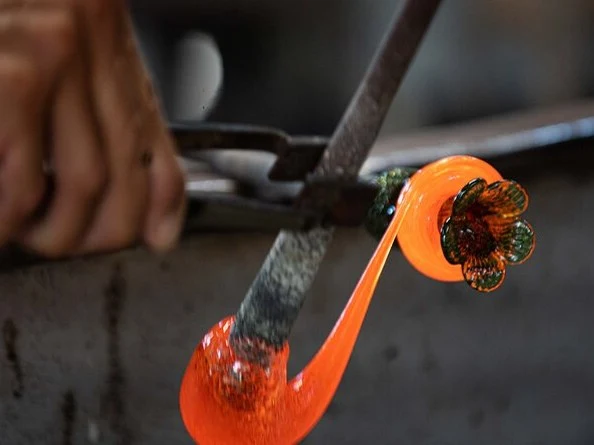
The technique that most visitors find arresting is the filigrana work, in which threads of colored or opaque glass are embedded in the gather and then twisted or pulled into patterns during shaping. The precision required is not in the twist itself but in the temperature management: the gather must be at exactly the right viscosity for the threads to move without breaking. A maestro with twenty years on this technique reads that temperature by color and by the way the glass pulls against the pontil. There is no instrument involved; the studio does not publish the specific temperature thresholds, and the knowledge lives in the hands.
Durations vary, but structured guided tours at Wave Murano Glass run approximately 45 to 60 minutes1 as a reference point, while the glass-making experience workshop at Murano Glass Factory runs around 45 minutes, with 20 minutes of hands-on practice with hot glass.5 A private visit can run longer and may include a conversation with the maestro or a senior apprentice about the specific techniques in production that day. The working language on the floor is Venetian dialect; most studios that accept international visitors have someone who can translate the key technical points.
The crowd at a public demonstration skews toward general tourism: couples, families, organized tour groups. The private visits and specialist tours draw a different room, practitioners, designers, collectors, people who have done background reading and arrive with specific questions about technique or lineage. The quality of the visit tracks closely with the quality of the questions.
Who Should Make the Trip, and When
The floor visit is worth the planning effort for anyone whose interest is in the technique itself: cooks who watch knife work, ceramicists who understand kiln temperature, glassblowers at any level, designers working with material. The Murano fornace is one of the few places where a craft lineage running back to the thirteenth century is still producing work on the same island, in the same tradition, with the same tools. That is not a claim many benches can make.
It is not the right visit for someone who wants a souvenir and a story. The showrooms serve that need without requiring any planning. The floor visit is for the person who wants to watch the gather come off the furnace and understand, technically, what happens next.
A dedicated half-day or full day on the island serves this purpose far better than a two-hour stop between vaporetto connections. The Museo del Vetro in the morning, a floor visit in the late morning or early afternoon when the furnace is at full production pace, and time in the showroom afterward to look at finished work with fresh eyes from the bench: that sequence is the right shape for the visit.
The Verdict on Murano Fornace Access
Murano's serious fornaci are not closed to the public, but they are not open in the way a museum is open. The bench access that matters, watching a third-generation maestro work a gather of filigrana at production pace, requires a direct approach: an email to the studio, a specific request for the working floor rather than the demonstration room, and a visit timed to the production season rather than the tourist season. September and October are the strongest window. August is the wrong month entirely.
The Consorzio Promovetro Murano's member directory is the most reliable starting point for identifying which studios are currently running visitor programs. For anyone who wants smaller groups and access to ateliers that do not advertise publicly, a specialist operator with genuine bench relationships is worth the additional cost. Wave Murano Glass offers free cancellation up to 24 hours before the experience,3 which gives some flexibility once you have confirmed travel dates. The Museo del Vetro is not optional; it is the context that makes the floor visit legible.
The most serious ateliers, the ones where the lineage and the technique are most concentrated, do not run public programs at all. The route to those benches runs through the craft community, through the Abate Zanetti school, through sustained engagement with the work rather than a single visit. For most travelers, the combination of a direct-booked private visit and the museum is the right level of access, and it is genuinely achievable. The people worth following on Murano are at the bench, not in the showroom, and the work they are doing there has been continuous for longer than most craft traditions have existed.
Frequently Asked Questions
Can you walk into a working Murano fornace without a booking?The showroom of most Murano studios is open without a booking. The working floor, where the furnace and the maestro are, typically requires either a scheduled demonstration slot or a prior appointment. Some of the larger public-facing fornaci do allow walk-ins to watch a demonstration if one is already in progress, but this is not guaranteed. For a serious floor visit, contact the studio directly in advance.
Which months give the best access to a working Murano glass studio?September through June is the working season for most fornaci. August is the traditional shutdown period, when the majority of production furnaces go dark. September and October offer the best combination of active furnaces and lower visitor numbers. January and February are the quietest months on the island, though some smaller studios reduce their demonstration schedules in deep winter.
How do you tell a genuine Murano glass studio from a showroom selling imported glass?The Vetro Artistico Murano trademark, administered by the Regione Veneto, identifies pieces made by hand on Murano by Murano maestri. Studios that carry this certification are working production ateliers. The Consorzio Promovetro Murano's member directory is also a reliable reference. If a showroom cannot show you the working furnace or name the maestro who made a specific piece, treat the provenance as unverified.
Does the Abate Zanetti school in Murano accept visitors who want to try glassblowing themselves?The Abate Zanetti school runs courses for practitioners at various levels, including introductory sessions for people with no prior glassblowing experience. Course schedules and pricing are published on the school's own site and change seasonally. Contact the school directly to confirm current availability and whether short-format sessions are running in your travel window.
Is the Museo del Vetro worth visiting before or after a Wave Murano Glass floor visit?Before. The museum's collection spans five centuries of Murano production and covers the full technical range of the tradition, from filigrana to murrine to sommerso. Arriving at a working demonstration with that context means you can read what the maestro is doing rather than simply watching it. The museum does not offer bench access, but it is the most efficient way to build the technical vocabulary that makes a floor visit useful.