Inside a Sakai Forge: What the Bench Actually Looks Like
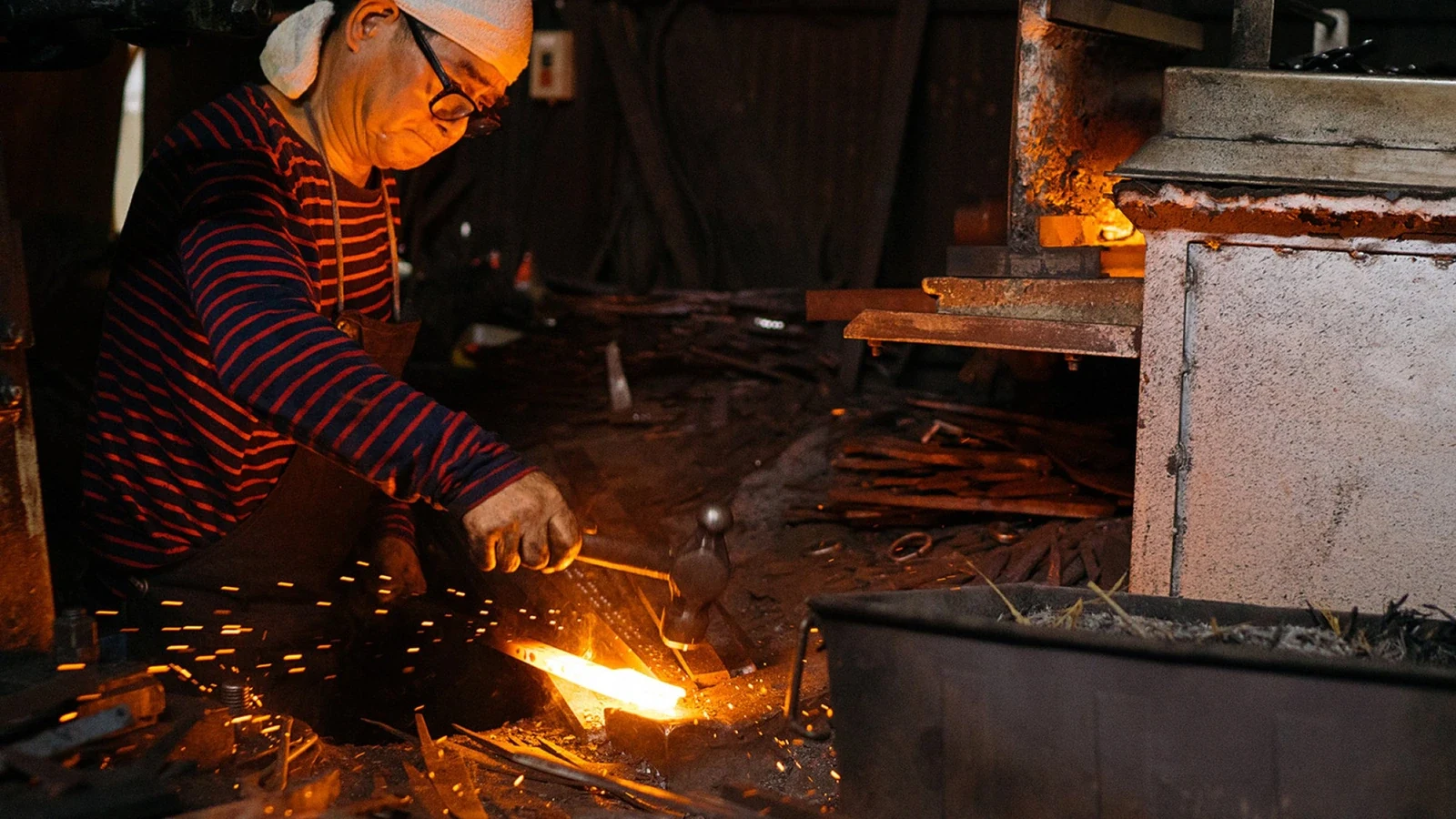
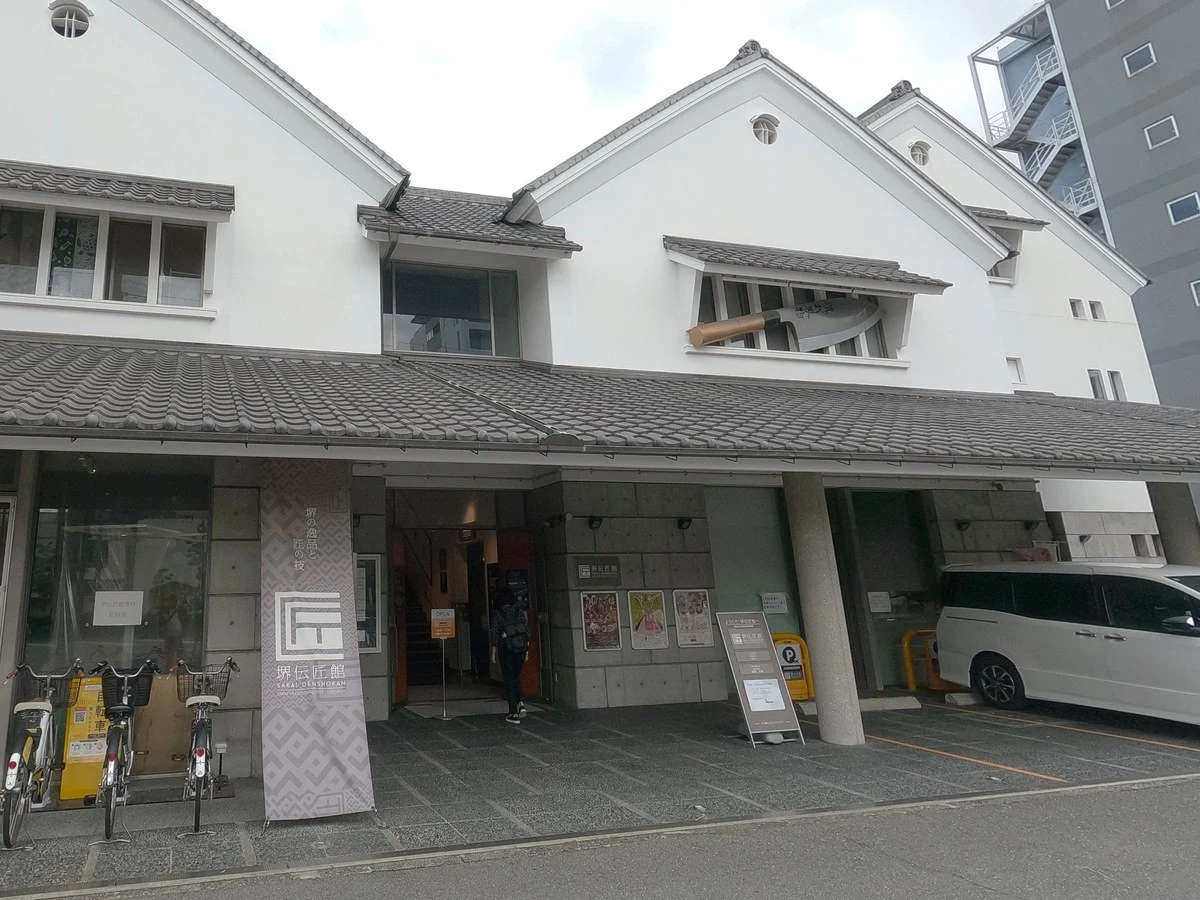
A third-generation blacksmith whose family has worked the same forge in Sakai for over seventy years shapes a gyuto blank by hand on a power hammer before finishing the shoulder geometry with a smaller cross-peen. The sequence takes roughly four minutes per blade at that stage; the full forging process for a single knife, from raw steel bar to rough-shaped blank ready for the sharpener, runs several hours across multiple heat cycles. Watching it, you understand why the city's output is measured in decades of practice rather than in units per hour. Most forge visits in Sakai run between thirty minutes and two hours depending on the workshop and the arrangement. The typical format is observation from a designated standing area, bench-side but at a respectful distance from the working heat. Some workshops allow closer positioning during the sharpening stage, where the togishi works at a water-cooled grinding wheel and the pace is slower and more legible to a non-specialist eye. A few makers, particularly those who have built relationships with culinary schools or knife retailers, will walk visitors through the steel selection and heat-treatment logic while the work continues. The Sakai Dentotsangyokan (Sakai Traditional Crafts Museum) maintains a demonstration space where visitors can watch both forging and sharpening without a prior appointment, and the museum holds examples of the city's blade lineage across several centuries. Admission is free.2The museum is a three-minute walk from Myokokujimae Station on the Hankai Line.2 For visitors who want context before approaching individual workshops, it is the sensible first stop. The Sakai City Tourism Association also coordinates introductory forge tours, typically in small groups, that include a sharpening experience where participants work a blade on a whetstone under instruction. What the experience is not: it is not a cooking class, not a retail showroom, and not a guided narrative in the style of a distillery tour. The makers are working. The visit happens around that work, not instead of it.Why Getting to the Right Forge Takes More Than a Train Ticket
The scarcity here is not seats at a counter; it is attention. A working blacksmith running a small forge cannot stop the fire to explain the process to every visitor who arrives at the door. Most of Sakai's active knife-making workshops are family operations, often with one or two people at the bench, and the craft requires sustained concentration across long heat cycles. Interruptions cost material and time. The workshops that do accept visitors have generally made a deliberate choice to do so, often through a relationship with a tourism coordinator, a knife retailer, or a culinary institution. Those that have not made that choice are effectively closed to walk-ins, and showing up unannounced at a working forge is the fastest way to close the door permanently for the visitors who come after you. Language is a second constraint. Most of Sakai's working craftsmen conduct their days in Japanese. Wada Shoten offers an English guide, but it requires advance reservation and carries a separate fee.1 Arranging a visit through the Sakai City Tourism Association or through a specialist knife retailer in Osaka or Tokyo who has an existing relationship with the forge is the practical solution for non-Japanese-speaking visitors.When Forge Visits in Sakai Are Actually Available
The Channels That Actually Work
Sakai City Tourism Association: The most reliable public channel for coordinated forge visits. The association maintains relationships with participating workshops and can arrange group and individual visits, sometimes including a hands-on sharpening component. Contact them directly through their official site to confirm current programs and availability. Sakai Dentotsangyokan (Traditional Crafts Museum): Walk-in access to demonstrations and the permanent collection. Open 10:00 AM to 5:00 PM.4 This is the lowest-friction entry point and a useful orientation before approaching individual makers. Wada Shoten direct: Wada Shoten can be reached by telephone at 072-232-1886.1The workshop accepts payment by cash, credit card (VISA, Mastercard, American Express), and PayPay.1With advance reservation, a knife can be finished with your name and prepared ahead of time.5 Wabunka (specialist booking platform): For visitors who want a fully managed private experience, Wabunka lists the Wada Shouten experience from $358 per person.5The session runs 120 minutes.5It is private and accepts one to eight guests.5An English-speaking guide is included.5Cancellation is free up to 15 days before the visit.5 Specialist knife retailers: Several Osaka-based knife shops, and a smaller number in Tokyo, have long-standing relationships with specific Sakai forges and can facilitate introductions for serious buyers or culinary professionals. This channel tends to yield closer access, sometimes including time with a named craftsman, but it is oriented toward people who are also purchasing. Direct contact with workshops: Possible for Japanese-speaking visitors with a clear, respectful inquiry. For non-Japanese speakers, this channel is difficult without an intermediary. Do not arrive without prior arrangement.Cost and What You Pay at Each Stage
The Sakai Dentotsangyokan charges no admission fee.2The Sakai-Tohji Knife Museum (Izumi Riki Seisakusho) charges a ¥15,000 (approximately US$94) participation fee for its workshop, which includes a Japanese knife; the session covers handle-fitting.6Participants can also learn to engrave a blade or sharpen knives on a stone.6 For the Wabunka-managed Wada Shouten experience, the rate is from $358 per person for a private 120-minute session. Forge visits arranged through the tourism association may carry a participation fee, particularly for programs that include a hands-on sharpening component; specific pricing is not published in a form that can be cited here, so contact the association directly for current rates. Knives at the Sakai City Traditional Crafts Museum shop range from approximately $100 to $1,000.2 There is no deposit or booking fee structure published for the tourism association's programs; confirm the payment process when you make contact.Mistakes That Cost People the Visit
Arriving without an arrangement. The workshops that accept visitors have opted into a system. Those that have not are working forges, not attractions. Walking up to an unmarked workshop door and knocking is not a route to access; it is a way to make the city less open to the visitors who follow. Underestimating the language gap. Even visitors who have traveled widely in Japan sometimes assume that a city with significant tourism infrastructure will have English-language support at every point. At the forge level, it often does not. Arrange your visit through a channel that includes interpretation, or bring a Japanese-speaking companion. Conflating the museum with the forge. The Dentotsangyokan is a museum with demonstrations. It is not a working production forge. Visitors who want to see active production, blades being made for sale, need to arrange a workshop visit separately. Treating the visit as a retail transaction. Some visitors approach forge access as something that can be purchased on demand. The makers who accept visitors do so because they have chosen to share the work, not because access is a product. The visit goes better when the visitor arrives with genuine curiosity about the process rather than a shopping list.Who Should Make the Trip to Sakai
Cooks who use Japanese knives professionally and want to understand what they are holding. Culinary students who have studied blade geometry and want to see the forging logic behind it. Knife collectors who have read the lineage and want to close the gap between the object and the hands that made it. Travelers who are already in Osaka and have a half-day free will find Sakai accessible by train and worth the detour even at the museum level. Visitors who want a passive, narrated experience in English with guaranteed access to a specific named maker should calibrate their expectations carefully. That level of access exists, but it requires more lead time and usually a specialist intermediary.Alternatives When Sakai's Workshops Are Unavailable
Sakai and Its Alternatives: Forge Access Compared
| Location / Venue | Access Difficulty | Typical Format | Language Support | How to Book |
|---|---|---|---|---|
| Sakai forges (via tourism association) | Moderate (advance arrangement required) | Observation + optional sharpening | Limited; intermediary recommended | Sakai City Tourism Association |
| Wada Shoten (direct or via Wabunka) | Low to moderate (advance reservation required) | Private 120-min session; English guide included via Wabunka | English guide available (fee applies direct; included via Wabunka) | Tel: 072-232-1886 or Wabunka platform; from $358/person via Wabunka |
| Sakai-Tohji Knife Museum (Izumi Riki Seisakusho) | Moderate (advance reservation required) | Handle-fitting workshop; blade engraving or sharpening available | N/A | Advance reservation; ¥15,000 (~US$94) participation fee |
| Sakai Dentotsangyokan (museum) | Low (walk-in) | Demonstration + permanent collection; free admission | Some English materials | Walk-in, 10am, 5pm; closed every third Tuesday |
| Seki City, Gifu Prefecture | Low to moderate | Factory tours, museum, hands-on grinding | Some English support at larger facilities | Seki City tourism office; some facilities accept walk-ins |
| Eric Chevalier blacksmithing tour, Sakai | Moderate | Blacksmithing tour | Japanese, English, and Traditional Chinese | Inquiry via Japan Roots Guide |
| Aritsugu, Kyoto (retail + sharpening) | Low | Retail purchase + in-store sharpening observation | Some English | Walk-in; no forge visit, but direct maker contact |
Worth the Journey to Sakai?
For anyone who works with Japanese knives and wants to understand the object at the level of its making, Sakai is the right destination. The access is real, the craft is active, and the city has built enough infrastructure around forge visits that a well-prepared traveler can get genuinely close to the work. The museum is the floor; a coordinated workshop visit through the tourism association or a private session at a workshop like Wada Shoten is the ceiling for most visitors; and a relationship with a specialist retailer is the route to the rarest access, time with a named maker at a working bench. The mistakes that close doors are avoidable: arrange in advance, go through the right channel, arrive with curiosity rather than a transaction in mind. The makers who accept visitors have chosen to share the work. That choice deserves a visitor who has done the same preparation the craft itself demands. There is no drop time, no waitlist, no membership. There is a tourism office, a museum, and a set of craftsmen who have decided, on their own terms, to let the work be seen. Contact the Sakai City Tourism Association early, confirm what is currently available, and build the itinerary around what they can actually arrange. For the cook who wants to understand what a single-bevel knife costs in time and heat before it costs anything in yen, the forge visit is the only education that holds. The people in Sakai have been doing this work, at the same bench, across generations, long enough that the visit earns its place in any serious culinary education, and the craft is patient enough to reward anyone who arrives with the same quality of attention.Frequently Asked Questions
Can you walk into a Sakai knife forge without a prior arrangement?For most working forges, no. The workshops that accept visitors have opted into a coordination system, typically through the Sakai City Tourism Association or a specialist retailer relationship. Arriving unannounced at a production forge is not a reliable route to access and risks closing the door for future visitors. The Sakai Dentotsangyokan museum does accept walk-ins during its published opening hours and is the appropriate starting point for visitors without a prior arrangement.
How far in advance should you contact the Sakai City Tourism Association to arrange a forge visit?The association does not publish a specific lead-time requirement, but accounts from knife-focused travelers consistently suggest contacting them at least two to four weeks before your intended visit, and longer during peak tourist seasons (late March through early May, and October through November). Confirm current availability and any lead-time requirements directly with the association before finalizing travel dates.
Does Wada Shoten in Sakai offer a hands-on knife-making session, and what does it cost?Wada Shoten runs a structured workshop program. Booked privately through Wabunka, the session runs 120 minutes, accepts one to eight guests, includes an English-speaking guide, and is priced from $358 per person. Booked directly, the workshop accepts groups of two to ten, requires advance reservation, and offers an English guide for a separate fee. With advance notice, a knife can be finished with your name and prepared ahead of time. Cancellation through Wabunka is free up to 15 days before the visit.
Is English-language support available at Sakai's working knife forges?At the forge level, English support is limited and inconsistent. The Sakai Dentotsangyokan has some English-language materials. Wada Shoten offers an English guide with advance reservation, for an additional fee. For other workshop visits, arranging access through the tourism association or a specialist knife retailer who can provide or coordinate interpretation is the practical approach for non-Japanese-speaking visitors.
What is the difference between visiting Sakai and visiting Seki City for knife-making access?Sakai's craft tradition centers on hand-forged single-bevel knives made in small family workshops; access is more intimate but requires more advance coordination and language preparation. Seki City in Gifu Prefecture has a larger industrial knife-making sector alongside craft production, with more established tourist infrastructure, easier walk-in access at some facilities, and more consistent English-language support. Sakai is the right destination for visitors focused on traditional craft lineage; Seki is more accessible for visitors who want a broader overview of Japanese knife production.