Sunday Supper: Boulud, Ducasse, and the Pairing Work
Daniel Boulud and Alain Ducasse reunited at Restaurant DANIEL for a Citymeals dinner built around wine, craft, and charity.
HM
Director of Editorial Standards
Hugo Marchetti
Filed July 28, 2026
10 min read
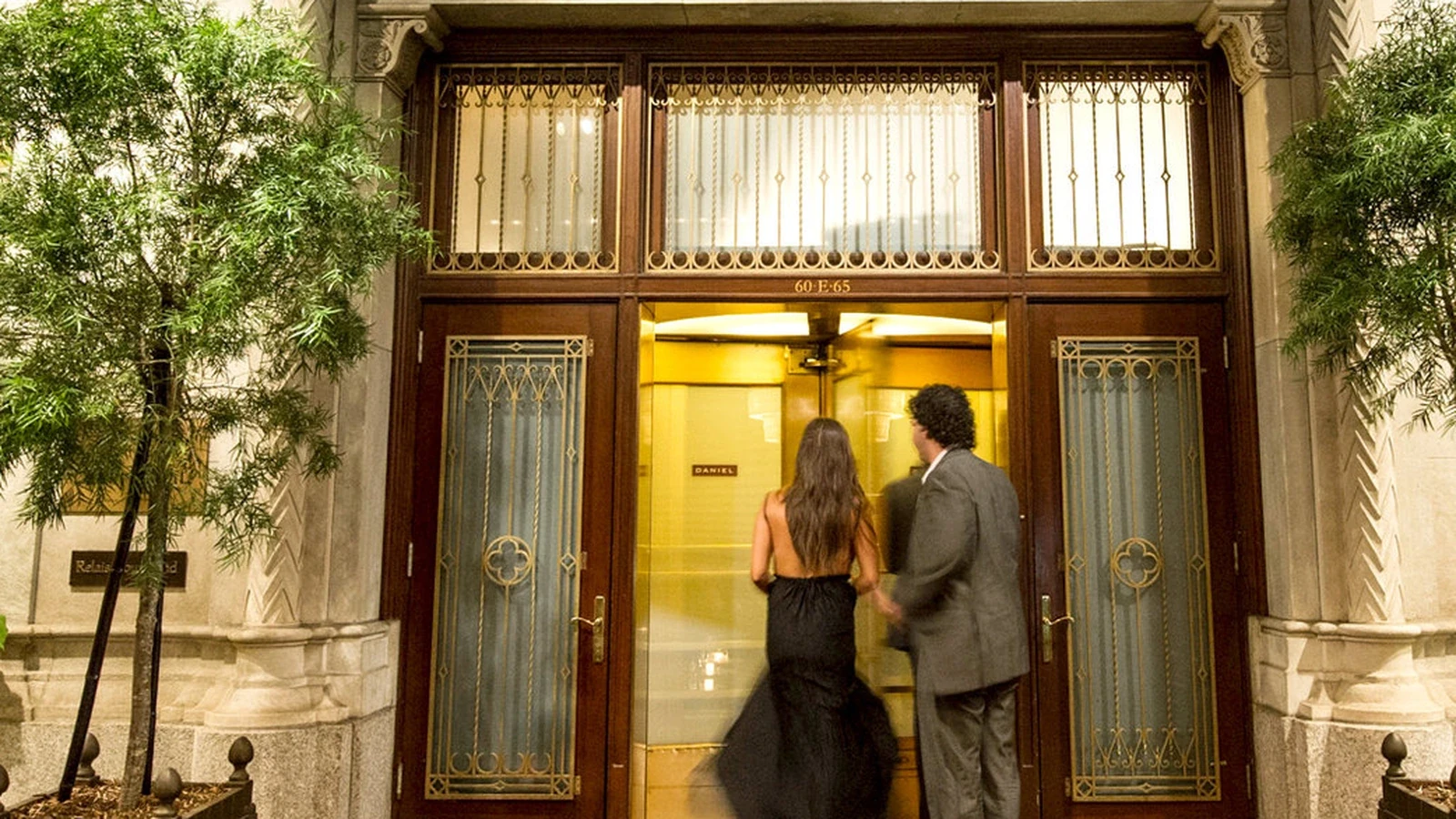
Celtuce steeped into Roku Gin before snap pea juice, grapefruit, and soda stretched the drink into something green, sharp, and built for the first minutes of service. At Restaurant DANIEL on Manhattan’s Upper East Side, Daniel Boulud and Alain Ducasse reunited for Sunday Supper, Boulud’s annual charitable dinner of 28 years. The seat was $3,500, the format was four courses, and the night raised $1.3 million for Citymeals, benefiting homebound, food-insecure older New Yorkers.
Boulud and Ducasse arrived with more than reputation. They have been friends and colleagues for more than 50 years, with a combined century in some of the world’s top kitchens. Boulud holds three Michelin stars in New York; Ducasse holds 21 across his global restaurant group. Michael Cimarusti and Rafa Costa e Silva were among the other chefs gathered for the evening, with Erin Healy, Boulud’s chief sommelier, shaping the wine pairings.
The Sunday letter
Get our new stories in your inbox every Sunday.
One email with our newest profiles and guides. See a sample before you subscribe.
The pass had to carry rare ingredients, exact timing, and a philanthropic purpose without letting any one of them crowd the others. A caviar tartlet sat in the evening’s register of ceremony. Crispy lobster came with artichoke and arugula, and Ducasse’s approach gave the lobster a tapioca rice layer that formed a shell around it. Dessert reached for Mekonga, a Vietnamese dark chocolate, with coconut milk jam.
Ducasse connected the lobster to Provence, where he spent formative time as a young chef. Boulud, looking at Ducasse’s larger body of work, pointed to the way he opened French kitchens toward other cuisines and ingredients, including white truffle and balsamic vinegar. That history matters at a dinner like this: technique is never only technique. It carries where a cook has worked, what he has chosen to absorb, and which products he has made room for on the plate.
The two chefs first shared one of their defining kitchen moments in Monaco, when Ducasse organized a 70th-birthday celebration in 1990 for Craig Claiborne, the longtime New York Times food editor and a major figure in modern gastronomic criticism. Decades later, the Sunday Supper reunion placed them back in a working frame rather than a commemorative one. Friendship had to become mise en place.
Boulud has a plain reading of that kind of collaboration: both chefs come from the countryside, so there is room in the kitchen. The line holds because it is practical before it is sentimental. A crowded station works only when cooks know where to stand, when to move, and when to let another hand finish the gesture.
The Citymeals Brief Kept the Meal Accountable
Citymeals gave the evening its measure. Homebound, food-insecure older New Yorkers were not an abstract beneficiary; they were the reason the dining room, the chefs, the cellar, and the guests gathered under one roof. The luxury had a task: turn access into support for people without easy access to food, company, or movement through the city.
Boulud also tied the night to education. He spoke of cooking with young chefs and alongside them, of transmitting knowledge through kitchens, books, and training. Ducasse’s own school began about 20 years ago and has grown into ADN, an institute with 700 students across pastry and cooking, representing 18 nationalities. The name plays on Alain Ducasse Naturality and the French initials for DNA.
That layer of apprenticeship belongs in the same conversation as fundraising. A charitable dinner can feed a cause for one night; a school changes who will be able to cook, lead, and teach years from now. Sunday Supper held both forms of responsibility in view: immediate money for Citymeals, and the longer work of craft moving from one generation to the next.
Erin Healy’s Wine Pairings Held the Middle
Erin Healy curated the wines for the dinner, and in a room led by Boulud and Ducasse, that role required more than accuracy. A pairing has to read fat, salt, bitterness, temperature, and pace. It has to know when to cut, when to echo, and when to stay quiet.
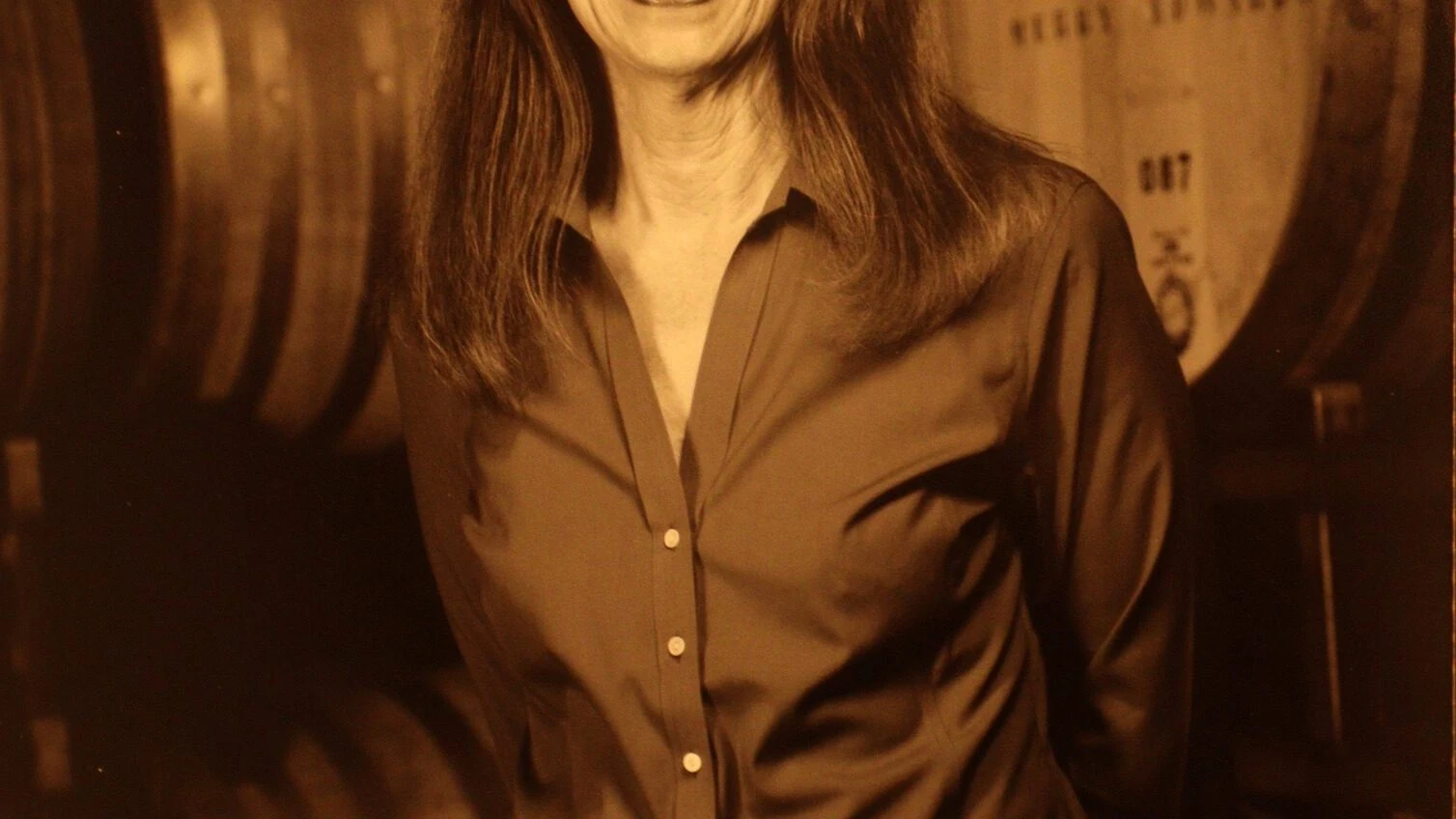
Erin Healy holds a glass of wine, ready to discuss pairings for Daniel Boulud's dishes.
Boulud’s own pairing logic is built on that kind of adjustment. With richer preparations, he looks for acidity: dry Alsatian Riesling and Chenin Blanc from the Loire Valley can cut through cream-based sauces, foie gras, and other dishes with weight. The point is not contrast for its own sake. Acid changes how the fat lands, making the plate feel lighter without denying its richness.
Modern cooking changes the equation further. Boulud describes richness now as something achieved through technique rather than excess, with sauces relying less on butter and fat and more on vegetables, reductions, and precise cooking. Crisper, more highly seasoned dishes can carry less sauce and meet younger, lighter wines; fuller preparations need roundness and balance so the glass and plate evolve together.
Ducasse brings the question back to the producer. For him, grape variety matters less than the vineyard and the person responsible for it. He makes room for growers committed to their soil and to a more natural way of farming, while staying clear-eyed about quality: a natural label does not make a wine good. At Benoit in New York, guests have access to more than 1,700 wine references, a number that only matters if the team can translate it into understanding at the table.
The Spring Forward Cocktail Put the Bar on the Pass
The Spring Forward cocktail started with Roku Gin and treated it like an ingredient with prep time. Celtuce infused the spirit before snap pea juice, grapefruit, and soda entered the glass. The build stayed vegetal and refreshing, aligned with the spring menu rather than sitting beside it as a separate welcome drink.
Boulud paired that cocktail thinking with a spring hiramasa dish and a seasonal salad. The connection was not decorative. Celtuce changed the base; snap pea juice kept the drink in the produce register; grapefruit added citrus and bitterness; soda lengthened the structure so the drink could open the meal without weighing it down.
He also kept a classic martini in view: two parts gin to one part dry vermouth, with a twist or an olive. That ratio says something about the bar’s range. One drink leaned into infusion and green juice for a seasonal menu; the other held to a clean, established proportion.
What the Collaboration Asked of the Room
A dinner built around Boulud and Ducasse could easily become a stack of names. Sunday Supper asked for something more disciplined: chefs, sommeliers, bartenders, and guests moving toward the same end. The food carried the chefs’ histories. The wines had to make the courses legible. The cocktail opened the seasonal argument before the first plate settled.
The presence of Cimarusti and Costa e Silva widened that field of hands. A collaboration among chefs of this caliber works only when authorship does not become clutter. Each contribution needs enough identity to matter and enough restraint to serve the menu around it.
Restaurant DANIEL brought its own expectations into the room. Boulud’s dining room is not a neutral stage; it comes with a standard of precision before service begins. For Sunday Supper, that standard had to face outward, toward Citymeals, without losing the internal discipline that makes such a night possible.
What to Watch After Sunday Supper
The lasting lesson is alignment. Boulud hosted. Ducasse joined. Healy paired. The bar opened with Roku Gin infused through a vegetable lens. The kitchen moved from caviar to lobster to Vietnamese dark chocolate. Citymeals remained the reason the room gathered.
For anyone studying restaurants as craft systems, Sunday Supper shows how philanthropy depends on execution. The cause draws the moral center; the makers still have to earn attention through prep, timing, product, and judgment. At this level, generosity is not separate from technique. It is carried by it.
Frequently Asked Questions
How much did Sunday Supper at DANIEL cost per person?
Sunday Supper at Restaurant DANIEL cost $3,500 per person. The four-course dinner raised $1.3 million for Citymeals.
Who cooked at the Sunday Supper at Restaurant DANIEL?
Daniel Boulud hosted the dinner, and Alain Ducasse joined him at Restaurant DANIEL. Michael Cimarusti and Rafa Costa e Silva were also among the chefs gathered for the evening.
Which charity benefited from the Sunday Supper dinner?
Citymeals benefited from the dinner, with funds supporting homebound, food-insecure older New Yorkers.
What was in the Spring Forward cocktail?
The Spring Forward cocktail combined Roku Gin infused with celtuce, snap pea juice, grapefruit, and soda.
Who handled the wine pairings for the dinner?
Erin Healy, Daniel Boulud’s chief sommelier, curated the wine pairings for the four-course dinner.
The Sunday letter
Get the next Made By guide in your inbox.
We send one email every Sunday morning with the guides and profiles we published that week.