Inside the Forge: What You Actually See When the Hammers Are Moving
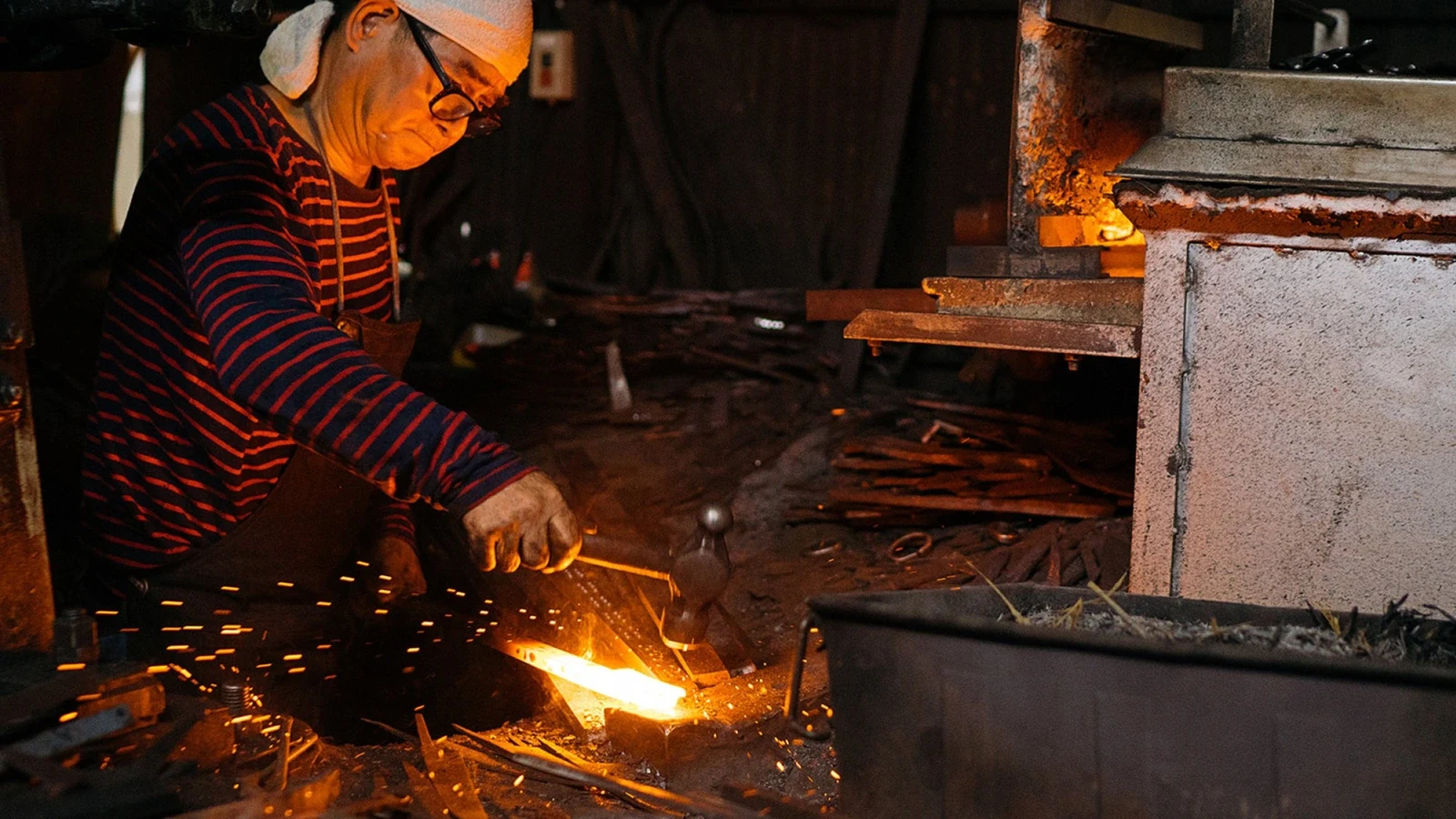
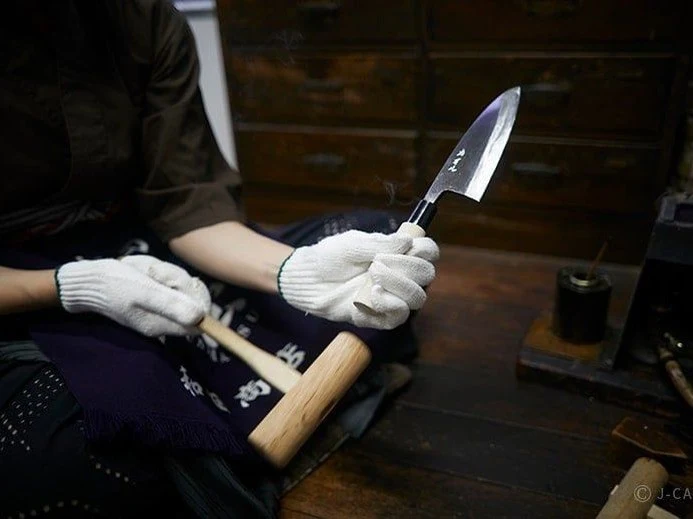
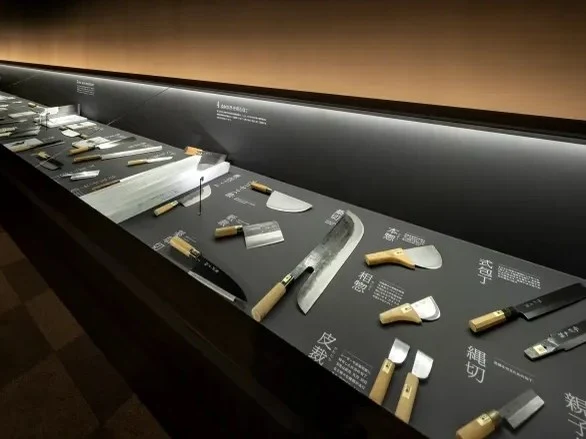
Sakai's knife-making district sits in Osaka Prefecture, and the craft there is divided across distinct specialist trades: the blacksmith who forges the blade, the sharpener (togishi) who grinds and polishes it, and the handle-maker who finishes the piece. These are separate workshops, sometimes separate streets. A visit to one is not a visit to all three. At a forge, the visible work is the shaping of hagane, the hard carbon steel, against a softer iron body (jigane). The smith heats the laminated billet to forging temperature, hammers it to rough shape, and repeats the cycle until the blade profile emerges. The sound is specific: a short, dense ring on the anvil, not the theatrical clang of a film blacksmith. The fire is gas or coke depending on the house. The smell is iron scale and coal smoke. At a togishi's workshop, the work is quieter and slower. The sharpener works through a sequence of whetstones, moving from coarse to fine, holding the blade at a consistent angle across each stone. The geometry of a single-bevel Japanese knife, the kind Sakai is known for, requires the sharpener to maintain a flat back and a precise hollow grind on the face. Watching this is instructive in a way that no video replicates: you see how much pressure, how much water, and how many passes each stage actually takes. The retail showrooms attached to major Sakai houses display finished knives in locked cases, but the better ones will open the case and let you hold the knife, feel the weight distribution, and examine the hamon (the temper line) under a light. Some showrooms have a small grinding station where staff demonstrate edge finishing on request. The Sakai Traditional Crafts Museum1 (堺伝統産業会館) offers a more structured introduction: displays of the full production sequence, finished examples from multiple makers, and, on certain days, live demonstrations by working craftspeople. The museum closes during year-end and New Year holidays (December 29 through January 3). It is a practical first stop1 if you are arriving without a specific forge contact, as it provides context for what you will see when you visit individual workshops.Why Getting into the Right Sakai Workshop Takes More Than Showing Up
Sakai has roughly 200 knife-related businesses, but the number of forges where a visitor can watch active production is considerably smaller. Many of the city's most respected smiths work in small family operations, sometimes with one or two apprentices, and production runs on a schedule that does not accommodate drop-in observers. A smith mid-way through a forging sequence cannot pause to explain the process in English, or sometimes in any language, without losing the heat in the steel. The craft also carries a generational weight that shapes how access works. Houses that have been forging for three or four generations tend to have established relationships with specific knife dealers, restaurants, and collectors. Their output is often pre-allocated. A visitor who arrives without an introduction may be received politely at the retail counter and no further. Language is the practical barrier most visitors underestimate. Sakai's craftspeople are not, as a rule, set up for English-language tourism. Visiting blacksmith workshops in Sakai requires making an appointment at Sakai Hamono. A guide or interpreter who has existing relationships with specific workshops changes what you can access entirely.2When Sakai Workshop Visits Are Available and How the Calendar Works
Sakai's forges do not publish a public booking calendar, and no centralized reservation system covers the working workshops. The Sakai Traditional Crafts Museum operates on standard museum hours and does not require advance booking for general admission, but live demonstration days are not published far in advance on English-language platforms. The museum's own website and direct contact are the most reliable sources for demonstration schedules. For individual forge visits, the booking window is entirely dependent on the specific house. Some workshops accept requests with a week's notice; others require several weeks, particularly if you want to observe a specific stage of production rather than simply tour the showroom. No verified public release schedule exists for forge access in Sakai. Contact the specific workshop or a specialist guide directly, and do so well before your travel dates.The Channels That Actually Work for Sakai Forge Access
Mistakes That Cost Visitors the Access They Came For
Arriving without a translator and expecting English. The working forges of Sakai are not staffed for English-language visitors. A guide who speaks Japanese and has a prior relationship with the workshop is not a luxury; it is the difference between watching the forge from the doorway and standing beside the anvil. Treating the visit as a tourist attraction rather than a professional call. Sakai's smiths are running production businesses. Visitors who arrive with a specific interest in the craft, who ask questions about steel selection or heat treatment, and who are considering a purchase or commission are received differently from those who want a photograph for social media. The distinction is visible within the first two minutes of conversation. Booking a general Osaka day-trip and adding Sakai as an afterthought. The district rewards a dedicated half-day at minimum, and a full day if you want to visit a forge, a togishi, and the museum separately. Sakai is accessible from Osaka by train, but the workshops are spread across the district and do not cluster conveniently. The Osaka Sakai Knife Tour on ByFood, when available, meets at the bus stop in front of Sakai Station on the Nankai Main Line and runs 3.5 hours6for groups of one to five.6Note that this tour is currently listed as unavailable for booking.6Check the listing directly for updates.6 Failing to confirm demonstration days at the museum before visiting. Live demonstrations are not daily events. Arriving on a day when no craftsperson is present means you see static displays only. Contact the museum directly or check their Japanese-language calendar before building your itinerary around a demonstration.What a Sakai Visit Costs at Each Stage
Sakai Forge Access: Entry Points Compared
| Access Route | Difficulty | Cost Range | Lead Time | How to Book |
|---|---|---|---|---|
| Sakai Traditional Crafts Museum (general admission) | Low | Low (confirm with museum) | Walk-in | Direct / walk-in |
| Wada Shouten via Wabunka (private, 1 to 8 guests, 120 min, from $358 pp) | Low | From $358 per person | Advance reservation required | Wabunka experience page5 |
| Specialist guided forge tour (group) | Low, Medium | Mid (varies by operator) | Days to weeks | Osaka-based tour operators |
| Direct workshop visit, Wada Shoten (2 to 10 guests; English guide extra) | Medium, High | N/A (purchase/commission separate) | 1 to 4 weeks | Phone: 072-232-1886 |
| Bespoke commission from named smith | High | High (unpublished; negotiate directly) | Months (unpublished) | Direct with workshop |
Who Should Make the Trip to Sakai, and When
Sakai rewards visitors who already cook seriously, who sharpen their own knives, or who have spent time thinking about blade geometry and steel. The craft is visible and legible to someone who has held a single-bevel knife and wondered how the hollow grind was achieved. For that person, watching a togishi work through a sequence of natural stones is one of the more instructive hours available in Japan. It is less suited to visitors who want a packaged cultural experience with English commentary and a gift-shop exit. Those visitors will find the museum adequate and the working forges opaque. The best occasions are a dedicated research trip before commissioning a knife, a longer stay in Osaka with a free half-day, or a trip structured specifically around Japanese blade culture, which might also include visits to Seki in Gifu Prefecture, the center of production-scale knife manufacturing, for contrast.Alternatives That Scratch the Same Itch
Seki, Gifu Prefecture. Japan's largest knife-producing city, with a different production model (more machine-assisted, higher volume) but several workshops and a dedicated cutlery museum that offers hands-on sharpening experiences. Easier to access as a structured tourist visit than Sakai's working forges. Tsukiji Aritsugu, Tokyo. The Tokyo branch of the Kyoto knife house maintains a workshop where staff sharpen and adjust knives in front of customers. Not a forge visit, but a close look at professional sharpening and a chance to handle a wide range of Japanese knives with knowledgeable staff. Kyoto Aritsugu (Nishiki Market). The original Aritsugu house sells and sharpens knives from a small shop in Nishiki Market. The space is tight and the staff are busy, but the knife selection is serious and the sharpening service is genuine craft work, not a demonstration. Korin, Tokyo. A specialist retailer with deep relationships with Sakai and other Japanese knife-making regions. Staff can discuss steel types, makers, and production methods in detail, and the shop facilitates bespoke orders from specific Sakai smiths for clients who cannot travel to the forge directly. Tamahagane forging near Tokyo. A tamahagane knife forging experience in Ome City, near Tokyo, offers a limited number of spots per month through a collaboration with Wabunka. It is bookable through8 Wabunka8 and suits visitors who want a hands-on forging session rather than an observational tour.Worth the Journey to Sakai?
For a cook or craftsperson who wants to understand where a Japanese knife actually comes from, Sakai is the right place to go, and the access is more open than the city's reputation for quiet, closed workshops might suggest. The museum gives you the sequence; a guided forge visit gives you the heat, the sound, and the specific gestures of people who have spent decades at one stage of a single craft. Neither experience is available anywhere else in quite the same form. The practical caveat is that the visit requires preparation. Arriving without a guide, without a translator, and without a specific workshop contact will limit you to the showroom and the museum. Arriving with all three opens the forge floor. The allocation list for bespoke commissions from Sakai's most respected smiths is the hardest access problem here, and it has no shortcut: the route runs through a direct relationship with the workshop, a serious conversation about what you need the knife to do, and patience measured in months rather than weeks. For most visitors, the guided tour and a carefully chosen purchase from the showroom is the right level of access. The commission is for the person who already knows exactly which smith they want and why. madeby follows the people who do this work, and the Sakai forges are where the lineage of Japanese kitchen knife-making is still held in living hands. The craft has survived precisely because the workshops kept their doors mostly closed; the ones that open them, even partially, are worth the effort of finding.Frequently Asked Questions
Can you walk into a Sakai knife forge without an appointment?
Some forges have attached retail showrooms that operate as walk-in spaces during business hours. The working forge floor, where active forging or sharpening takes place, generally requires an advance arrangement. Arriving without contact and expecting to observe production is unlikely to succeed at most workshops. The Sakai Traditional Crafts Museum is the most reliable walk-in option for seeing the craft in context.
Does Wada Shoten in Sakai offer tours with English-language support?
An English guide at Wada Shoten requires advance reservation and carries a separate fee. The workshop is closed on Saturdays, Sundays, and holidays unless a reservation is already confirmed. Groups of two to ten people are accepted. Contact the workshop directly at 072-232-1886 to arrange a visit. Alternatively, the Wada Shouten experience through Wabunka includes an English-speaking guide as part of the booking.
How far in advance should you contact a Sakai forge to arrange a visit?
No single answer covers all workshops. Some accept requests with a week's notice; others, particularly those with small teams and full production schedules, may need several weeks. Contact the specific forge or your guide operator as early as possible, and well before your travel dates are fixed. No centralized booking calendar exists for Sakai forge visits.
What does commissioning a bespoke knife from a Sakai smith actually involve?
A commission typically begins with a detailed conversation about intended use, blade geometry (length, height, single or double bevel), steel type, and handle material. A deposit is usually required before work begins. Lead times and pricing are not published by most workshops and must be negotiated directly. Expect the process to unfold over months, not weeks, for a knife from a senior smith with a full order book.
Is the Sakai Traditional Crafts Museum worth visiting before going to the forges?
Yes, particularly for visitors who are new to Japanese knife production. The museum covers the full production sequence across the specialist trades (blacksmith, sharpener, handle-maker) and provides context that makes a forge visit significantly more legible. Live demonstration days are not daily events; contact the museum directly to confirm the schedule before your visit. The museum closes during year-end and New Year holidays (December 29 through January 3).