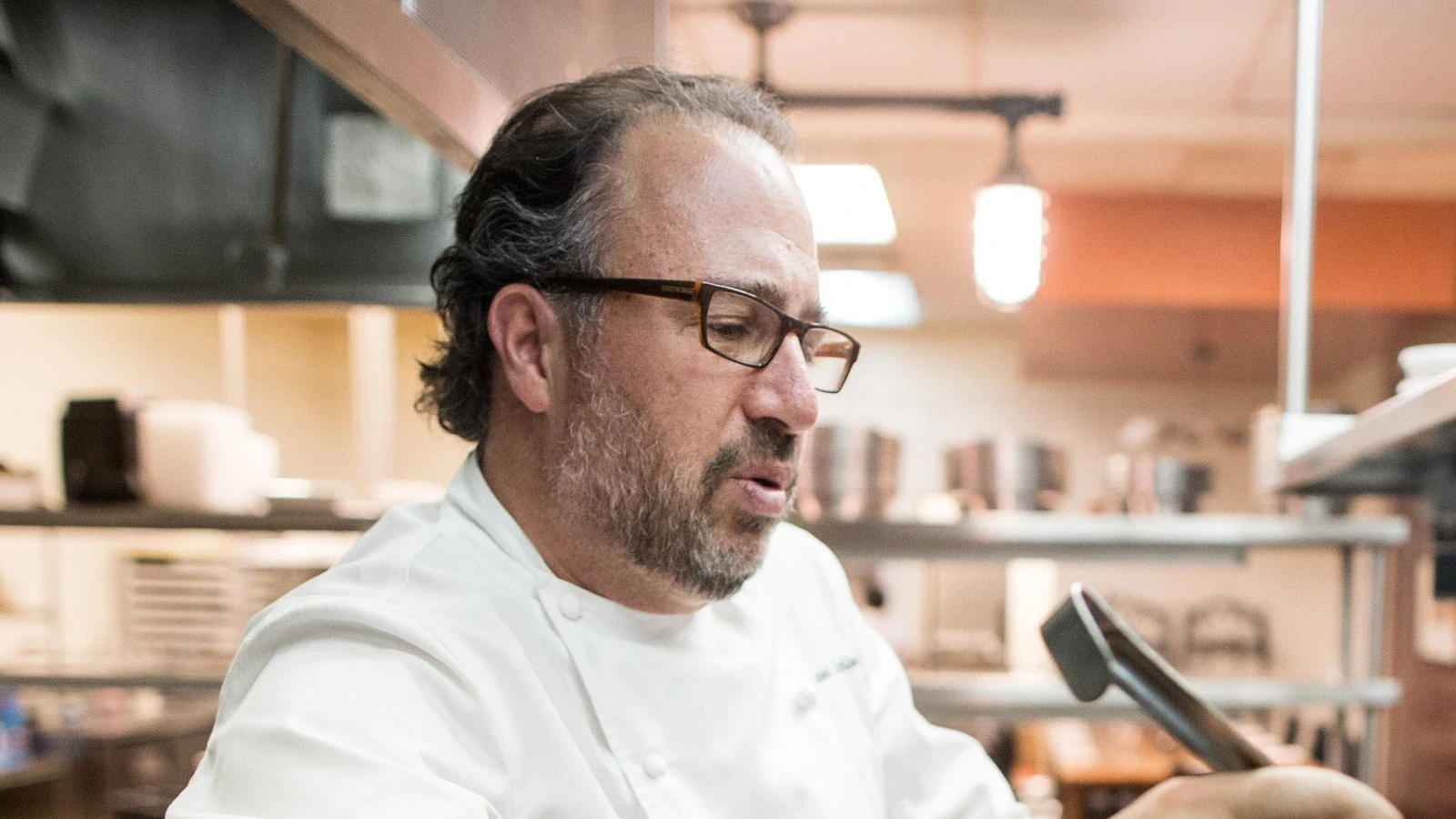
Leidy’s bacon stays warm in a copper pot until the wedge salad is built tableside; the cart, not the pass, finishes the dish. Michael Schlow has brought The Riggsby back to Dupont inside the Royal Sonesta Hotel, returning a familiar name to the same Northwest neighborhood where it built its following before closing in 2019.
Dinner began Wednesday, June 3, breakfast followed Thursday, June 4, and lunch is still to come. The new address is 2121 P Street NW, inside a 335-room hotel and about a 10-minute walk from the restaurant’s original home. The room now holds 12 at the bar, 30 in the parlor, 80 in the dining room, and 32 in the private dining room.
Schlow has not treated the revival as a clean slate. About 70 percent of the menu is new or evolved, keeping the restaurant in the language he wanted from the start: “the retro, quiet glam of a supper club-meets-continental cuisine of my childhood.” The useful measure is not nostalgia alone. It is what the kitchen repeats daily, what the bar keeps close, and what the dining room asks a server to finish in front of the guest.
The Riggsby returns to Dupont with its old name nearby
The Riggsby returns to Dupont with a clear pressure: a new restaurant can teach guests how to read it; a revived one has to answer memory. The original Riggsby had a popular pre-pandemic run in the neighborhood, and the second version arrives close enough that regulars can map the distance by foot.
Schlow had planned to bring the restaurant back in Bethesda, Maryland, before the pandemic altered the plan. “COVID changed every plan for everybody,” he says. Putting The Riggsby back in Dupont gives the name its old ground and a new operating frame: hotel breakfast in the morning, lunch soon, dinner already underway, and a bar that carries its own off-menu work.
The West End proximity matters, too. Schlow sees the central location as part of the restaurant’s usefulness, and he often walks to Rasika for a cocktail after work. That detail gives the neighborhood scale for him: not an abstract market, but a working route between service, colleagues, and the places that keep feeding the city’s cooks.
The return also reunites him with chefs Scott Drewno and Danny Lee, whose ChiKo sits on the same strip. They were his “welcome wagon” when he opened Tico, his first D.C. restaurant, in 2014. A reopening carries the maker’s history with the room, but it also carries the surrounding bench: the chefs down the block, the closed projects that still teach the menu, the habits formed after service.
The cart, the grind, and the work guests can see
The wedge salad is engineered around temperature. Schlow wants the ingredients to avoid the icy, dulled effect the dish can take on by the time a diner spears it with a fork, so the dining room finishes it from a rolling cart with warm bacon held separately in copper. The gesture looks like service, but the real work is timing: cold lettuce, warm fat, assembly at the last possible moment.
The burger belongs to the bar and stays off-menu. The kitchen grinds brisket, chuck, and short rib daily, then dresses the patty with horseradish-black pepper sauce. Keeping it at the 12-seat bar makes the dish narrower by design. It is not a dining-room promise; it is a station decision, a reason to sit where the bartender and kitchen pace meet.
Schlow’s Swedish meatballs come from an earlier kind of room: his parents’ cocktail parties. He remembers his mother making “a million hors d’oeuvres,” including stuffed mushrooms, clam dip, and sweet-and-sour meatballs. His version tones down the spice and nutmeg, then brings in black truffle and mushroom sauce; frilly toothpicks remain part of the service.
The schnitzel à la Holstein keeps the fried egg, anchovies, and capers, but Schlow has reworked the plate. Instead of letting salt cluster in a few bites, he makes an emulsion of capers, basil, and parsley, turns it into a puree, and dots it across the schnitzel. The adjustment is small in description and large in eating: distribution, not decoration.
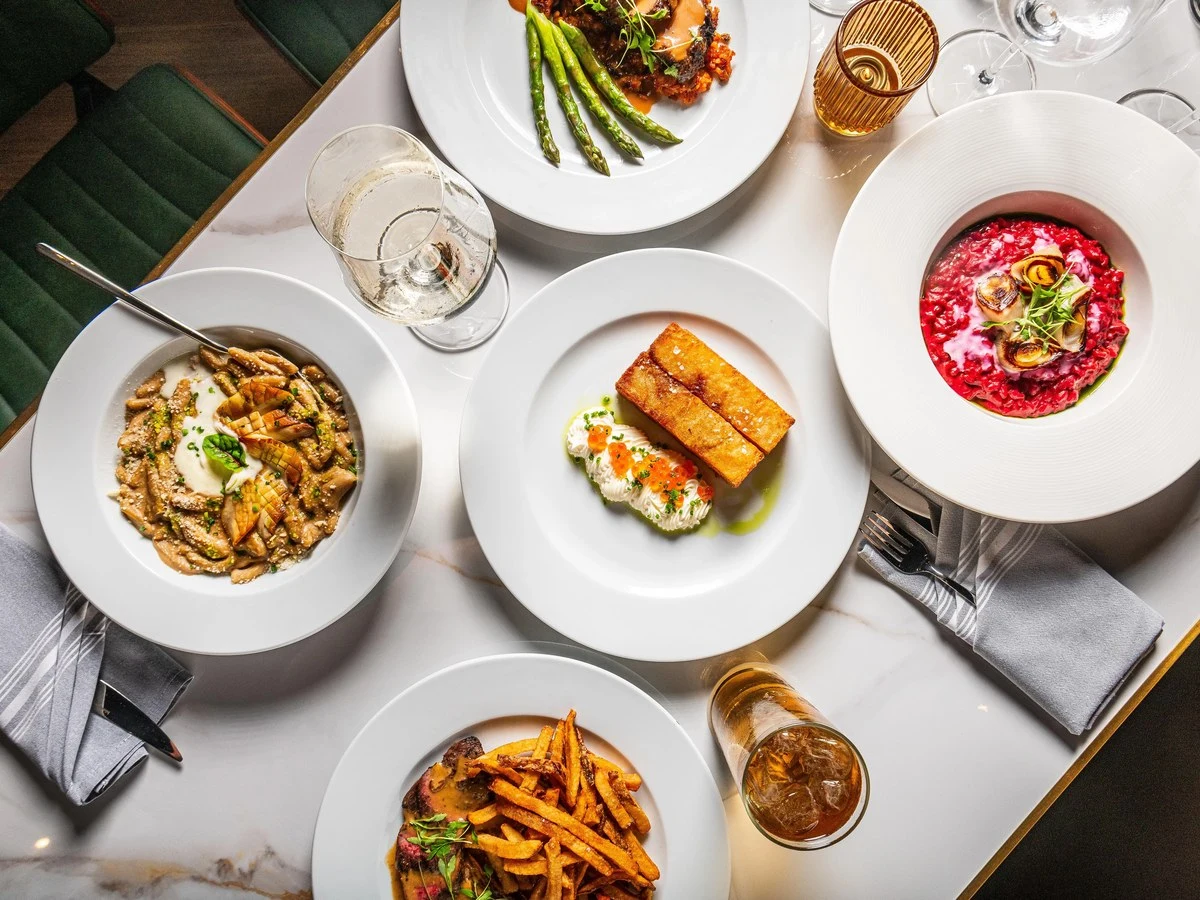
For dessert, banana foster sundae brings house-made vanilla ice cream, whipped cream, and almond biscotti crumble. The kitchen also returns the hit bar snacks and adds hash brown squares topped with caviar, a compact version of the high-low instinct Schlow is leaning into throughout the room.
What Schlow kept from the original Riggsby menu
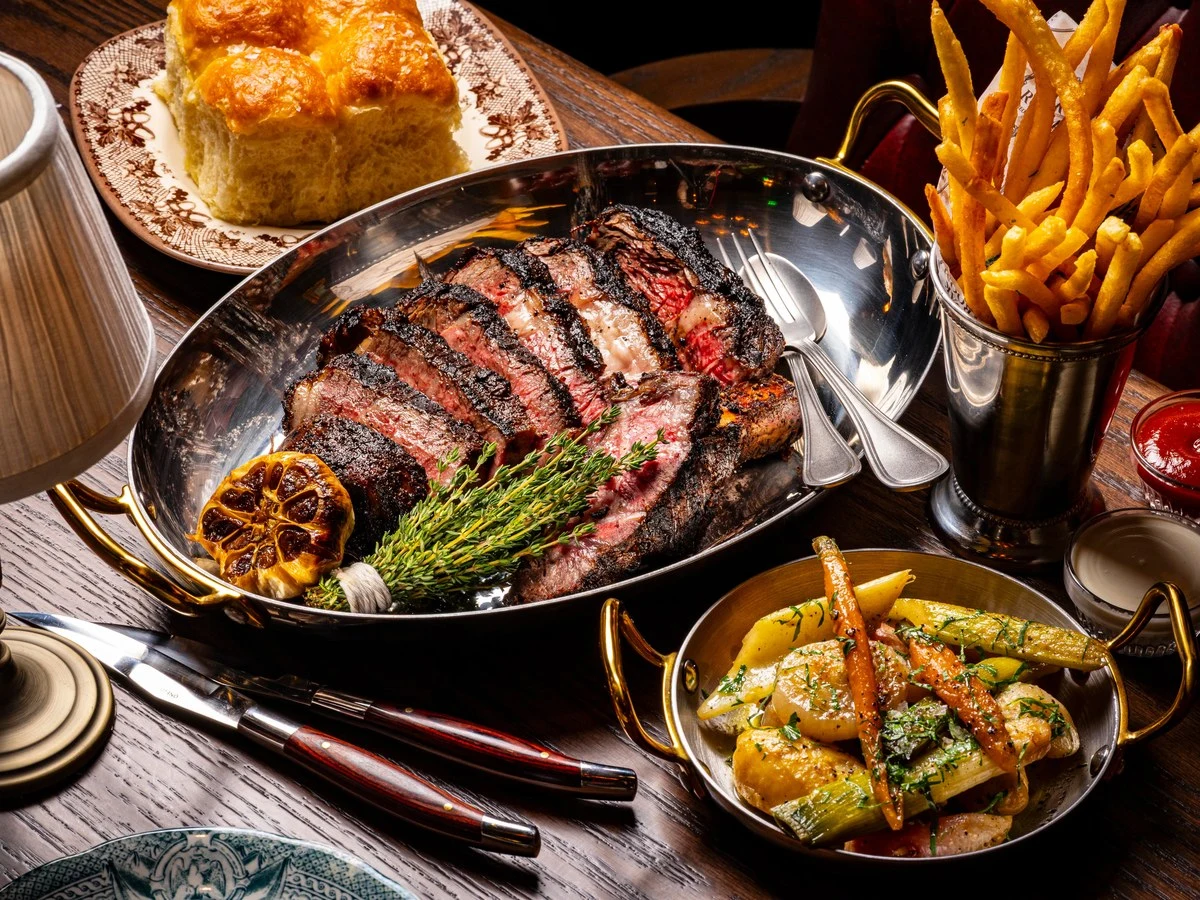
Rigatoni alla vodka, escargot-studded gnocchi, steak au poivre, and mussels anchor the opening mains. They are familiar dishes, but not passive ones. Each asks the kitchen to hold a specific line: pasta coating without slackness, gnocchi with enough restraint to carry escargot, peppered steak work that depends on heat and sauce, shellfish that punishes delay.
Schlow frames the return through comfort food, a term he sees differently now than he did earlier in his career. “Comfort food in chef vernacular was a dirty term 20 years ago. Now you see three-Michelin-starred NYC restaurants doing fried chicken. Inventiveness and personal touches excite diners and staff again,” he says.
That sentence explains why the menu can move between meatballs, caviar-topped hash browns, a Vesper at the bar, and continental dining-room cues without apology. The thread is not novelty. It is personal revision: the childhood cocktail-party dish adjusted with truffle and mushroom, the old schnitzel cleaned up through puree, the burger tightened by daily grinding.
Regulars returning for the old Riggsby will recognize much of the vocabulary, but Schlow has made the second version through selection rather than preservation. He has kept enough of the first restaurant to make memory useful, then recut the details where the new room, new service pattern, and hotel day require a different hand.
Inside the Royal Sonesta dining room
EditLab designed the original Riggsby in 2014 and returned for this version. The space has been transformed from its former life as Urbana, the stark Italian restaurant in the then-Kimpton hotel. From the lobby, geometric-shaped openings give a view into the long restaurant and parlor.
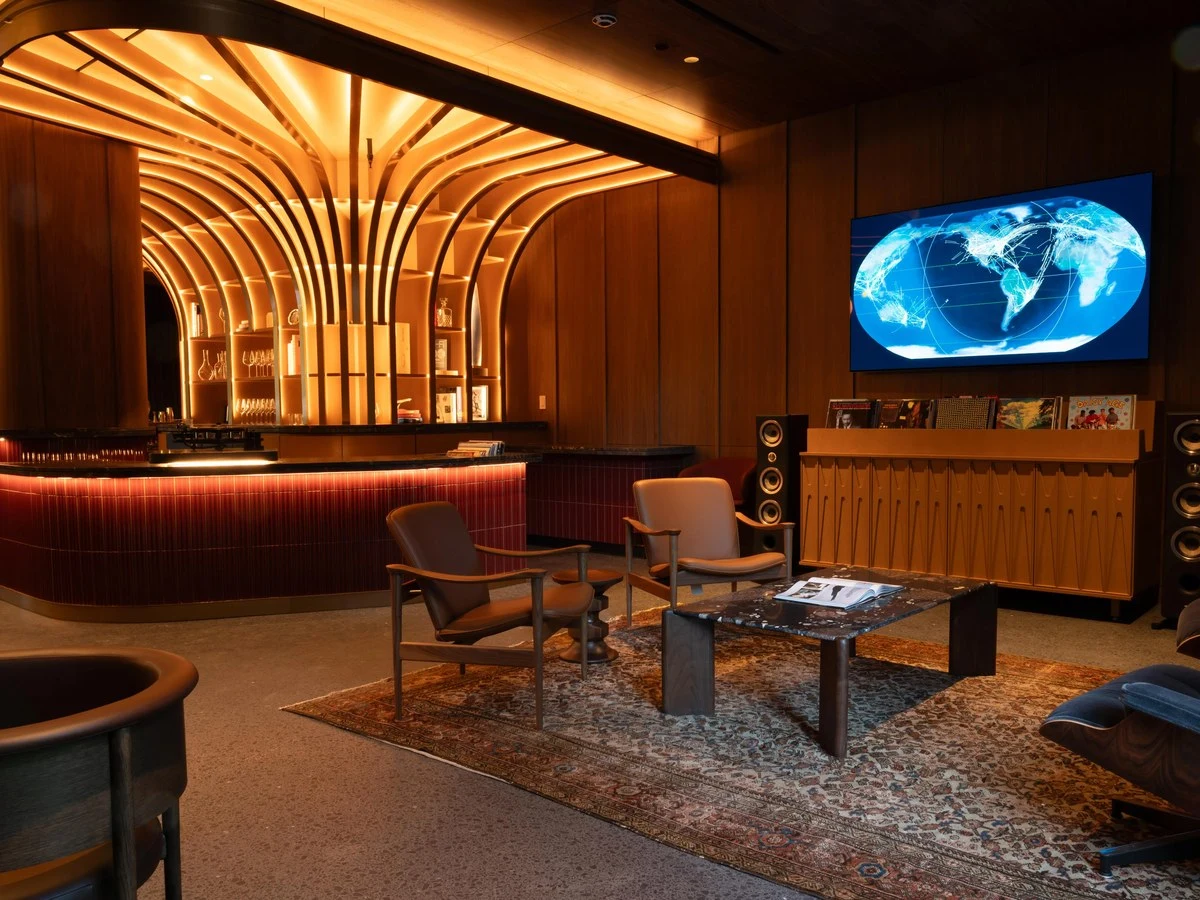
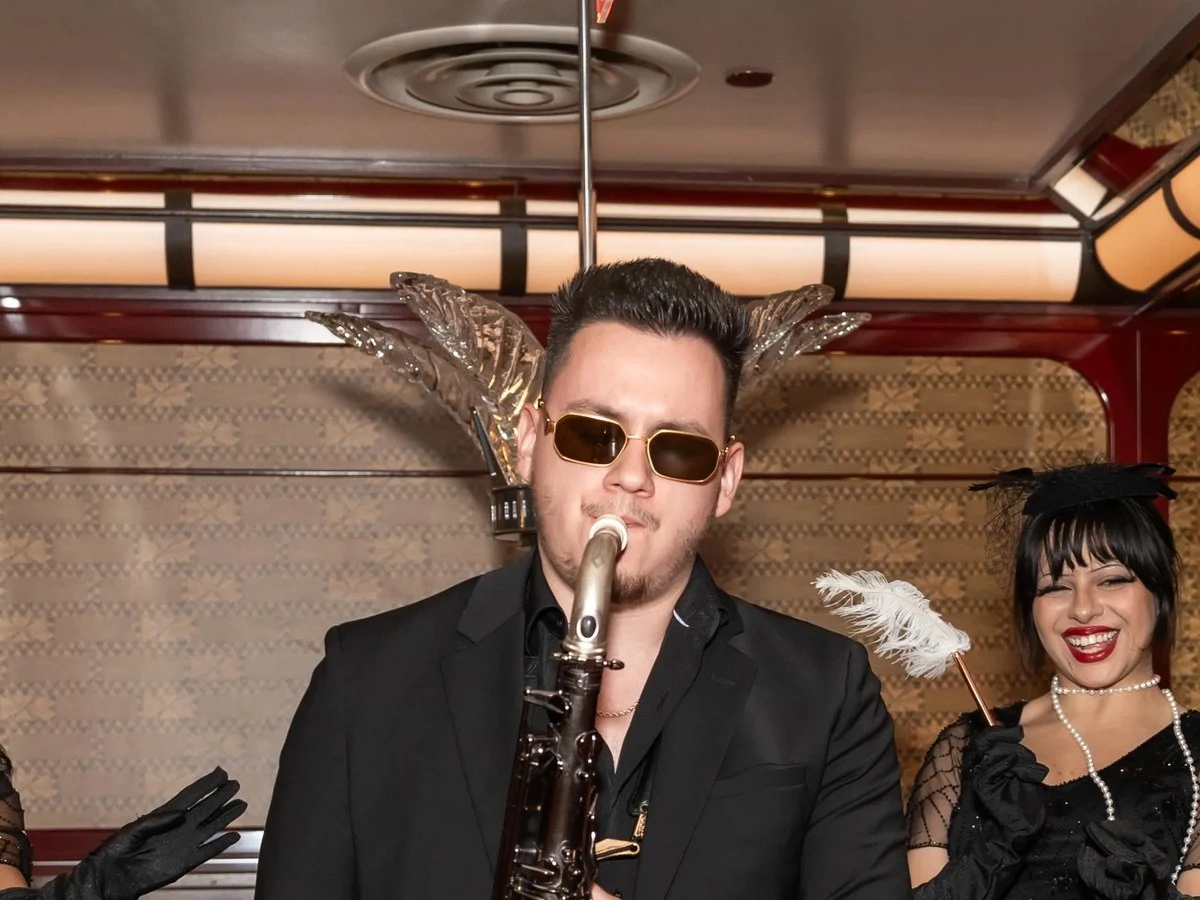
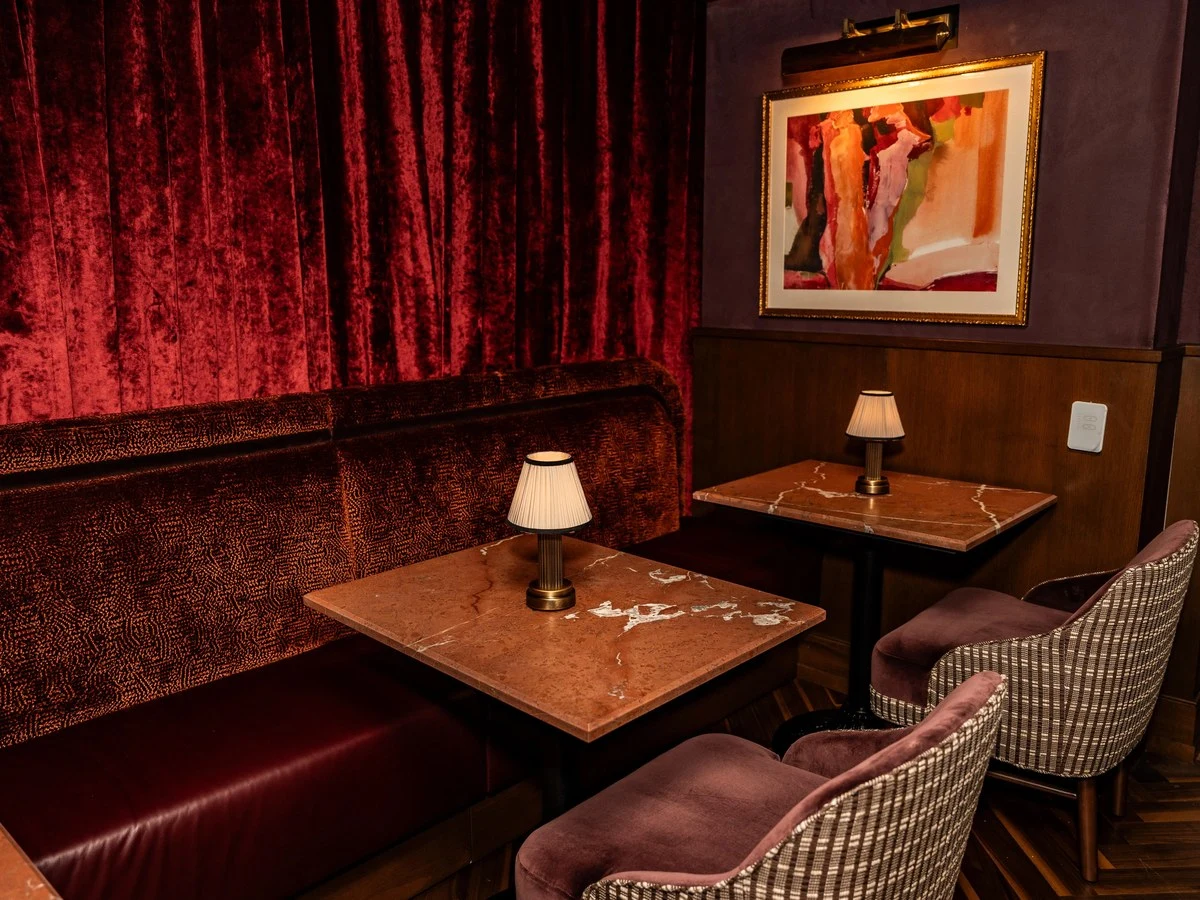
The keyhole-shaped entryway has stayed important to Schlow. It was “about transporting you to another place, going down the rabbit hole,” he says. Inside, Art Deco glass sconces, velvet crimson drapes, back-lit martini glasses behind the marbled bar, and midcentury artwork in gilded frames carry the supper-club register without asking the food to become period costume.
The middle area where the pizza oven used to be now works across the day. In the morning, it holds juices and pastries. At lunch, it becomes a buffet. At night, it doubles as a second bar, with shaken cocktails adding movement in the center of the room.
That flexibility matters in a hotel restaurant. The bar, parlor, dining room, and private room are not only seating categories; they are different tempos of labor. A cart needs a clean path. A bartender needs a tight count. A private room needs enough separation to run its own meal without draining the main floor.
How to read The Riggsby reopening now
The private dining room will also carry some of Schlow’s closed D.C. history forward. In the fall, it will host ticketed dinners with surprise menus that revive dishes from Nama Ko and Alta Strada, two restaurants he closed in recent years. The Fairfax, Virginia Alta Strada remains open, along with others in Boston, where he built his career.
For an early read on the restaurant, follow the work rather than the mood. Sit at the bar for the burger and the close rhythm of shaken drinks. Watch the dining room when the wedge cart moves. Look for the caper-basil-parsley puree on the schnitzel, the black truffle and mushroom sauce with the meatballs, the way a hotel space shifts from morning pastry to nighttime cocktails without losing its center.
Schlow sums up the intended register as “casual without being stuffy, snazzy without being fancy,” the kind of place meant for grandparents as easily as friends visiting from Los Angeles or New York. The phrasing is loose; the test is not. The Riggsby’s second life will be made in repetition: breakfast into lunch, lunch into dinner, bar into parlor, cart into dining room, old dishes passing through a new service until they earn their place again.