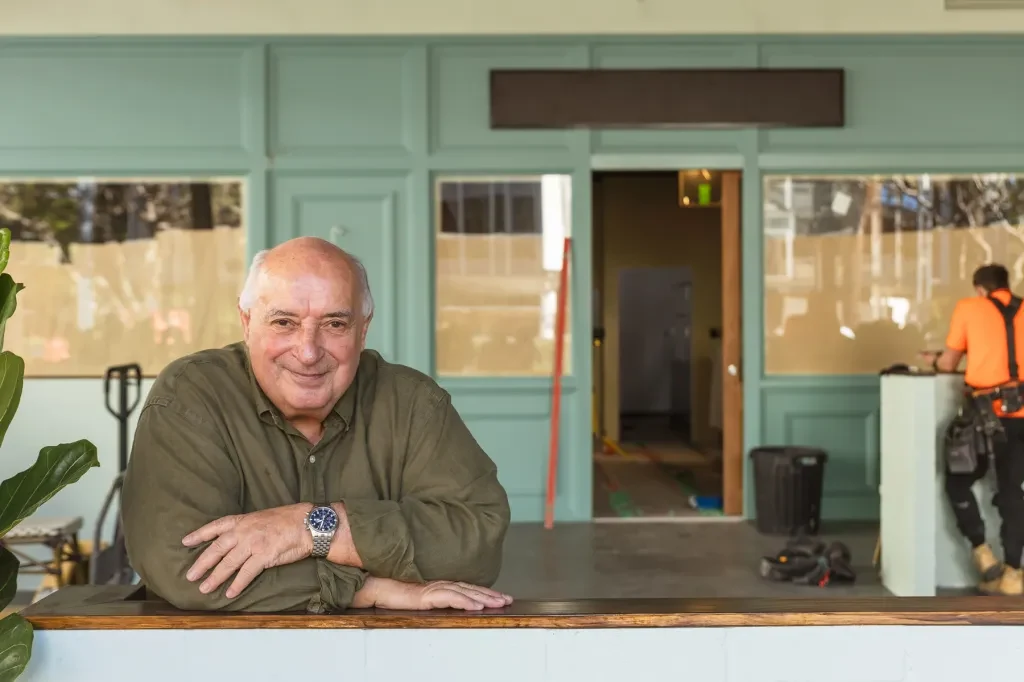
Thierry Galichet is opening Pas de Chichi Brisbane in late October, a 30-seat French restaurant at the old Mecca Bah premises in the Emporium complex in the Valley. The creator of Montrachet is handling the fitout himself, building an art deco-inspired room with counter dining at its centre and a menu that refuses the dishes currently filling French menus around Australia.
The name is new. The hand is not. Galichet created Montrachet, now owned by Clem Chauvin, then created La Cache a Vin in Spring Hill, which he sold in 2022 to Romain Maunier and Dan Arnold. Pas de Chichi puts him back on the bench in a smaller room, with 30 seats inside and space for 24 outside. The scale matters because it sets the rhythm: a counter within reach of the station, a dining room narrow enough for the chef’s decisions to stay visible, and a list of dishes large enough to push against the current appetite for short menus and shared plates.
Why Pas de Chichi Brisbane Refuses the Current French Script
Pas de Chichi Brisbane arrives while French cooking has found new life on Australian menus, but Galichet is not joining the line for the same plates. He has said he will avoid the dishes that have become common again, including snails, souffles, and onion soup. The point is not rejection for theatre. It is a cook’s decision to keep a menu from becoming a roll call of familiar signals.
That decision carries more weight because Galichet has already built rooms where French technique was the premise rather than the theme. Montrachet gave Brisbane diners a model of French dining shaped by counter work, close service, and a kitchen that treated the pass as part of the room. Pas de Chichi will recall elements of that earlier restaurant, including counter dining done properly, while Galichet has made clear that he does not intend to copy it. Similar in feel, different in dress: this one moves toward art deco.
The counter is the detail to watch. In a 30-seat room, counter dining changes the contract between cook and guest. The plate does not travel far. The final gesture, sauce, garnish, cut, rests in view. For a diner who has followed Galichet through Montrachet and La Cache a Vin, that proximity will be part of the draw. For the chef, it demands a different discipline from a room built around distance, runners, and softened edges.
The late October opening also creates a scarcity that is practical before it is emotional. Thirty indoor seats is not a large runway for a returning restaurateur with Galichet’s Brisbane history. Add 24 outdoor places, and the room still remains compact enough that early bookings will carry the pressure of people who remember the predecessor rooms and want to see what his hands do next.
The Montrachet Lineage: What Galichet Brings Back to the Valley
Galichet’s new opening cannot be read without Montrachet. He created the restaurant, and Clem Chauvin owns it now. That transfer matters because it gives the lineage a living form rather than leaving it as nostalgia. Montrachet continues under a named successor. Galichet, meanwhile, returns with a different room and a different constraint.
Lineage in restaurants is not only a matter of logos or recipes. It sits in how a chef sizes a menu, where he places the counter, what he keeps close to the guest, and what he refuses to serve when every other menu is leaning the same way. Galichet’s history gives him the freedom to work against the fashionable dishes without making the new restaurant feel like a denial of French cooking. He is not stepping away from the craft. He is narrowing the frame.
La Cache a Vin adds another layer. Galichet created the Spring Hill restaurant and sold it in 2022 to Romain Maunier and Dan Arnold. That handover put another of his rooms into named hands. Pas de Chichi now follows those two earlier Brisbane projects, not as a sequel, but as the next test of scale, comfort, wine, and service.
The Valley location shifts the ground. Pas de Chichi will open in the old Mecca Bah premises at the Emporium complex, a site with its own hospitality memory. Galichet is not simply taking over a blank box; he is remaking a known space. He is also looking after the fitout himself, which brings the room into the same field as the menu. The maker is not outsourcing the feel of the place to an abstract brief. He is choosing the surfaces, the angles, the counter, the way the guest meets the station.
For Brisbane diners who have tracked French rooms across owners, suburbs, and cycles of fashion, that direct authorship matters. Pas de Chichi is not just a venue announcement. It is a veteran restaurateur returning with enough time on the tools to know which parts of the old method to keep and which current habits to leave outside.
Art Deco Ambition in a 30-Seat Room
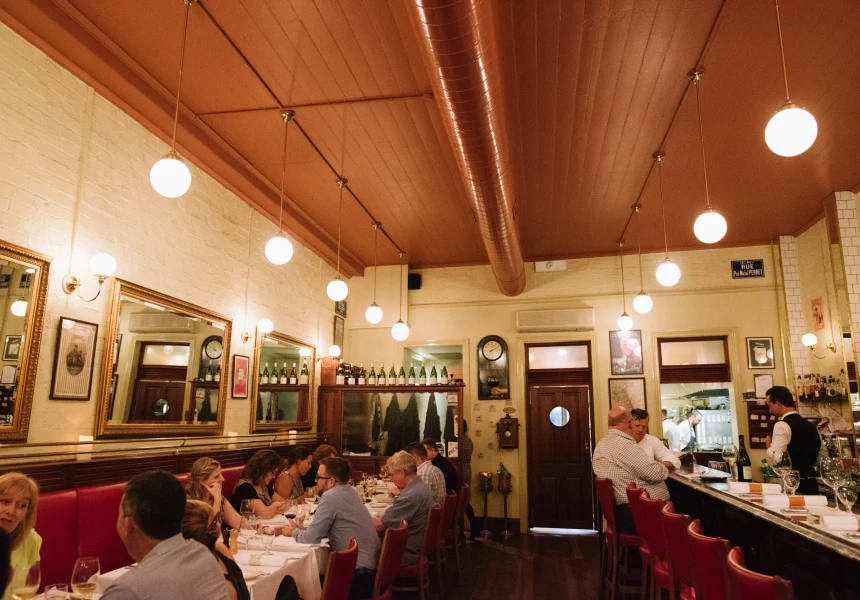
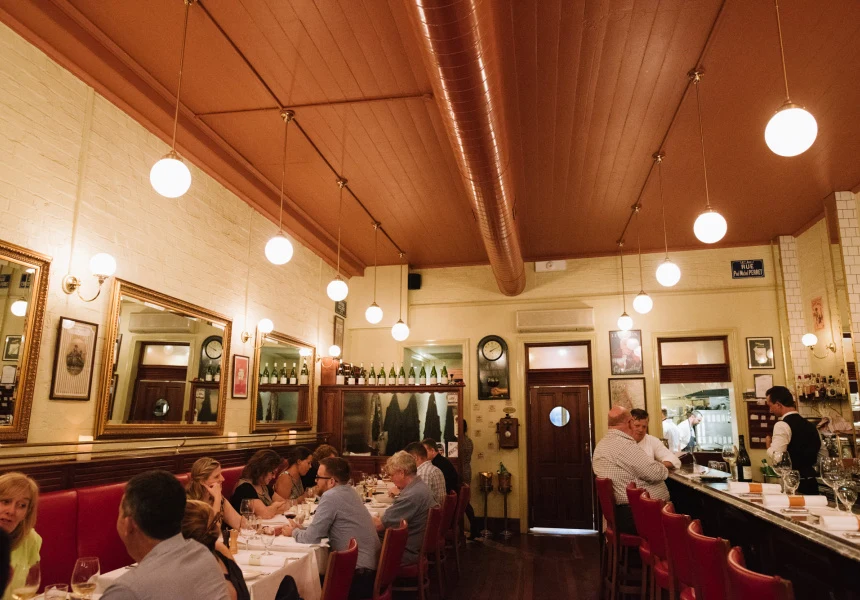
Galichet has said Pas de Chichi will be more art deco in feel. That gives the new restaurant a visual grammar before the first plate lands: geometry, polish, a room shaped by period references rather than the soft neutrality that has become familiar in dining rooms built to disappear behind the food. The risk, always, is costume. Galichet’s advantage is scale. Thirty indoor seats gives the design less room to drift away from service.
Art deco matters here because Galichet is tying the room to a form of dining that asks for posture. Not stiffness. Attention. Counter dining places guests close to the pass; art deco gives the room a frame; the menu gives the kitchen a load that is larger than many current formats. Together, those choices point toward a restaurant where service rhythm and design cannot be separated.
There will also be space for 24 outside. That detail changes how the restaurant may breathe across a Brisbane evening, but the indoor count remains the signal. Pas de Chichi Brisbane is built around a small room, not volume. The inside seats will carry the pressure of the counter and the fitout. The outside places add reach without changing the nature of the project.
Galichet handling the fitout himself is not a decorative footnote. Chefs who build rooms with their own hands, or at least their own eye, tend to make choices that affect the station later: how far a plate travels, where a guest waits, how a wine bottle moves from shelf to table, whether the counter invites watching or merely sitting. Those remain for opening. What is already clear is authorship. Galichet is putting his own measure on the room before service begins.
Menu Philosophy: No Trends, Just Technique
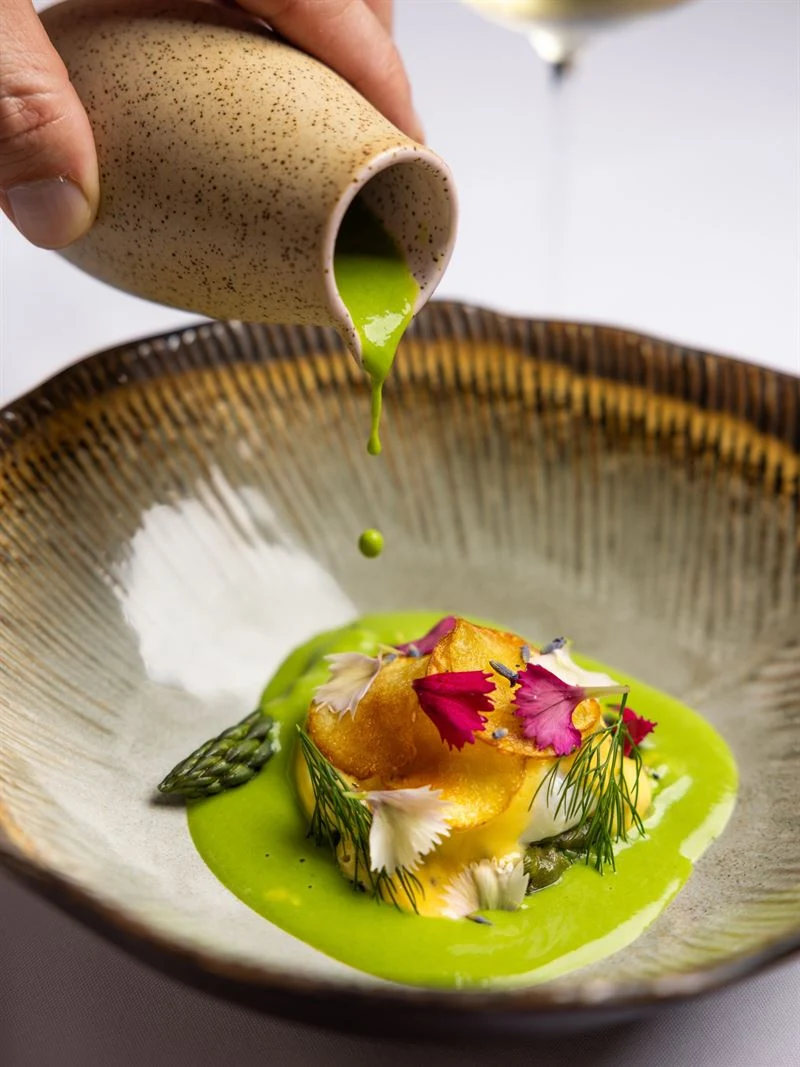
The menu numbers are unusually clear for a restaurant before opening: 10 entrees, six mains, four desserts, and a cheese platter. That is not the short, shared-food format Galichet has pointed to elsewhere. It asks the kitchen to hold more preparations, more ordering paths, and more decisions at the pass. It also gives diners a structure closer to an older French dining rhythm, where entree, main, dessert, and cheese remain separate stations of appetite.
Galichet has said he will not put on onion soup for another two years because it is everywhere. He has also said he is not going to do souffles for a while. In less careful hands, that could read as contrarian. Here it reads like menu discipline. If a dish has become the reflex order across the city, he does not want it to do the work for him. The kitchen will have to earn attention elsewhere.
The wine list follows the same pruning. Galichet once ran an expansive wine import business, and Pas de Chichi will still carry a substantial cellar for a 30-seat restaurant: between 80 and 90 reds, and 60 whites. Yet he has narrowed his own instinct for scale. "I used to have huge lists, but a lot of wines now just stay on the shelves … it looks good on paper but what do you do with it after 10 years?," said Thierry Galichet.1
That sentence gives collectors and regulars a useful clue. Pas de Chichi is unlikely to be a museum list built to impress from a distance. It will be mixed, shaped by Galichet’s continuing friendships with winemakers, and smaller than the lists he once carried. He has said he used to bring in three containers a year, but that the work became difficult as more people began selling wine and French wines became widely available. The new list, then, should be read as a working cellar rather than a trophy wall.
For the diner, the difference will show up in choice and turnover. A list of 80 to 90 reds and 60 whites gives enough room for range without burying the table in inventory that never moves. In a restaurant this size, wine has to meet the pace of service. Bottles cannot only look good in print. They need to leave the shelf, reach the table, and make sense beside a menu that refuses to lean on the most expected French dishes.
Booking Details and Opening Timeline
Pas de Chichi is scheduled to open in late October at the old Mecca Bah premises in the Emporium complex in the Valley. The practical facts are simple: 30 guests inside, 24 outside, counter dining as a key feature, an art deco-inspired room, and a menu built around 10 entrees, six mains, four desserts, and a cheese platter. For a returning Brisbane restaurateur with Galichet’s track record, those numbers will shape the first months more than any broad promise could.
The booking pressure will come from several groups at once. Some will have known Montrachet under Galichet. Some will have followed La Cache a Vin before its 2022 sale to Romain Maunier and Dan Arnold. Some will come because the current French revival has made them fluent in snails, onion soup, and souffles, only to find a chef refusing those markers for now. The smallest group, and the one Made By readers may recognise themselves in, will book for the counter: to watch the station, the timing, the menu discipline, and the way a veteran restaurateur edits his own history.
There is still genuine reader-relevant uncertainty. The full dish list has not been named. Opening reservations have not been detailed in the material provided. The wine producers have not been listed. Those absences are not gaps to fill with guesswork. They are the reason to keep an eye on the late October opening and the first service reports from the room.
What matters now is the shape of the bet. Galichet is returning not with a large dining room, not with the dishes currently doing easy work for French menus, and not with the vast cellar he once might have built. He is opening a smaller, art deco-inspired restaurant, fitted out under his own eye, with the counter close to the action and enough menu breadth to make the kitchen carry the weight. Watch the first weeks for the apprentices at the station, the wine list that actually moves, and the dishes Galichet chooses when onion soup stays off the menu.