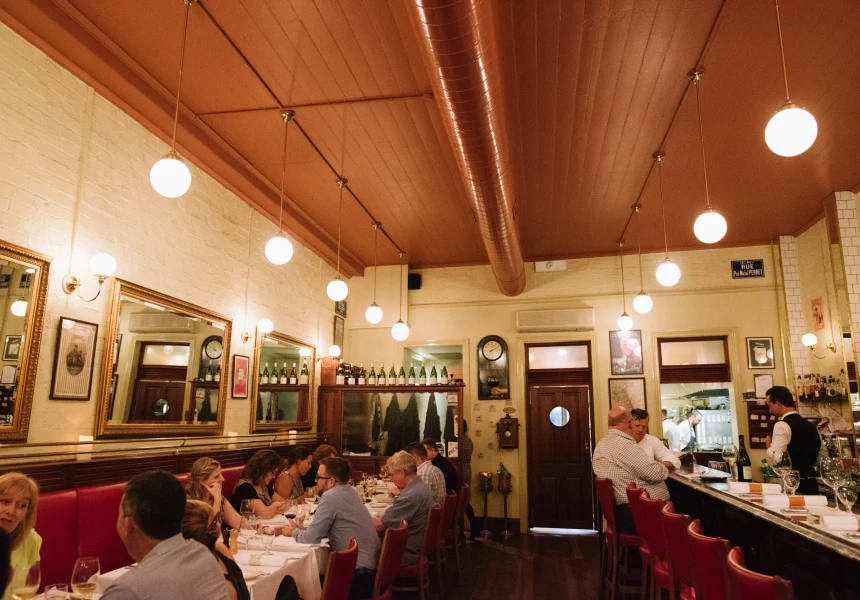
Thierry Galichet is looking after the fitout himself at Pas de Chichi Brisbane, the 30-seat French restaurant he will open in late October in the old Mecca Bah premises at the Emporium complex in Fortitude Valley. The room will carry an art deco line, counter dining will be part of the service, and the menu will not lean on the French dishes now circulating through Australian dining rooms as shorthand for bistro comfort.
That is the news, and it lands in Brisbane because Galichet has already left marks there. He created Montrachet, now owned by Clem Chauvin. He also created La Cache a Vin in Spring Hill, which he sold in 2022 to Romain Maunier and Dan Arnold. Pas de Chichi brings him back to the bench of restaurant-making, not through a large room or a broad concept, but through the dimensions of a small service: 30 guests inside, 24 outside, 10 entrees, six mains, four desserts, a cheese platter, and a wine list planned at between 80 and 90 reds and 60 whites.
Why Pas de Chichi Brisbane Starts With Thierry Galichet
Galichet’s name matters here because his restaurants have never been just addresses. Montrachet carried his sense of French dining into Brisbane, and its current life under Clem Chauvin keeps that lineage visible. La Cache a Vin, in Spring Hill, extended the same French cellar vocabulary before Galichet sold it in 2022 to Romain Maunier and Dan Arnold. Pas de Chichi follows those rooms without copying them outright.
The scale tells the first part of the method. Pas de Chichi will be smaller than Galichet’s original Montrachet when it operated in Paddington. Thirty seats inside changes the daily discipline of a restaurant. It narrows the pass. It gives the counter weight. It makes the space between the person cooking, the person pouring, and the person eating harder to fake. A plate does not travel far in a room that size.
Galichet has had other offers for spaces, but he has not taken them. He has looked at taking over restaurants and resisted doing it when the fit did not feel right. That resistance is part of the craft decision. A restaurateur can inherit walls, exhaust, a floor plan, a lease rhythm. Galichet has chosen a former restaurant space, the old Mecca Bah premises, but he is shaping the fitout himself. The distinction matters. He is not simply moving into another operator’s finished room.
Pas de Chichi Brisbane also arrives at a time when French food has returned to Australian menus with visible force. The easy response would be to assemble the familiar signals, the snails, the onion soup, the souffles, the compact menu of share plates. Galichet is doing the opposite in at least one clear way. He is using the renewed appetite for French dining as the opening, then refusing some of its current habits.
The Old Mecca Bah Room, Recut for 30 Inside
The Emporium complex in Fortitude Valley gives Pas de Chichi a site that already carries dining memory. The old Mecca Bah premises are not being treated as a neutral shell. Galichet is looking after the fitout, and the stated direction is art deco. No further design inventory has been released, so the useful fact is not a colour palette or a chair count. It is that the maker of the room is the same person setting the restaurant’s rules.
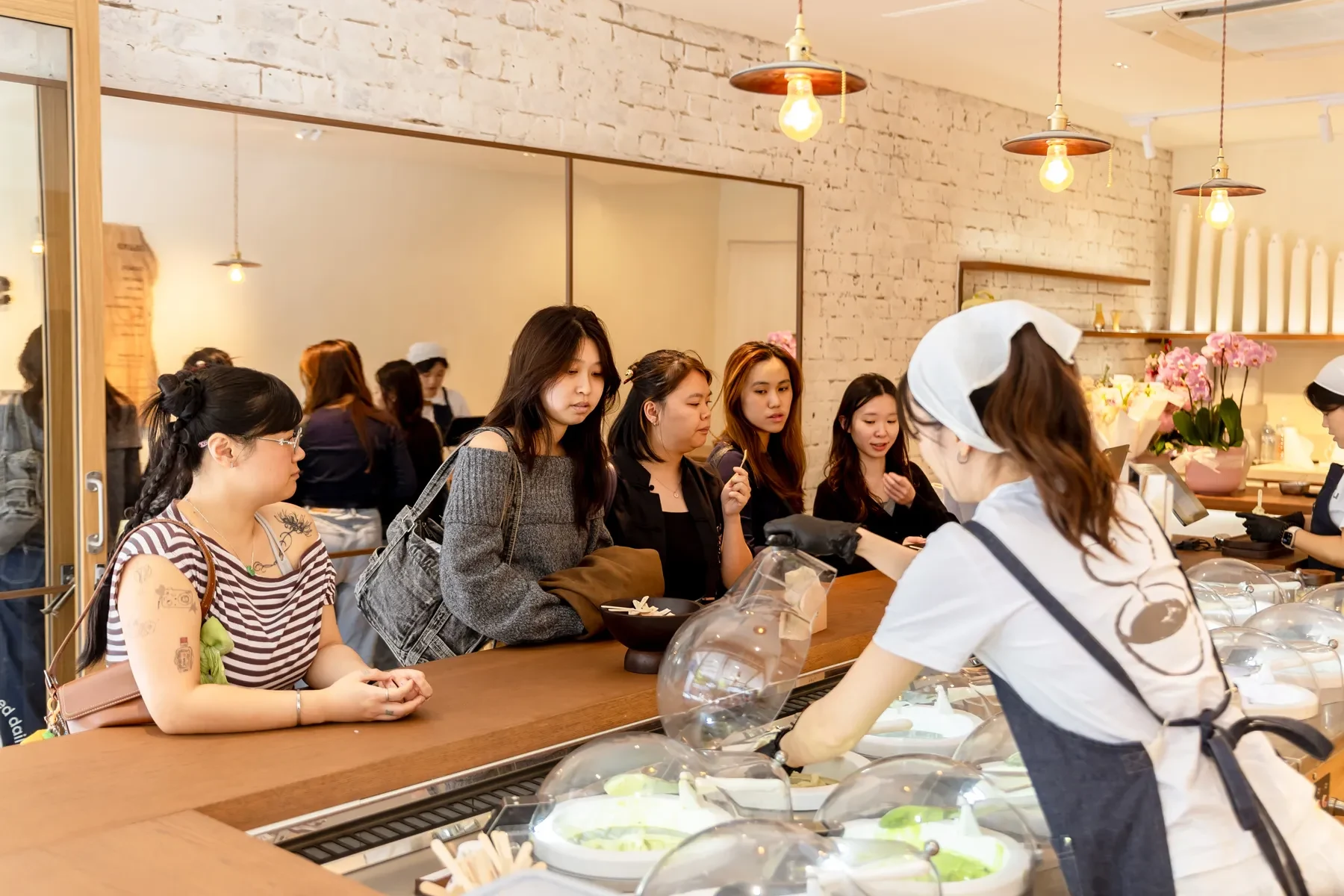
Thirty guests inside and 24 outside create two different kinds of service pressure. Inside, the counter dining feature pulls attention toward the hands and the station. Outside, the extra seats give the restaurant a second tempo without changing the small-room core. For diners, that means Pas de Chichi will not behave like a large brasserie, even if the menu has breadth. For the team, it means the kitchen must carry a relatively full French menu inside a room with little margin for wasted movement.
Counter dining is often used as theatre. In Galichet’s case, it links back to Montrachet and to the old restaurant grammar of proximity: the guest can read a pass, the cook can feel the room, the pacing becomes physical rather than abstract. A counter also disciplines the plate. Sauces need to arrive at the right heat. A cheese platter cannot hide behind distance. Wine service has to move without turning the room into storage.
The art deco note gives Pas de Chichi its visual posture, but the operational numbers give it its shape. A 30-seat interior is scarcity before anyone writes a booking line. It will matter for Fortitude Valley visitors because the room’s capacity will cap the number of diners who can test Galichet’s return in the first weeks. It will matter for Brisbane regulars because a chef-restaurateur with this lineage is choosing a narrow room rather than a broad one.
What Galichet Is Leaving Off the Menu, and Why It Matters
The clearest statement of Pas de Chichi’s position is absence. Galichet is avoiding French dishes that have become common again on restaurant menus, including onion soup, snails, and souffles. He put the refusal plainly to The Sydney Morning Herald: "Everyone's doing snails, soupe a l'oignon, I won't put on an onion soup for another two years because it's everywhere."1
That sentence gives the restaurant its spine. Pas de Chichi Brisbane is not anti-French. It is anti-reflex. Galichet is not rejecting the canon; he is rejecting the current habit of using a few dishes as proof of Frenchness. In a dining cycle where snails and soupe a l’oignon can become costume pieces, the omission is a practical edit. He is making room for his own list.
The list is not short. Galichet plans 10 entrees, six mains, four desserts, and a cheese platter. That is a different discipline from the smaller share-food menus he has pointed to elsewhere. Ten entrees require a kitchen to hold more mise en place, more garnishes, more sauce work, more pickup logic. Six mains ask for range without the sprawl of a hotel dining room. Four desserts and cheese bring the last third of the meal back into the program rather than treating it as a footnote.
The menu count also changes how a regular can use the restaurant. A short menu asks a diner to return only after the kitchen changes it. A wider menu lets the room build habits: a first dinner at the counter, a later dinner outside, a cheese course with a different white, a main held back for the next visit. Pas de Chichi has not released dish names beyond what Galichet is avoiding, and that restraint leaves the focus where it belongs for now: on the structure of the menu and the maker’s refusal to chase the room next door.
A Wine List Cut Down, Not Thinned Out
Galichet’s wine background sits behind Pas de Chichi as more than decoration. He once had an expansive wine import business, and he has kept relationships with winemakers. The new list, by his own past scale, will be concise: between 80 and 90 reds, and 60 whites. In most 30-seat restaurants, that would still read as a deep cellar for the room.
The ratio matters. Reds will outnumber whites, but the white count is not token. Sixty whites can carry aperitif drinking, seafood, poultry, richer sauces, cheese, and the kind of table that wants acidity rather than weight. The planned red range gives enough space for Burgundy-minded drinkers, Bordeaux-minded drinkers, and those looking elsewhere in France, though specific bottles have not been announced. The practical point is that Galichet is not building a wall of wine for display. He is building a list he expects to move.
For collectors and wine-focused diners, Pas de Chichi will be worth watching less for size than for selection. A small restaurant with a maker who has imported wine and kept close to winemakers can turn the list into a record of relationships. That does not require a thousand-dollar bottle. It requires the person buying to know which growers still matter to him, which wines work with the food, and which bottles deserve a place on a list that cannot expand endlessly without becoming dead stock.
The 80 to 90 reds and 60 whites also create a service question. In a 30-seat room, a list of that scale needs staff who can speak plainly, not recite. The counter format will make that more visible. A guest sitting bench-side will hear the suggestion, the vintage if one is given, the reason a white works with cheese or why a red belongs with a main. Pas de Chichi has not named its sommelier or floor team. Until those names are public, the wine program is tied chiefly to Galichet’s history and the cellar decisions he makes before the first service.
Opening Timeline, Seats, and the First Weeks in Fortitude Valley
Pas de Chichi will open in late October. No exact date has been announced. The useful planning facts are the suburb, the building, and the count: Fortitude Valley, the Emporium complex, the former Mecca Bah premises, 30 seats inside, 24 outside. That is enough for Brisbane diners to understand the first pressure point. The opening weeks will not absorb a crowd the way a larger dining room can.
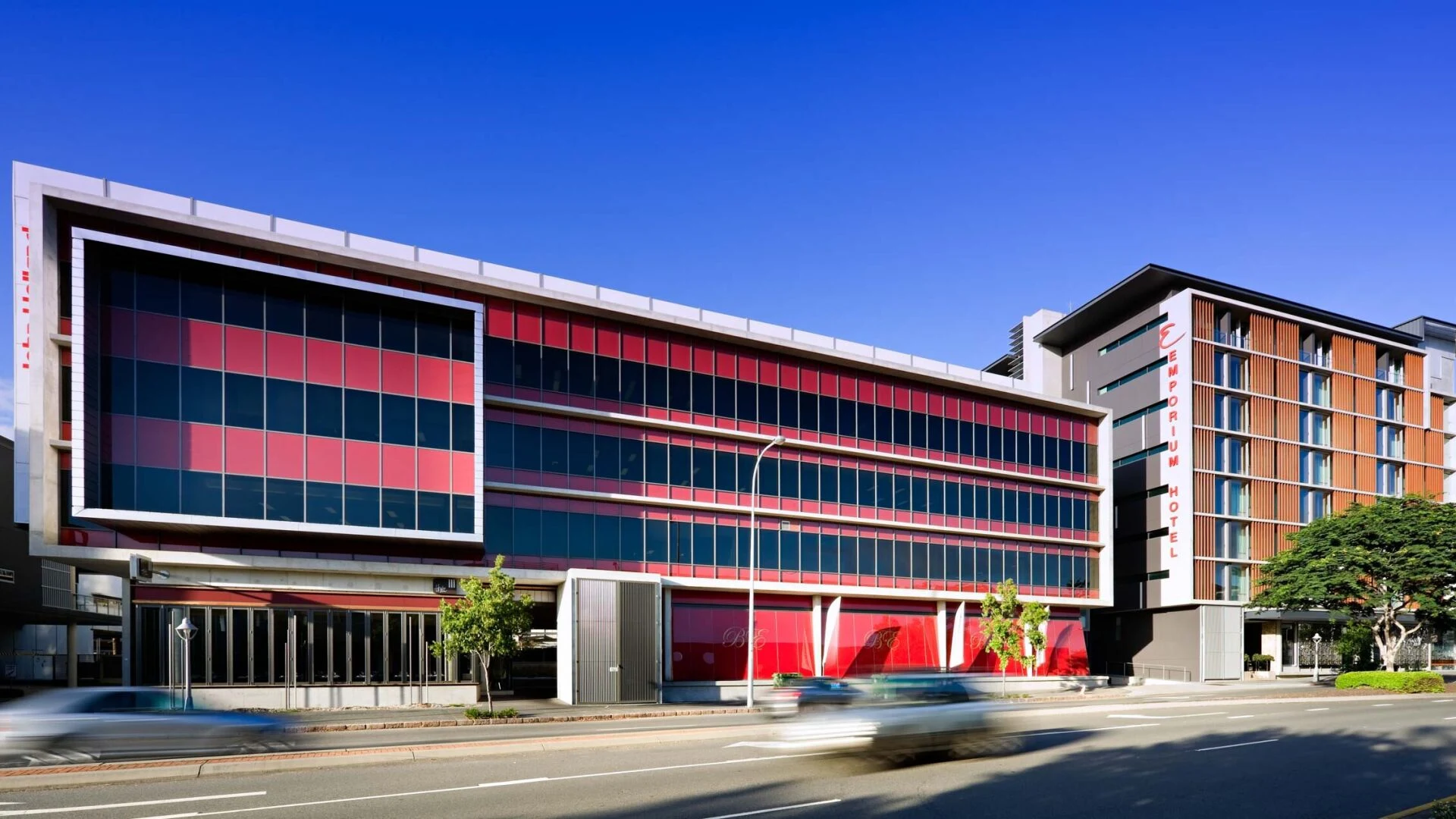
For visitors, the counter will be the seat to watch. It is the clearest expression of Galichet’s return to a small French room, and it is where the restaurant’s claims will be tested fastest: menu breadth, sauce work, pacing, the wine list’s usefulness, the art deco fitout as a working room rather than a surface. The outside seats will matter too, especially in Fortitude Valley, but the inside count is the heart of the project.
There is also a succession story running through this opening. Montrachet continues under Clem Chauvin. La Cache a Vin moved to Romain Maunier and Dan Arnold in 2022. Galichet now returns with Pas de Chichi instead of standing still inside his earlier rooms. Brisbane’s French dining map keeps those names in relation: predecessor, current custodian, buyer, new maker, new room.
The first service will show how far the Montrachet echo carries and where Galichet cuts away from it. Watch the menu for what appears in place of onion soup and souffles. Watch the counter for how the room uses its 30 seats. Watch the wine list for the growers he chooses from the friendships he kept. Pas de Chichi Brisbane begins with absence as much as arrival, and that is often where a maker tells you the most.