Wendouree Clare Valley Wine: The Cult Built on Silence
No website, no email, no tasting room. Wendouree Clare Valley wine sells out every vintage through snail mail alone — and has since 1995.
HM
Director of Editorial Standards
Hugo Marchetti
Filed June 25, 2026
10 min read
Every winter, a few thousand envelopes leave a property in the Clare Valley, South Australia. They are hand-written. They ask, in the manner of a letter from a trusted acquaintance, whether you would like to purchase wine. If you would, you write back. By hand. On paper. Through the post.
There is no website to check, no email address to find, no tasting room to walk into. There is, as far as the modern wine industry is concerned, almost nothing to indicate that Wendouree Cellars exists at all, except that every vintage it produces sells out entirely, and has done so every year since 1995.
The Sunday letter
Get our new stories in your inbox every Sunday.
One email with our newest profiles and guides. See a sample before you subscribe.
The bottle that reached this writer came through the generosity of Paul Longbottom, then the owner of the SevenHill Hotel in the Clare Valley, who parted with a 2022 Malbec from his own allocation.
That a publican would share a bottle from a personal mailing-list allocation, rather than pour it by the glass, tells you something about how Wendouree Clare Valley wine moves through the world.
The Wendouree Clare Valley Wine Cult That Runs on Snail Mail
The story of how Wendouree became Australia's most coveted cult wine turns on a single moment. In 1995, a journalist wrote a piece for the Financial Review marking the winery's centennial. Demand did not build gradually. It arrived all at once. According to Wine Enthusiast Australia Reviewer Christina Pickard, who has spoken directly with co-owner Lita Brady, the phones rang without stopping.
"she actually pulled the phone cord out of the wall, and the phone company actually threatened her with a fine. They had so many people calling wanting wine, like wanting to get connected."
, Christina Pickard, Wine Enthusiast Australia Reviewer, Wine Enthusiast1
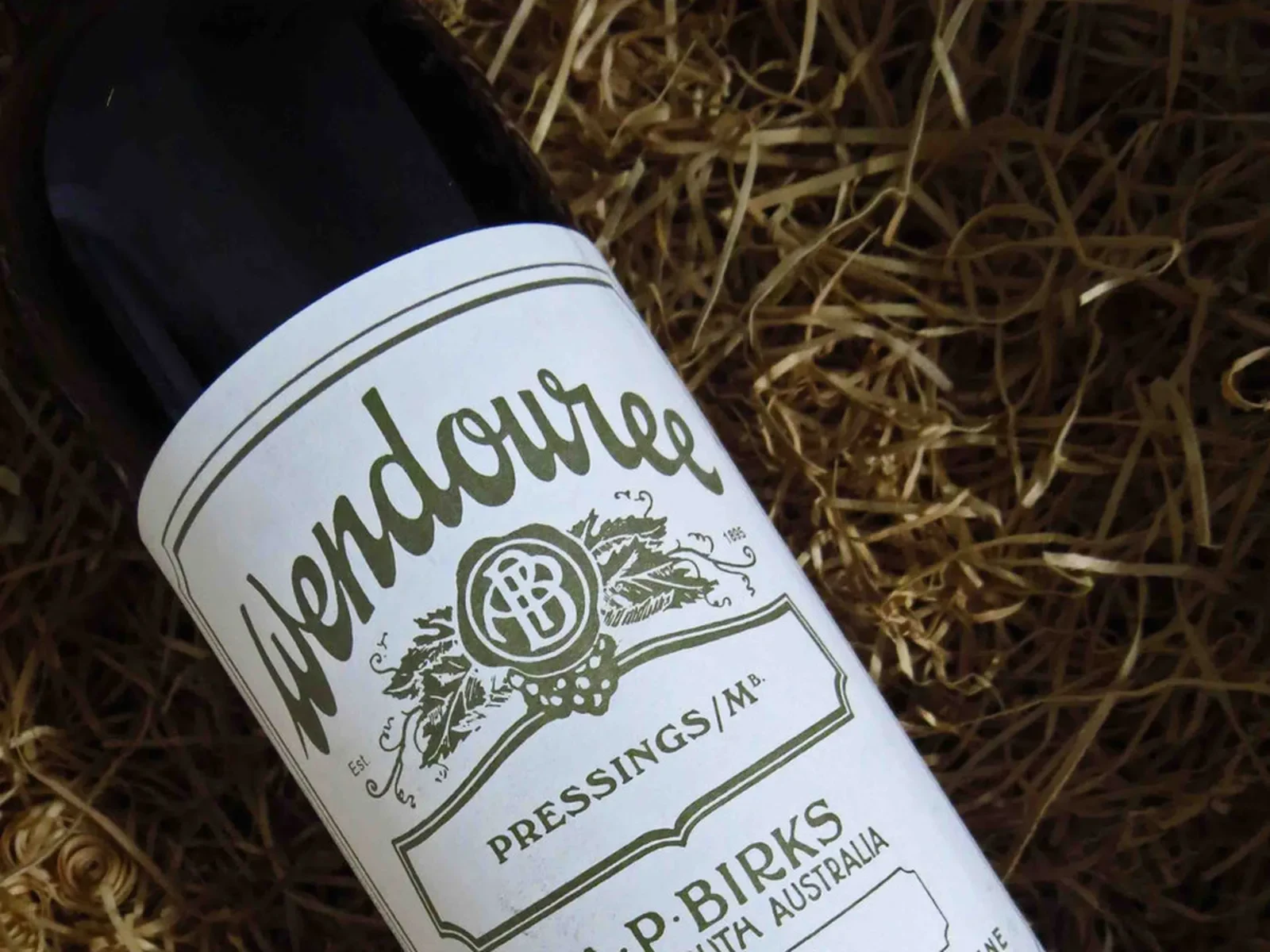
From that year forward, Wendouree has sold out of every vintage. The winery closed to the public after 1995 when it became clear that visitors were buying bottles and reselling them; Tony and Lita Brady had always wanted the wine drunk, not traded. The snail-mail system, which predated the internet age and simply never changed, became the only channel through which a new customer could reach the winery. No distribution network was ever established. No marketing staff were ever hired. The label, which still reads A.P. Birks in the same typeface it always has, was never redesigned.
What the Bradys built, or more precisely what they refused to dismantle, is a system that functions entirely on patience and physical correspondence. The Wendouree Clare Valley wine mailing list is not something you join online. You write. You wait. And then, if you are fortunate, you write again each winter in reply to their letter, and a small allocation of bottles arrives at approximately $75 per bottle, a price that, given the years of waiting required to reach it, represents one of the more unusual value propositions in Australian wine.
Clare Valley's Most Radical Winery Philosophy
The Clare Valley sits approximately two hours north of Adelaide, a region of five sub-regions and eleven soil types, with soils that Pickard describes as approximately 200 million years old. It is, by almost any measure, one of Australia's most historically significant wine regions, and it is known above all for Riesling: bone-dry, high-acid, lime-driven whites that age for decades without losing their tension. The region's continental climate, tempered by sea breezes and wide diurnal swings, is built for acidity retention, and Clare Riesling is its most celebrated expression.
Artisan craftsmanship
Wendouree produces no Riesling. It produces only reds. In a region defined by white wine, that alone sets the property apart from its neighbours, but the divergence runs deeper than variety selection. Where Clare Valley has, over the past thirty years, modernised its cellar doors, built visitor experiences, and pursued export markets, Wendouree has done none of those things. The philosophy is not articulated in a mission statement, there is no platform on which to publish one, but it is legible in every decision the Bradys have made or declined to make since they purchased the property in the 1970s.
"The Brady's basically went on to create, unwillingly and unknowingly, this cult brand."
, Christina Pickard, Wine Enthusiast Australia Reviewer, Wine Enthusiast1
The original building still stands. The original equipment is still in use. Some of the vine plantings date to the 1890s, when Alfred Percy Birks first established the property. When A.P. Birks retired in 1917, the winery passed to his son Roly, who continued selling wine by horse and cart, by the cask, to Melbourne and other Australian cities. The Bradys, when they arrived in the 1970s, inherited not just a property but a posture: make the wine, sell the wine, stay out of the way. That posture has not shifted.
A Founding in 1895 and the Lineage That Held
Wendouree was founded in 1895 by Alfred Percy Birks in the Clare Valley, South Australia. The fact that the label still carries his initials, A.P. Birks, in the same old-fashioned typeface, is not nostalgia. It is a statement about continuity, about the idea that the winery's identity was fixed at its founding and has not required revision. Roly Birks, who took over from his father in 1917, maintained the same direct-sale model his father had used. The Bradys, purchasing in the 1970s, maintained it again.
Artisan craftsmanship
Throughout the twentieth century, additional vines were planted, but the 1890s material remains. Old-vine Shiraz, Cabernet Sauvignon, Malbec, Mataro, and Muscat of Alexandria grow on a property where the infrastructure around them has changed as little as the vines themselves. Visiting Wendouree, Pickard notes, is like stepping back in time, though visiting is no longer something most people can do, given the closure to the public that followed 1995.
The lineage here is not metaphorical. Three distinct custodians, A.P. Birks, Roly Birks, and then the Bradys, have each held the same conviction: that the wine does not need to be explained, promoted, or made easier to find. The conviction has been tested only once, in 1995, and the response to that test was to pull the phone cord from the wall.
What Wendouree Wines Taste Like, and Why Collectors Obsess
The 2022 Wendouree Malbec reached this writer through Paul Longbottom, then the owner of the SevenHill Hotel in the Clare Valley. It was dark-fruited and herbal, supple and not-too-tannic: a wine that carried its concentration without weight, its structure without austerity. That a Malbec from a Clare Valley property founded in 1895 could taste this composed in its youth says something about the vine age and about the dry-grown conditions that produce it.
Wendouree's red program spans Shiraz, Cabernet Sauvignon, Cabernet Malbec, Mataro, and Muscat of Alexandria. These are varieties that suit the Clare Valley's warm days and cool nights, and on vines with root systems that have been developing since the 1890s, the fruit they produce carries a concentration that younger plantings cannot replicate.
The wines are built for cellaring. Collectors who secure allocations at approximately $75 per bottle on the mailing list are not paying for immediate gratification; they are paying for what the wine will become over years or decades in a cool cellar.
The gap between that mailing-list price and what bottles fetch on the secondary market, at auction, through private sales, reflects how rarely they escape the cellars of the people who receive them.
The comparison that surfaces most often in collector circles is Penfolds Grange, Australia's other benchmark red. Grange is produced in volume, distributed globally, and priced accordingly. Wendouree is the inverse: small, closed, and priced at a point that, as Pickard observes, most people can actually afford, if they can get on the list. The scarcity is not manufactured by price. It is manufactured by silence and by the physical friction of snail-mail correspondence.
How to Actually Buy Wendouree Wine
The path to a Wendouree allocation begins with a letter. Not an email. A physical letter, sent to the winery in the Clare Valley, expressing interest in joining the mailing list. What happens after that is a matter of patience: the wait to receive a mailing, and then the wait for an allocation to become available, is measured in years.
Pickard places the wait at longer than the over-a-decade wait associated with Screaming Eagle, the Napa Valley cult wine that sells for thousands of dollars per bottle straight off the gate, and whose 1992 vintage sold at a Napa auction for $500,000.
Wendouree's mailing-list price of approximately $75 per bottle makes the comparison instructive: the scarcity is comparable, the price is not.
Screaming Eagle does have a website, which is where the similarity with Wendouree ends. Wendouree has no website, no email address, no tasting room, no distribution network, no marketing, and no salespeople. The secondary market exists, bottles appear at auction and through private sales, but the Bradys have consistently tried to prevent it, which is why they closed to the public after 1995 and why allocations are made to individuals rather than to retailers or restaurants.
For collectors visiting the Clare Valley, Wendouree is not a destination in the conventional sense. There is no cellar door to visit, no appointment to book, no tasting to arrange. The winery's presence in the region is felt through reputation and through the bottles that occasionally surface at local hotels and restaurants, often through the generosity of someone who has held an allocation for years. If you encounter one, the $75 mailing-list price will not be the price you pay.
Why Inaccessibility Is the New Luxury in Australian Wine
Wendouree's model is not a strategy in any planned sense. Pickard is careful to note that the Bradys did not set out to build a cult wine. They set out to make wine the way it had always been made on that property, to sell it to people who would drink it, and to be left alone to do so. The cult status arrived as a consequence of those commitments, not as their goal.
But the lesson the wine industry has drawn from Wendouree is real, even if the Bradys did not intend to teach it. In an era when wineries invest heavily in digital presence, social media, cellar-door experiences, and direct-to-consumer platforms, Wendouree's complete absence from all of those channels has not diminished demand. It has concentrated it.
The mailing list grows longer. The name circulates from Perth to Margaret River to every restaurant and pub in the Clare Valley, passed between people who have tasted the wine and people who have not, all of them treating the name with the kind of quiet reverence usually reserved for something much harder to explain.
Pickard describes Wendouree as a cult winery in the way she would want all cult wineries to be: accessible in price to anyone who can secure an allocation, resistant to commodification, and oriented entirely toward the drinker rather than the collector or the investor. The $75 bottle that costs years of patience to obtain is a different object from the $500,000 bottle that exists primarily as a financial instrument. Both are cult wines. Only one of them is still, at its core, about the wine.
The Clare Valley will continue to produce its Rieslings on those ancient soils, and visitors will continue to drive the two hours north from Adelaide to taste them at the region's cellar doors.
Wendouree will continue to hand-write its winter letters, to wait for the replies, and to send its allocations to the same few thousand people who have been writing back for years. New names will join the list slowly, as they always have. The original building will stand. The A.P. Birks label will remain unchanged.
And somewhere in the Clare Valley, on vines that have been in the ground since the 1890s, the fruit for the next vintage will be ripening without a press release, without a social media post, and without any announcement at all. Made By follows the people who shape what you eat and drink.
Subscribe, and the next dispatch from the bench, the cellar, or the kitchen comes to you.
The Sunday letter
Get the next Made By guide in your inbox.
We send one email every Sunday morning with the guides and profiles we published that week.