You can commission a bespoke hat from a working milliner today, but the route is narrower than it was a generation ago, and the wait is longer than most people expect. The handful of houses and independent makers still doing the work properly, blocking by hand, sourcing from the remaining felt and straw merchants, fitting across multiple appointments, carry books that open and close on their own rhythms. The single best route for most readers is a direct approach to the maker's studio, by email or telephone, before assuming anything about availability.
The milliners worth the effort are not hard to find; they are hard to reach at the right moment. Rachel Trevor-Morgan, whose atelier is open Monday to Friday, 9:30am to 6:00pm, takes commissions through direct studio contact,1 as do Philip Treacy's London atelier and a smaller tier of independent bench milliners across Britain, France, and the United States. None of them operate like a retail counter. The process is a conversation before it is a transaction, and the conversation begins with you knowing what you want well enough to describe it.
Why the Books at the Best Millinery Studios Close So Quickly
The supply problem is structural. The number of milliners trained to block a hat over a wooden form, steam a brim to a precise angle, and hand-sew a petersham band without a single visible stitch has contracted steadily since the mid-twentieth century. The apprenticeship pipeline that once ran through the London College of Fashion's millinery program and its Paris equivalents still produces graduates, but the graduates who stay at the bench rather than moving into costume or theatrical work are few. A studio with one or two trained hands can produce only so many commissions per season.
Demand, meanwhile, concentrates around the same calendar points every year: the spring racing season, the summer wedding season, and the autumn social calendar. A maker who takes thirty bespoke commissions a year may fill half of them in a six-week window between February and March. If you approach in April, you are already behind the season you wanted.
The materials compound the constraint. The best hood felt, the kind that blocks cleanly and holds its shape across decades, comes from a shrinking number of specialist suppliers. Sinamay and fine straw for summer work is sourced from specific mills in the Philippines and Italy; the merchants who stock the grades that serious milliners require are not restocking on demand. A maker who finds a bolt of exceptional material buys what she can and works with what she has.
How to Actually Reach a Working Milliner: The Channels That Work
The studio website is the starting point, not the booking surface. Most independent milliners do not use third-party reservation platforms; the commission begins with a direct email or a telephone call to the studio. Rachel Trevor-Morgan's atelier accepts bespoke enquiries by email at info@racheltrevormorgan.com and by WhatsApp at 0207 839 8927,2 where sending a photo of your outfit allows the team to discuss remote options.2 Bespoke consultations can also be booked via a form on the atelier page,2 or via FaceTime for those who cannot visit in person. Philip Treacy's London house, at 69 Elizabeth Street in Belgravia,3 takes enquiries through the studio directly. Neither publishes a live availability calendar. You write, you wait for a response, and you learn whether the books are open.
For readers outside London, the route runs through a small number of regional milliners whose work is documented through professional bodies. The Worshipful Company of Feltmakers and the British Hat Guild both maintain directories of working milliners; the Guild's website is a practical starting point for finding a maker whose geographic reach and price range match your situation. In the United States, the Millinery Arts Alliance keeps a similar register of practicing milliners who take commissions.
Social media, specifically Instagram, has become a genuine access channel for the tier of independent milliners below the famous houses. A maker who posts her work regularly and responds to direct messages is often more reachable than a studio with a formal enquiry form. The work itself tells you whether the hands are worth the conversation: look for process photographs, not just finished pieces. A milliner who photographs the blocking stage, the wire armature, the hand-stitched trim, is showing you the method, not just the result.
Trunk shows and millinery fairs are the third channel. The Royal Ascot season generates a cluster of millinery events in London each spring; the Chelsea Flower Show week draws a similar concentration of makers. These are the moments when a maker who does not normally take walk-in enquiries is physically present and open to conversation. A commission that begins at a trunk show often moves faster than one that begins cold by email, because the maker has already seen your face and your proportions.
When the Books Open and What the Lead Time Actually Looks Like
No major millinery studio publishes a fixed calendar for when commissions open. Availability is continuous but uneven, and the only way to know is to ask. Rachel Trevor-Morgan's appointment book fills up quickly before Royal Ascot, so early appointments are advisable;2 the studio's own record shows that Royal Ascot preparation begins the previous August and September, with customers ordering bespoke pieces from after Christmas onwards.4 A fully bespoke commission from the atelier takes approximately four to six weeks to make, from the point the commission is confirmed.2 A simple blocked felt with a single trim element sits at the shorter end of that range; a structured sculptural piece with hand-wired elements, multiple fittings, and custom-dyed materials sits at the longer end.
The racing and wedding seasons create predictable pressure points. If you need a hat for a specific event, work backward from the date and add a buffer. A commission placed in January for a June wedding is well-timed. A commission placed in April for the same wedding is a risk. The maker's studio will tell you honestly whether the timeline is achievable; the ones worth working with will not take a commission they cannot deliver properly.
The Money-vs-Time Tradeoff: What Bespoke Actually Costs
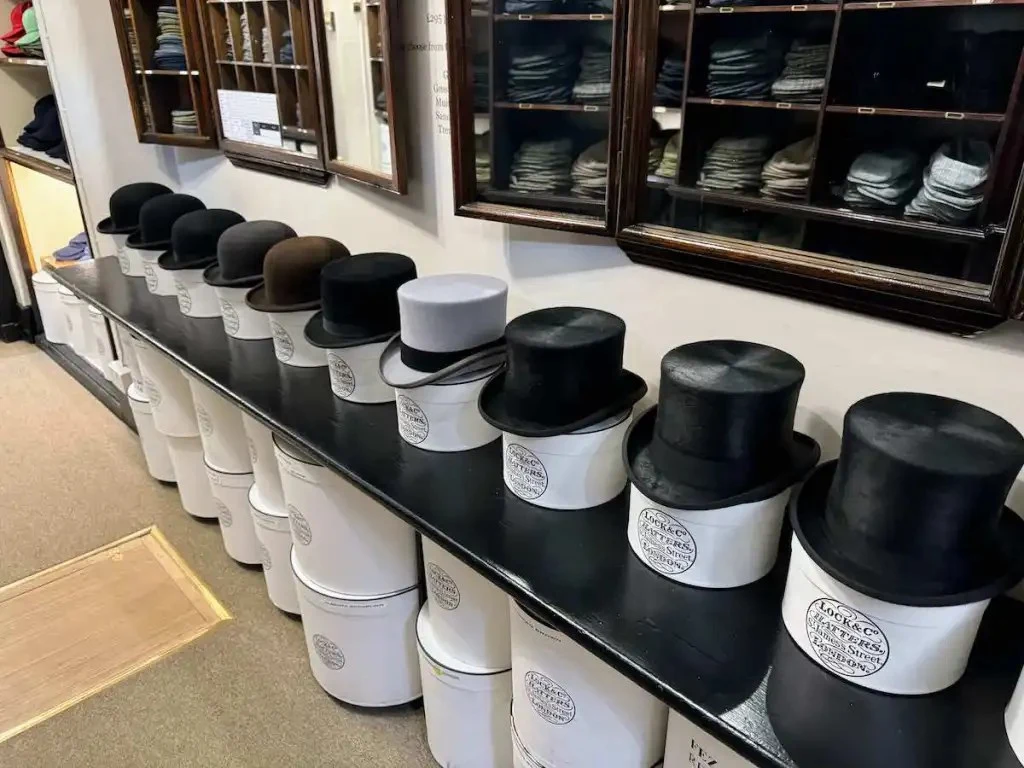
Rachel Trevor-Morgan's bespoke hats are priced from £800 to £4,000, depending on complexity and materials.2 Philip Treacy's bespoke commissions are reported to start at prices that reflect his position as the most decorated milliner of his generation; the studio does not publish a price list, and the figure depends entirely on the complexity of the piece. Stephen Jones's bespoke work sits in a similar tier. Neither studio publishes pricing online; both require a consultation before any figure is discussed. For comparison, Lock & Co.'s Coke hat is priced at £575,5 and the house offers pieces straight off-the-peg or customised,6 which gives a useful reference point for the made-to-order tier.
The expensive-but-faster route is a made-to-order piece from a maker who works from a set of existing blocks and adapts them to your measurements and material choices. This is not the same as fully bespoke, where the block itself may be made or modified for your head, but it produces a fitted, individual piece in a shorter window and at a lower price point. Several London milliners offer this as a distinct service tier.
The patient route is a commission placed well outside the season, when the maker's books are quieter and the timeline is more flexible. A hat commissioned in October for the following spring's racing season gives the maker room to source materials carefully, schedule fittings without pressure, and do the work at the pace the craft requires.
Inside the Rachel Trevor-Morgan Consultation: What the Commission Process Is Actually Like
The initial consultation at the atelier takes around one hour, and the studio advises bringing your outfit or a fabric swatch;2 fabric swatches are required for a perfect colour match.2 The maker looks at your face shape, your height, the way you carry yourself. She asks about the event, the outfit, the light conditions. She pulls blocks from the shelf, holds shapes near your head without placing them, reads the geometry. This is the part of the process that cannot happen by email, which is why the studio also offers FaceTime consultations for clients who cannot travel, and accepts WhatsApp photos of outfits to begin the remote conversation.
The atelier typically plans for one fitting, with intricate orders potentially requiring further fittings.2 The fitting is the moment when the blocked shell first sits on your head at the right angle, and small adjustments are made to the sit of the hat, the angle of the brim, the tension of the petersham lining. These are the adjustments that separate a bespoke piece from a made-to-measure one, and they require the maker's hands and your head in the same room.
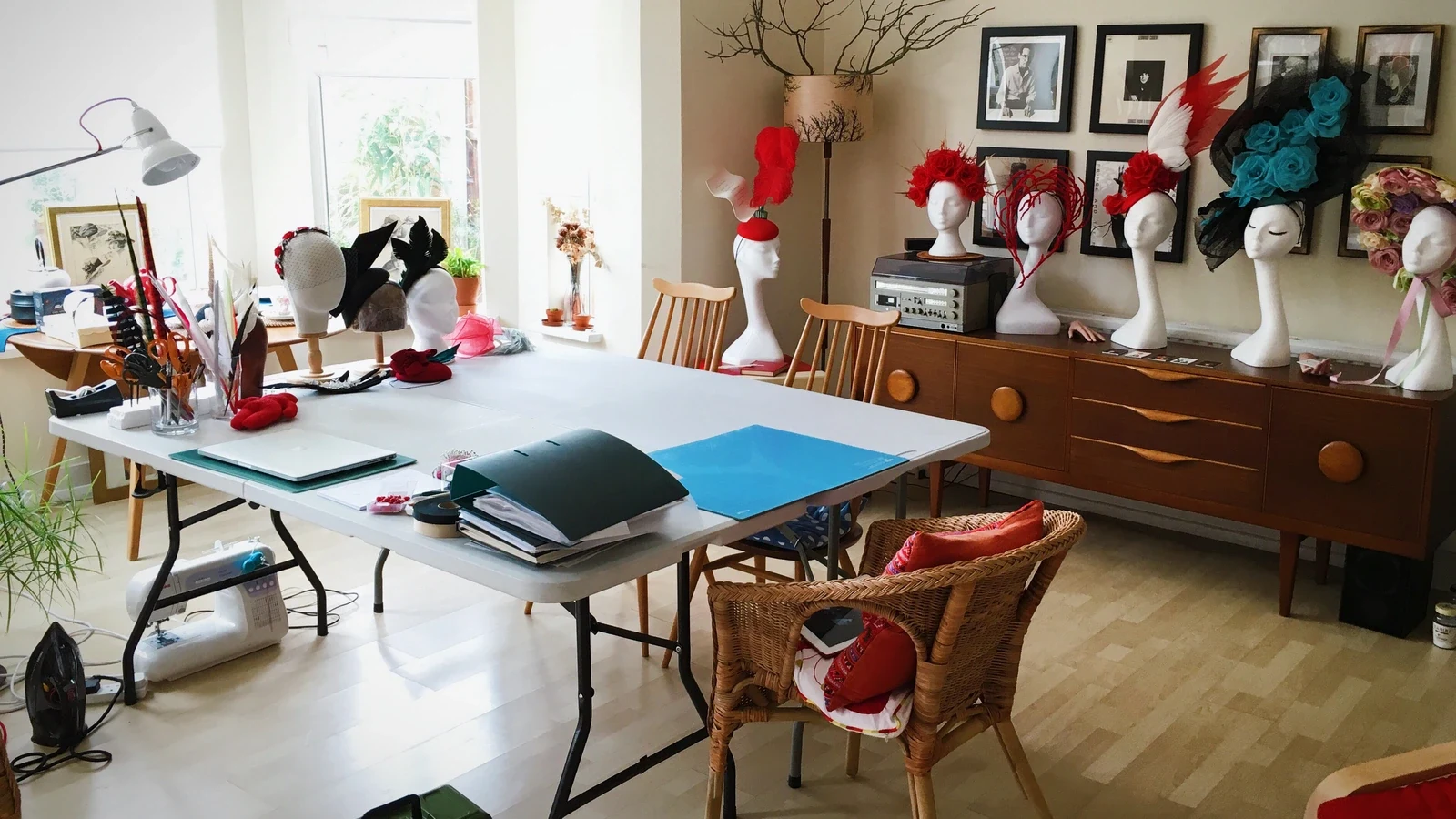
The workshop itself, in the studios that welcome clients, is a working space: wooden blocks on shelves, hat stands in various stages of completion, the smell of steam and sizing. The atmosphere is quiet and focused. You are not in a boutique; you are in a place where the work happens, and the work is happening around you.
For clients who cannot visit in person, the studio's personal shopping service via WhatsApp allows the team to send photographs of options once they have seen a photo of your outfit, and same-day hotel delivery is possible for off-the-peg purchases within London.1 This makes the atelier a practical option for international clients arriving in the city close to an event.1
Strategy: How to Improve Your Odds of Getting the Commission You Want
Approach early and approach specifically. A vague enquiry ("I'd like a hat for a summer event") is harder for a busy maker to respond to than a specific one ("I'm looking for a blocked sisal piece for a July wedding, brim width around four inches, to wear with a navy dress"). The specific enquiry tells the maker whether she has the materials, the time, and the skills the commission requires. It also signals that you have thought about the work, which matters to makers who care about the work.
If the first-choice maker's books are closed, ask when they are likely to open again. Most milliners will give you a direct answer, and some will take your contact details for when space becomes available. This is the closest thing to a waitlist that most studios operate, and it is informal rather than systematic.
Consider the mid-tier makers alongside the famous names. The milliners who trained under Treacy or Jones and have since opened their own studios often do work of equivalent quality at shorter lead times and lower prices. The lineage is documented; the hands are trained. The name above the door is different, but the method is the same. Chloë Scrivener, for instance, offers bespoke hats and bridal pieces made to commission from her Dorset-based studio, with an initial consultation followed by one or two fittings depending on complexity;7 she also runs one-to-one intensive workshops or small group workshops7 for those who want to understand the process before committing to a commission.
For the racing calendar specifically, the major millinery associations and the racecourses themselves sometimes publish lists of recommended milliners in the months before the season. These lists are a practical shortcut to makers who are actively taking commissions for that specific context. Royal Ascot bespoke options can be discussed directly with the Rachel Trevor-Morgan studio by emailing info@racheltrevormorgan.com or WhatsApping a photo of your outfit to 0207 839 8927.8
Bespoke Millinery: A Comparison of the Main Routes
| Route | Difficulty to Access | Typical Lead Time | Approximate Cost | How to Book |
|---|---|---|---|---|
| Major London house (Treacy, Jones) | High; books close seasonally | N/A (unconfirmed; enquire directly) | Unpublished; enquire directly | Direct studio contact |
| Rachel Trevor-Morgan atelier (bespoke) | Medium; books fill before Ascot season | 4 to 6 weeks from confirmation | £800, £4,000 | Email, WhatsApp, or website booking form |
| Independent milliner (e.g. Chloë Scrivener) | Medium; varies by maker | N/A (unconfirmed; enquire directly) | N/A (unconfirmed; enquire directly) | Direct contact via studio or hatcourses.com |
| Lock & Co. (off-the-peg or customised) | Lower; walk-in and customised options available | N/A (unconfirmed; enquire directly) | From £575 (Coke hat) | In-store or direct studio contact |
Note: lead times and costs marked N/A are not verified against a specific maker's published schedule. Confirm all figures directly with the studio before planning around them.
Alternatives When the Books Are Closed
Made-to-order from a named milliner's existing collection. Several established milliners offer a made-to-order tier alongside their bespoke work: you choose from a set of existing designs, specify your measurements and material preferences, and receive a fitted piece without the full consultation process. The result is individual without being fully bespoke, and the lead time is shorter. The Rachel Trevor-Morgan Ella diffusion line, for instance, accepts bespoke requests by contacting the studio at info@racheltrevormorgan.com.9
A commission from a recent graduate of a millinery program. The London College of Fashion, the Royal College of Art, and the École de la Chambre Syndicale de la Couture Parisienne all produce milliners whose technical training is current and whose books are, by definition, open. The work is often less polished than a maker with twenty years on the bench, but the ambition is frequently higher, and the price reflects the stage of the career.
A vintage or archive piece from a specialist dealer. For clients whose interest is in the object rather than the process, the secondary market for twentieth-century millinery is active. Dealers in London's Portobello Road and Paris's Marché aux Puces stock pieces by named makers from the mid-century period; the condition varies, but the craft is often superior to anything available new at a comparable price.
A millinery workshop or short course. Chloë Scrivener runs one-to-one intensive workshops and small group sessions at her Dorset studio, bookable through hatcourses.com.7 This is not a commission, but it is a way to understand the process, meet working makers, and identify whose hands and sensibility match your own before committing to a full commission.
Who Should Commission Bespoke and for Which Occasions
The commission process rewards clients who have a specific occasion, a clear sense of what they want, and the patience to see the work through multiple appointments. It is the right route for a wedding, a significant racing event, a formal occasion where the hat will be photographed and remembered, or a collector who wants a piece made to last decades rather than seasons.
It is not the right route for someone who needs a hat in three weeks, who is uncertain about the occasion, or who is primarily motivated by price. The process takes time, requires decisions, and costs more than ready-to-wear. The result, when the maker and the client are well matched, is a piece that fits your head and no one else's, made by hands that have spent years learning how.
Skip the bespoke route if the occasion is informal, if the timeline is short, or if you have not yet worn enough hats to know what suits you. Wear ready-to-wear for a season first. Learn what you like. Then commission.
Worth the Wait?
The bespoke millinery commission is one of the few remaining craft processes where the object you receive is genuinely made for you and no one else: blocked to your head, fitted across multiple appointments, finished by hands that have spent years learning the discipline. The houses and independent makers who still do this work properly are not numerous, and the ones at the top of the craft carry books that close quickly around the racing and wedding seasons.
The practical route that reliably works is a direct, specific, early approach to the maker's studio, placed well outside the season you need the piece for. Rachel Trevor-Morgan's atelier accepts enquiries by email, phone, and WhatsApp, and the studio is reachable on +44 207 839 8927.1 The made-to-order tier is the sensible alternative when the timeline is tight; the graduate commission is the route for clients whose budget is limited but whose patience is not.
The craft is worth understanding before you commission. A maker who has spent years at the bench blocking felt over steam, sourcing from the last specialist merchants, and fitting hats to faces that no block was made for, is doing something that cannot be replicated by a machine or a fast-fashion atelier. The piece you receive carries that time in it. For most clients, the second appointment, when the blocked shell first sits on your head at the right angle, is the moment the investment makes sense. The milliners worth following are the ones whose studios are quiet enough to hear the steam.
Frequently Asked Questions
How far in advance should I contact the Rachel Trevor-Morgan atelier to commission a bespoke hat for Royal Ascot?
The atelier's own record shows that Royal Ascot preparation begins the previous August and September, with customers ordering bespoke pieces from after Christmas onwards. The appointment book fills up quickly before the season, so early contact is advisable. A fully bespoke commission takes approximately four to six weeks to make once confirmed, so a January approach for a June event is well-timed; an April approach carries real risk. Contact the studio directly at info@racheltrevormorgan.com or on 0207 839 8927 to confirm current availability.
Can I book a Rachel Trevor-Morgan bespoke consultation remotely, without visiting the London atelier in person?
Yes. The studio offers FaceTime consultations for clients who cannot visit in person, and accepts WhatsApp messages with a photo of your outfit to begin discussing remote options. The atelier's personal shopping service also allows the team to send photographs of suitable pieces once they have seen your outfit. For a perfect colour match on a bespoke commission, the studio asks that you send a fabric swatch. Contact the studio at info@racheltrevormorgan.com or WhatsApp 0207 839 8927.
What is the price range for a fully bespoke hat from the Rachel Trevor-Morgan atelier?
Bespoke hats from the Rachel Trevor-Morgan atelier are priced from £800 to £4,000, depending on the complexity of the piece and the materials required. The initial consultation takes around one hour, and the studio typically plans for one fitting, with intricate orders potentially requiring further fittings. Contact the studio directly for a quote after describing the commission in specific terms.
Does Chloë Scrivener's Dorset studio take bespoke commissions, and how does the process compare to a London atelier?
Chloë Scrivener offers bespoke hats and bridal pieces made to commission, with an initial consultation followed by one or two fittings depending on complexity. Her studio is Dorset-based, which makes it a practical option for clients outside London. She also runs one-to-one intensive workshops and small group sessions, which are a useful way to understand the process before committing to a full commission. Enquiries can be made through hatcourses.com. Pricing is not published; contact the studio directly.
What decisions does a client make during the Rachel Trevor-Morgan bespoke commission process?
The client makes decisions at several stages: the overall shape and silhouette (brim width, crown height, angle of wear), the material (blocked felt, sisal, sinamay, straw, or fabric), the colour, and the trim elements (feathers, flowers, veiling, ribbon, wire structures). The studio advises bringing your outfit or a fabric swatch to the consultation; fabric swatches are required for a perfect colour match. The maker advises on what suits the client's proportions and the occasion; the client chooses from the options presented. The atelier typically plans for one fitting, with intricate orders requiring further fittings.