A lead time of six to eighteen months is the number most first-time clients underestimate. That single figure shapes everything: when you make first contact, how you stage a budget, and whether the piece arrives before the house is sold or the child leaves for school. The commission route is open to most people who can find the right maker and ask the right questions early. The difficulty is not access in the velvet-rope sense; it is patience, preparation, and knowing whose hands you want on the work before you pick up the phone.
Custom furniture and joinery sits in a discipline where the maker's calendar is the constraint. A cabinetmaker in their fourteenth year on the bench, working alone or with one apprentice, can complete perhaps eight to twelve substantial commissions a year. Demand from architects, interior designers, and direct clients competes for those same slots. The books are not always open, and when they are, the window closes faster than most clients expect.
Why the Calendar Fills Before You Call
The scarcity here is structural, not manufactured. A single bespoke dining table, built to a client's dimensions and finished by hand, can occupy a maker for a substantial stretch of bench time; Woodchaser estimates small pieces at three to six weeks and large pieces at eight to fourteen weeks or longer,1 depending on the species, the joinery method, and the surface treatment. A fitted kitchen or a library of floor-to-ceiling joinery runs longer still. Makers who have earned a reputation through lineage, through training under a named predecessor, or through a body of work that architects specify by name, carry a waiting list that compounds year on year.
The discipline also attracts a particular kind of client: one who has already spent time researching, who arrives with reference images and a site survey, and who is prepared to wait. That client is your competition for the next available slot. Makers who work at the level where the craft is the point, where the dovetail is cut by hand and the timber is selected board by board, are not scaling. The bench stays the same size.
There is also a seasonal rhythm to how commissions land. Architects and interior designers tend to place orders at the start of a project, which clusters around planning approvals and build starts. If you are a direct client approaching a maker without a design intermediary, you are entering a queue that already contains professional specifiers who book months ahead.
How to Find the Right Maker and Make First Contact
The channels that actually work are not the ones that feel most convenient. A cold enquiry through a general contact form, with no brief and no images, is the lowest-conversion approach. Makers report that the enquiries they respond to first are the ones that arrive with a clear brief: dimensions, intended use, timber preference if any, and a realistic budget range stated plainly.

The routes worth pursuing, ranked by what they realistically yield:
- Architect or interior designer referral. If you are working with a design professional, ask them which makers they have used and trust. A referral from a known specifier carries weight; the maker already has a working relationship with the intermediary and a shared language for drawings and tolerances.
- Craft guild and association directories. Bodies such as the Furniture Makers' Company in the UK, The Furniture Society, and regional craft councils maintain directories of vetted makers. These are searchable by specialism and location, and the listings tend toward makers who have completed formal training or apprenticeships.
- Graduate shows and open studios. Makers in their third or fourth year of independent practice often have more availability than established names, and the work coming out of programs at institutions like the Royal College of Art, the Building Crafts College, or the North Bennet Street School in Boston is frequently at a high level. The commission risk is lower than it appears if you have seen the work in person.
- Direct studio contact, with a brief. When approaching a maker directly, send a one-page brief: the piece, the space, the dimensions, the budget range, and the timeline. Attach a site photograph. This is not a formal document; it is a signal that you have done the thinking and are a client worth a conversation. For simple requests involving size or wood variations, some makers can respond within a day or two.2
There is no universal booking platform for bespoke furniture commissions; the field is fragmented by individual studios. Confirm availability and current lead times directly with each maker's studio before planning around a specific delivery date.
When Books Open and How Lead Times Actually Work
Most independent makers do not publish a release schedule for commission slots. The books open when a project completes and the maker has capacity to take on new work. Some studios send a newsletter or post to their website when they have availability; signing up to a maker's mailing list is the closest equivalent to getting on a waiting list.
Lead times vary by maker, by the complexity of the piece, and by where you fall in the existing queue. Confirm the specific lead time with the studio at first contact, and get the price, payment structure, and delivery timescale confirmed in writing before work begins.3
If your timeline is fixed, say so at the first conversation. Makers can sometimes accommodate a hard delivery date by adjusting their queue, but only if they know the constraint exists. Arriving at the contract stage with a surprise deadline is one of the most common ways a commission goes wrong.
Cost Breakdown Over the Commission Timeline
Bespoke furniture pricing is not published the way restaurant menus are. The cost depends on the maker's day rate, the timber species and grade, the complexity of the joinery, and the finish. As a working orientation: bespoke commissions from established independent makers can start at around £5,000 and take around twelve to fourteen weeks to complete,4 with more complex work in figured or rare timber running considerably higher. In the US market, dining tables from custom makers run from roughly $2,600 to $5,000 and above; sideboards and buffets from $4,000 and above.5 The studio does not publish a price list; request a quote with your brief.
The payment structure across most bespoke commissions follows a recognizable pattern, though the exact terms vary by studio:
- Deposit on commission agreement:some makers require a deposit equal to half the total cost up front2 to secure the slot and cover timber purchase. Most independent makers ask for a 50% deposit at the approval stage, with the balance paid on delivery; for larger projects, staged payments are common.3
- Stage payment at mid-point: some makers invoice a second tranche when the carcass or main structure is complete, before finishing begins. Not universal; confirm with the studio.
- Balance on delivery or installation: the remainder, paid before or on the day the piece is delivered and installed. Woodchaser, for example, takes a 50% deposit at the design and materials stage, with the balance due when the piece is done.1
Timber cost is a live variable. Figured walnut, English oak, and certain imported hardwoods have seen price movement in recent years. A maker who quotes in good faith may need to revisit the timber line if the project is delayed or if the species you specified has moved in price. Build a contingency into your budget for this reason.
Mistakes That Actually Cost People the Commission
The errors that derail bespoke commissions are specific and avoidable:
- Approaching without a brief. "I want a dining table, what does it cost?" is not a brief. It signals to the maker that the client has not yet done the thinking, and it makes a useful quote impossible. Arrive with dimensions, a room photograph, and a budget range.
- Treating the deposit as optional. Some clients attempt to negotiate the deposit down or defer it while they "think it over." This does not hold a slot. The maker's calendar moves; another client with a deposit in hand takes the space.
- Changing the brief after timber is ordered. Once the maker has selected and purchased the timber for your piece, a significant design change may mean waste, additional cost, or a delay while new material is sourced. Lock the design before the timber is bought.
- Ignoring the site survey. A piece built to drawings that have not been checked against the actual space, accounting for skirting boards, ceiling height, and floor level, is a piece that may not fit. Commission a site visit or provide accurate measured drawings before the build begins.
What Repeat Commissioners Do Differently
Clients who commission repeatedly, and who consistently get the work they want from the makers they want, do a few things that first-timers do not:
They build relationships before they have a project. They visit open studios, attend graduate shows, and follow makers whose work interests them over years, not weeks. When a project arrives, they already know whose books they want to be in.
They brief in timber, not in finish. Telling a maker you want "a dark table" is less useful than saying you are drawn to American black walnut with an oil finish. The more specific the brief, the faster the maker can assess fit and quote accurately.
They ask about the maker's current queue honestly. "Are you the right person for this timeline?" is a question that earns respect and saves time. A maker who is honest about being overcommitted will often refer you to someone whose work they trust.
They treat the commission agreement as a working document, not a formality. The agreement should specify the timber species, the dimensions, the finish, the payment schedule, the delivery date, and what happens if either party needs to change something. Getting all of this confirmed in writing before work begins is standard practice among experienced makers.3
Inside the Workshop: What the Commission Process Feels Like
The first conversation with a maker is not a sales meeting. It is closer to a design consultation, and the best ones run long. The maker will ask about the space, the use, the people who will live with the piece. They will ask about timber preferences and whether you have seen work in person that you responded to. They are assessing fit as much as you are.
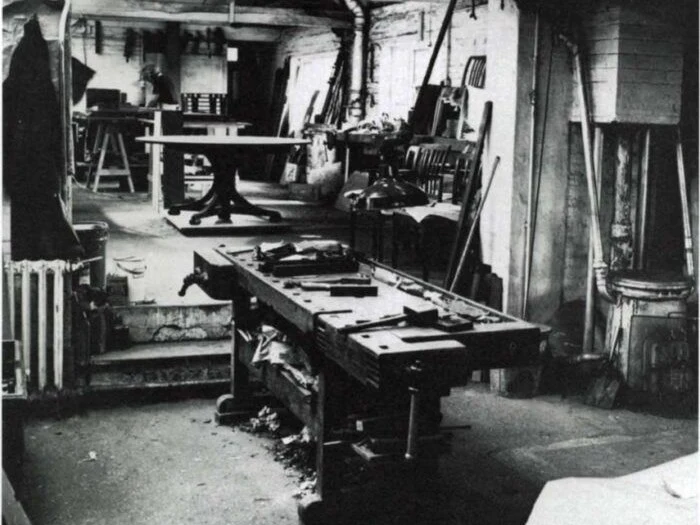
If the commission proceeds, there is usually a design phase: drawings, sometimes a scale model or a sample of the timber and finish. This is where the client's decisions matter most. The maker brings the method; the client brings the context. The conversation at this stage is about tolerances, about how the piece will age, about whether the grain direction on the top panel should run with the length of the room or across it. These are not decorative questions. They are structural and visual decisions that will be visible for decades.
The workshop visit, if the maker offers one, is worth taking. Seeing the timber before it is cut, watching the maker work at the bench, understanding the tools and the sequence, changes the relationship to the finished piece. It is also the moment when clients who have been vague about what they want tend to become specific. The smell of freshly planed oak, the sound of a hand plane on end grain, the weight of a test joint: these things clarify preference faster than a mood board.
Delivery and installation is the final stage, and it is often underestimated. A large piece of joinery may require two people and a half-day to install correctly. The maker will typically want to be present, or to send someone from the studio, to ensure the piece is set level, that any fixings are correct, and that the finish has not been damaged in transit. This is not a courier drop; it is the last act of the commission.
Bespoke Furniture Routes: Commission Paths Compared
| Route | Typical Lead Time | Cost Tier | Access Difficulty | How to Initiate |
|---|---|---|---|---|
| Established independent maker (10+ years) | 12 to 18 months | High | Books often full; referral helps | Direct studio contact with brief |
| Mid-career independent (3 to 8 years) | 6 to 12 months | Mid to high | More available; quality variable | Graduate show, guild directory, direct |
| Recent graduate / emerging maker | 3 to 6 months for smaller pieces1 | Mid | Often available; see work in person first | Graduate show, college referral |
| Design-led furniture studio (small batch) | 8 to 16 weeks for standard; longer for bespoke | Mid to high | Moderate; some pieces semi-custom only | Studio website, showroom visit |
| Architect-specified maker | Varies; often 12+ months | High to very high | Requires design professional relationship | Through your architect or interior designer |
Lead times and cost tiers are general field estimates based on common practice; confirm specifics with each studio directly, as individual makers' schedules and pricing vary.
Alternatives When the Maker You Want Is Unavailable
When the maker whose work you have followed for two years tells you their books are closed, these are the routes worth considering:
- The maker's recommended referral. Ask directly: "Who else would you trust with this?" Makers at the top of the field know whose work is at a comparable level. A referral from the person you wanted is the next best thing to the commission itself.
- Craft school workshop commissions. Institutions like the Edward Barnsley Workshop in Hampshire, the Chippendale International School of Furniture in Scotland, and the North Bennet Street School in Boston occasionally take commissions through their advanced programs, where the work is executed by students under close supervision from experienced tutors. The lead time can be shorter and the cost lower; the trade-off is that the work is a teaching exercise as well as a commission.
- Small-batch design studios. Studios that produce limited runs of designed pieces, rather than fully bespoke work, can sometimes accommodate modifications to standard dimensions or finishes. The piece is not fully custom, but the quality of making can be high and the lead time shorter.
- The waiting list, honestly held. If the maker you want is the right maker for the piece, ask to be placed on a waiting list and mean it. Some commissions fall through; slots open. A client who has been patient and clear about what they want is often the first call when a space appears.
The Verdict: Is the Commission Worth the Wait?
For the right piece and the right client, yes, without qualification. The commission route is the only way to get a piece of furniture genuinely made for the space, the use, and the person who will live with it. The lead time is real, the deposit is typically half the total cost and non-refundable once timber is ordered,2 and the process asks more of the client than buying from a showroom. None of that is a reason to avoid it; it is a reason to start earlier than you think you need to.
The closest thing to a formal waiting list here is the maker's mailing list and the direct relationship. Sign up, visit the studio if they open it, and arrive with a brief when you make contact. The clients who get the work they want are the ones who have done the thinking before they call.
The single most reliable route is a referral from an architect or designer who has worked with the maker before. If you do not have that relationship, a guild directory and a well-written brief are the next best tools. The emerging maker route, for clients who are willing to see the work in person and take a considered risk, often yields the best value in the field right now.
In bespoke furniture, the people are the program: the maker at the bench, the apprentice learning the joint, the predecessor whose method is still visible in the finished surface. That lineage is the thing worth commissioning, and the patience required to reach it is part of how the work earns its place in a room.
Frequently Asked Questions
How far in advance should I contact a bespoke furniture maker before I need the piece delivered?For a substantial commission, such as a dining table, fitted shelving, or a kitchen, contact makers at least twelve to eighteen months before your target delivery date. Established makers with full order books may not have availability within that window; emerging or mid-career makers may be able to work to a shorter timeline of six to nine months. Confirm the current lead time with the studio at first contact and get the delivery date in writing as part of the commission agreement.
What should a custom furniture commission brief include before I make contact?A useful brief covers: the piece (what it is and what it needs to do), the dimensions (measured accurately, with a site photograph), the timber species if you have a preference, the finish, the budget range stated plainly, and the delivery timeline. You do not need a technical drawing; you need enough information for the maker to assess whether the project is a fit and to provide a realistic quote. Arriving without a brief is the most common reason a first enquiry does not convert to a commission.
Is the deposit on a bespoke furniture commission refundable if I change my mind after signing?In most commission agreements, the deposit is non-refundable once timber has been purchased for the project. Some makers hold a portion refundable up to a certain point in the process; this varies by studio and should be clarified before signing the agreement. Read the commission contract carefully and ask the maker to explain the cancellation terms before you pay. Changing the brief significantly after timber is ordered may also incur additional cost.
Can I commission bespoke furniture directly from a maker, or do I need to go through an architect or designer?Direct commissions are standard practice across the field. Many makers work exclusively with direct clients; others work primarily through architects and interior designers. A referral from a design professional can help with access to makers whose books are full, but it is not a requirement. Approaching a maker directly with a clear brief and a realistic budget is a legitimate and common route. Some makers prefer direct clients because the brief is simpler and the decision-making is faster.
What distinguishes a fully bespoke furniture commission from ordering a customized piece through a studio?A bespoke commission is built from scratch to your specific dimensions, timber choice, and design, with the maker involved in every decision from timber selection to final finish. A customized piece from a design studio typically means modifying a standard design within the studio's existing production framework. The bespoke route offers more control and suits pieces that need to fit a specific space or carry a particular method; the studio route is faster and often less expensive, and suits clients who want a known design adapted rather than a new one originated.