Winemaker Manfred Ing of Querciabella, Sixteen Years On
Manfred Ing grew up in KwaZulu Natal, studied at Stellenbosch, worked his first vintage in New Zealand, and now makes wine at Querciabella.
HM
Director of Editorial Standards
Hugo Marchetti
Filed October 21, 2026
9 min read
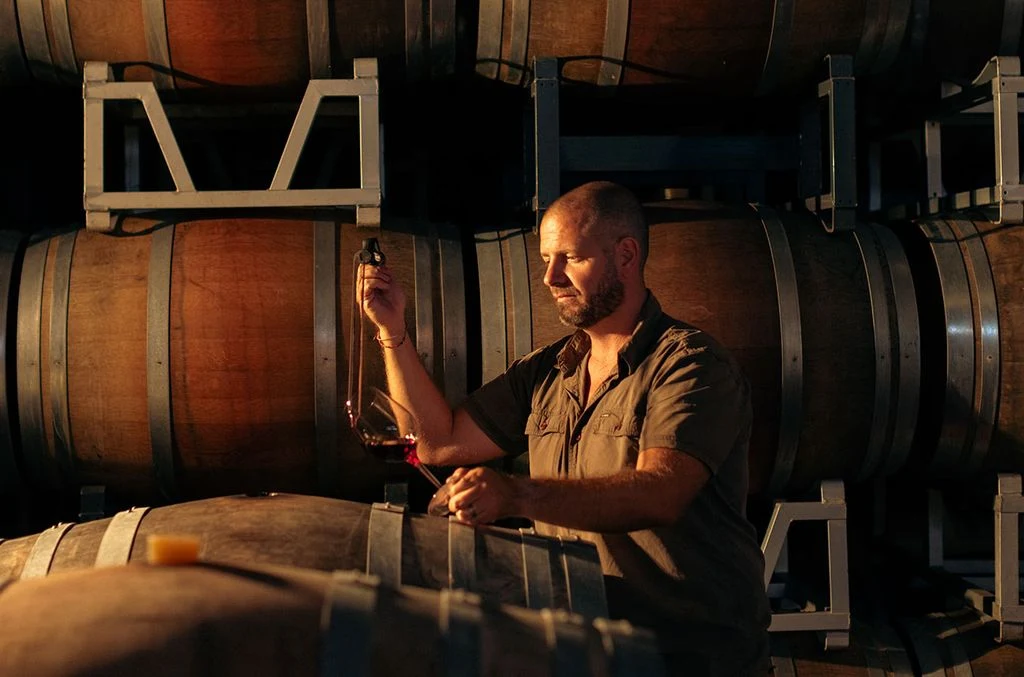
On 8 October in Lamole, Manfred Ing and the Querciabella team picked the last bunches of Sangiovese. Manfred Ing is the South African-born winemaker at Querciabella in Chianti Classico, where he has shaped the estate’s stylistic evolution since 2010. This autumn, he brings that sixteen-year view to London, hosting a Decanter Fine Wine Encounter lunch with Italy editor James Button and pouring wines including Batàr and Gran Selezione Greve 2021 (Querciabella3).
The timing matters because Ing’s work sits at a hinge point for Chianti Classico: a Tuscan region rooted in Sangiovese, a producer working with biodynamic and organic practices, and a winemaker whose first training came far from the hills around Greve, Lamole and Panzano. His path runs through KwaZulu Natal, Stellenbosch University, New Zealand’s North Island, l’Avenir, Esk Valley, and then Querciabella.
The Sunday letter
Get our new stories in your inbox every Sunday.
One email with our newest profiles and guides. See a sample before you subscribe.
Manfred Ing at Querciabella, from Stellenbosch to Chianti Classico
Ing grew up in KwaZulu Natal, South Africa, away from vineyards. His mother is Italian, from a Sardinian family that moved through Brazil before South Africa, and the family kitchen carried food and wine as a daily grammar. His grandfather had grown grapes in Sardinia before leaving. Ing has traced his own ease with plants back to that family line.
It is summer heat in the Cape and swimming in the reservoir at La Motta in Franschhoek, with Reenen Borman of Boschkloof and Borman’s older brother in the frame. Ing’s first vineyard memory is summer heat in the Cape and swimming in the reservoir at La Motta in Franschhoek with Reenen Borman of Boschkloof and Borman’s older brother.
At school, he leaned into science and mathematics. In his second-to-last year of high school, his father drove him down to the Cape for work experience with Jacques Borman, then at La Motte. Ing returned to school with the decision made. At 17, he started studying winemaking at Stellenbosch University, too young to order wine but already inside the discipline.
Stellenbosch gave him the first formal structure, then the road widened. His first professional vintage took him to New Zealand’s North Island. Early harvests placed him under Francois Naudé at l’Avenir, whom Ing has described as a chemist winemaker, and Gordon Russell at Esk Valley, whom he has framed as an artist. Francois Naudé at l’Avenir taught him chemistry, and Gordon Russell at Esk Valley taught him another way to read wine.
That split, chemist and artist, follows him into Querciabella. Jacques Borman at La Motte, Francois Naudé at l’Avenir, Gordon Russell at Esk Valley, and the Stellenbosch program shaped his early training.
Sixteen Years at Querciabella, With Sangiovese as the Test
Ing has worked at Querciabella for 16 years, long enough to speak about the estate without confusing familiarity for certainty. He lives in Lamole, and he has said that even after sixteen years in the area, new places still appear off small roads.
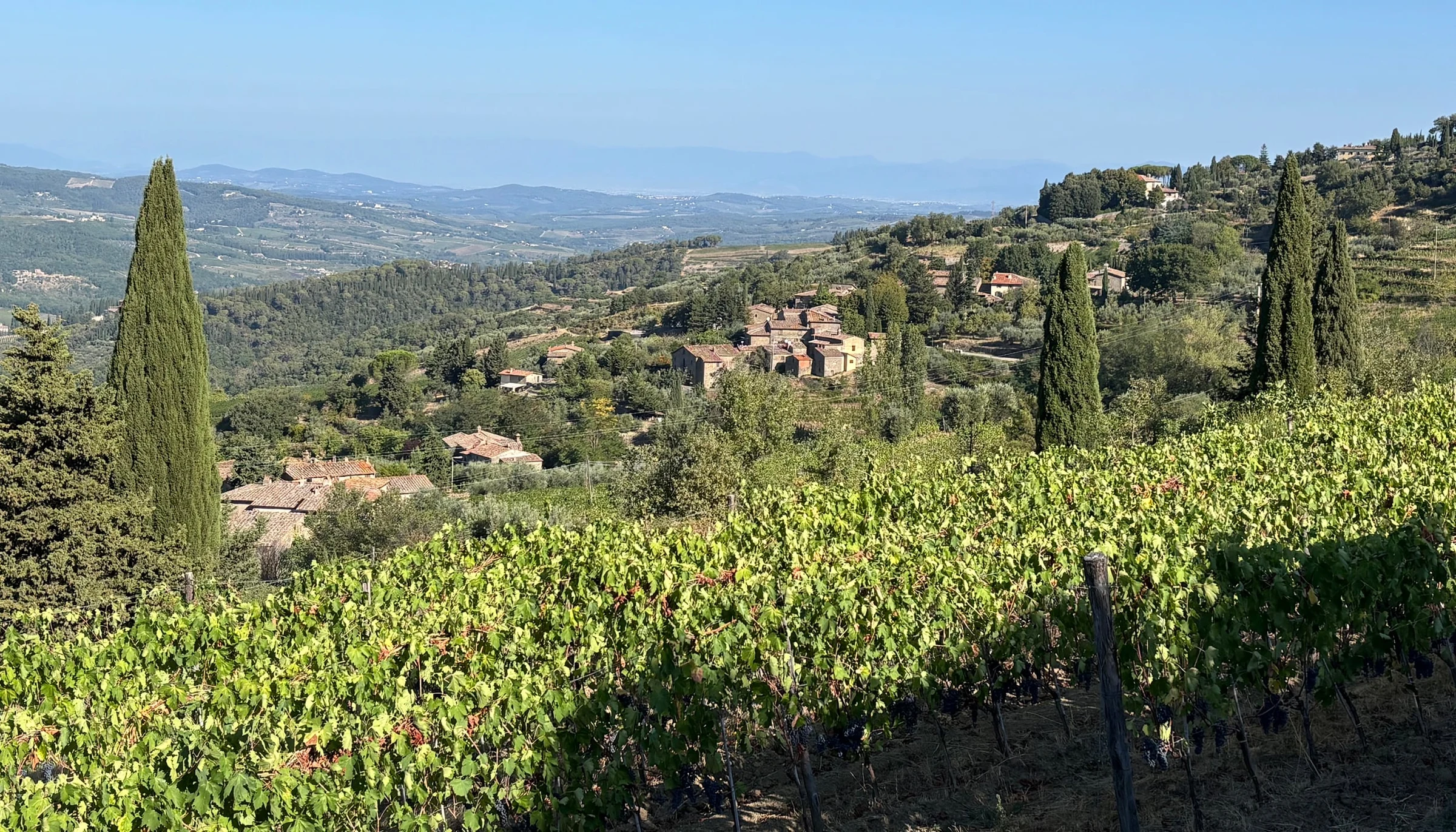
Tuscan hillside vineyard landscape with Sangiovese vines in the foreground and characteristic cypress trees.
Querciabella, owned by the Castiglioni family, produces wines that let Ing work across different expressions of the estate’s thinking. Batàr sits in the program as a white wine with its own place at the table. Gran Selezione Greve 2021 gives a site-specific Chianti Classico point of reference. Camartina Toscana IGT, a blend with Cabernet and Sangiovese, gives Ing another way to speak about spice, lift and structure.
The Sangiovese picked on 8 October in Lamole belongs to a wider calendar of attention. Ing’s language around harvest does not lean on romance. Mother Nature controls the pressure, as he has put it, and the winemaker’s job is to prepare until decisions can be made without panic. That is where his training under different mentors starts to show. The chemist’s understanding of what can go wrong, the artist’s patience with what should not be forced, and the Tuscan expectation that Sangiovese will show every shortcut.
Querciabella’s place in Chianti Classico also gives Ing a particular audience. Sommeliers tracking Gran Selezione, collectors following site-specific Tuscan bottlings, and cooks who want Sangiovese at the table are all reading the same signals: acidity, grip, lift, and the ability to sit beside food without flattening it. Ing says bottles work best when the table is moving.
Maximum Attention, Minimal Intervention
"At Querciabella, we're very precise: maximum attention allows for minimal intervention."1
Manfred Ing, winemaker, Decanter
He has said Querciabella does not work from recipes. Querciabella carries procedures in the mind, and each vintage arrives with different demands. It means work done early enough that the cellar does not become an emergency room. The team has to know the baseline well enough to depart from it. For a biodynamic and organic-minded estate, refusing recipes means relying on procedures in the mind.
The hands sorting fruit, the people walking rows, the cellar team watching fermentations, and the winemaker reading a vintage against earlier years all carry part of the outcome. A recipe can hide weak attention. Ing’s method puts pressure on observation.
"If you're as precise as possible, you can be preventative rather than curative. That is a philosophy I've learnt from some of my mentors around the world."2
Manfred Ing, winemaker, Decanter
Naudé’s chemistry at l’Avenir gave Ing respect for cause and correction. Russell’s work at Esk Valley gave him the permission to see wine as an interpretive craft. Querciabella gives him the Tuscan material and the Castiglioni family’s appetite for innovation within tradition. Ing’s cellar discipline is built around the long way: see earlier, move cleaner, intervene less because the work has already been done.
Global Training, Tuscan Restraint
Ing’s career took him from South Africa to New Zealand to Tuscany, and each stop shaped his work. Stellenbosch taught him wine through study. New Zealand gave him his first vintage on professional terms. L’Avenir placed him beside Francois Naudé, where chemistry became a practical language. Esk Valley placed him beside Gordon Russell, where the maker’s eye had to stay open to shape and feel.
At Querciabella, Ing applies that training to Chianti Classico. For Ing, Chianti Classico has its own requirements. Sangiovese has its own acidity, its own transparency, its own ability to resist over-handling. The work asks for adaptation. Ing has described the Castiglioni family as open-minded, and he has said Querciabella respects tradition and takes a modern approach to winemaking. He works inside that tension each year.
The Gran Selezione Greve 2021 pours into this context. Gran Selezione Greve 2021 connects Chianti Classico, Greve, Sangiovese-led thinking, and Querciabella’s site-specific attention. For Ing, Gran Selezione Greve 2021 is a narrower test. Gran Selezione Greve 2021 is more site-specific than a broad regional wine. Ing’s sixteen-year tenure matters here because site work depends on repetition. Ing’s sixteen-year tenure matters because place teaches slowly, and only to people who stay.
Camartina gives another window into Ing’s palate. He has described the wine as carrying the spice of Cabernet with a Sangiovese lift. In Ing’s description, Cabernet does not define the whole wine. In Ing’s telling, Sangiovese still lifts the blend. It keeps movement in the glass, the same quality he points to when he talks about Sangiovese with Asian flavours, slightly chilled if the table calls for it, acidity doing the work of refreshment.
The Table Around the Cellar
Ing cooks when he is not making wine or travelling, and the details he gives from home explain part of his cellar thinking. He keeps six or seven wooden boxes filled with spices from around the world. Travel in Asia with Querciabella changed his approach to pairing because a Cantonese table does not move in the linear order of antipasti, light white wine, Chianti Classico, Riserva. A Cantonese table turns plates, brings flavours together, and asks bottles to behave in company.
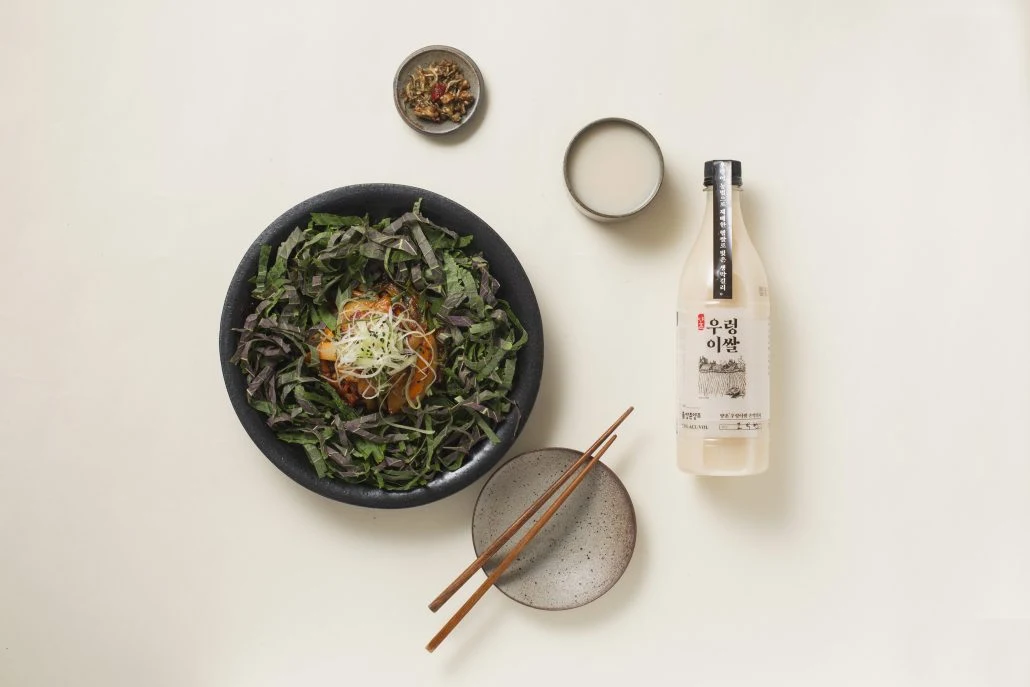
Ing is thinking about Batàr, Chianti Classico, Gran Selezione and Camartina in use. He has spoken about Thai-style creaminess needing acidity, smoky Korean barbecue with kimchi working beside spicy Syrah, Cabernet or Camartina, and Sangiovese opening the palate through freshness and high acid. Ing cooks with flame, spices, a wok, and a South African memory of braai.
The travel map around his Tuscan life is similarly grounded in people and tables. In Volpaia, he points to Bar-Ucci for local flavours tied to that hill. In Lamole, where he lives, he names Ristoro di Lamole. In Panzano, he names Dario Cecchini at Antica Macelleria Cecchini and Enoteca Baldi, whose list he places beside top restaurant lists in New York or London. These rooms and makers connect Ing’s palate with the region.
In London, Ing names Bocca di Lupo when pressed for one place to eat. He also makes room for a Sunday roast in a small pub near Paddington, with a pint of ale, timed to a Sunday morning arrival.
What to Watch When Manfred Ing Pours Querciabella Next
At the Decanter Fine Wine Encounter London, Ing’s lunch with James Button presents sixteen years of work through Batàr, Gran Selezione Greve 2021, and the language of a winemaker who arrived from South Africa by way of Stellenbosch, New Zealand, l’Avenir and Esk Valley. The tasting will draw attention because of the labels on the table; the better study is the method behind them.
Ing talks about prevention before cure. He returns to precision rather than correction. Sangiovese, especially when Greve and Lamole sit in the background of the conversation. Querciabella’s next chapter will still be measured in harvest dates, site-specific bottlings, and the patient work of a team that chooses maximum attention before it asks the cellar to do less.
The Sunday letter
Get the next Made By guide in your inbox.
We send one email every Sunday morning with the guides and profiles we published that week.