Agustarello A Testaccio
- 01CuisineTraditional Roman Trattoria
- 02CityRome, Italy
From the people index
Recommended by
One trusted voice points here.

Testaccio's Kitchen, Still Set to the Original Temperature
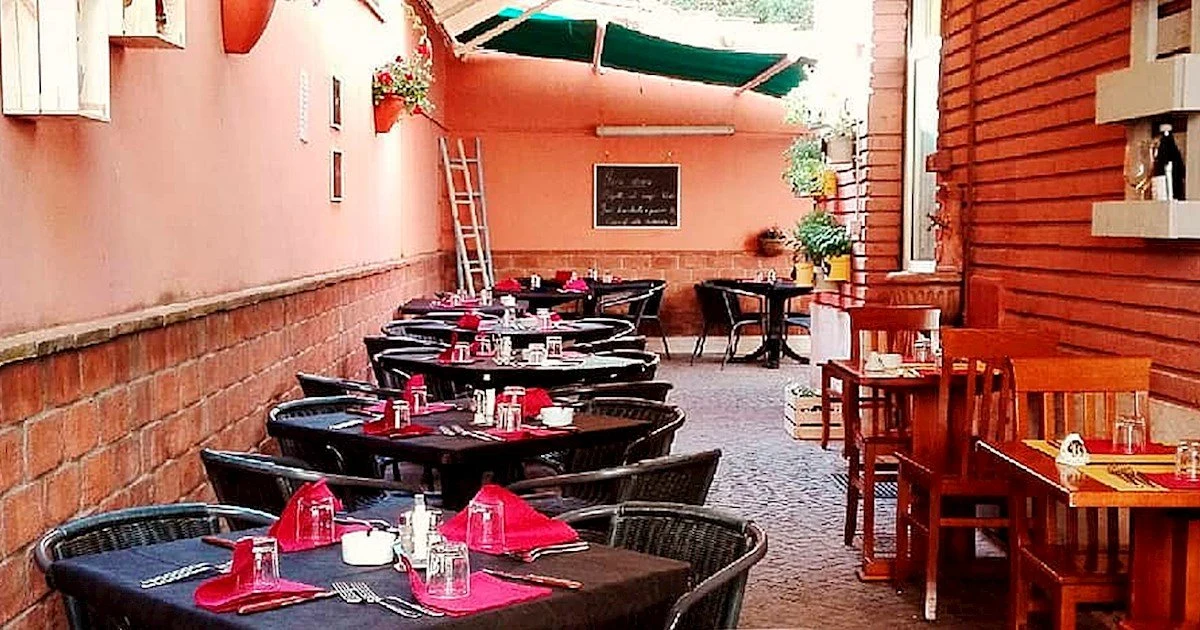
Approach Via Giovanni Branca on a weekday evening and the noise arrives before the sign does. Chairs scraping tile, the clatter of ceramic, conversations that have no interest in lowering their register for strangers. Testaccio has been Rome's working-class food quarter for well over a century, built around the former slaughterhouse that once employed most of the neighbourhood and, in doing so, gave Roman cooking its most distinctive and debated chapter: the quinto quarto, the fifth quarter, the offal cuts that the slaughterhouse workers took home as wages when cash ran short. Agustarello A Testaccio sits inside that tradition not as a museum piece but as a functioning expression of it, operating on Via Giovanni Branca in the part of the city where this cooking was never a trend to be discovered and then abandoned.
The Quarter That Shaped the Menu
Testaccio's relationship with Roman cuisine is structural rather than incidental. The Mattatoio, the municipal slaughterhouse that defined the area's economy through much of the nineteenth and twentieth centuries, created the conditions for a hyper-local culinary vocabulary: rigatoni con la pajata, coda alla vaccinara, trippa alla romana, coratella. These are dishes with a specific address. You find versions of them across Rome, but the neighbourhood where slaughterhouse workers ate them on weekday afternoons has a different claim on their authenticity than a restaurant in Prati or Parioli serving them to tourists who booked through a concierge. Agustarello operates in that original geography, on a street where the cooking and the community that produced it were once the same thing.
This places the trattoria in a different conversation from the addresses that define Rome's upper tier. La Pergola, Il Pagliaccio, and Enoteca La Torre represent a version of Italian fine dining that measures itself against international creative standards. Acquolina and Achilli al Parlamento occupy the sophisticated middle ground of Rome's contemporary scene. Agustarello is not competing in those categories. The competition is with the handful of other Testaccio trattorias still doing this cooking without apology or theatrical reframing, and the measure of quality is whether the rigatoni arrives the way it should, not whether it arrives on a handmade plate with a foam.
What the Cooking Signals About the Place
Roman trattoria cooking at this level is not simple to execute well. The quinto quarto tradition requires ingredient sourcing, timing, and technique that are less forgiving than most tourist-facing menus acknowledge. Pajata, the milk-fed calf intestine cooked with the chyme still inside, requires both access and confidence. Coda alla vaccinara, the braised oxtail with sweet-sour notes from cocoa and celery, needs long cooking and a kitchen that understands where restraint applies. These are dishes that reward familiarity with the tradition, both in the kitchen and at the table. Trattorias like Agustarello persist because a local clientele, the kind who eat here on Tuesday rather than Saturday, holds the standard by returning when it's met and staying away when it isn't.
For context on how Italy's broader restaurant scene handles traditional cooking versus creative interpretation, it's worth noting how different the calculus becomes outside Rome. Osteria Francescana in Modena and Le Calandre in Rubano work the same source material through an entirely different intellectual framework. Dal Pescatore in Runate and Piazza Duomo in Alba hold onto regional identity while pushing into refined territory. Agustarello makes none of those moves. The tradition is the point, not the raw material for something else.
The Neighbourhood as Context for the Visit
Testaccio has gentrified considerably since the slaughterhouse closed in 1975, and the former Mattatoio now houses markets, cultural spaces, and a section of MACRO, Rome's contemporary art museum. The neighbourhood's food market, Mercato di Testaccio, relocated to a purpose-built structure on Via Beniamino Franklin and remains one of the more serious food markets in central Rome. This is a district where culinary tradition and urban change coexist without one erasing the other, which makes it a more interesting place to eat than areas that have simply been cleared for restaurant tourism. Via Giovanni Branca itself is a residential street with the texture of a working neighbourhood rather than a dining destination, which is part of what it signals about Agustarello's positioning.
Visitors coming from other parts of Rome should factor in that Testaccio is south of Trastevere and west of the Aventino, accessible by tram from Largo Argentina or on foot from Circo Massimo on the Metro B line. The neighbourhood rewards time spent beyond the meal: the Pyramid of Cestius is a short walk, and the Protestant Cemetery, where Keats and Shelley are buried, sits adjacent to it. An evening at Agustarello works as part of a longer Testaccio itinerary rather than a destination visit in isolation.
Planning the Visit
Agustarello A Testaccio is a neighbourhood trattoria, and the conventions of that format apply: walk-ins are possible but arrive early or late by local standards (before 8pm or after 9:30pm) to avoid the peak squeeze, expect a short, handwritten menu that changes with supply, and bring cash as backup regardless of card acceptance. The price point sits well below Rome's creative fine dining tier, this is a meal measured at about $25 per person, which puts it in a different planning frame from addresses like Acquolina or Achilli al Parlamento where advance booking is standard practice.
Uliassi in Senigallia and Quattro Passi in Marina del Cantone represent coastal Italy at the higher end. Reale in Castel di Sangro and Atelier Moessmer Norbert Niederkofler in Brunico occupy the creative-regional tier. Enoteca Pinchiorri in Florence and Enrico Bartolini in Milan anchor the northern fine dining circuit. Agustarello fits none of those categories, which is precisely the point of including it in any serious account of Italian eating.
The Sunday letter
Get new places like Agustarello A Testaccio every Sunday.
One email a week with the restaurants, bars and hotels we have just written up, and the people who run them.
One email a week. Unsubscribe from any issue.
Questions
Frequently asked
How expensive is Agustarello A Testaccio?
Agustarello A Testaccio is listed at a price level of $$.
Where is Agustarello A Testaccio and what does it serve?
Agustarello A Testaccio is in Testaccio, Rome, serving Traditional Roman Trattoria.
The field
How it compares
| Place | Cuisine | Notes | Awards |
|---|---|---|---|
| Agustarello A Testaccio | Traditional Roman Trattoria | Testaccio, $$ | · |
| Acquolina | Modern Mediterranean Seafood Fine Dining | Rome | Michelin 2 Stars |
| Enoteca La Torre | Modern Italian Fine Dining | Rome | Michelin 2 Stars |
| Idylio by Apreda | Modern Mediterranean-Asian Fusion | Rome | Michelin 1 Star |
| Il Pagliaccio | Modern Italian-Japanese Fusion Fine Dining | Rome | Michelin 2 Stars |
| Imàgo | Modern Italian Fine Dining | Rome | Michelin 1 Star |
| La Pergola | Modern Italian Fine Dining | Rome | Michelin 3 Stars |
Similar places
Modern Mediterranean Seafood Fine Dining
Acquolina
Rome, Italy
★★
Modern Italian Fine Dining
Enoteca La Torre
Rome, Italy
★★
Modern Mediterranean-Asian Fusion
Idylio by Apreda
Rome, Italy
★
Modern Italian-Japanese Fusion Fine Dining
Il Pagliaccio
Rome, Italy
★★
Modern Italian Fine Dining
Imàgo
Rome, Italy
★
Modern Italian Fine Dining
La Pergola
Rome, Italy
★★★
The Sunday letter
Get the next Made By story in your inbox.
We send one email every Sunday morning with the places and people we covered that week.
One email a week. Unsubscribe from any issue.